

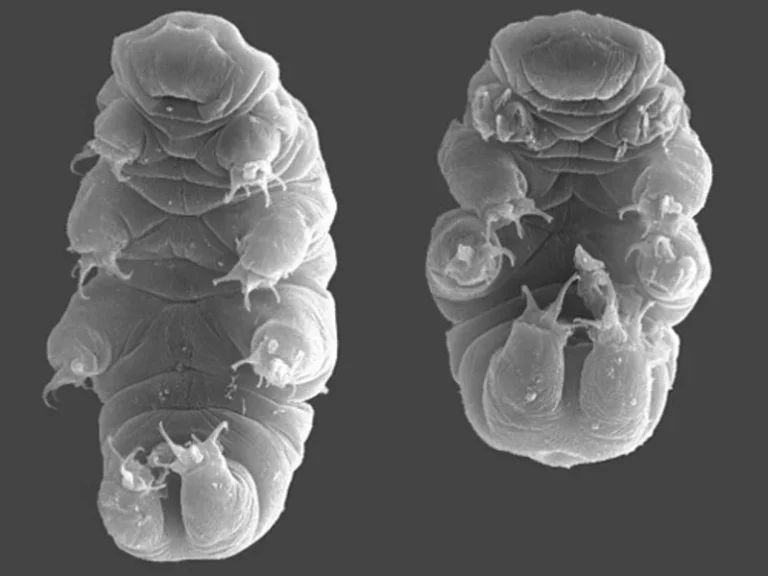

Tardigrades — microscopic eight-legged invertebrates measuring less than a single millimeter — represent the absolute pinnacle of biological extremotolerance on planet Earth. They routinely withstand near-absolute-zero cryogenic cooling in liquid helium, scorching heat exceeding 150 degrees Celsius, hydrostatic pressures exceeding six thousand atmospheres in the Mariana Trench, and the raw ionizing vacuum of outer space. Today, tardigrades anhydrobiosis TDP proteins vitrification Dsup radiation shielding analyses have transitioned into a vanguard frontier of molecular biophysics: researchers have unraveled the exact mechanisms of intracellular vitrification and genomic photoprotection, promising a revolution across biopreservation, vaccine stabilization, and cell therapies.
The Mechanics of Anhydrobiosis: Suspending Life at 99% Water Depletion
For almost every terrestrial organism, desiccation represents an irreversible lethal event. Liquid water is vital for governing hydrophobic protein folding, maintaining lipid bilayer fluidity, and solubilizing metabolites. When water evaporates, lipid membranes aggregate and fracture, while intracellular enzymes permanently denature.
Tardigrades overcome this constraint through anhydrobiosis, an extreme state of suspended animation. Upon environmental dehydration, the animal retracts its lobopodia, curls into a compacted cylinder called a tun, and expels up to 99 percent of its body water.
In this tun state, measurable metabolic respiration falls beneath instrument detection limits. They remain viable in this state for years; upon the introduction of a single drop of water, they rehydrate, regain locomotion, and resume feeding within minutes.
Whereas other anhydrobiotes rely on the disaccharide trehalose as a chemical chaperone, genomic profiling revealed that many tardigrade species lack trehalose entirely, indicating an alternate evolutionary strategy.
During the induction of anhydrobiosis, the tardigrade undergoes profound phenotypic transformation: appendages retract into the body cavity, intersegmental cuticular folds condense into a barrel-like tun morphology, and epicuticular lipids form a sealed hydrophobic barrier against residual vapor loss.
In this cryptobiotic state, the organism exhibits unprecedented resilience, tolerating immersion in cryogenic liquid helium at -272°C as well as hyperthermic exposure exceeding +150°C without denaturing crucial enzymatic complexes.
Reanimation proceeds with remarkable efficiency: upon moisture exposure, capillary imbibition dissolves the vitrified matrix, reinstating basal metabolic cycles within thirty to forty minutes.
Tardigrade Disordered Proteins (TDPs): Cytosolic Glass Formation
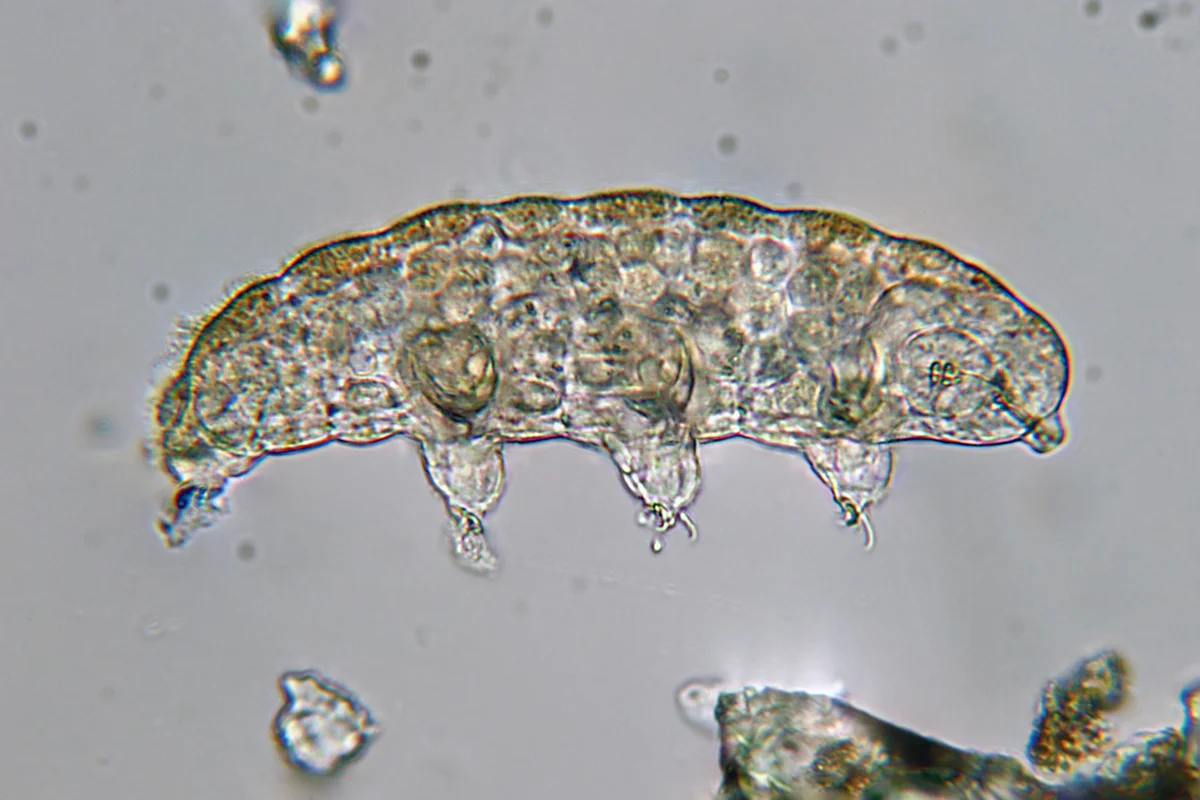
The biophysical basis of tardigrade desiccation tolerance was isolated by Dr. Thomas Boothby’s laboratory. They identified a novel family of Tardigrade Intrinsically Disordered Proteins (TDPs), notably cytosolic abundant heat-soluble proteins (CAHS).
In fully hydrated environments, CAHS proteins lack defined tertiary architectures, remaining flexible and unstructured within the cytoplasm.
However, as ambient water molecules evaporate, TDP concentrations cross a critical biophysical threshold, precipitating liquid-liquid phase separation (LLPS) into dense intracellular condensates.
Upon complete dehydration, these proteinaceous condensates vitrify into an amorphous, non-crystalline bioglass matrix. This biological glass immobilizes sensitive enzymes and cellular membranes in an inert spatial lattice, preventing protein unfolding and mechanical shearing.
The biophysical action of CAHS disordered proteins relies on spontaneous polymerization into dense macromolecular networks. As intracellular hydration diminishes, CAHS monomers self-assemble into extended cross-linked nanofilaments, transitioning the cytosol from a liquid sol into an elastic gel.
Continued dehydration forces this gel into an amorphous, non-crystalline vitrified solid. This bioglass encases native tertiary enzymes and phospholipid bilayers, physically shielding them from irreversible aggregation and mechanical deformation.
Crucially, the vitrification process is dynamically reversible: hydrating molecules rapidly dissociate the intermolecular hydrogen bonds binding CAHS polymers, returning the proteins to their flexible, monomeric conformations without cytotoxic debris.
CAHS disordered proteins vitrify into an amorphous glass matrix, locking cellular membranes and enzymes in place.
Damage suppressor protein coats nucleosomes, shielding DNA from lethal reactive hydroxyl free radicals.
Tardigrades withstand radiation dosages 1,000 times greater than the fatal threshold for human physiology.
Bioglass vitrification allows pharmaceutical vaccines and blood plasma to be stored at room temperature.
Dsup (Damage Suppressor): A Molecular Electrostatic Armor Against Radiation
Equally extraordinary is the tardigrade’s resistance to ionizing radiation: they endure gamma-ray and heavy-ion exposure exceeding 5,000 Gray (a dose of 5 Gray is universally fatal to humans).
Professor Takekazu Kunieda’s group at the University of Tokyo sequenced the genome of Ramazzottius varieornatus, isolating a unique nuclear protein designated Dsup (Damage suppressor).
Structural biology revealed that Dsup is a highly basic, positively charged protein that binds selectively along the negatively charged phosphodiester backbone of chromatin.
When ionizing radiation strikes water, it produces highly reactive hydroxyl free radicals (OH•) that induce double-strand DNA breaks. The Dsup protein physically blankets the nucleosome core, intercepting radicals before they fragment the chromosome.
Beyond the electrostatic shielding conferred by Dsup, tardigrades possess extensive suites of enzymatic antioxidant scavengers, including robust superoxide dismutase (SOD) and catalase pathways.
When ionizing radiation induces chromosomal cleavage, exceptionally efficient non-homologous end-joining (NHEJ) and homologous recombination DNA repair systems rapidly reassemble sheared chromosomal fragments with extraordinary fidelity.
«Tardigrades do not merely survive extreme desiccation; they fundamentally suspend biological time. By generating an amorphous biological glass matrix throughout the cytosol, their disordered proteins preserve complex macromolecules in pristine condition for decades.»
Thomas Boothby, Associate Professor of Molecular Biology, University of Wyoming
Medical Frontiers: Cold-Chain-Free Vaccines and Organ Cryopreservation
Harnessing the biophysical properties of TDPs and Dsup introduces transformative possibilities for human healthcare.
A major bottleneck in international pharmaceuticals is the cold chain: biotherapeutics, mRNA vaccines, and recombinant antibodies require constant cryogenic storage between -20°C and -80°C. Integrating recombinant CAHS proteins stabilizes dried blood plasma and vaccines at ambient room temperatures without loss of efficacy.
Furthermore, transfecting the Dsup gene into mammalian cell cultures reduces X-ray-induced chromosomal breakage by approximately 50 percent.
This paves the way for developing tissue-protective therapies for patients undergoing ionizing oncology radiotherapy and formulating radioprotective countermeasures for astronauts on deep space interplanetary voyages.
Translating tardigrade cryptobiosis into medical science holds profound implications for organ transplantation, where donor ischemic cold-storage windows are currently constrained to a few hours.
Implementing TDP-mediated vitrification protocols could enable organ banking at ambient temperatures without intracellular ice crystallization, resolving organ donor logistics worldwide.
- Anhydrobiosis permits tardigrades to lose 99% of cellular water without membrane rupturing.
- TDP proteins are intrinsically disordered and polymerize into glass only when water content drops.
- Dsup expression in human cell lines suppresses radiation-induced chromosome breaks by nearly half.
- Desiccated tardigrades survived direct solar exposure and deep vacuum aboard ESA’s FOTON-M3 satellite.
Synthetic Biology and Climate-Resilient Agriculture
In the face of intensifying global droughts, tardigrade vitrification pathways are being adapted for agricultural bioengineering.
Expressing TDP genes in model crops such as rice has generated transgenic varieties capable of surviving prolonged moisture deprivation and resuming vigorous photosynthetic activity upon rehydration.
By deciphering how extremophiles engineer cellular glass, synthetic biologists are actively expanding the operational limits of biological resilience. Also read our related investigative feature on biomedical investigations into cellular traumatology and soft-tissue pathologies.
To discover how tardigrades endure open space vacuum, what happened to thousands of cryptobiotic specimens after the Beresheet lunar crash, and how Dsup shields human astronauts, read our companion investigation on how tardigrades survive the harsh vacuum of deep space and lunar impacts.