


In the critical management of acute ischemic stroke, myocardial infarction, and deep vein thrombosis, therapeutic success is measured not in hours, but in the survival of precious brain and heart cells: that is why a pioneering breakthrough by bioengineers at ETH Zurich (ETH Zürich) heralds a transformative dawn in endovascular medicine. Innovative microrobots to dissolve blood clots utilize external rotating magnetic fields to somersault (tumble) along blood vessel walls directly against turbulent arterial currents. By driving thrombolytic drugs into the core of vascular occlusions, these microscopic devices dissolve blood clots ten times faster than medication alone, offering a life-saving lifeline against catastrophic cardiovascular blockages.
The Crisis of Conventional Thrombolysis: Why Medication Stalls Before the Clot
Arterial and venous thromboses represent the primary global causes of mortality and long-term adult disability. When an acute ischemic stroke or coronary occlusion strikes, a dense meshwork of fibrin fibers, platelets, and trapped red blood cells forms an impermeable plug, halting vital blood flow and depriving tissues of oxygen and glucose. In emergency vascular medicine, the foundational mantra remains ‘time is tissue’—during an ischemic stroke, roughly two million neurons perish every sixty seconds of untreated vascular occlusion.
The current standard of clinical care relies upon intravenous administration of potent thrombolytic enzymes, notably recombinant tissue plasminogen activator (tPA). However, systemic pharmacology confronts a daunting fluid dynamic obstacle. When a blood vessel is completely blocked, forward hemodynamics stall, forming a stagnant dead-end zone immediately upstream of the occlusion. Enzyme molecules can penetrate the compact fibrin mesh only via sluggish, passive molecular diffusion. Earlier, we examined how cutting-edge robotic and bioengineering advancements are continually revolutionizing critical human industries.
To accelerate clot dissolution, clinicians frequently administer elevated systemic drug dosages, which carries a perilous risk of catastrophic off-target hemorrhages and fatal intracranial bleeding. Resolving this perilous trade-off between therapeutic efficacy and hemorrhagic toxicity inspired the bioengineering team at ETH Zurich to develop an active, micro-robotic delivery platform.
The Tumbling Motion: How Microrobots Navigate Upstream Arterial Currents
Under the leadership of Professor Simone Schürle (Simone Schürle-Finke), the Responsive Biomedical Systems Lab engineered a novel class of magnetically steered micro-actuators. Each microrobot features an oblong, eccentric geometry measuring merely 30 to 50 micrometers in length. They are composed of a biocompatible, biodegradable hydrogel polymer matrix embedded with superparamagnetic iron oxide nanoparticles (Fe₃O₄).
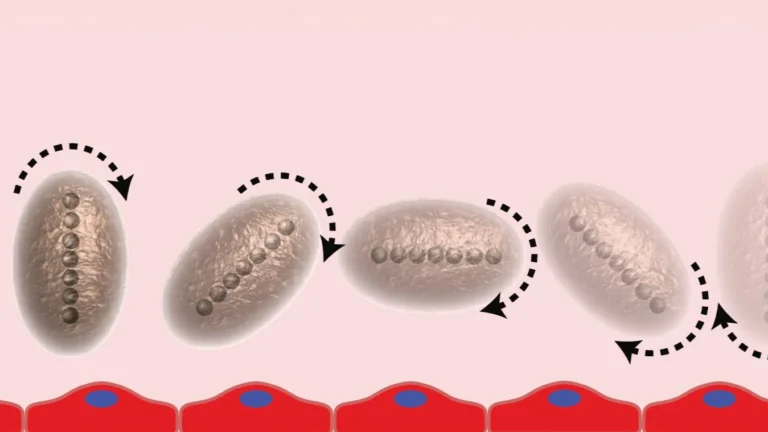
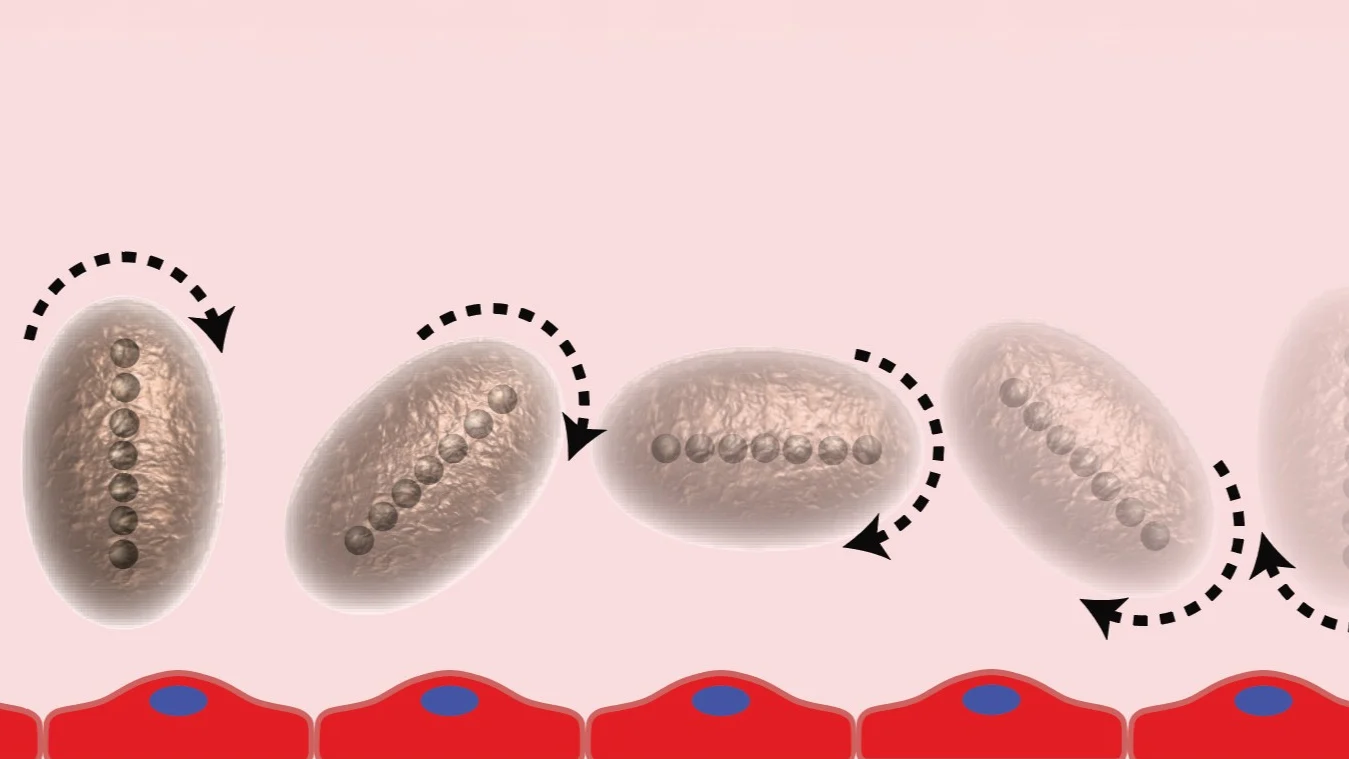
The core engineering breakthrough lies in their biomimetic locomotion mechanism. Rather than attempting to swim against the high-velocity torrent in the vessel’s lumen where arterial flow would sweep them away, the microrobots gravitate toward the vessel wall. In this near-wall fluid boundary layer, viscous hemodynamic drag drops flow velocities nearly to zero. When exposed to an external, rotating low-frequency magnetic field generated by electromagnetic coils positioned above the patient, the robots perform continuous tumbling (somersaulting) rotations along the endothelial surface.
This cartwheeling surface locomotion enables the microrobots to crawl reliably along vessel walls against strong pulsatile arterial pressures without causing endothelial trauma. In benchtop testing, the robots effortlessly navigated complex vascular bifurcations and tortuous vessel geometries, homing in on target occlusions with millimeter precision.
The fluid dynamics governing near-wall microrobotic navigation leverage the non-Newtonian rheology of whole blood. In the vessel lumen, high shear rates and concentrated erythrocytes generate prohibitive drag. However, via the Fahraeus–Lindqvist effect, a cell-free marginal plasma layer forms along the endothelial boundary. Within this microscale zone, hydrodynamic resistance drops substantially. Synchronizing the magnetic dipole of the eccentric microbots with an external rotating field creates stable rolling contact, allowing the fleet to somersault steadily upstream without inflicting mechanical shear on the endothelial lining.
«Our mission is to conquer the fatal bottleneck of modern pharmacological thrombolysis: empowering life-saving therapeutics to cross those final, critical millimeters into the dense core of a blood clot.»
Professor of Biomedical Engineering Simone Schürle (Simone Schürle-Finke), Head of the Responsive Biomedical Systems Lab at ETH Zurich
Hydrodynamic Microvortices: Why Clots Dissolve 10 Times Faster
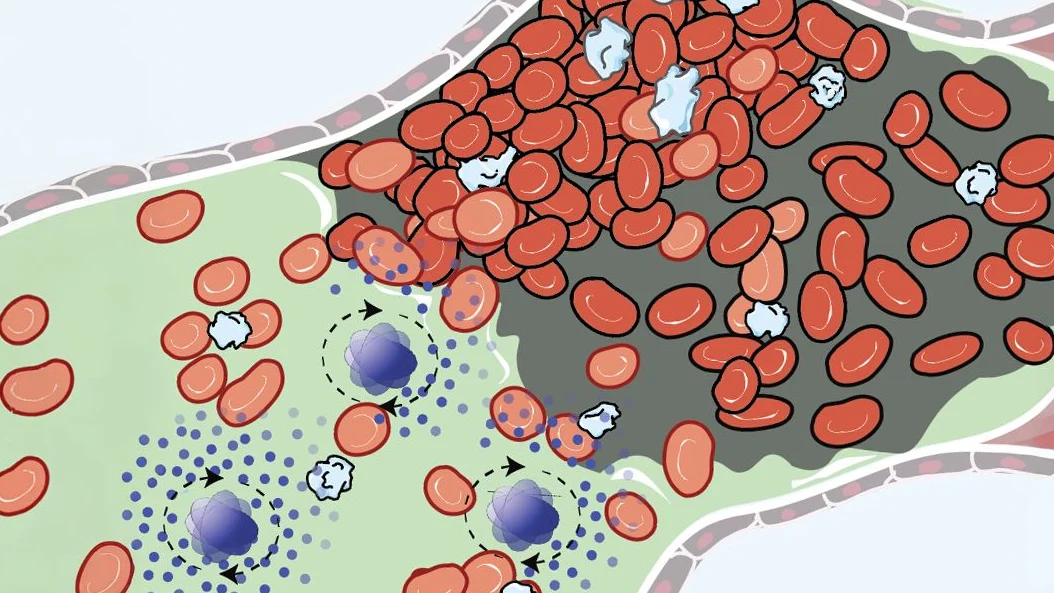
Upon reaching the face of the thrombus, the microrobots execute their most vital therapeutic function. Rotating at frequencies of several tens of hertz under external magnetic orchestration, the particles generate intense, localized microvortices in the adjacent blood plasma.
These localized hydrodynamic eddies function as microscopic convective pumps. They actively entrain dissolved tPA molecules from the surrounding bloodstream and drive them deep into the microscopic pores of the fibrin network. Rather than waiting hours for passive diffusion, the clot-busting enzymes saturate the clot’s structural interior in a matter of seconds.
In vitro trials conducted in microfluidic silicone models of blood vessels occluded with porcine whole-blood clots demonstrated unprecedented efficacy: the combination of tumbling microrobots and tPA dissolved vascular blockages ten times faster than medication alone, restoring open vessel patency in a fraction of standard therapeutic times.
Molecular fibrinolysis hinges upon the enzymatic cleavage of fibrin polymers by plasmin, activated locally by tPA. In stationary occlusions, the tightly cross-linked fibrin matrix acts as a steric shield, restricting drug ingress to glacial diffusive timescales. The localized microvortices generated by the microbots spinning at 20–40 Hz disrupt the stagnant fluid boundary layer, generating dynamic pressure gradients that drive convective mass transport directly through the dense core of the clot.
Rotating microrobots generate microvortices that actively pump tPA enzymes deep into the fibrin clot network.
Rolling locomotion along the endothelial boundary layer allows robots to crawl upstream against arterial flow.
Hydrogel and iron oxide nanoparticles naturally degrade within weeks, safely metabolized without systemic toxicity.
Preclinical trials in swine renal arteries restored rapid perfusion across previously blocked microvascular beds.
Preclinical Success In Vivo: Reperfusion in Porcine Kidney Models
To validate clinical translatability, the ETH Zurich team advanced to in vivo animal trials using live swine, whose vascular anatomy, vessel calibers, and hemodynamic parameters closely mirror human physiology. The researchers induced acute renal artery thromboses, halting blood perfusion across target kidney lobes.
Following co-administration of the microrobots and standard thrombolytic therapy under external magnetic guidance, the team observed rapid, widespread reperfusion across previously ischemic kidney tissue—significantly outperforming control cohorts treated with medication alone. Angiographic and thermal imaging confirmed prompt restoration of microvascular flow without causing downstream secondary embolisms.
Moreover, the superparamagnetic iron oxide core makes the microrobots naturally radiopaque and visible under standard clinical fluoroscopy and magnetic resonance imaging (MRI), allowing interventional radiologists to steer and monitor the micro-fleet in real time.
- Overcoming hydrodynamic barriers: convective drug pumping directly defeats stagnant fluid resistance.
- Atraumatic surface locomotion: rolling along vessel walls avoids mechanical abrasion of delicate endothelial linings.
- Clinical infrastructure alignment: guided by non-invasive electromagnets with real-time fluoroscopic imaging.
- Scalable microfluidic manufacturing: droplet microfluidics enables rapid, high-throughput commercial production.
Biodegradability, Safety, and the Road to Human Trials
A paramount consideration for any endovascular nanodevice is its post-therapeutic clearance. Exhaustive biocompatibility studies in murine models confirmed that both the hydrogel sheath and the iron oxide nanoparticles are completely biodegradable.
Over several weeks, the polymer matrix safely hydrolyzes into non-toxic oligomers excreted via the renal system, while the iron nanoparticles are gradually degraded by reticuloendothelial macrophages and integrated into normal human ferritin and hemoglobin metabolism. Professor Schürle has filed a patent for a high-throughput droplet microfluidics manufacturing process that enables scalable, cost-effective fabrication of millions of uniform microrobots per batch.
The team is currently finalizing extended chronic safety investigations in large animals, paving the way toward Phase I human clinical trials for patients suffering acute stroke and arterial thrombosis. This paradigm shift in endovascular microrobotics promises to redefine targeted medicine, delivering mechanical precision where pharmacology alone falls short.
Beyond acute cerebral and coronary interventions, endovascular microrobotics promises wide-ranging applications in vascular surgery. Clinicians foresee transformative utility in treating massive pulmonary embolism (PE), deep vein thrombosis (DVT), and critical limb ischemia in diabetic patients suffering severe peripheral artery disease, where microvascular calibers preclude conventional mechanical catheter thrombectomy. This minimally invasive paradigm bridges the gap between precision nanotechnology and clinical emergency care.