

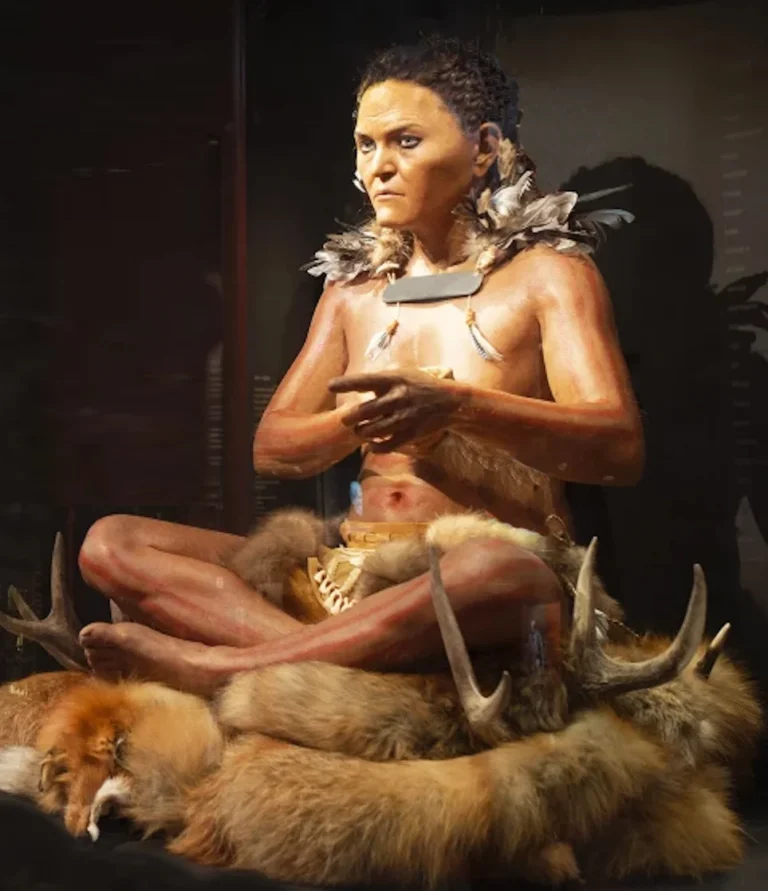

When historians and anthropologists reflect upon the decisive turning points in human evolution, few transitions rival the monumental scale of the Neolithic Revolution — humanity’s shift from nomadic foraging to settled agricultural civilization: precisely this epochal metamorphosis was experienced firsthand by rodhals man (Rødhals Man), whose exceptionally preserved skeleton was unearthed on the Danish island of Sejerø. A groundbreaking transdisciplinary study combining whole-genome ancient DNA sequencing and incremental tooth dentine isotope analysis has revealed that this indigenous Western European hunter-gatherer witnessed the arrival of the region’s first farmers, successfully integrating agricultural bread and domesticated livestock into his diet while keeping his ancestral traditions intact.
The Sejerø Discovery: How Rødhals Man Waited Decades in Museum Vaults
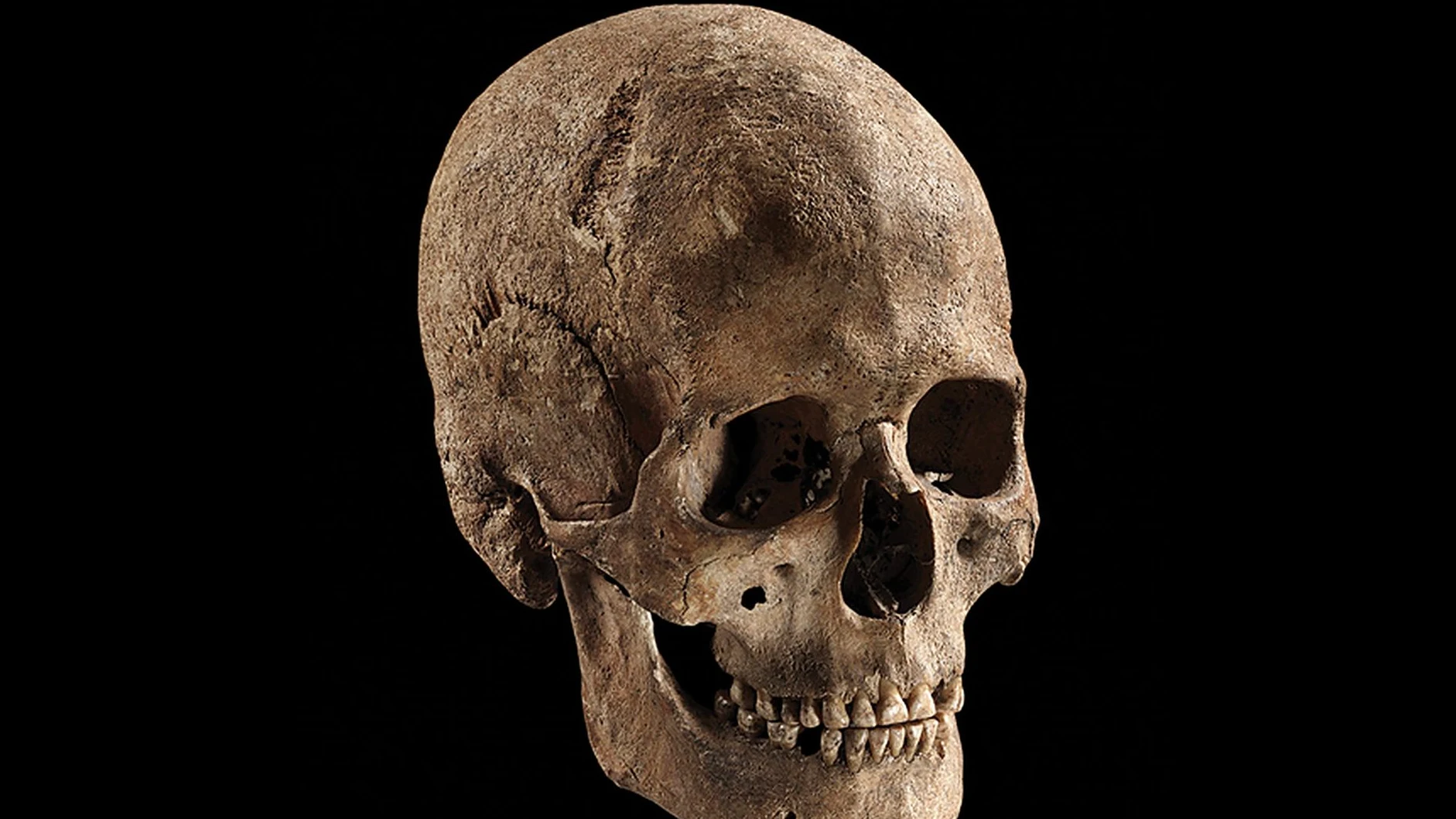
The saga of this archaeological revelation began in October 1956 on Sejerø, a windswept island in the Kattegat strait off the northwestern coast of Zealand, Denmark. Local islanders digging into a coastal ridge struck a dense deposit of compacted oyster and cockle shells — a prehistoric shell midden (køkkenmødding, or kitchen heap) left behind by hunter-gatherers of the Ertebølle culture. Beneath two meters of shellfish debris lay a fully articulated human skeleton, carefully laid to rest on its back.
Transferred to the National Museum of Denmark (Nationalmuseet) in Copenhagen, physical anthropologists led by Pia Bennike (Pia Bennike) documented that the remains belonged to a robust adult male aged roughly 35 to 45 years at death. For decades, he was classified as a classic Mesolithic marine forager. Previously, we examined how ancient Paleolithic hunting weapons revealed the profound adaptive intelligence of early hominins across prehistoric landscapes.
However, modern accelerator mass spectrometry (AMS) radiocarbon dating — rigorously calibrated for marine reservoir effects — yielded an electrifying date: Rødhals Man died around 3,900 BCE. This narrow chronological window represents the exact tipping point when migrant farmers of the Funnelbeaker culture (TRB) first introduced pottery, cattle, and cereal agriculture to southern Scandinavia.
Genomic Blueprint of the Mesolithic: Who Was Rødhals Man?
To determine his ancestral origins, an international genetic consortium led by archaeologist Anders Fischer (Anders Fischer) and radiocarbon specialist John Meadows (John Meadows) extracted ancient DNA from the petrous temporal bone. The sequencing results were definitive: Rødhals Man possessed 100% Western European Hunter-Gatherer (WHG) ancestry.
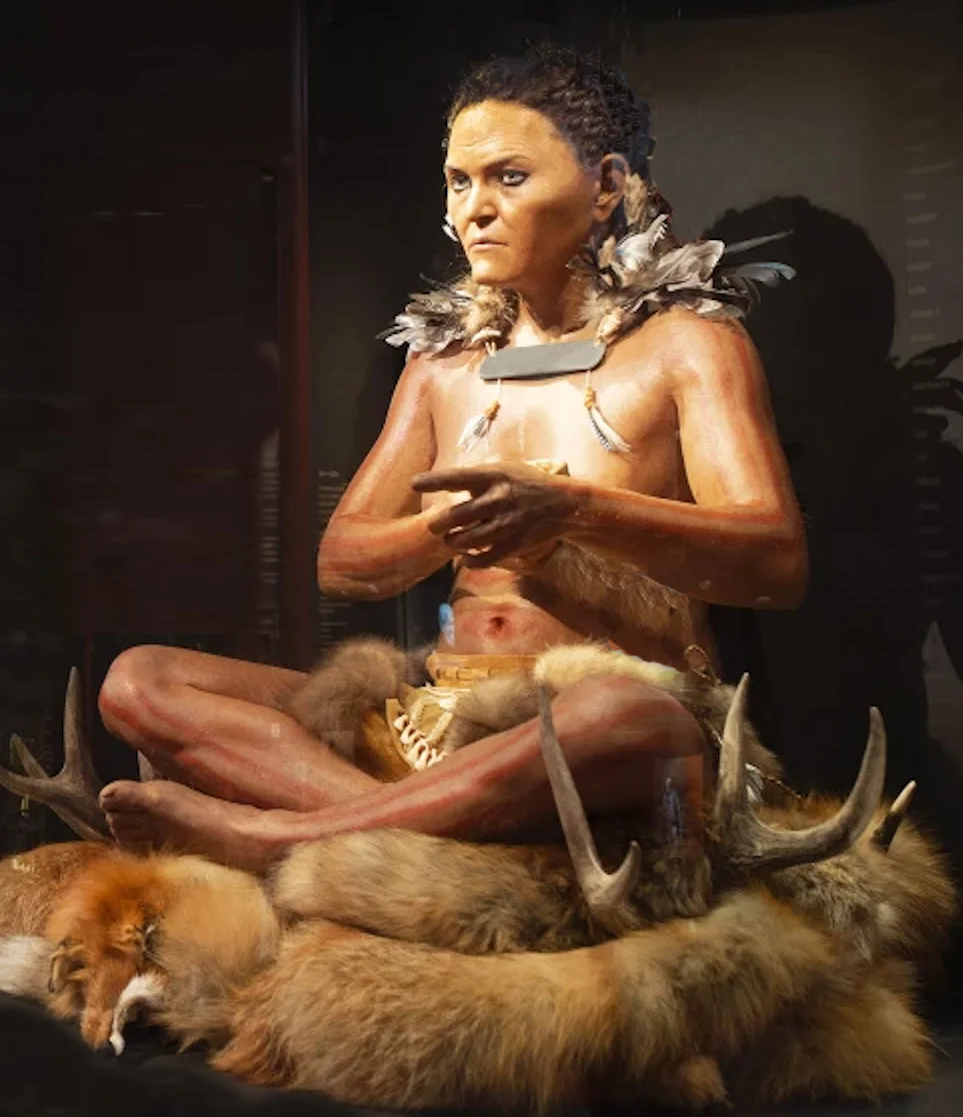
Phenotypic prediction markers showed that he had dark skin pigmentation, dark curly hair, and an over 85% probability of piercing blue eyes — a signature appearance shared by Mesolithic hunter-gatherers across Europe for millennia. Crucially, his genome lacked any detectable Anatolian farmer admixture, proving that incoming farming populations had not assimilated his lineage biologically.
This finding demolished the theory that Scandinavian agriculture arose through spontaneous local invention by foragers. Farming was brought by distinct migrants with different genes, languages, and material cultures. Yet a vital mystery remained: how did an indigenous hunter coexist with strangers clearing his ancient hunting forests for cultivated fields? For deeper context on how methods of ancient DNA sequencing unlock historical biographies, explore our investigative features.
«Rødhals Man literally stood at the doorstep of a new world. The micro-layers in his teeth preserve an astonishing personal record of an indigenous coastal forager choosing to embrace the technological fruits of incoming farmers.»
Anders Fischer (Anders Fischer), lead project archaeologist, National Museum of Denmark
Teeth as Tree Rings: Isotopic Evidence of a Dietary Transformation
The answer came through state-of-the-art micro-sampling of Rødhals Man’s tooth dentine. Human dentine develops in incremental micro-layers from the crown to the root tip during the first 20 to 25 years of life, acting like growth rings in a tree. Each layer permanently seals the isotopic ratios of the nutrients metabolized during that specific life phase.
Researchers analyzed carbon (δ¹³C) and nitrogen (δ¹⁵N) isotopes across twelve chronological sections of his tooth root. The results astonished bioarchaeologists: throughout his childhood and teenage years (up to age 18), his isotopic values reflected an exclusively high-trophic marine diet. The young forager subsisted on seals, porpoises, cod, flounder, and shellfish harvested from the Sejerø coast.
Yet between ages 20 and 25, the isotope curve undergoes a sudden, dramatic deflection: δ¹³C values plummet toward terrestrial C3 vegetation, and δ¹⁵N drops to indicate significant consumption of domestic grains and terrestrial livestock. Upon reaching adulthood, Rødhals Man broke with ancestral custom, making farmed cereal flatbreads and beef a central pillar of his daily sustenance.
Whole-genome sequencing revealed 100% Western Hunter-Gatherer lineage with dark skin, dark hair, and blue eyes.
Radiocarbon dating places his death around 3,900 BCE, coinciding exactly with the arrival of the first Neolithic farmers.
Micro-dentine isotopes prove a lifelong shift from seal and fish in youth to cultivated cereals and livestock in maturity.
Uninjured bones and an ancestral midden burial demonstrate peaceful barter and mutual benefit rather than conflict.
Peaceful Symbiosis Over Conflict: Rewriting the Neolithic Paradigm
For generations, archaeological textbooks framed the Neolithic transition as a story of violent displacement or near-instant annihilation: incoming farmers wielding polished flint axes were thought to have eradicated indigenous hunter-gatherers or driven them into marginal wastelands. Rødhals Man tells a profoundly different story of pragmatic coexistence and intercultural trade.
Sejerø is a compact island where two hostile groups could never have shared territory in violent deadlock for decades. Yet Rødhals Man shows zero signs of interpersonal trauma: no parry fractures, arrow wounds, or cranial impacts. He lived into mature adulthood and was buried with reverence by his peers inside the ancestral shell midden according to traditional forager customs.
This proves he retained his social and spiritual identity while fostering trade partnerships with neighboring agriculturalists. He traded surplus dried fish, seal blubber, pelts, and high-quality coastal flint nodules for nutritious cultivated grain, flour, and dairy products. This stands as the earliest scientifically verified record of peaceful intercultural economic integration in Northern Europe.
The peer-reviewed paper in Antiquity (Fischer et al., 2026) fundamentally shifts archaeological consensus, demonstrating that human pragmatism and mutual economic advantage frequently triumphed over xenophobia even 6,000 years ago.
- Definitive refutation of the hypothesis of violent total eradication of northern European foragers.
- First direct biochemical documentation of a lifelong dietary revolution within an individual human biography.
- Preservation of indigenous Mesolithic identity alongside active economic adoption of agricultural staples.
- A singular prehistoric human bridge linking two foundational chapters in the story of human civilization.
Civilizational Lessons from the Agricultural Threshold
The Agricultural Revolution transformed the biology, sociology, and destiny of Homo sapiens. While delivering food surpluses that fueled demographic booms and gave rise to cities, writing, and statecraft, it also introduced infectious zoonotic diseases, spinal wear, tooth decay from starch, and institutionalized inequality.
Rødhals Man offers an intimate portrait of an indigenous society encountering that monumental crossroads. He walked the untamed shores of a wilderness free of fences and property deeds, yet exhibited the pragmatic wisdom to embrace agricultural technology to enrich his life.
Today, as modern humanity navigates its own tectonic threshold — driven by artificial intelligence and bioengineering — Rødhals Man stands as an inspiring reminder: civilizational change does not require bloodshed or the destruction of one’s roots. Curiosity, adaptability, and peaceful cooperation remain humanity’s greatest survival tools across the ages.