

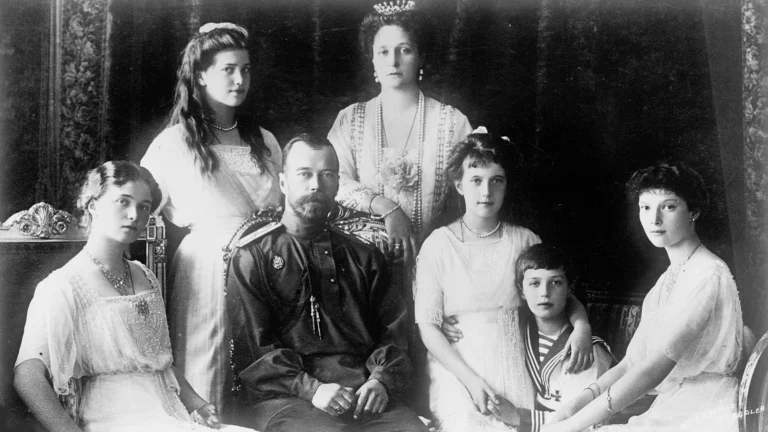

In the dead of night on July 17, 1918, gunfire shattered the basement of the Ipatiev House in Yekaterinburg, abruptly ending the three-century reign of the Romanov dynasty and igniting one of the most enduring mysteries of the twentieth century. For more than seven decades, the fate of the imperial children was obscured by Soviet state secrecy, political propaganda, and hundreds of pretenders claiming to be Anastasia or Alexei. Only groundbreaking Romanov DNA forensics, anchored by crucial reference samples from the British royal family, enabled molecular geneticists to finally solve this historic criminal cold case.
The Bloody Night in Yekaterinburg and the Hidden Graves in Pig’s Meadow
Following his abdication in March 1917 amidst the turmoil of the Russian Revolution, Tsar Nicholas II, his wife Tsarina Alexandra Feodorovna, and their five children—Olga, Tatiana, Maria, Anastasia, and Tsarevich Alexei—were placed under house arrest. Initial diplomatic discussions to secure asylum for the royal family in Great Britain failed due to domestic political sensitivities. By mid-1918, the Bolshevik government had transferred the family, alongside four loyal retainers (physician Dr. Eugene Botkin, chambermaid Anna Demidova, footman Alexei Trupp, and cook Ivan Kharitonov), to the remote Ural city of Yekaterinburg.
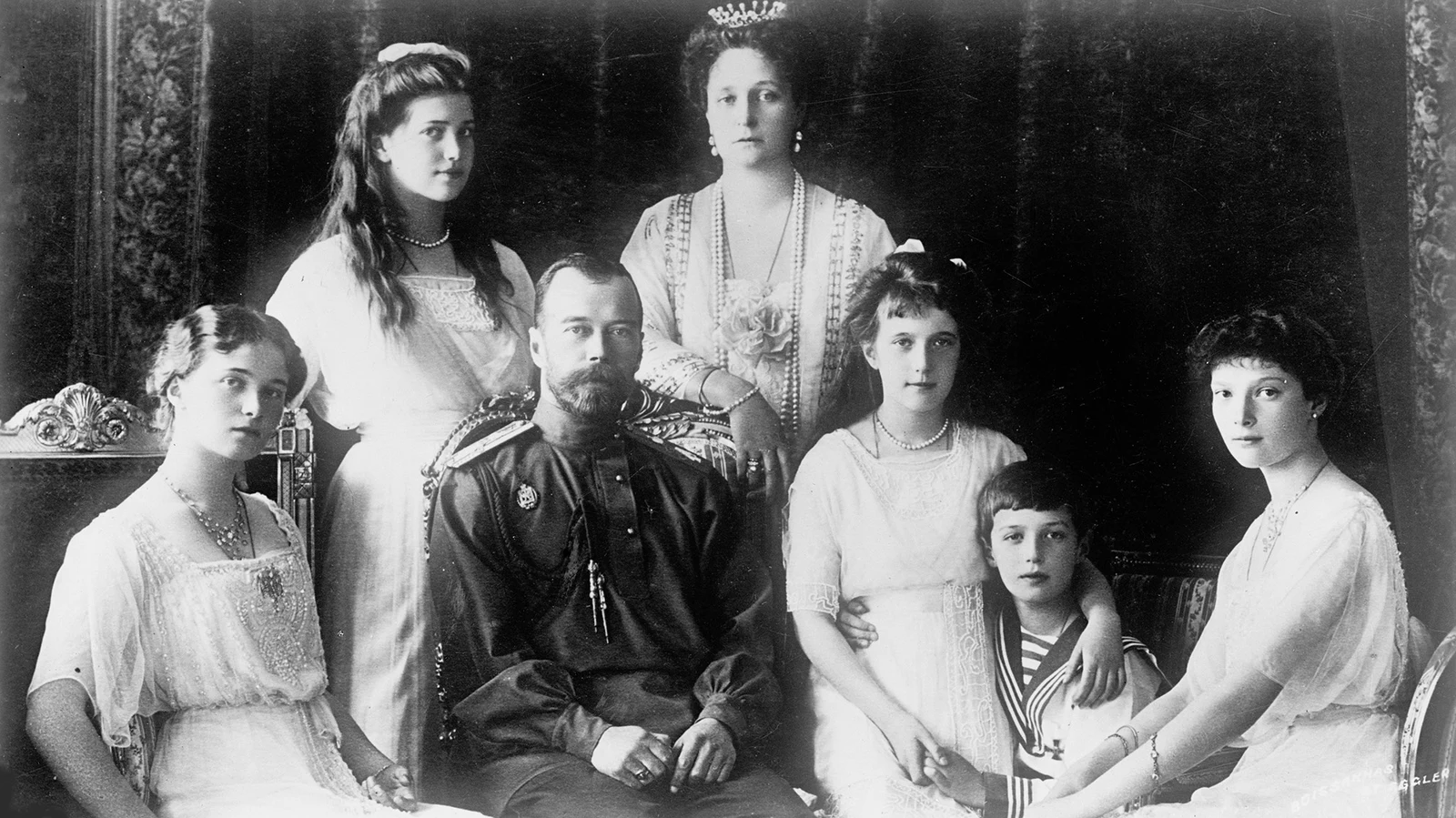
As anti-Bolshevik White Army forces converged on the city, local Bolshevik commanders received orders to execute the entire party. In the early morning hours, the captives were assembled in a basement room and executed by a firing squad. In an effort to conceal the massacre, the executioners transported the bodies into the Koptyaki forest at Porosenkov Log (Pig’s Meadow), disfigured them with sulfuric acid, attempted incineration, and concealed the remains under wooden railroad ties along an abandoned dirt track. For decades, Soviet authorities acknowledged only the execution of the Tsar, deliberately concealing the murder of the Tsarina and children, which catalyzed sensational global folklore regarding surviving royalty.
In the late 1970s, amateur geologist Alexander Avdonin and filmmaker Geli Ryabov located the clandestine burial site using the confidential field report of execution commander Yakov Yurovsky. However, fear of Soviet persecution delayed public revelation until July 1991, following the collapse of the USSR, when official investigators exhumed nine skeletons from the shallow grave. We have previously detailed how modern archaeological science reconstructs enigmatic historical events, but in Yekaterinburg, forensic molecular biology faced an unprecedented challenge: establishing the identity of weathered skeletal remains to an unquestionable legal and scientific standard.
The British Royal Connection: How Prince Philip’s Blood Authenticated the Romanov DNA
Initial osteological and facial reconstruction analyses revealed nine individuals: three adult males, four adult females, and three young adult females. Two family members were conspicuously absent: Tsarevich Alexei and one of the younger grand duchesses (Maria or Anastasia). To authenticate whether the remains truly belonged to the Romanov imperial family, Russian chief medical examiner contacted the United Kingdom’s Home Office Forensic Science Service in Aldermaston, enlisting prominent geneticists Peter Gill and Erika Hagelberg, alongside Russian forensic scientist Pavel Ivanov.
The investigative team turned to mitochondrial DNA (mtDNA). Unlike nuclear DNA, which is inherited equally from both biological parents and undergoes meiotic recombination every generation, mtDNA is transmitted exclusively down the maternal line from mother to offspring. Furthermore, while nuclear DNA degrades rapidly under damp environmental conditions, each mammalian cell contains thousands of copies of mitochondrial genomes, making mtDNA an exceptionally resilient marker for historical skeletal remains that have endured decades in acidic soil.
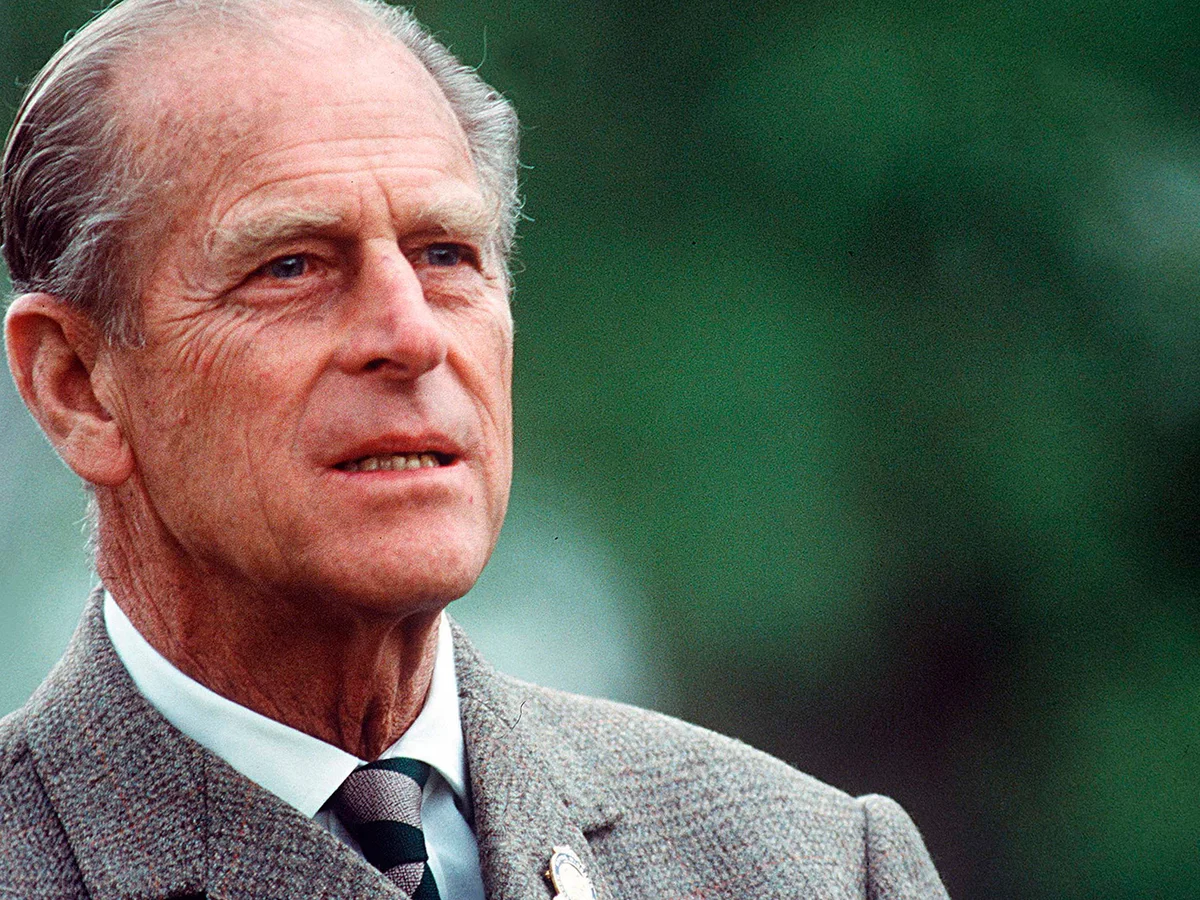
The interconnected royal genealogy of European monarchies provided the vital analytical linchpin. Tsarina Alexandra (formerly Princess Alix of Hesse) was a granddaughter of Queen Victoria. Prince Philip, Duke of Edinburgh—the consort of Queen Elizabeth II—shared an unbroken maternal lineage with Queen Victoria as the grandson of Alexandra’s elder sister, Princess Victoria of Hesse and by Rhine. Prince Philip graciously donated a blood reference sample. When Gill and Hagelberg sequenced the hypervariable regions (HVI and HVII), Prince Philip’s mtDNA sequence yielded an undeniable, 100% exact nucleotide match to the adult female and three young females exhumed from the grave, conclusively authenticating Tsarina Alexandra and her daughters.
«The identification of the identical point heteroplasmy in Nicholas II and his brother George remains one of the crowning triumphs of forensic molecular biology. The genetic data is unequivocal.»
Turi King, Professor of Genetics, Director of the Centre for Evolution at the University of Bath
The Heteroplasmy Enigma of Nicholas II: How a Scientific Puzzle Silenced Doubters
Confirming the identity of Tsar Nicholas II proved far more complex and intellectually demanding. To establish the Tsar’s maternal lineage, researchers sequenced mtDNA from living descendants of Louise of Hesse-Kassel, Queen of Denmark: the Duke of Fife and Princess Xenia Cheremeteff-Sfiri.
When Gill and Ivanov compared the sequence of Skeleton No. 4 (the presumptive Tsar) against these living relatives, they observed a match across all positions except for one startling discrepancy: position 16169. While the living relatives exhibited thymine (T), the Tsar’s skeletal sample exhibited both cytosine (C) and thymine (T) simultaneously. This rare genetic anomaly is known as point heteroplasmy—the coexistence of two distinct mitochondrial lineages within an individual’s cells. Skeptics and ecclesiastical officials immediately cited this single mismatch as evidence that the remains were not royal.
The controversy prompted the 1996 exhumation of Tsar Nicholas II’s younger brother, Grand Duke George Alexandrovich, who died of tuberculosis in 1899 and was entombed in the Peter and Paul Fortress in St. Petersburg. Forensic sequencing of George’s skeletal DNA yielded a staggering result: he possessed the exact same C/T point heteroplasmy at position 16169 with an identical ratio of nucleotide peaks. What had initially seemed a discrepancy became the single most definitive forensic confirmation imaginable: the statistical odds of an unrelated individual possessing this identical, exceedingly rare heteroplasmy were calculated at less than one in one hundred million.
Prince Philip’s blood sample provided an unbroken maternal match, confirming the identities of Tsarina Alexandra and her daughters.
The C/T dual-base anomaly at position 16169, shared by Nicholas II and Grand Duke George, provided astronomical statistical proof.
Charred bone fragments discovered 70 meters away conclusively accounted for Tsarevich Alexei and Grand Duchess Maria.
Direct STR comparison with authentic blood from the Tsar’s preserved uniform in the Hermitage achieved absolute scientific certainty.
The 2007 Discovery of Alexei and Maria: Conclusive Closure Through Modern STR Forensics
Although the remains of Tsar Nicholas II, Tsarina Alexandra, and three daughters were reinterred in St. Petersburg in 1998, the case could not be formally closed while two children remained unaccounted for, leaving fertile ground for conspiracy theories.
A definitive resolution arrived in July 2007. Guided by meticulous readings of Yurovsky’s archival records, a team of amateur archaeologists excavated a small site situated just 70 meters south of the primary grave. Underneath shallow soil, they uncovered charred campfire remnants, shattered Japanese ceramic sulfuric acid containers, bullets, and 44 small bone fragments weighing a mere 70 grams.
International validation was spearheaded by the U.S. Armed Forces DNA Identification Laboratory (AFDIL) led by Michael Coble, alongside the Institute of Legal Medicine at Innsbruck Medical University. Utilizing multiplexed nuclear short tandem repeat (STR) typing, Y-chromosome STRs, and ultra-deep mtDNA sequencing, the forensic teams established that the charred fragments belonged indisputably to Tsarevich Alexei and Grand Duchess Maria. In 2008, scientists cross-referenced these genomic profiles with dried blood retrieved from a shirt Nicholas II wore during an 1891 assassination attempt in Otsu, Japan, confirming a 100% STR match. Modern molecular genetics ultimately dismantled every lingering royal myth, illuminating historical truth.
- Enduring power of mtDNA: maternal transmission allows precise identification across generational divides spanning over a century.
- Resolving anomalous mutations: the verification of identical heteroplasmy in Grand Duke George transformed skepticism into infallible proof.
- Multi-laboratory consensus: concordant independent testing across UK, US, Austrian, and Russian labs established irrefutable scientific consensus.
- Demystifying history: forensic molecular biology extinguished the romanticized survival myths of Anastasia and Alexei forever.