

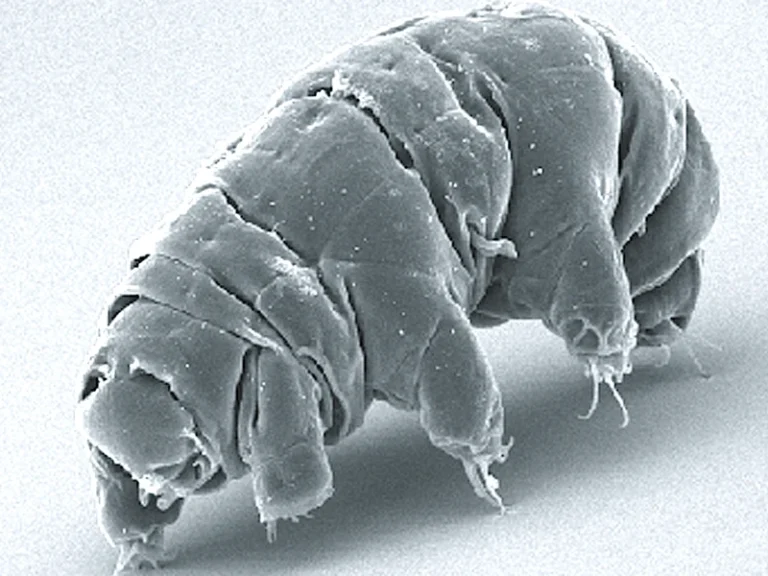

The astounding capacity of tardigrades to endure the freezing vacuum of space, searing solar ultraviolet radiation, and galactic cosmic rays has redefined astrobiology. Landmark orbital experiments and an accidental lunar crash landing have proven that these microscopic invertebrates can endure conditions once deemed fatal to all multicellular life, fueling theories of interplanetary panspermia and inspiring radiant shields for astronauts.
Project TARDIS in Orbit: 10 Days in the Vacuum of Outer Space
In September 2007, the European Space Agency (ESA) conducted an unprecedented astrobiological experiment aboard the unmanned FOTON-M3 satellite. Designated TARDIS (Tardigrades in Space), the mission aimed to determine whether complex multicellular animals could survive direct, unshielded exposure to space vacuum and solar radiation.
Thousands of desiccated specimens belonging to Richtersius coronifer and Milnesium tardigradum were loaded into the Biopan-6 exposure facility mounted on the satellite exterior. In low Earth orbit, the facility opened directly into the vacuum of space (pressure below 10⁻⁴ Pa), exposing the animals to wild thermal swings and solar ultraviolet radiation.
Upon retrieval and laboratory rehydration on Earth, more than 68 percent of tardigrades subjected to space vacuum revived successfully. The surviving specimens resumed normal locomotion, fed, and laid eggs that hatched into healthy offspring, making tardigrades the first multicellular animals proven to survive the open vacuum of space.
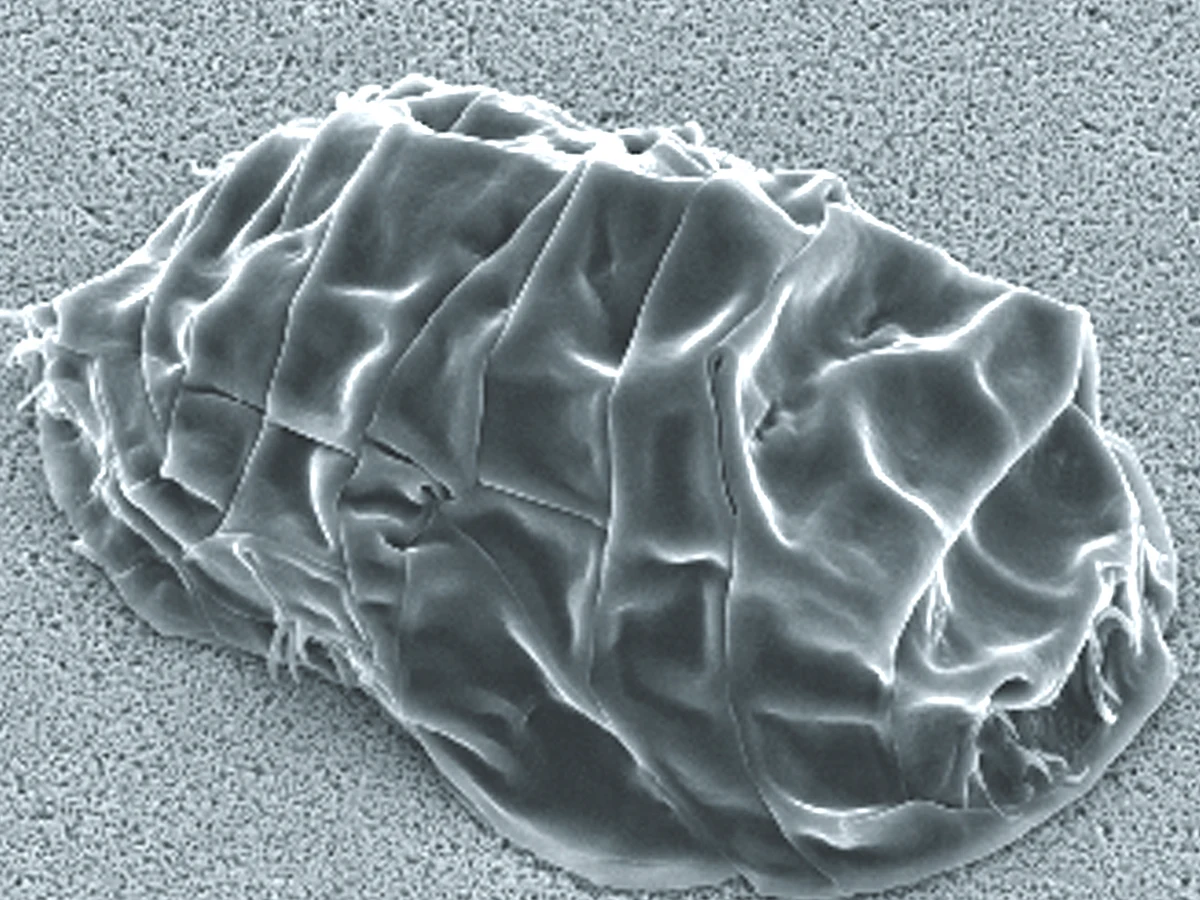
The Beresheet Lunar Incident: Are Tardigrades Asleep on the Moon?
In April 2019, tardigrades made international headlines when the Israeli robotic lunar lander Beresheet, developed by SpaceIL, crash-landed onto the Moon’s Sea of Serenity after a main engine malfunction during final descent.
Aboard the lander was the Arch Mission Foundation’s Lunar Library, a 30-million-page archive encased in nickel plates, accompanied by human DNA samples and thousands of cryptobiotic tardigrades sealed in epoxy resin. The impact occurred at approximately 500 kilometers per hour.
Subsequent ballistic hypervelocity experiments conducted at the University of Kent revealed that cryptobiotic tardigrades can withstand shock pressures up to 1.14 gigapascals and decelerations of 2,000 g. These findings strongly suggest that numerous tardigrades survived the crash intact and remain in dormant preservation on the lunar surface, awaiting future rehydration.
During the TARDIS project, tardigrades survived 10 days in the open vacuum of space and produced viable offspring on Earth.
Thousands of cryptobiotic tardigrades were deposited onto the lunar regolith after the crash of Israel’s Beresheet lander.
Damage suppressor protein physically wraps around chromosomal nucleosomes, deflecting ionizing radiation and free radicals.
Expressing tardigrade Dsup genes in human HEK 293 cells reduced ionizing radiation DNA damage by 40 to 50 percent.
Lithopanspermia: Can Life Travel Between Planets on Meteorites?
The empirical confirmation of tardigrade cosmic survival has revitalized the scientific credibility of lithopanspermia — the hypothesis that life can travel between planetary bodies inside ejected asteroid fragments and cometary debris.
Traditionally, astrobiologists believed that animal life could never survive the catastrophic trio of interplanetary transit: violent kinetic ejection from a home world, millions of years in cryogenic cosmic vacuum, and atmospheric entry incinerations.
Tardigrades have challenged each of these dogmas. Their ability to form desiccated tuns, suppress DNA damage with Dsup, and survive near absolute zero temperatures indicates that living organisms are vastly more resilient to interplanetary migration than previously assumed.
«Our space experiments demonstrated that multicellular organisms can survive direct exposure to the vacuum and ionizing radiation of space without artificial shielding. This provides tangible evidence for the viability of panspermia.»
Dr. K. Ingemar Jönsson, Principal Investigator of the TARDIS project, Kristianstad University
From Tardigrades to Astronauts: Genetic Armor for Deep Space Exploration
Cosmic ionizing radiation remains the most severe obstacle to human interplanetary exploration. Galactic cosmic rays consisting of high-energy HZE ions pierce spacecraft hulls, triggering massive double-strand chromosomal breaks in astronauts.
Tardigrade Damage suppressor (Dsup) protein provides a revolutionary blueprint for human radioprotection. When researchers engineered human cell cultures (HEK 293) to express Dsup, the cells demonstrated a 40 to 50 percent reduction in X-ray-induced DNA fragmentation.
Biomedical engineers are investigating Dsup-inspired therapeutic peptides and transient mRNA therapeutics to protect astronaut bone marrow and vascular endothelium during long-duration voyages to Mars.
- Tolerance to vacuum solar ultraviolet radiation up to 7,000 kJ/m².
- Cellular structural integrity preserved under high vacuum (10⁻⁴ Pa).
- Direct chromosomal shielding via the novel Damage suppressor (Dsup) protein.
- High-fidelity DNA double-strand break repair activated upon post-flight hydration.
Biophysical Foundation: How Cells Vitrify into Protective Glass
Underpinning the extraordinary cosmic endurance of tardigrades are their unique molecular vitrification mechanisms, driven by Tardigrade Disordered Proteins (TDPs) that convert fluid cytoplasm into an amorphous bio-glass.
To explore the fundamental molecular biophysics of cellular vitrification, TDP protein mechanics, and their groundbreaking applications in cold-chain-free vaccine stabilization and organ banking, read our companion investigation: our in-depth analysis of tardigrade TDP vitrification proteins and cellular cryptobiosis.