

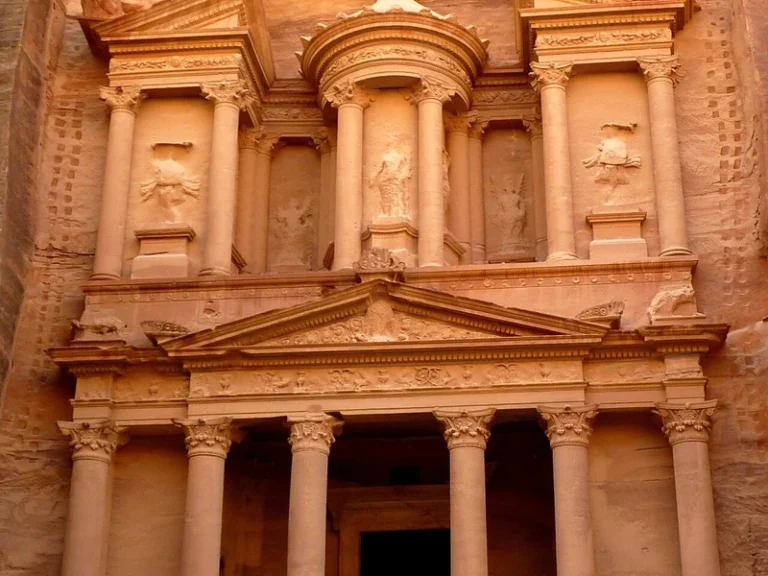

The discovery of a concealed tomb beneath Petra’s Treasury (Al-Khazneh) has illuminated the extraordinary engineering prowess of the Nabataean Kingdom: monumental rock-cut facades concealed a sophisticated network of flood diversion, seismic dampening, and multi-chambered subterranean crypts.
When an archaeological team led by Dr. Richard Bates and Dr. Pearce Paul Creasman uncovered the subterranean chamber at the base of Al-Khazneh, public fascination immediately gravitated toward the twelve intact skeletons and the chalice evoking Indiana Jones lore. Yet for structural engineers, hydrologists, and geologists, the truly astounding achievement was how the underground vault remained completely dry, structurally sound, and intact for over two millennia in an active tectonic rift valley.
The Petra Structural Paradox: Why Subterranean Chambers Never Collapsed
Unlike classical Roman or Hellenistic architecture erected bottom-up using fitted masonry, Nabataean builders employed top-down excavation into the Umm Ishrin sandstone formation. By carefully respecting natural bedding planes and internal tectonic stresses, stonemasons carved the lower tomb chambers precisely where surrounding cliff mass naturally redistributed compressive loads away from subterranean spans.
Advanced Hydraulics: Shielding Al-Khazneh from Flash Floods
The foremost threat to Petra’s monuments has always been flash flooding in the Siq gorge. During torrential desert downpours, rainwater channeled through the narrow canyon can reach velocities exceeding 5 meters per second, carrying crushing debris and gravel. Without specialized water diversion, any low-lying crypt would have been submerged under silt and destroyed in the 1st century AD.
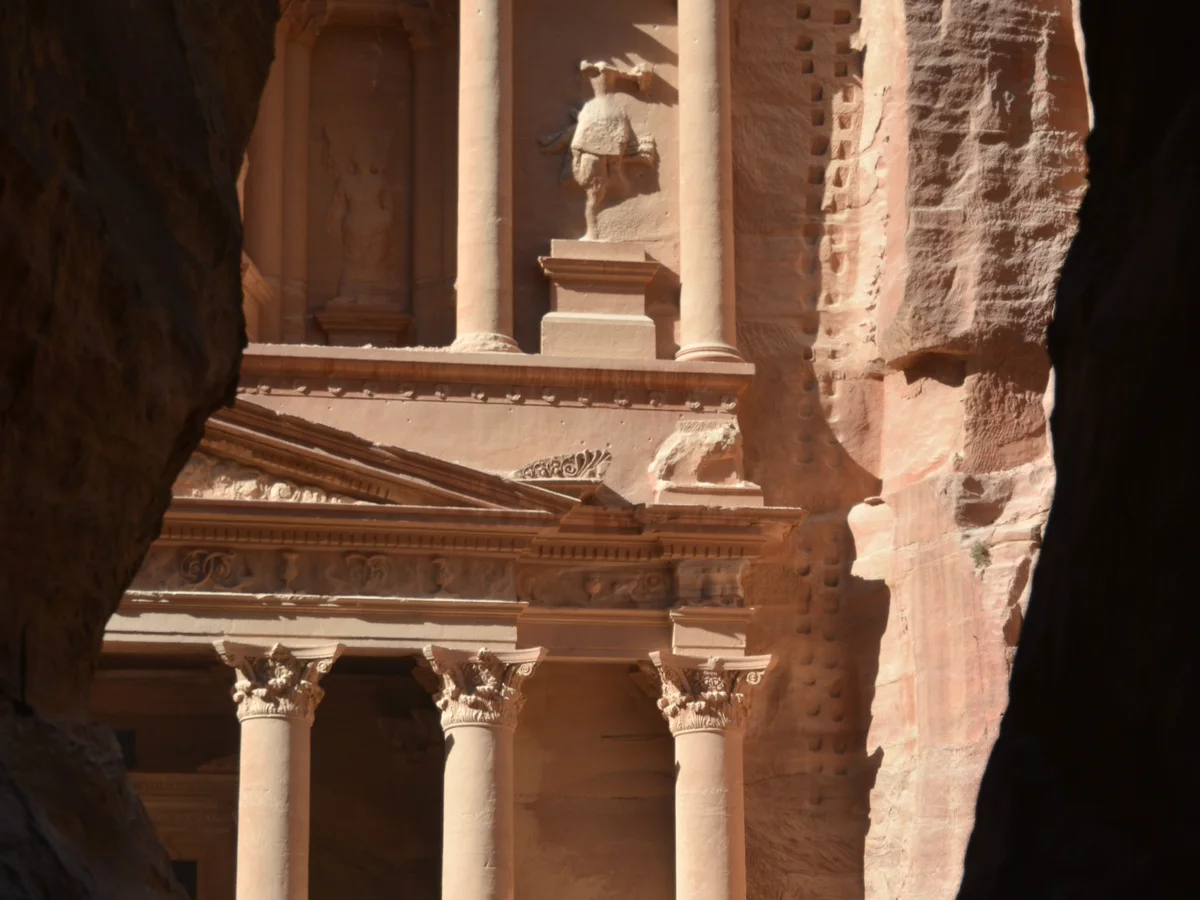
To preserve the Treasury and its concealed crypts, 1st-century engineers constructed an extensive hydraulic defensive ring:
- Al-Mudhlim Bypass Tunnel: an 88-meter tunnel hand-carved through bedrock that intercepted flash floods before entering the Siq and rerouted water north;
- Cascading Dams and Stilling Basins: a sequence of stone weirs engineered to dissipate hydraulic kinetic energy;
- Sealed Terracotta Aqueducts: water conduits embedded within canyon walls lined with hydraulic lime mortar, delivering potable water directly into the city center.
Ground-Penetrating Radar (GPR)
Advanced electromagnetic radar pulses pinpointed density anomalies beneath six meters of accumulated sediment and modern paving stones directly in front of Al-Khazneh.
Seismic Dampening
Petra survived the catastrophic 363 AD earthquake with minimal damage because monolithic rock-carved structures disperse shockwaves far more effectively than mortared blocks.
A Multi-Level Sacred Complex: Connecting Crypts with the Monumental Facade
For generations, scholars debated whether Al-Khazneh was a treasury, a temple of Isis, or a royal tomb for King Aretas IV Philopatris. The discovery of intact lower crypts validates the hypothesis of a layered royal funerary complex.
“The subterranean crypts beneath Al-Khazneh were not utilitarian cellars. They formed the sacred foundation of the monument, connecting royal terrestrial majesty with the underworld.”
Previously, we covered the breakthrough excavation details regarding the human remains and the grail-like vessel — read our full report on the secret tomb beneath Petra’s Treasury, the 12 skeletons, and the Holy Grail chalice.
Bioarchaeology and Next Investigations
Isotopic analysis of dental enamel and radiocarbon dating of skeletal remains are currently revealing the dietary patterns and geographic origins of those interred. Initial results indicate a nutrient-rich diet consistent with the highest tiers of Nabataean aristocracy during the pinnacle of the incense trade.
With LiDAR laser mapping continuing across the surrounding terrain, researchers anticipate further subterranean chambers remain sealed beneath adjacent bedrock throughout the valley.