

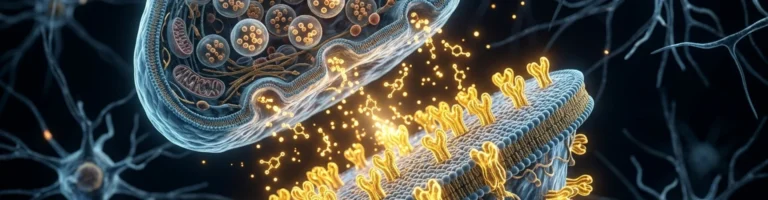

The dopamine trap has emerged as the defining neurobiological challenge of the twenty-first century: modern digital environments have effectively hijacked the brain’s ancestral reward circuitry, subverting evolutionary seeking drives into chronic procrastination and emotional numbness.
Every smartphone notification, algorithmic feed of short-form videos, unexpected social media like, or bite of hyper-palatable processed food triggers an immediate, finely calibrated biochemical surge in the subcortical architecture of the human brain. For decades, popular media has mistakenly branded dopamine as the “pleasure chemical” or the molecule of bliss. Groundbreaking discoveries in cellular and systems neuroscience have completely overturned this naive narrative. Dopamine is not the mediator of hedonic satisfaction; it is the neurochemical currency of anticipation, drive, exploratory vigor, and reward prediction error.
When biological reward pathways evolved across millions of years under conditions of scarce caloric resources and sparse sensory feedback meet an unceasing flood of friction-free digital superstimuli, a perilous dopamine trap takes hold. Rather than experiencing lasting fulfillment, individuals become ensnared in a compulsive cycle of foraging, where every subsequent interaction yields diminished satisfaction while demanding exponentially greater doses of neural stimulation.
Neurobiological Architecture: The Mesolimbic Pathway and Reward Prediction Error
To grasp why the dopamine trap is so insidious, one must dissect the anatomy of the brain’s reward machinery. At its core lies the mesolimbic dopamine pathway. The cell bodies of these specialized neurons reside primarily in the ventral tegmental area (VTA) of the midbrain. Their axons project extensively to the nucleus accumbens—a principal node in the ventral striatum governing motivation and reinforcement—as well as the amygdala and the medial prefrontal cortex.
The landmark paradigm shift in our understanding of this circuit came through the pioneering investigations of neurophysiologist Wolfram Schultz at the University of Cambridge. Schultz formulated the principle of Reward Prediction Error (RPE). Dopaminergic neurons do not fire when an animal consumes a predictable reward; rather, they fire in response to environmental cues that forecast the reward. If the actual outcome exceeds expectations, a robust phasic burst of dopamine ensues. If an expected reward fails to materialize, dopamine firing abruptly plummets beneath its baseline tonic rate.
Digital platforms and algorithmically curated feeds weaponize variable ratio schedules of reinforcement—the exact behavioural phenomenon pioneered by B. F. Skinner. Users never know which swipe will reveal an enthralling video, an outrage-inducing headline, or a validating interaction. This persistent uncertainty keeps phasic dopamine spikes firing at peak velocity, transforming voluntary engagement into compulsive, automated scrolling loops.
«Dopamine is not the molecule of celebration; it is the molecule of relentless pursuit. Its evolutionary purpose is to ensure an organism is never fully satisfied, constantly compelling it to scan the horizon for untapped resources.»
Wolfram Schultz, Professor of Neuroscience, University of Cambridge
Cellular Costs of Hyperstimulation: D2 Receptor Down-Regulation and Anhedonia
The mammalian central nervous system is governed by the unyielding imperatives of homeostatic equilibrium. When post-synaptic receptors in the striatum are continuously bombarded by unnaturally elevated concentrations of dopamine, cellular negative feedback mechanisms are activated. This triggers receptor down-regulation: the density of functional dopamine D2 and D3 receptors on the post-synaptic membrane declines sharply.
Receptor complexes are internalized via clathrin-coated pits and targeted for lysosomal degradation, while remaining surface proteins undergo phosphorylation-induced desensitization. Consequently, an individual’s tonic (baseline) dopamine tone sinks substantially below its normal physiological set point. Dr. Anna Lembke, Professor of Psychiatry at Stanford University, encapsulates this dynamic through the neurochemical model of the pleasure-pain balance.
With down-regulated D2 receptor availability, standard, slow-paced biological activities—reading a dense scientific treatise, working through a demanding intellectual project, or engaging in unstructured contemplation—can no longer generate sufficient neural drive. The individual descends into state-dependent anhedonia: a debilitating condition characterized by emotional blunting, pervasive restlessness, and cognitive fatigue, which they inevitably attempt to relieve through further indulgence in superstimuli.
Phasic vs. Tonic Dopamine Dynamics
Tonic levels provide baseline mood, emotional stability, and sustained motivation. Sudden phasic spikes driven by digital algorithms or fast carbohydrates inevitably induce a compensatory trough, depressing baseline neurochemistry.
D2 Receptor Down-Regulation
In response to chronic flooding, post-synaptic membranes internalize dopamine receptors. Everyday natural stimuli lose their capacity to elicit neural firing, creating behavioral tolerance and apathy.
Impaired Prefrontal Inhibition
The dorsolateral prefrontal cortex (DLPFC), which exercises executive control and impulse inhibition, suffers top-down dysregulation against the heightened salience cues emanating from subcortical structures.
Dissociation of Wanting vs. Liking
The mesolimbic drive system (wanting) becomes completely uncoupled from opioid-mediated pleasure networks (liking), resulting in compulsive consumption devoid of genuine enjoyment.
Circuit Dissociation: Why We Compulsively Crave What We Do Not Enjoy
One of the most consequential conceptual breakthroughs in modern behavioural neuroscience was achieved by Professor Kent Berridge at the University of Michigan. Berridge established that incentive salience (the motivational pull of “wanting”) and hedonic impact (the subjective experience of “liking”) are governed by distinct, dissociable anatomical networks.
Sensory pleasure is mediated by tiny, fragile subcortical structures known as hedonic hotspots, situated within the nucleus accumbens shell and the ventral pallidum. These micro-zones rely on endogenous mu-opioid and cannabinoid signaling. In stark contrast, dopamine governs the expansive motivational apparatus of pursuit. Under ordinary physiological conditions, these systems operate in harmony. However, when the dopamine trap closes, the wanting circuit enters hyper-drive while the liking hotspots are practically silent.
This neurochemical disconnect elucidates why people remain trapped late at night before glowing screens: fully aware of physical fatigue and cognitive fog, deriving zero genuine enjoyment from the media, yet driven by an overpowering subcortical urge to scroll just one more time.

Circadian Rhythms and Brain Clearance: The Hidden Price of Late-Night Stimulation
Dopaminergic signaling cannot be viewed in isolation from circadian biology and cellular homeostasis. Chronic exposure to short-wavelength blue light and cognitive arousal late at night blunts the nocturnal melatonin curve and destabilizes slow-wave sleep. Crucially, as clinical neuroscientists have recently demonstrated, deep slow-wave sleep is the exact physiological state during which the brain’s glymphatic system ramps up its convective fluid exchange, washing out neurotoxic protein aggregates from interstitial tissue.
When restorative sleep is curtailed by compulsive screen consumption, microglial inflammatory signaling rises, releasing cytokines such as TNF-alpha and interleukin-6. These pro-inflammatory cascades directly suppress tyrosine hydroxylase—the rate-limiting enzyme required to synthesize L-DOPA from dietary tyrosine. Thus, late-night stimulation creates a catastrophic double-bind: it burns out post-synaptic receptors while impairing de novo synthesis of dopamine itself.
Key Neurochemical Fact: Endogenous dopamine biosynthesis requires essential enzymatic cofactors, including iron, vitamin B6, and tetrahydrobiopterin (BH4). Prolonged sleep fragmentation and chronic low-grade neuroinflammation reduce baseline dopamine availability by over 30% within days.
Neuroplastic Protocols: Clinical Pathways to Dopamine Sensitivity Reset
The mammalian brain exhibits profound neuroplasticity. When superstimuli are systematically curtailed, striatal D2 receptor densities demonstrate remarkable capacity for complete structural recovery. The clinical framework of dopamine fasting, established by psychiatry professor Cameron Sepah, focuses on re-establishing prefrontal executive boundaries over automatic behavioral scripts:
- Circadian Digital Boundaries: Enforcing a zero-screen window during the first 60–90 minutes after waking and 120 minutes prior to sleep to protect morning cortisol and evening melatonin trajectories;
- Friction Engineering: Converting mobile screens to grayscale mode (blunting visual cortex hyperactivation by 35%), deleting high-frequency addictive applications, and disabling all non-essential push notifications;
- Effort-Driven Reward Architecture: Realigning the dopamine system by coupling satisfaction with prior metabolic expenditure (zone-2 aerobic conditioning, resistance training, deliberate cold exposure, deep work sprints);
- Substrate Optimization: Supplying dietary tyrosine and phenylalanine through whole protein sources, alongside targeted support for the gut microbiome that generates critical neurotransmitter precursors.
Receptor resensitization typically requires between 21 and 30 days of consistent stimulus regulation. The cognitive dividend of this biological recalibration is immense: restored mental clarity, effortless deep focus, freedom from compulsive screen foraging, and an authentic re-emergence of motivation for demanding intellectual and creative endeavors.