

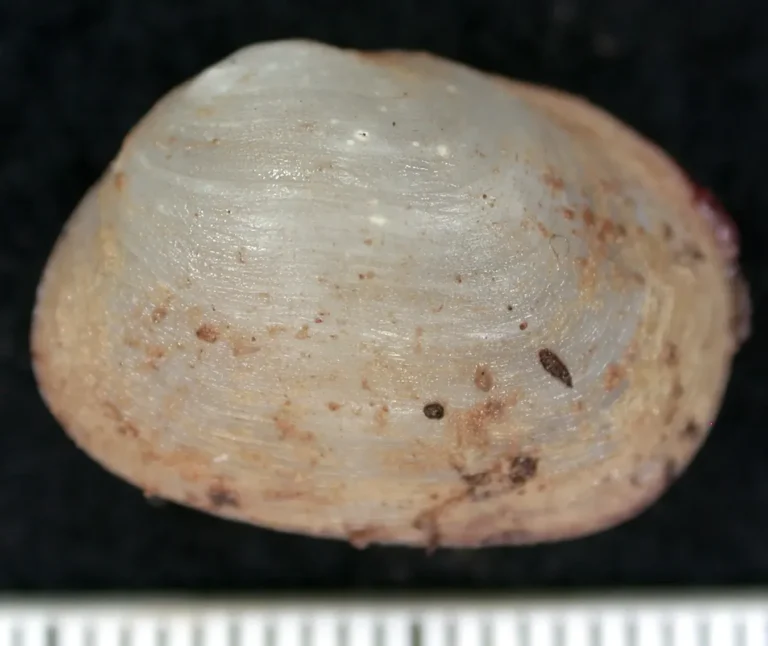

Between 4,000 and 5,000 meters beneath the Great Australian Bight, marine biologists have documented a remarkable biological partnership: a newly described species named Vaticinaria gulicola, a deep-sea clam that lives permanently inside the esophagus of an abyssal sea urchin. It is the first bivalve ever known to inhabit a sea urchin.
How Biologists Found the New Deep-Sea Clam off Southern Australia
The deep-sea clam came to light during an extensive biodiversity survey of the Great Australian Bight off southern Australia. Researchers sampled the abyssal seafloor from 200 meters down to 5,000 meters—a crushing, pitch-black realm of near-freezing temperatures and scarce nutrients. Across the expedition, scientists recovered 66,721 invertebrates spanning 1,267 species, roughly one-third of which appear to be completely new to science.
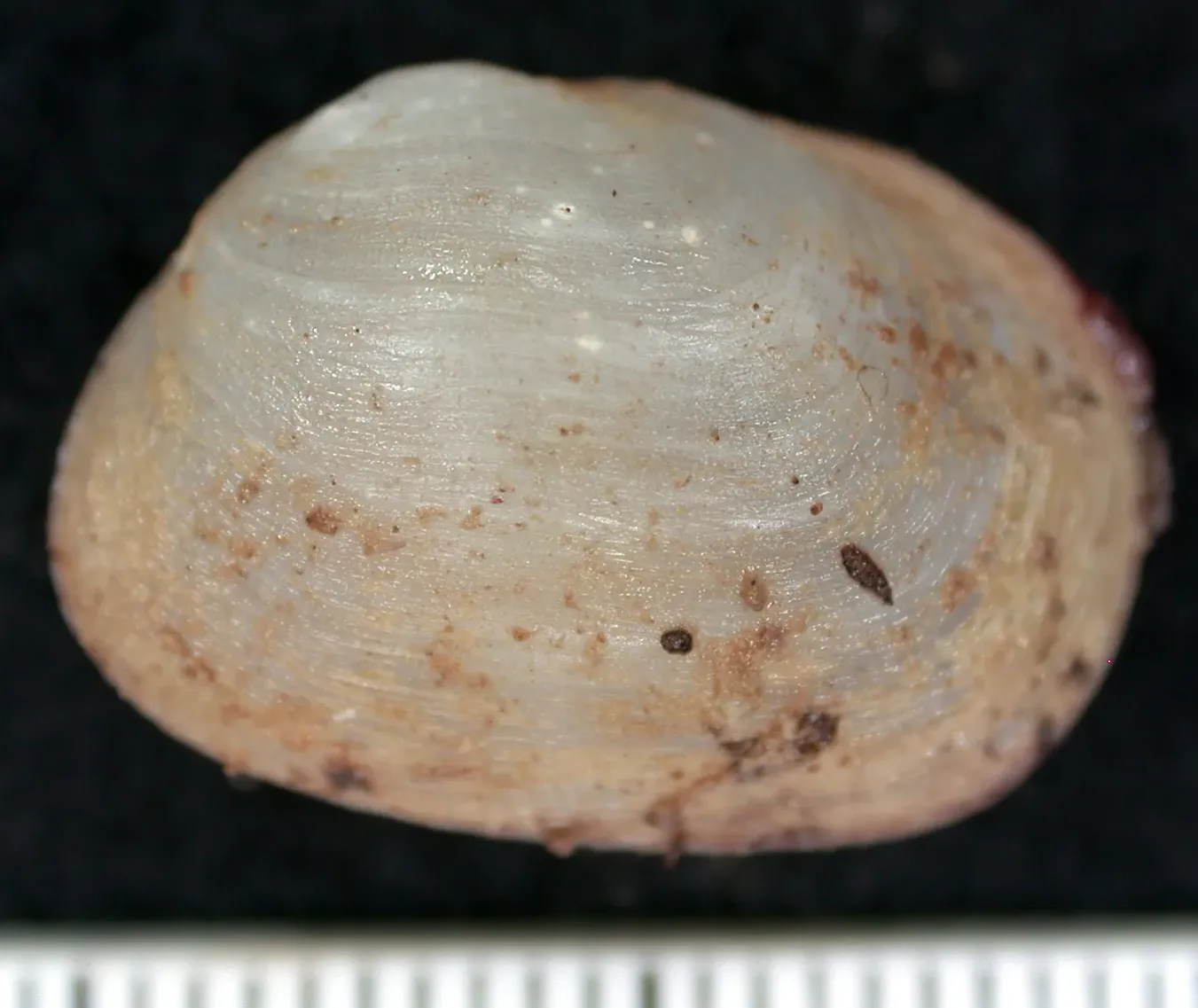
Among the specimens, small pale shells measuring up to 1.9 centimeters (0.75 inches) stood out because they were anchored by fine byssal threads inside fragments of soft animal tissue. Writing in the journal ZooKeys, lead author Paul Valentich-Scott of the Santa Barbara Museum of Natural History, together with Hugh MacIntosh and Ryutaro Goto, formally named the species Vaticinaria gulicola.
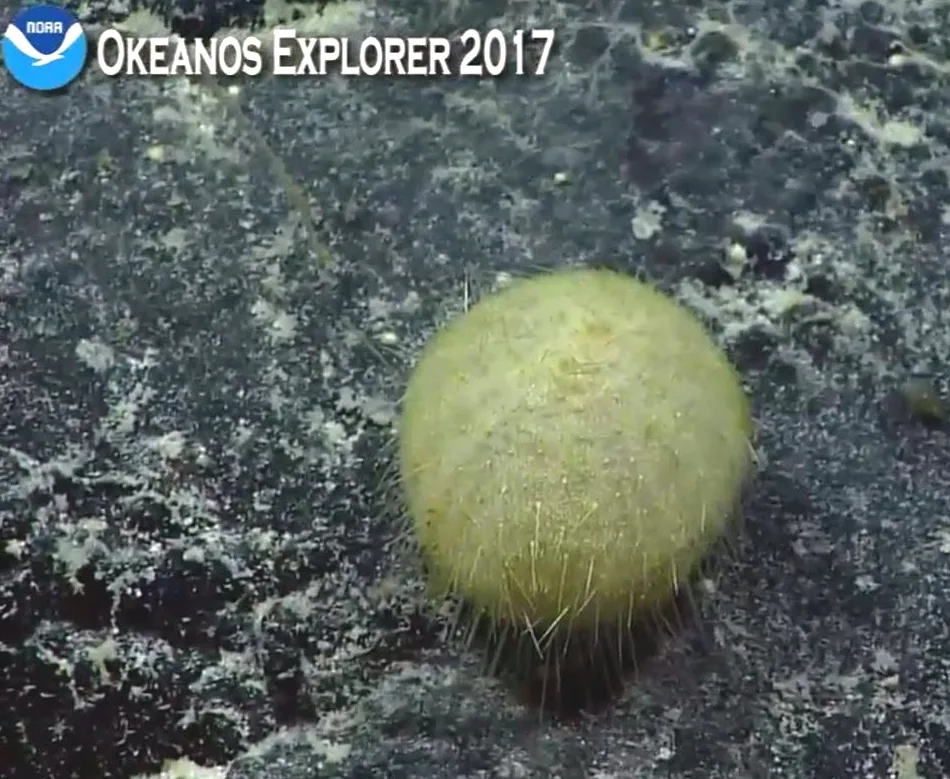
The Latin species name gulicola translates directly to “throat dweller.” Using DNA barcoding, the team confirmed that the surrounding tissue belonged to the esophagus of Carnarechinus clypeatus, an elusive deepwater irregular sea urchin so fragile that it has never been recovered intact.
Why Scientists Spent 150 Years Thinking the Clams Were Just Food
Encounters with tiny clams inside deepwater urchins had actually occurred before, yet earlier researchers misread the evidence. In the 1970s and 1990s, a Russian scientist studying abyssal collections noticed similar bivalves inside sea urchin digestive tracts and assumed the urchins had simply swallowed them while grazing on seafloor sediment.
Re-examining both the fresh Australian specimens and historical museum archives—including samples collected roughly 150 years ago during the famous HMS Challenger expedition—overturned that assumption. As highlighted by IFLScience, the clams were neither crushed nor digested; instead, they were actively anchored and growing inside the throat.
Making the discovery even more intriguing, the host urchin Carnarechinus clypeatus remains one of the least understood creatures of the abyssal plains. Because its delicate test breaks apart during deep trawling at 4,000 to 5,000 meters, biologists still rely on partial fragments and genetic sequencing to piece together its anatomy.
«What scientists spent decades dismissing as swallowed prey turned out to be a rare, specialized partnership in which a tiny clam turned a deep-sea urchin’s throat into a permanent home.»
Based on research by Paul Valentich-Scott et al., ZooKeys
Endocommensalism in the Abyss: Inside the Clam-Urchin Partnership
Biologists classify this lifestyle as endocommensalism, a rare arrangement where one organism lives entirely inside another without acting as a destructive parasite. Within the bivalve order Galeommatida and its superfamily Galeommatoidea, living inside a host is exceptionally uncommon—only one other genus was previously known to do so, residing inside sea cucumbers.
Unlike many internal symbionts that lose their protective armor over evolutionary time, this deep-sea clam retains a fully formed hinged shell that can clamp completely shut. That sturdy shell likely shields the clam from abrasion, digestive enzymes, or muscular contractions as the urchin swallows mouthfuls of sediment.
Survival five kilometers down demands extreme evolutionary compromises, where heat, pressure, and scarce food shape bizarre ecosystems. We explored another extraordinary deep-ocean discovery in our report on the unexpected volcanic eruption documented more than six kilometers deep in the Mariana Trench.
Found in the Great Australian Bight under crushing hydrostatic pressure and total darkness.
Roughly one-third of all 1,267 invertebrate species collected on the voyage were new to science.
Byssal threads anchor the clam inside the urchin throat, shielding it from seafloor predators.
Genetic barcoding matched the fragmented host tissue to the rare urchin Carnarechinus clypeatus.
Unanswered Questions: How Does the Throat-Dwelling Clam Feed?
Researchers still do not know exactly what Vaticinaria gulicola eats inside its host’s throat, or whether the sea urchin gains any subtle benefit from hosting a permanent roommate. On the nutrient-starved abyssal seafloor, every particle of organic carbon matters.
Two main hypotheses are on the table. First, the deep-sea clam may be a passive filter feeder, straining suspended bacteria and organic detritus from the water and mud pumped past it whenever the urchin feeds. Second, it could harvest mucus secreted by the esophageal lining or host chemosynthetic bacteria in its gills.
Evolutionarily, the partnership may have begun with ancestral clams sheltering near the urchin’s mouthparts to evade bottom-dwelling predators before gradually moving deeper into the throat. Meanwhile, even deep-ocean nutrient cycles are sensitive to planetary warming at the surface, a connection examined in our analysis of record ocean warming as a climate stress test for the 2030s.
- Vaticinaria gulicola is the first bivalve species ever documented living inside a sea urchin.
- The discovery solves a 150-year-old mystery dating back to historical HMS Challenger museum samples.
- Future ROV dives aim to reveal how the clam feeds and whether the host urchin benefits from the relationship.
What This Discovery Reveals About Earth’s Deepest Frontiers
The formal description of the reinstated genus Vaticinaria and the species Vaticinaria gulicola underscores how much of Earth’s abyssal plain remains unexplored. Even museum jars archived for a century and a half can conceal unrecognized symbioses waiting for modern DNA tools and fresh taxonomic eyes.
Future remotely operated vehicle (ROV) dives in the Great Australian Bight may finally capture intact video of Carnarechinus clypeatus alive on the seafloor. Observing the urchin and its internal clam in situ will help marine biologists understand how a delicate bivalve thrives inside another animal’s digestive tract.