



For nearly a decade, Josette Santiago, a 52-year-old physical therapist from New Jersey, endured an exhausting medical odyssey while searching for relief from a massive uterine fibroid that expanded to the size of a honeydew melon. Everywhere she turned, gynecologists presented the exact same drastic ultimatum: a total hysterectomy. When she expressed reluctance to undergo major organ-removing surgery, one physician even informed her that medicine had nothing left to offer. It was only after conducting her own research into scientific journals that she discovered a uterus-preserving procedure none of her doctors had ever mentioned: uterine fibroid embolization (UFE), an outpatient radiological treatment that starved the tumor of blood via a tiny arterial puncture, allowing her to resume running and swimming within 48 hours.
A Decade-Long Struggle: From a Walnut-Sized Growth to a Melon-Sized Mass
Josette Santiago’s medical ordeal began in 2016 at age 42, when routine pelvic imaging detected a uterine fibroid measuring just 4 centimeters — roughly the diameter of a walnut. Despite its modest dimensions, the growth caused debilitating menstrual hemorrhaging and large blood clots, threatening her career as an active physical therapist and disrupting her long-distance running and swimming routines.
Physicians repeatedly reassured her that the benign tumor required no immediate intervention, predicting it would naturally atrophy during menopause. However, time proved those assumptions wrong. By 2019, worsening blood loss prompted her to undergo endometrial ablation to manage the bleeding, but the muscular fibroid itself continued its relentless expansion, fed by pelvic arterial circulation.
By October 2025, the mass had expanded to 16 centimeters across — the size of a melon. Her abdomen was so distended that gym members frequently asked when she was due, while basic physical therapy movements like bending down triggered intense pelvic pressure and discomfort.
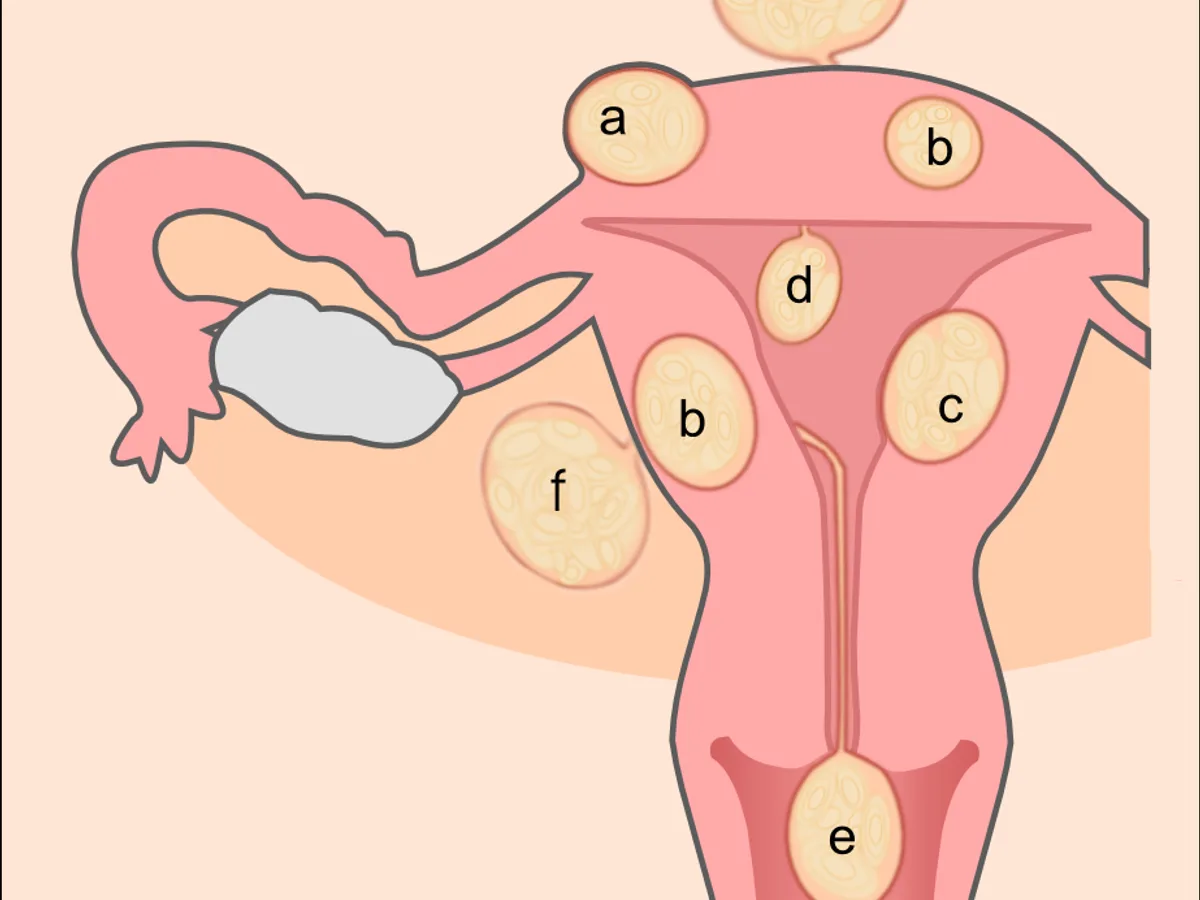
The Surgical Ultimatum: Why Are Millions Offered Major Surgery Without Alternatives?
Between 2020 and 2025, Josette consulted multiple gynecological surgeons, only to receive the exact same recommendation: a complete hysterectomy. When she voiced strong reservations about organ removal, one physician essentially dismissed her as a patient, stating that no other viable medical treatments existed.
Her experience exposes a profound systemic gap in women’s healthcare. According to a 2024 national survey, 53 percent of women presenting with symptomatic fibroids were offered a hysterectomy, while only 17 percent were informed about minimally invasive embolization procedures capable of shrinking tumors while preserving the uterus.
While hysterectomies remain medically necessary in cases involving malignancy or failed alternative therapies, the operation is irreversible, permanently terminates fertility, and carries substantial surgical risks, including infection, hemorrhage, damage to adjacent organs, and up to eight weeks of painful recovery.
Tiny embolic particles are delivered directly into the uterine arteries under fluoroscopic guidance, cutting off tumor nutrients.
Unlike an invasive hysterectomy, the reproductive organ remains intact, preserving pelvic structural integrity.
The entire procedure takes only 60 minutes under twilight sedation, allowing patients to walk comfortably within two days.
A 2024 national survey revealed that 53% of fibroid patients were offered hysterectomies, while only 17% were informed of embolization.
Vascular Biomechanics: How Embolization Starves Fibroids at the Cellular Level
Refusing to surrender to radical surgery, Josette conducted her own research into scientific journals, where she discovered uterine fibroid embolization (UFE). The institutional barrier she encountered stems from medical specialties: while hysterectomies are performed by gynecologists, embolization is conducted by interventional radiologists specializing in image-guided vascular interventions.
The procedural mechanics of UFE are remarkably precise. Rather than creating a large abdominal incision, the interventional radiologist makes a pinhole puncture in the femoral artery at the groin or the radial artery in the wrist. Under continuous fluoroscopic X-ray navigation, a microcatheter is guided directly into the left and right uterine arteries supplying the fibroid.
Microscopic embolic beads are injected into the vessels, lodging in the dense vascular matrix of the tumor. Deprived of oxygenated blood, the fibroid undergoes ischemic necrosis and steadily atrophies over subsequent months, while surrounding healthy uterine tissues continue receiving blood via rich collateral networks.
«After cutting off the arterial blood supply with microscopic particles, the dense fibroid not only shrinks by 50 percent or more over six months, it fundamentally transforms its texture. It becomes almost like a sponge, getting compressed rather than painfully compressing surrounding organs.»
Dr. Tate Kirk, Interventional Radiologist who performed the embolization procedure
One Hour on the Table: Rapid Recovery and Restored Vitality
In April 2026, interventional radiologist Dr. Tate Kirk performed Josette’s embolization under twilight sedation — a light, dream-like state that eliminated anxiety and pain while allowing her to respond to basic questions. The entire intervention took approximately sixty minutes.
Following two hours of observation in the post-anesthesia care unit, Josette was discharged home with prescription pain medication, which she never needed. Within 48 hours, she was walking outdoors, and within a week, her recovery was virtually complete without any complications.
Dr. Kirk explained that beyond volume reduction, embolization fundamentally changes tissue biomechanics. Dense, rigid tumors soften into sponge-like tissue. Instead of pressing against the bladder and surrounding nerves, the softened mass yields to adjacent anatomy, eliminating the sensation of pelvic fullness.
- Uterine fibroids affect up to 80% of women by age 50, causing severe menorrhagia, pelvic pressure, and anemia.
- Josette Santiago’s fibroid expanded from a modest 4cm in 2016 to an overwhelming 16cm by October 2025.
- Embolization is performed by interventional radiologists through a tiny puncture in the thigh or wrist.
- The procedure requires no general endotracheal anesthesia and allows same-day discharge after two hours.
- Patients should consistently seek second opinions from interventional radiologists prior to consenting to hysterectomies.
Empowering Women: The Vital Importance of a Second Radiological Opinion
Today, Josette Santiago has reclaimed her active lifestyle. Her severe abdominal bloating has fully resolved, heavy bleeding has ceased, and she has returned to cycling, swimming, and running without discomfort. An upcoming MRI scan in December will quantify the precise percentage of tumor shrinkage.
Medical experts emphasize that while embolization provides an outstanding alternative for a majority of fibroid patients, treatment plans must be tailored to individual anatomy, tumor positioning, and family planning desires. For some women, myomectomies or targeted medical therapies remain preferable.
Josette’s message to women facing similar diagnoses is unequivocal: never settle for a single surgical recommendation. In the era of modern interventional medicine, women deserve comprehensive information regarding all organ-sparing treatments available before making life-altering surgical decisions.
Long-Term Clinical Efficacy: Comparing Embolization to Myomectomy and Surgical Resection
Extensive clinical trials documented across peer-reviewed literature, including publications in the Journal of Vascular and Interventional Radiology, confirm that uterine fibroid embolization achieves durable symptom resolution in over 85 to 90 percent of treated patients across ten-year follow-up intervals.
In direct comparative studies against open and laparoscopic myomectomies, embolization demonstrates substantially lower intraoperative blood loss, near-zero transfusion rates, and dramatically shortened hospitalization times. Because embolization addresses all fibroid formations simultaneously, it effectively eliminates the risk of sub-centimeter seedling tumors continuing to grow unchecked.
By preserving normal pelvic anatomy and avoiding surgical disruption of the peritoneal cavity, UFE empowers women to overcome chronic pelvic pain and severe menorrhagia without bearing the profound physical and psychological burdens of premature surgical organ removal.