

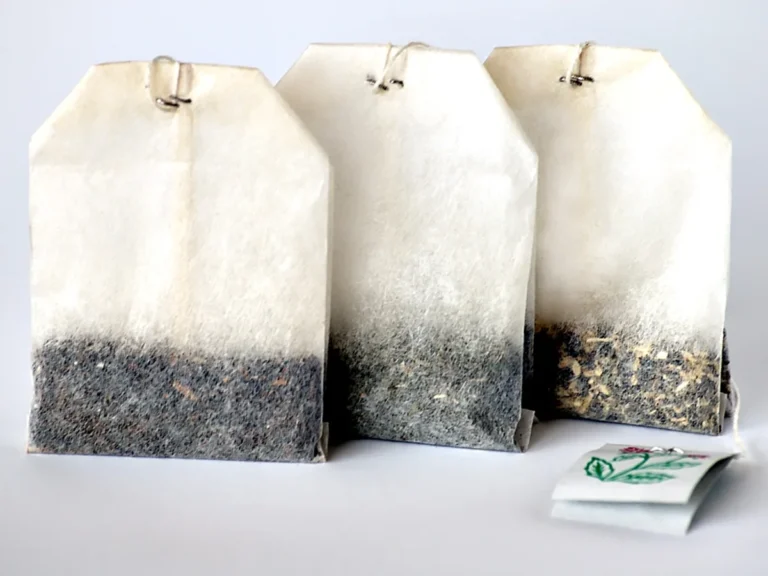

Popular plastic tea bags, widely marketed as luxurious silky pyramid mesh infusers, represent a major hidden vector of synthetic chemical and polymer contamination. A new peer-reviewed study conducted by environmental and food scientists at Recep Tayyip Erdoğan University in Türkiye and published in the prestigious Nature Portfolio journal npj Science of Food demonstrates that steeping synthetic tea sachets in hot water releases billions of micro- and nano-sized plastic particles directly into the liquid. Even more critically, analytical chemistry assays revealed the significant leaching of hazardous endocrine-disrupting chemicals—most notably bisphenol A (BPA) and phthalate plasticizer esters—capable of altering fundamental human hormonal pathways.
The Silken Myth: What Premium Pyramid Sachets Are Really Made Of
For over a century, conventional tea bags were crafted from natural, biodegradable botanical fibers—predominantly unbleached wood pulp or Manila hemp (Musa textilis, known as abaca). In recent years, however, commercial tea companies have increasingly shifted toward translucent ‘silken’ pyramid tea sachets. Marketed as luxurious upgrades designed to allow full-leaf expansion, these bags are almost never composed of natural biological silk. Instead, they are constructed from petroleum-based thermoplastic polymers, including nylon-6 (polyamide), polyethylene terephthalate (PET), and woven polypropylene (PP).
During industrial manufacturing, these synthetic polymers are fortified with an array of chemical additives—plasticizers, thermal stabilizers, and slip agents—to facilitate high-speed spinning and ultrasonic heat-sealing. Yet when an individual prepares a cup of tea by immersing the sachet into near-boiling water (95°C to 100°C), the polymer matrix encounters extreme hydrothermal stress. This rapid heating provokes thermal degradation, molecular chain scission, and the direct shedding of polymer fragments and plasticizing additives into the consumable infusion.
To quantify the scale of this contamination, an environmental research team led by Dr. Necla Pehlivan and Dr. Kenan Gedik at Recep Tayyip Erdoğan University in Türkiye undertook an exhaustive comparative investigation. Their findings, published in npj Science of Food, provide crucial toxicological insights into the chemical consequences of everyday tea preparation.
Rigorous Analytical Methodology: Electron Microscopy and Chromatography
The researchers acquired representative samples of commercial bagged teas spanning diverse national and global brands, packaged in synthetic pyramid and flat sachets, alongside control samples of pure loose-leaf bulk tea. The experimental design meticulously replicated standard domestic brewing: sachets were steeped in ultrapure, deionized water maintained at 95°C for exactly five minutes, after which the liquid was subjected to high-resolution analytical instrumentation.
Morphological characterization of shedding particles was conducted utilizing scanning electron microscopy (SEM) coupled with energy-dispersive X-ray spectroscopy (EDS) and Fourier-transform infrared spectroscopy (FTIR) for precise polymer fingerprinting. To detect and quantify organic chemical contaminants, the researchers deployed advanced gas chromatography-mass spectrometry (GC-MS).
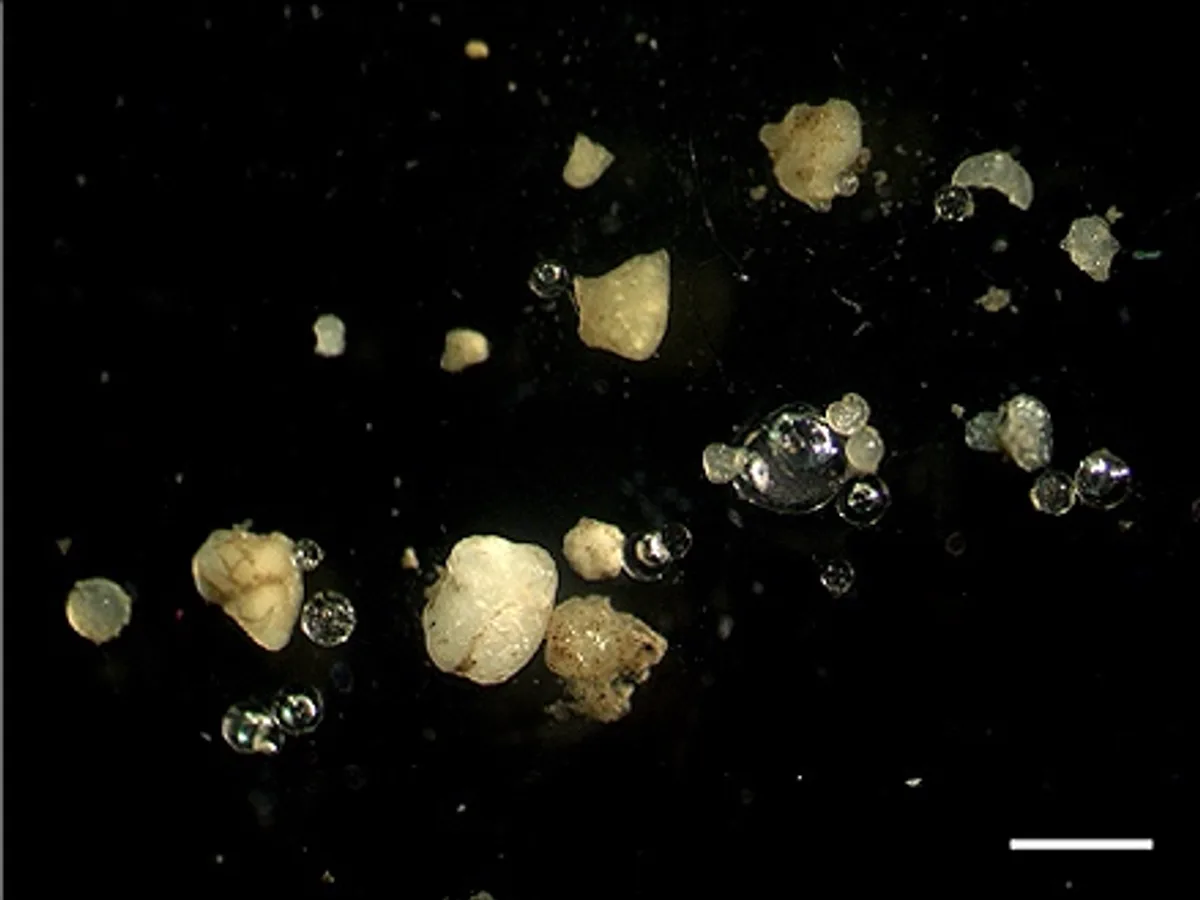
The analytical imagery revealed alarming particle densities: each milliliter of tea brewed with synthetic sachets contained thousands of irregular microplastic fragments, alongside elongated fibrous shreddings sheared from the woven mesh edges. Extrapolated across an ordinary 250-milliliter mug, total microplastic exposure reached hundreds of thousands of particles, while sub-micron nanoplastic estimates escalated into billions of particles per single serving.
Steeping synthetic mesh at 95°C triggers rapid polymer scission, shedding microparticles and sub-100nm nanoplastics capable of translocating across cell membranes.
Brewed infusions contained measurable levels of BPA, a potent endocrine-disrupting agent known for binding to and disrupting human estrogen receptors.
Gas chromatography-mass spectrometry confirmed the migration of industrial phthalate plasticizers (DEHP and DBP) used to synthesize pliable mesh fibers.
Control trials utilizing traditional loose-leaf tea steeped in glass vessels showed complete absence of detectable phthalates and only ambient background particles.
Endocrine Disruption: Quantifying BPA and Phthalate Migration
The most medically significant aspect of the study was the demonstration of chemical additive migration. GC-MS assays unequivocally documented the leaching of bisphenol A (BPA) alongside multiple ortho-phthalate esters—specifically diethylhexyl phthalate (DEHP) and dibutyl phthalate (DBP)—directly into the brewed tea. In stark contrast, control infusions prepared from loose bulk tea exhibited zero detectable phthalate migration.
Both BPA and phthalates are universally designated by major global health authorities, including the World Health Organization (WHO) and the European Chemicals Agency (ECHA), as hazardous endocrine-disrupting chemicals (EDCs). Because their molecular configurations mimic endogenous steroid hormones—particularly 17β-estradiol—they readily bind to cellular estrogen receptors, triggering inappropriate transcriptional activity or competitively blocking normal endocrine signaling.
Epidemiological and toxicological literature links persistent low-dose exposure to EDCs with diminished semen quality and testosterone levels in men, polycystic ovary syndrome (PCOS) and endometriosis in women, insulin resistance, and heightened susceptibility to hormone-dependent malignancies, including breast and prostate cancers.
«We have provided unambiguous evidence that brewing commercial tea in synthetic plastic bags inevitably leads to thermal polymer degradation and the active migration of hazardous chemical plasticizers into the consumable liquid.»
Dr. Necla Pehlivan, Lead Research Author, Recep Tayyip Erdoğan University
Cellular Translocation and Systemic Micro-Inflammation
Historically, toxicologists assumed that ingested plastic debris would transit harmlessly through the gastrointestinal tract and be excreted. Contemporary bio-nanotechnology research has shattered this benign assumption. Nanoplastic particles smaller than 100 to 200 nanometers readily bypass the intestinal epithelial barrier through clathrin-mediated endocytosis and persorption via the specialized microfold (M) cells of Peyer’s patches.
Once across the gut barrier, these synthetic particles enter the mesenteric lymphatic circulation and the bloodstream, accumulating in secondary filter organs such as the liver and spleen. Owing to their extraordinarily high surface-area-to-volume ratio, internalized plastics catalyze the overproduction of reactive oxygen species (ROS), triggering cellular lipid peroxidation, mitochondrial damage, and chronic micro-inflammatory cascades.
Simultaneously, plastic particles lodged within the intestinal mucus layer disrupt the homeostatic balance of the gut microbiome, depleting populations of beneficial commensals like Bifidobacterium and Lactobacillus while fostering the growth of pathobionts. This dysbiosis undermines mucosal barrier integrity, predisposing the host to increased intestinal permeability and systemic immune activation.
- Synthetic polymer sachets (nylon/polyamide, polypropylene, PET) cannot withstand boiling water temperatures without microscopic thermal breakdown;
- Chronic ingestion of microplastics induces localized oxidative stress and micro-inflammation within the intestinal mucosa;
- Phthalates and BPA accumulate within adipose tissues, correlating with reproductive impairment and metabolic dysfunction;
- Scientists strongly recommend adopting loose-leaf tea with stainless steel infusers or certified unbleached natural abaca fiber filter bags.
Consumer Action: Practical Steps to Eliminate Plastic from Your Daily Tea
Given that tea is one of the most widely consumed beverages on the planet, with many individuals drinking three or more cups daily, the cumulative chemical and particle burden from synthetic sachets represents an avoidable chronic health risk. Fortunately, consumers can eliminate this exposure through straightforward operational adjustments:
First, the most definitive and environmentally sustainable remedy is transitioning entirely to bulk loose-leaf tea. Brewing loose tea using teapots crafted from borosilicate glass, porcelain, or unglazed ceramic, paired with food-grade 304 or 316 stainless steel infuser baskets, completely eliminates plastic-water thermal contact.
Second, when tea bags are necessary for travel or convenience, scrutinize packaging certifications. Avoid transparent, glossy, or heat-sealed pyramid bags. Choose brands bearing certified Plastic-Free labels that utilize 100% unbleached Manila hemp filter paper assembled with stitched organic cotton thread rather than synthetic adhesives or polymer sealing matrices.
The findings from Recep Tayyip Erdoğan University provide a sobering reminder of the unintended trade-offs of modern convenience. By reclaiming traditional loose-leaf brewing methods, tea drinkers can enjoy the rich polyphenol and antioxidant benefits of tea without compromising their long-term health to invisible microplastic and endocrine hazards.