

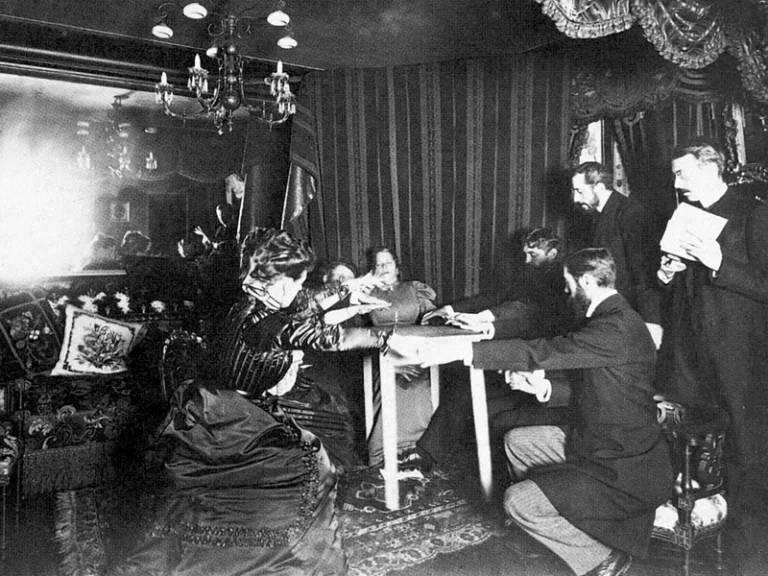

In the early 1970s, a team of Canadian scientists embarked on one of the most audacious undertakings in psychological history: rather than hunting for spirits in dilapidated castles, they set out to fabricate a ghost from scratch in a laboratory environment. The groundbreaking philip experiment, orchestrated by the Toronto Society for Psychical Research, proved that human beings can generate extraordinary physical manifestations purely through collective expectation, group suggestibility, and unconscious muscular micro-movements.
Fabricating a Knight: The Invention of Philip Aylesford
In 1972, Dr. A.R.G. Owen (A.R.G. Owen), a respected British-born mathematician and geneticist at the University of Toronto, teamed up with his wife Iris Owen (Iris Owen) to establish the Toronto Society for Psychical Research (TSPR). Joined by clinical psychologist Dr. Joel Whitton (Joel Whitton), the researchers sought to resolve an age-old scientific puzzle: were mediumistic communications and physical séance phenomena genuinely produced by disembodied souls, or were they products of unconscious psychokinetic energy, group suggestion, and cognitive self-deception? To ensure no actual historical ghost could interfere, the team resolved to engineer a completely fictional personality with an elaborate, tragic biography.
They christened their creation Philip Aylesford (Philip Aylesford), an imaginary English nobleman born in 1624. According to the storyline crafted by the group, Philip was a staunch Cavalier who fought valiantly for King Charles I during the English Civil War and received a knighthood at an early age. His personal life, however, descended into heartbreak. Trapped in a loveless marriage with a domineering aristocratic woman named Dorothea, Philip fell passionately in love with Margot, a Romani girl living in the woods near his ancestral Diddington Manor. When Dorothea uncovered the affair, she accused Margot of witchcraft, leading to her public burning at the stake. Tormented by overwhelming remorse, Sir Philip hurled himself from the ramparts of Diddington in 1654.
To establish a vivid mental template, the team sketched portraits of Philip, mapped the layout of the fictitious manor, and memorized historic details from the Cromwellian era. The core experimental group comprised eight individuals without any history of psychic ability: Margaret Sparrow (Margaret Sparrow), a former chairperson of Canadian Mensa, an industrial designer, a heating engineer, an accountant, a bookkeeper, a sociology student, and Iris Owen (Iris Owen). Every participant committed Philip’s life to memory until his persona became an indelible, living fixture in their collective consciousness.
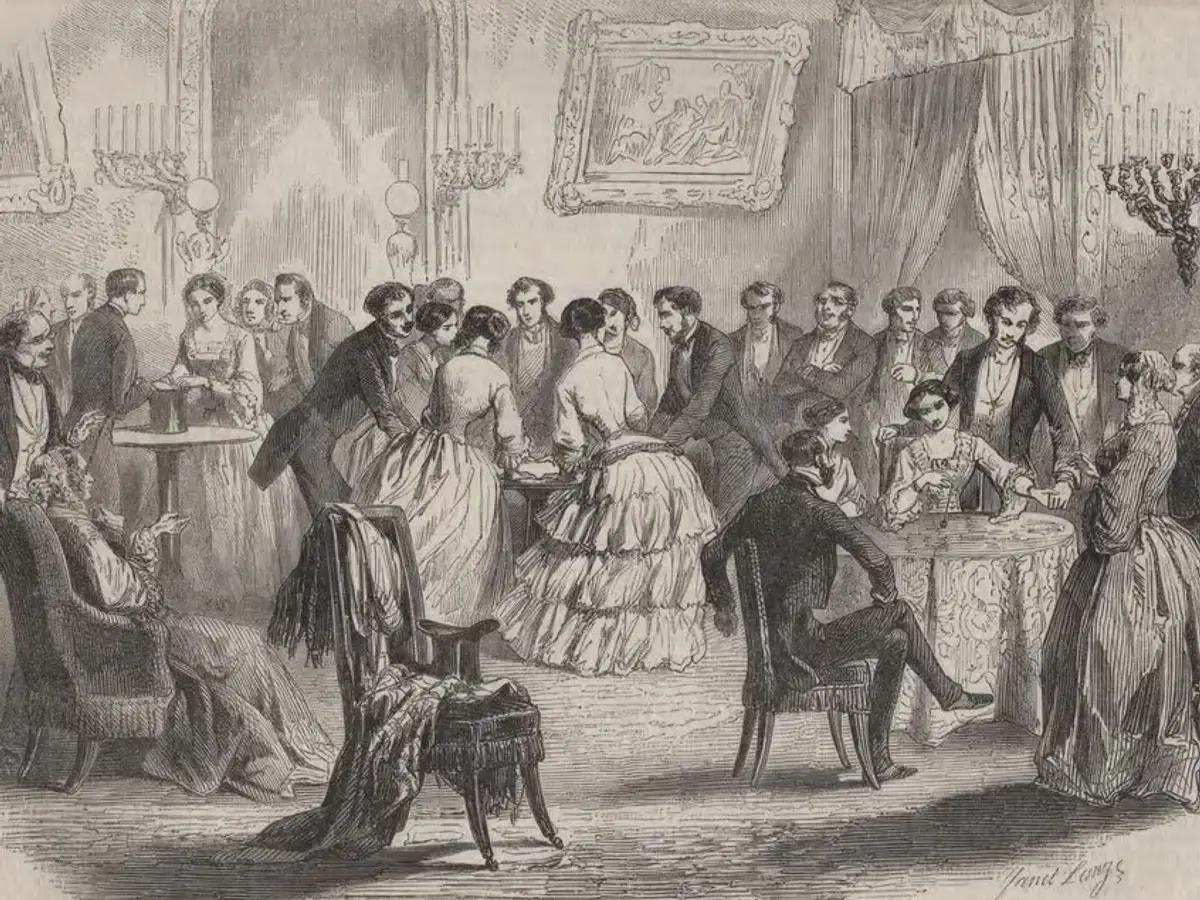
From Solemn Silence to Tavern Songs: The Methodological Pivot
During the opening phase of the experiment, the TSPR researchers adhered to the classical protocols of Victorian spiritualism. Every week, the sitters gathered in a darkened room around a heavy wooden table, lit candles, clasped hands, and maintained profound meditative silence. For a full twelve months, the group attempted to telepathically call forth Philip, willing his ethereal essence to materialize. However, this solemn routine yielded absolute silence: the room remained cold, and the table never shifted by a fraction of a millimeter. The mental strain and constant fear of failure pushed the sitters to the brink of despair.
The decisive breakthrough occurred when Dr. A.R.G. Owen (A.R.G. Owen) fundamentally overhauled the experimental methodology, drawing upon the insights of British psychologist and parapsychologist Kenneth Batcheldor (Kenneth Batcheldor). Batcheldor hypothesized that solemn reverence and performance anxiety generate a crippling psychological resistance block, stifling spontaneous subconscious expression. Owen urged the group to banish the gloom, illuminate the room with bright electric lights, and cultivate the boisterous atmosphere of an informal social gathering. Sitters began bringing beer and snacks, trading jokes, and singing popular 17th-century tavern ballads and roundels in full voice.
The emotional liberation triggered an immediate, dramatic transformation. Within several sessions of relaxed revelry, sitters felt a vibrant current hum beneath their fingertips across the table surface. Soon after, sharp, resonant raps cracked from within the timber itself. The fictional ghost of Philip had finally awakened, adopting the classic spiritualist code of one rap for “yes” and two raps for “no.” The sudden breakthrough confirmed that uninhibited emotional engagement, rather than mystical trance, served as the primary catalyst for the phenomenon.
The group painstakingly wrote the tragic life and death of a non-existent 17th-century aristocrat named Philip Aylesford.
Abandoning solemn, dark meditation for bright lights, drinking, and jovial folk singing triggered sudden physical manifestations.
Unconscious muscular micro-contractions among participants synchronized, causing a heavy table to rap, slide, and levitate.
Demonstrated how an intensely focused collective mental construct (tulpa) can convincingly simulate an autonomous entity.
Physical Anomalies and the Paradox of Fictional Knowledge
Once reliable communication was established, the physical demonstrations escalated dramatically. The table did not merely produce acoustic raps; it exhibited remarkable physical mobility. According to documented records, the heavy furniture slid effortlessly across thick carpeting, spun rapidly on its axis, tilted at forty-five-degree angles, and balanced precariously on a single leg. On numerous occasions, the table pursued terrified or amused sitters around the room, pinned skeptics against walls, and levitated completely off the floor in broad daylight before neutral visiting scientists.
Yet the most philosophically revealing aspect of the Philip experiment was what researchers termed the paradox of fictional knowledge. Over hundreds of documented question-and-answer sessions, investigators interrogated Philip regarding 17th-century politics, military maneuvers, and everyday social customs. Philip answered accurately whenever the information was known to at least one person seated at the table. However, when asked about genuine historical facts beyond the group’s knowledge, the phantom fell completely silent or gave erroneous guesses. Strikingly, Philip faithfully repeated historical errors and chronological blunders that the sitters had accidentally introduced into his fictional backstory.
Had Philip been an autonomous spirit residing in an afterlife realm, he would have readily corrected the historical misconceptions fabricated by his creators. The fact that the phantom possessed exclusively the knowledge, beliefs, and mistakes of the people surrounding the table provided irrefutable empirical proof: the entity was not an external ghost, but a collective subconscious mirror of the sitters themselves. These findings parallel modern neuroscientific insights into psychological dynamics and cognitive distortions in perceptual studies, which highlight the brain’s extraordinary ability to confabulate coherent, false identities.
«We proved conclusively that spiritualist manifestations do not require the presence of discarnate spirits or real ghosts from the past. The human mind, operating under synchronized group expectation, possesses the capacity to generate the very physical phenomena humanity has attributed to the dead for centuries.»
Dr. A.R.G. Owen, Cambridge mathematician, geneticist, and founder of the Toronto Society for Psychical Research
The Ideomotor Effect: The Physiology Behind the Supernatural
From the standpoint of orthodox cognitive psychology and neurophysiology, the Philip experiment stands as a textbook demonstration of the collective ideomotor effect. First articulated in 1852 by English physiologist William Benjamin Carpenter (William Benjamin Carpenter) and later experimentally validated by legendary physicist Michael Faraday (Michael Faraday), the ideomotor phenomenon describes involuntary, unconscious micro-movements executed by skeletal muscles in response to focused mental suggestion.
When eight individuals rest their hands upon a responsive wooden surface, even infinitesimal involuntary twitches from sixteen hands combine mechanically. Because the sitters shared an identical emotional tempo, sang the same rhythmic tunes, and intensely anticipated the table’s response, their unconscious muscular impulses synchronized seamlessly. If the group subconsciously anticipated the table sliding to the left, their fingers imparted an imperceptible lateral shear force that compounded into several kilograms of thrust, while each participant remained genuinely convinced that their hands were merely along for the ride.
The mysterious acoustic knocks also yielded to rational physical analysis. Structural acoustics revealed that the raps were caused by rapid elastic release within the wood grain. When multiple sitters apply opposing unconscious forces to opposite edges of a tabletop, mechanical stress accumulates in the timber. When this strain exceeds frictional thresholds, the wood fibers slip by fractions of a millimeter, producing an explosive mechanical crack that resonates through the table’s hollow acoustic cavity like a drumhead, mimicking an invisible fist knocking from below.
Thought-Forms, Group Suggestion, and the Enduring Legacy
Beyond sheer biomechanics, Dr. Owen’s experiment illuminated fundamental principles of social contagion and group psychology. In esoteric lore, the concept of a “tulpa” refers to an autonomous thought-form conjured by concentrated mental discipline. Mainstream behavioral science, however, frames the phenomenon as an extraordinary example of dissociative identity distribution and social conformity. Immersed in shared expectation, the participants experienced an altered state of consciousness where individual agency was temporarily displaced onto the fictional archetype of Philip.
To test whether Philip was a unique anomaly, the TSPR subsequently engineered a whole pantheon of fictional apparitions, including Lilith, a 16th-century French alchemist, Sebastian, an 18th-century Canadian voyageur, and Axel, an extraterrestrial from an advanced galactic civilization. In every case, the new characters manifested acoustic raps and table movements far more rapidly than Philip, because the participants had already dismantled their initial skepticism and internalized the behavioral blueprint for group manifestation.
In 1974, the Canadian Broadcasting Corporation (CBC) produced an acclaimed documentary titled “Philip, the Imaginary Ghost”, capturing the animated table leaping before rolling television cameras. The Philip experiment remains an enduring milestone of scientific skepticism, demonstrating that humanity’s most uncanny supernatural encounters require neither haunted houses nor departed spirits, but arise from the boundless, uncharted creative faculties of our own living minds. Also read our related investigative feature on psychological dynamics and cognitive distortions in perceptual studies.