

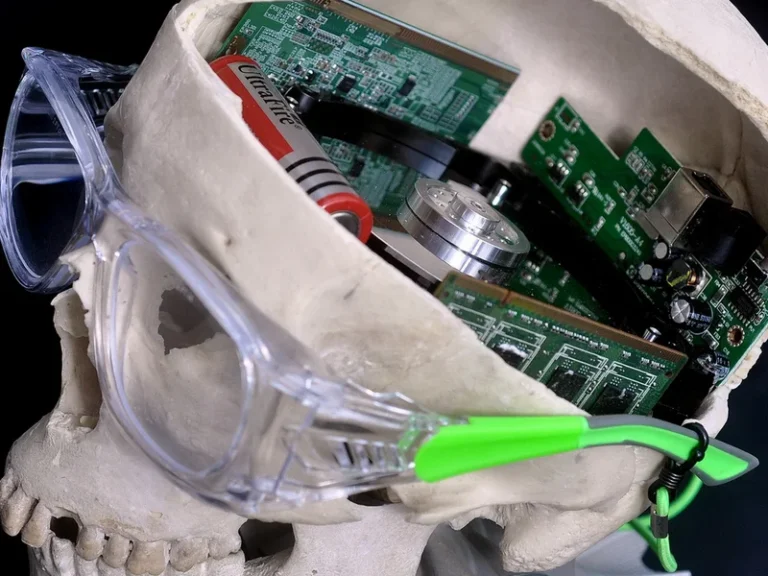

The groundbreaking analysis of 1600 reincarnation cases conducted by the Division of Perceptual Studies (DOPS) at the University of Virginia School of Medicine represents the most exhaustive academic examination of childhood past-life memories ever undertaken. Founded by psychiatrist Dr. Ian Stevenson and expanded by neurobehavioral scientist Dr. Jim Tucker, this rigorous research uncovered a startling statistical pattern known as the intermission anomaly: the interval between the previous personality death and the child birth is dramatically shortened when the prior death was violent or sudden.
University of Virginia and DOPS: Academic Rigor Meets the Science of Memory
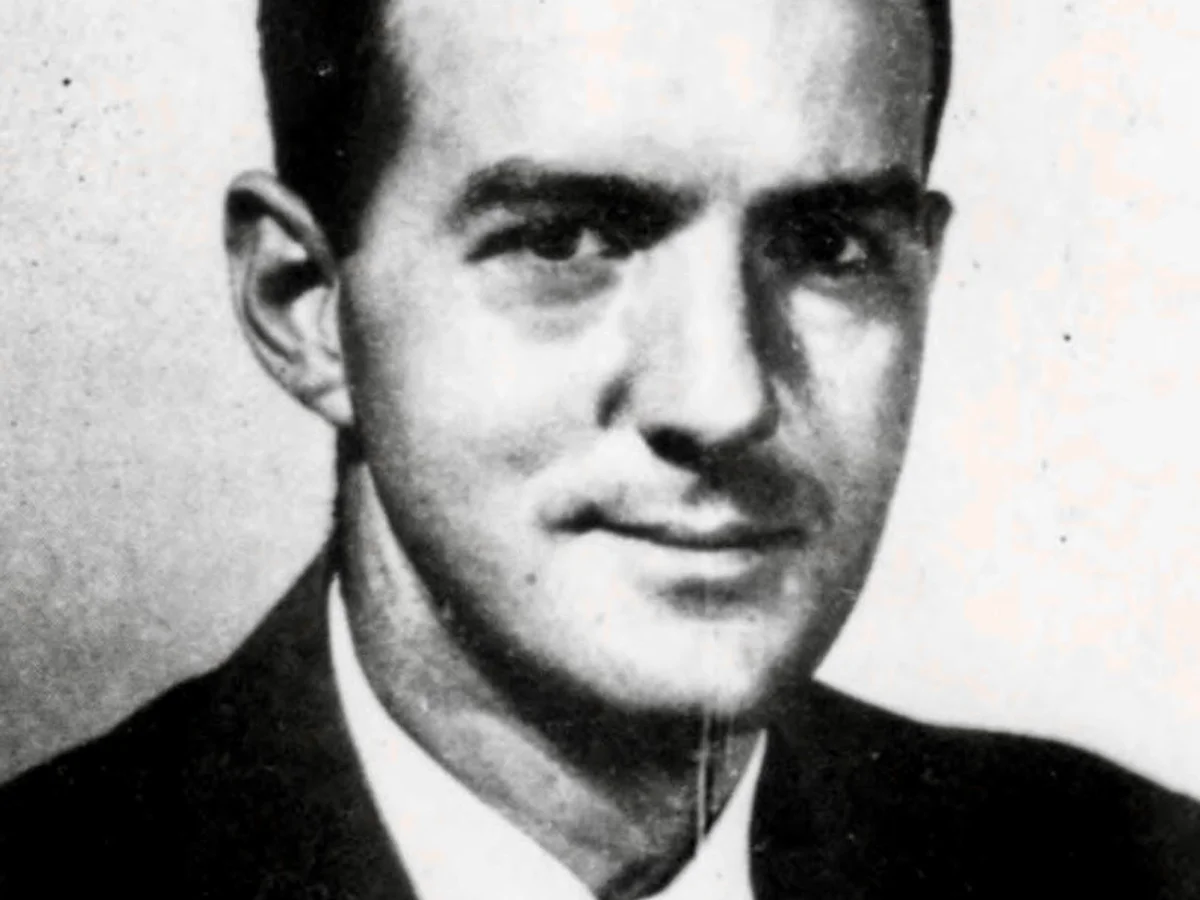
In the late 1960s, Dr. Ian Stevenson, Chairman of the Department of Psychiatry at the University of Virginia School of Medicine, established a dedicated academic research unit: the Division of Perceptual Studies (DOPS). Stevenson sought to rescue the study of unusual human consciousness phenomena from occult speculation, subjecting claims of past-life memories to rigorous empirical verification. The endeavor received crucial institutional backing through an endowment from Chester Carlson, the inventor of xerography, ensuring enduring scholarly independence.
Stevenson explicitly rejected hypnotic regression, recognizing that hypnosis induces a hyper-suggestible state prone to confabulation, cryptomnesia, and cinematic fantasy. Instead, he concentrated entirely on spontaneous statements made by very young children between two and five years old. At this developmental stage, children have not yet internalized historical literature, lack sophisticated storytelling motives, and rarely have unsupervised access to mass media. DOPS established field protocols requiring investigators to record children claims before any cross-communication occurred between the families involved.
Over five decades of systematic field inquiries across Asia, the Middle East, Europe, and North America, researchers compiled detailed biographical testimonies. Child psychiatrist Dr. Jim Tucker subsequently assumed leadership of the project, standardizing the investigative framework. Tucker digitized the expansive archive into a structured dataset of 1,600 verified and scored cases, enabling researchers to apply advanced multivariable statistical analysis to investigate underlying empirical regularities.
The Intermission Time Anomaly: Mathematical Links to Violent and Sudden Death
Among the most statistically compelling findings to emerge from the 1,600-case dataset is the non-random distribution of what researchers term intermission time — the duration elapsing between the death of the prior individual and the birth of the child exhibiting the memories. Across the overall sample, the median duration stood at approximately 43 months. However, when researchers disaggregated the cohort based on the mode of death, a sharp statistical divergence emerged with high significance (p < 0.001).
In instances where the previous personality passed away from natural illnesses, senility, or protracted chronic diseases, the intermission interval was substantially prolonged, frequently spanning several years. Conversely, when the prior death occurred suddenly or violently — such as through murder, automobile crashes, combat trauma, or sudden drowning — the intermission interval shrank dramatically, averaging between 18 and 21 months, and in several documented instances taking place within weeks.
Dr. Jim Tucker hypothesized that the sudden truncation of a life trajectory, combined with intense emotional arousal at the moment of demise, might operate as a psychological catalyst, stabilizing cognitive structures and hastening reconnection with physical reality. Crucially, this mathematical pattern proved culturally invariant: it emerged with equal statistical prominence in Asian populations steeped in reincarnation beliefs and in secular Western households with no religious framework supporting past lives.
Statistical analysis of DOPS database revealed that the median intermission duration for natural deaths is 43 months, whereas for individuals who died violently, the gap shrinks significantly to just 18 to 21 months.
In approximately 35% of documented cases, children exhibited distinct birthmarks or congenital malformations that matched the entry and exit wounds of the deceased, corroborated by official autopsy reports.
Past-life claims universally manifest between the ages of 2 and 4 when expressive language develops, and typically fade away completely by age 6 or 7 as the child integrates into formal schooling.
Mainstream cognitive scientists attribute these accounts to confabulation, cryptomnesia, subconscious parental guidance, and pervasive cultural expectations in societies with reincarnation traditions.
Congenital Birthmarks and Medical Correlation: Physical Evidence Under the Microscope
The most physically verifiable facet of the University of Virginia archives involves anatomical correspondences between congenital birthmarks or deformities and fatal wounds suffered by the deceased. In roughly 35% of the analyzed cases, children were born with anomalous skin pigmentations, fibrous scar tissue, or structural defects that directly mirrored medical trauma documented in the previous person life. Stevenson detailed these physical manifestations in a seminal two-volume treatise entitled Reincarnation and Biology.
The evidentiary threshold demanded independent post-mortem reports and medical records rather than relying on hearsay. In multiple substantiated cases, researchers matched neonatal birthmarks to official autopsy diagrams. In one prominent case, a child who recalled being fatally shot in the back of the skull exhibited a tiny, neat circular birthmark at the base of his head and a larger, raggedly shaped mark on his forehead, precisely mirroring the entrance and exit bullet wounds logged by the coroner years earlier.
Physical correspondences frequently extended beyond planar skin markings to include rare congenital conditions such as microtia, absent digits, or muscular hypoplasia matching surgical amputations. While developmental embryology attributes these anomalies to random genetic mutations or in-utero vascular disruptions, the mathematical odds of such rare defects randomly coinciding with verified fatal trauma in a deceased individual correctly identified by a toddler are vanishingly small.
«We are not advancing any religious doctrine or attempting to validate esoteric dogma. Our objective is strictly scientific: to apply empirical field methodology, document verified claims before families make contact, and impartially examine patterns that challenge conventional models of memory.»
Dr. Jim Tucker, Bonner-Lowry Professor of Psychiatry and Neurobehavioral Sciences at the University of Virginia
Scientific Skepticism: Cognitive Confabulation, Cultural Priming, and Cryptomnesia
Despite the volume of documentation, the broader scientific and psychiatric establishment maintains rigorous skepticism regarding the survival hypothesis. Prominent cognitive scientists argue that mundane psychological and sociological dynamics provide more plausible explanations. Foremost among these is childhood confabulation, in which young children unconsciously merge imagination, overheard anecdotes, and dreams into autobiographical narratives, sincerely believing them to be genuine historical recollections.
Cryptomnesia and unintentional parental cueing represent further compounding variables. In cultures where reincarnation is widely accepted, enthusiastic parents who hear an ambiguous phrase from a toddler may inadvertently supply details through leading questions, reinforcing a coherent narrative. By the time academic fieldworkers arrive, the child memory has often been thoroughly contaminated by familial retelling. This leaves researchers evaluating an already reconstructed family narrative rather than pristine testimony.
Skeptics also emphasize the geographic skew of the DOPS database, noting that the overwhelming majority of resolved cases originate in regions where reincarnation is an established cultural paradigm. While Tucker has documented dozens of American and European cases, critics argue that confirmation bias leads researchers to focus on striking coincidences while overlooking numerous erroneous statements. Without real-time laboratory verification, these field findings cannot definitively establish post-mortem survival.
- The University of Virginia DOPS repository houses over 2,500 meticulously documented international cases spanning more than fifty years of academic field research.
- The statistical correlation between violent death and brief intermission intervals holds across different cultures with high significance (p < 0.001).
- Many investigated children display profound, specific phobias directly mirroring the exact fatal trauma described in their biographical statements.
- Mainstream cognitive science emphasizes that cultural priming, leading interview techniques, and memory reconstruction remain powerful alternative explanations.
Modern Neuroscience and the Hard Problem of Consciousness
The debate surrounding the 1,600 DOPS cases ultimately interfaces with the deepest dilemma in cognitive science: the hard problem of consciousness. Classical physicalism posits that subjective experience is entirely an emergent epiphenomenon of neurochemical and synaptic operations within the brain. Under this paradigm, the cessation of cerebral biological processes must irrevocably extinguish all memory and identity, rendering any transfer of personal information impossible under the known laws of physics.
Conversely, theoretical physicists such as Nobel laureate Sir Roger Penrose and anesthesiologist Stuart Hameroff have proposed quantum models of consciousness (Orch-OR), hypothesizing that cognitive information may involve quantum states within neuronal microtubules. Advances in complex cognitive architectures and biomolecular structures highlight that biological information processing operates with extraordinary sophistication, reminding us of the vast gaps remaining in our comprehension of living systems.
Ultimately, the empirical archive preserved at the University of Virginia challenges dogmatism on both sides of the philosophical spectrum. Whether future scientific paradigms explain these cases through yet-undiscovered neurodevelopmental mechanisms, subtle socio-psychological feedback loops, or novel principles of non-local information conservation, the 1,600 cases compiled by DOPS provide an invaluable empirical challenge, urging researchers to explore the boundless complexities of human consciousness. Also read our related investigative feature on complex cognitive architectures and biomolecular structures.