

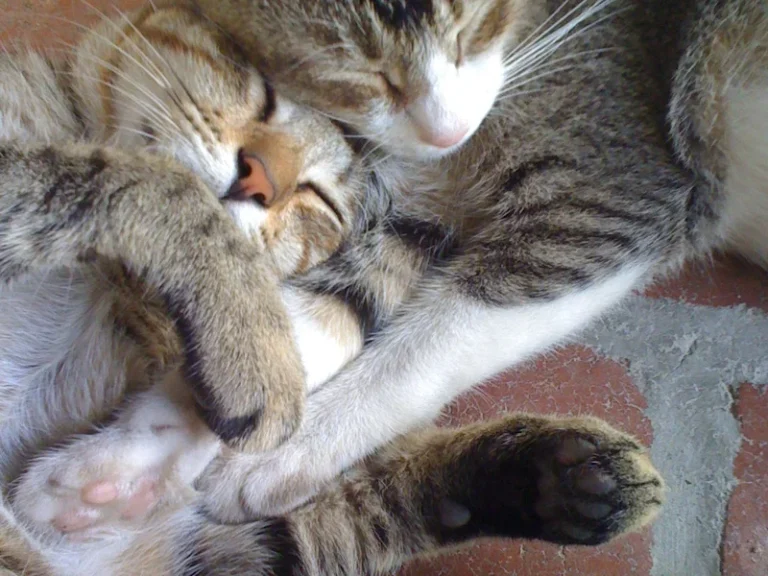

For centuries, domestic felines have endured an unfair reputation as detached, aloof, and purely self-interested companions that value humans merely as providers of kibble and warm shelter. However, groundbreaking neurobiological research from Kyoto University, published in the prestigious peer-reviewed journal iScience, has dismantled this age-old myth. Scientists have empirically demonstrated that a profound cats owners hormonal connection mirrors neurochemical states across species: urinary levels of oxytocin—the quintessential neuropeptide of attachment and trust—synchronize between cats and their guardians, effectively mitigating chronic physiological stress and dampening depressive symptomology.
Deconstructing the Myth of Feline Emotional Indifference
In popular folklore and conventional animal behavioral literature, cats have frequently been cast as solitary, transactional carnivores incapable of authentic emotional reciprocity. While canines have been celebrated for their loyalty and trained to respond to human emotional cues across hundreds of academic papers, Felis catus was routinely perceived as an opportunistic predator whose affection was confined to seeking food or physical comfort. Purring, vocalizations, and head-bunting were often dismissed as simple conditioned strategies rather than reflections of genuine attachment.
Contemporary comparative cognitive neuroscience has begun to thoroughly dismantle these outdated assumptions. The feline central nervous system possesses a well-developed limbic complex, featuring anatomical structures and neurotransmitter pathways that closely parallel those found in human brains. Felines experience fundamental affective states including security, grief, social joy, and anxiety. The central empirical question remained whether this social awareness manifested as a measurable biochemical dialogue with their human caregivers.
To resolve this debate, an interdisciplinary team from Kyoto University and Azabu University, spearheaded by Dr. Saho Takagi and Professor Takefumi Kikusui, designed an unprecedented non-invasive protocol. Rather than assessing animals in artificial laboratory confines, they sought to quantify the neuroendocrine dynamics governing cats and their owners inside their natural domestic habitats over extended temporal windows.
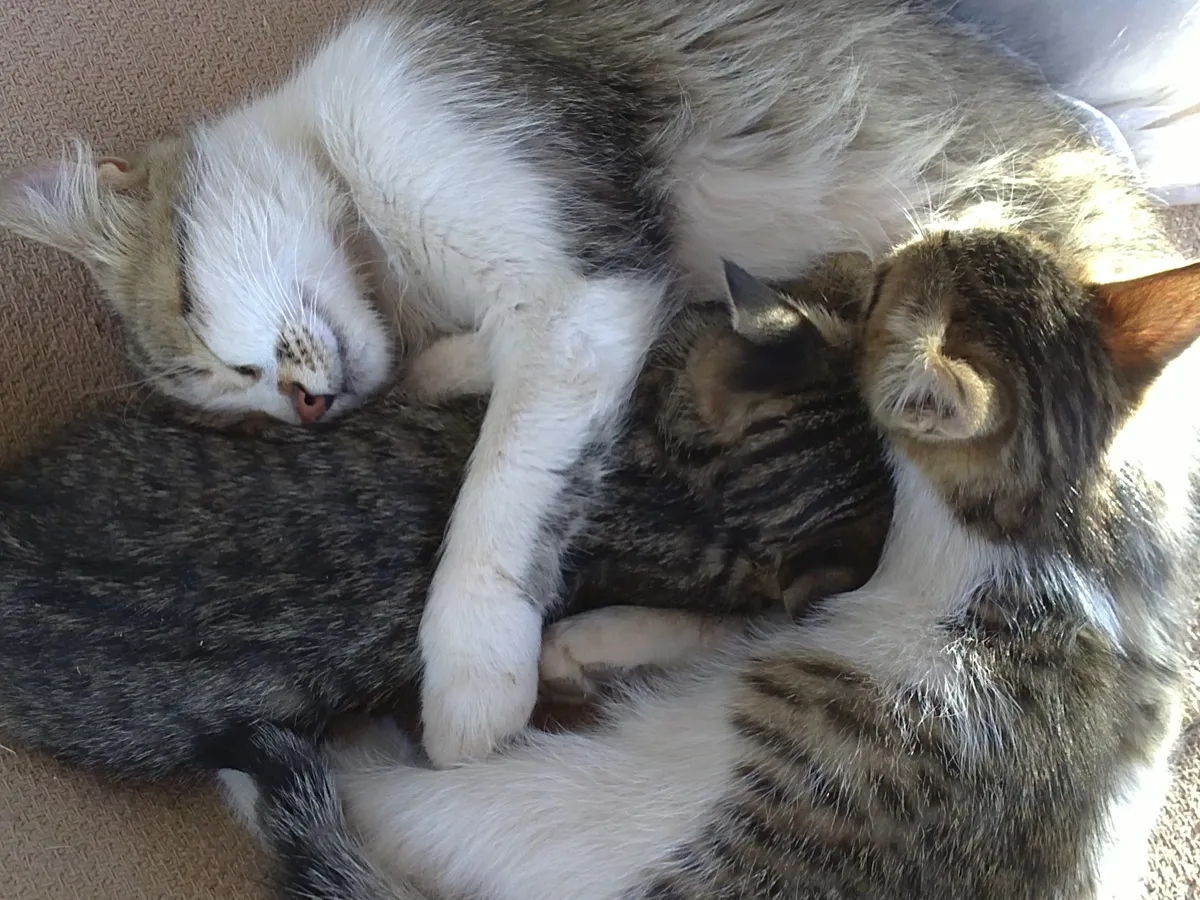
Experimental Architecture: Urinary Peptides and Bluetooth Micro-Tracking
A pervasive methodological challenge in feline behavioral science is the observer effect: bringing a cat into a clinical laboratory or performing venipuncture inevitably triggers an acute sympathoadrenal panic reaction. The resulting deluge of adrenaline and corticosterone obliterates subtle prosocial neuropeptide activity. To bypass this obstacle, Dr. Takagi engineered an ingenious longitudinal field experiment that unfolded seamlessly over four weeks within the participants’ private residences.
Dozens of human-cat dyads participated in rigorous daily monitoring. Every morning, owners collected first-void urine samples from themselves and their felines, using specialized non-absorbent hydrophobic litter pellets that allow effortless fluid retrieval without distressing the animal. In the laboratory, researchers conducted enzyme-linked immunosorbent assays (ELISA) to determine concentrations of free oxytocin and cortisol, standardizing values against creatinine levels to correct for urinary dilution.
To eradicate the recall bias inherent in subjective human logs, researchers outfitted each cat collar with a lightweight Bluetooth Low Energy (BLE) beacon. Custom smartphone software continuously logged the Received Signal Strength Indicator (RSSI), recording every instance where human and feline occupied a shared physical perimeter of under two meters. This technological approach produced thousands of hours of high-resolution spatial telemetry.
A month-long longitudinal assay of morning urine samples revealed a statistically robust correlation: owners exhibiting elevated oxytocin shared their households with cats displaying mirrored endocrine spikes.
Increased urinary oxytocin concentrations in feline companions correlated with precipitous drops in systemic cortisol among owners, mitigating physiological manifestations of anxiety and anger.
In an ethological first, researchers deployed miniaturized collar-mounted Bluetooth Low Energy beacons, capturing real-time proximity logs to smartphones every few seconds without self-reporting bias.
Owners’ psychological vigor and vitality correlated decisively with cumulative hours spent within a 1-to-2 meter radius of the cat, completely eclipsing the nominal longevity of pet ownership.
Endocrine Resonance: How Cat Oxytocin Tracks Human Psychological Strain
The data, published in iScience, unveiled a striking phenomenon: urinary oxytocin levels in domestic cats and their human companions were coupled in a robust positive correlation. On days when an owner experienced higher endogenous oxytocin release, their cat exhibited an almost identical upward surge in the same neurohormone, documenting a functional interspecies endocrine loop.
Intriguingly, statistical modeling revealed that feline oxytocin levels tracked an owner’s negative psychological states—such as chronic anxiety, workplace exhaustion, and latent depressive affect—with greater fidelity than the human’s own self-reported evaluations. When an owner underwent psychological strain, the feline endocrine system responded proactively, prompting comforting behaviors such as lap-sitting, slow purring, and tactile affiliative head-rubbing.
This feline neurochemical upregulation exerted a direct somatic impact: owners living with cats exhibiting elevated oxytocin demonstrated statistically significant reductions in urinary cortisol. The interaction appears to stimulate human vagal efferent activity, reducing heart rate, tempering blood pressure, and transitioning the central nervous system out of exhausting fight-or-flight sympathetic overdrive into restorative homeostasis.
«Our experimental protocol provides the first empirical evidence that domestic cats are deeply integrated into the human emotional matrix at the peptide level. A cat’s urinary oxytocin serves as an exceptionally sensitive barometer of its owner’s hidden psychological distress, with daily spatial proximity proving far more consequential than the cumulative duration of ownership.»
Dr. Saho Takagi, Lead Researcher in Cognitive Ethology at Kyoto University
Spatial Co-Presence vs. Cumulative Ownership Longevity
Perhaps the most surprising revelation to emerge from the Kyoto dataset concerned the relative irrelevance of historical ownership duration. When scientists compared owners’ subjective vitality and emotional resilience scores against the number of years they had cohabited with their pet, no significant correlation was detected; sharing a household for a decade did not inherently yield biochemical attunement.
Instead, the quantitative determinant of psychological well-being was the cumulative daily duration of physical co-presence documented by the Bluetooth beacons. Individuals who spent hours in close spatial proximity—such as working with a cat curled up alongside a laptop keyboard or resting with the animal at the foot of the bed—garnered the most pronounced endocrine benefits. Physical nearness within one to two meters acted as a continuous, ambient neurochemical stabilizer.
This insight provides crucial guidance for contemporary companion-animal therapy. Unlike dogs, which frequently require active verbal engagement, rigorous training schedules, and outdoor exercise routines, cats offer therapeutic benefits through quiet, undemanding coexistence. Their mere calm presence within one’s immediate personal perimeter gently reinforces emotional equilibrium amidst the high-pressure demands of modern urban existence.
Contrasting Canine Dynamics and the Future of Interspecies Therapeutics
Professor Takefumi Kikusui had previously achieved international acclaim by discovering that mutual eye gaze between dogs and humans ignites a rapid oxytocin loop akin to human parental bonding. However, across feline ethology, an intense, unblinking stare is perceived as an overt threat display. Consequently, the feline path toward interspecies attachment evolved along a distinctly subtle physiological trajectory.
Rather than relying on direct gaze, cats modulate human emotional states through rhythmic acoustic purring (oscillating at frequencies of 20 to 140 Hz known to stimulate bone density and tissue repair), slow blink sequences, and passive physical companionship. The findings in iScience illustrate that this alternative mechanism is just as powerful, fostering profound interpersonal tranquility without requiring intense sensory arousal.
These discoveries establish a rigorous empirical foundation for targeted feline-assisted therapy in neuropsychiatric rehabilitation. Just as advanced bio-engineering draws upon bio-inspired molecular mechanisms and cellular dynamics, clinical psychiatry can harness the endogenous neuropeptide pathways activated by feline companionship, validating the domestic cat as an indispensable biological ally in safeguarding human mental health. Also read our related investigative feature on bio-inspired molecular mechanisms and cellular dynamics.