


The Nobel Assembly has awarded the 2026 Nobel Prize in Physiology or Medicine to Karl Deisseroth, Peter Hegemann, and Georg Nagel for the groundbreaking discovery of light-gated ion channels and the invention of optogenetics. This pioneering biotechnology allows researchers to turn individual neurons in the living brain on and off with millisecond precision using pulses of blue light, revolutionizing our understanding of neural circuitry, memory formation, and neuropsychiatric treatments.
From Green Algae to Mammalian Brain Circuits
The foundation of this historic breakthrough was laid by German biophysicists Peter Hegemann and Georg Nagel. While investigating the unicellular green alga Chlamydomonas reinhardtii, they identified light-sensitive membrane proteins named channelrhodopsins. In nature, these ion channels allow algae to navigate toward light for photosynthesis. The researchers demonstrated that channelrhodopsin genes could be transferred into mammalian cells, creating light-activated molecular switches.
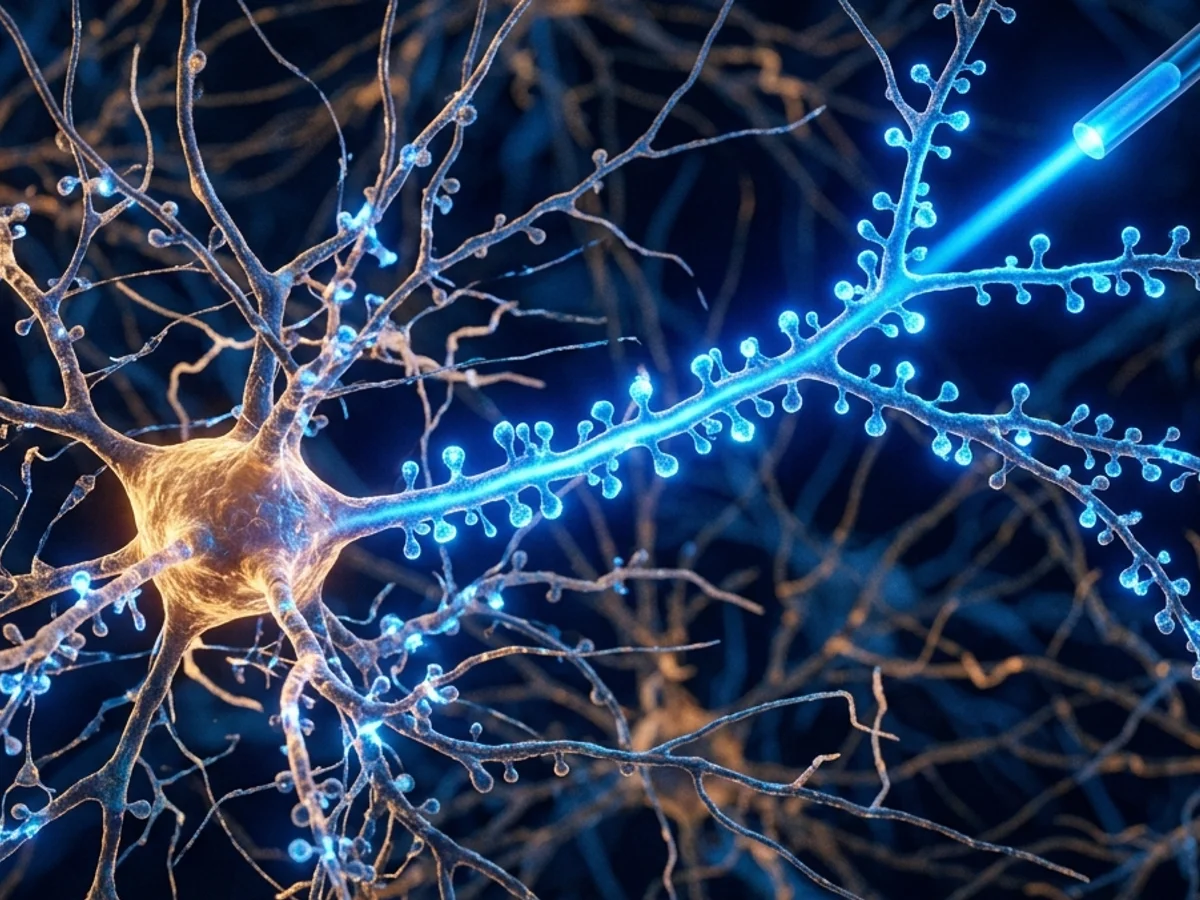
Fundamental Scientific Principle: Upon illumination with 470 nm blue light, channelrhodopsins open in fractions of a millisecond. Influx of sodium ions depolarizes the neuron, triggering native action potentials and driving specific animal behaviors.
Clinical Frontiers: Parkinson’s, Depression, and Vision Restoration
Before optogenetics, neuroscientists had to rely on blunt pharmacological agents or electrical deep brain stimulation that affected millions of surrounding cells indiscriminately. Karl Deisseroth at Stanford University combined bioengineering and fiber optics, demonstrating that targeted stimulation of specific dopamine pathways could instantly alleviate Parkinsonian motor deficits and modulate depressive circuits.
«Optogenetics turned the brain from an impenetrable black box into a transparent functional map, allowing causal dissection of specific neural pathways».
— The Nobel Committee at Karolinska Institutet
Clinical trials utilizing optogenetic vectors have already achieved historic milestones, restoring partial vision in patients suffering from retinitis pigmentosa. For complete technical insights, consult the landmark research publication in Nature.