

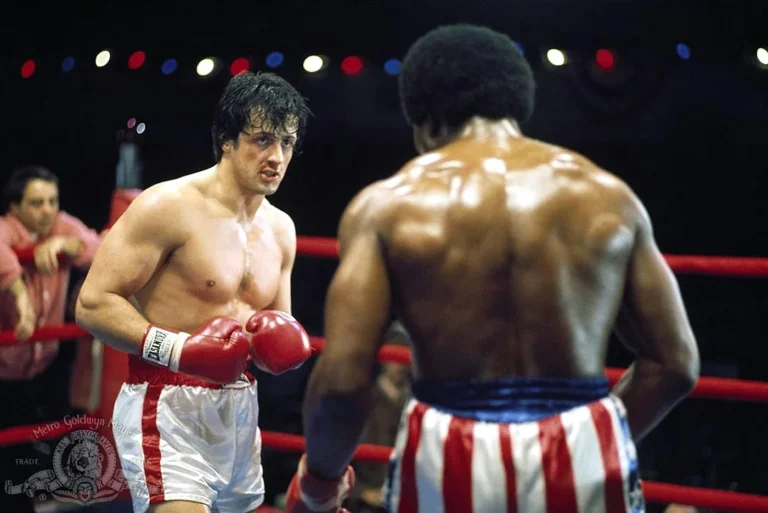

Half a century since its theatrical debut, the iconic Rocky film remains the definitive cinematic benchmark for sports dramas and underdog narratives worldwide. Yet the profound and enduring genius of Sylvester Stallone’s Academy Award-winning masterpiece lies in an unexpected narrative truth: its battered protagonist does not win the championship fight at the final bell. Instead, Rocky Balboa reveals an infinitely deeper human lesson — that true victory is measured not by scorecards or trophies, but by the courage to stand the distance and forge unbreakable self-respect.
The Real-Life Ali vs. Wepner Bout That Sparked a Legend
The origins of Rocky trace back not to elite Hollywood writers’ rooms, but to the electric atmosphere of the Richfield Coliseum in Ohio on March 24, 1975. Undisputed heavyweight champion Muhammad Ali entered the ring for what pundits widely dismissed as a routine tune-up against Chuck Wepner, a gritty club fighter from Bayonne, New Jersey. The boxing world anticipated a swift, humiliating knockout within the opening rounds.
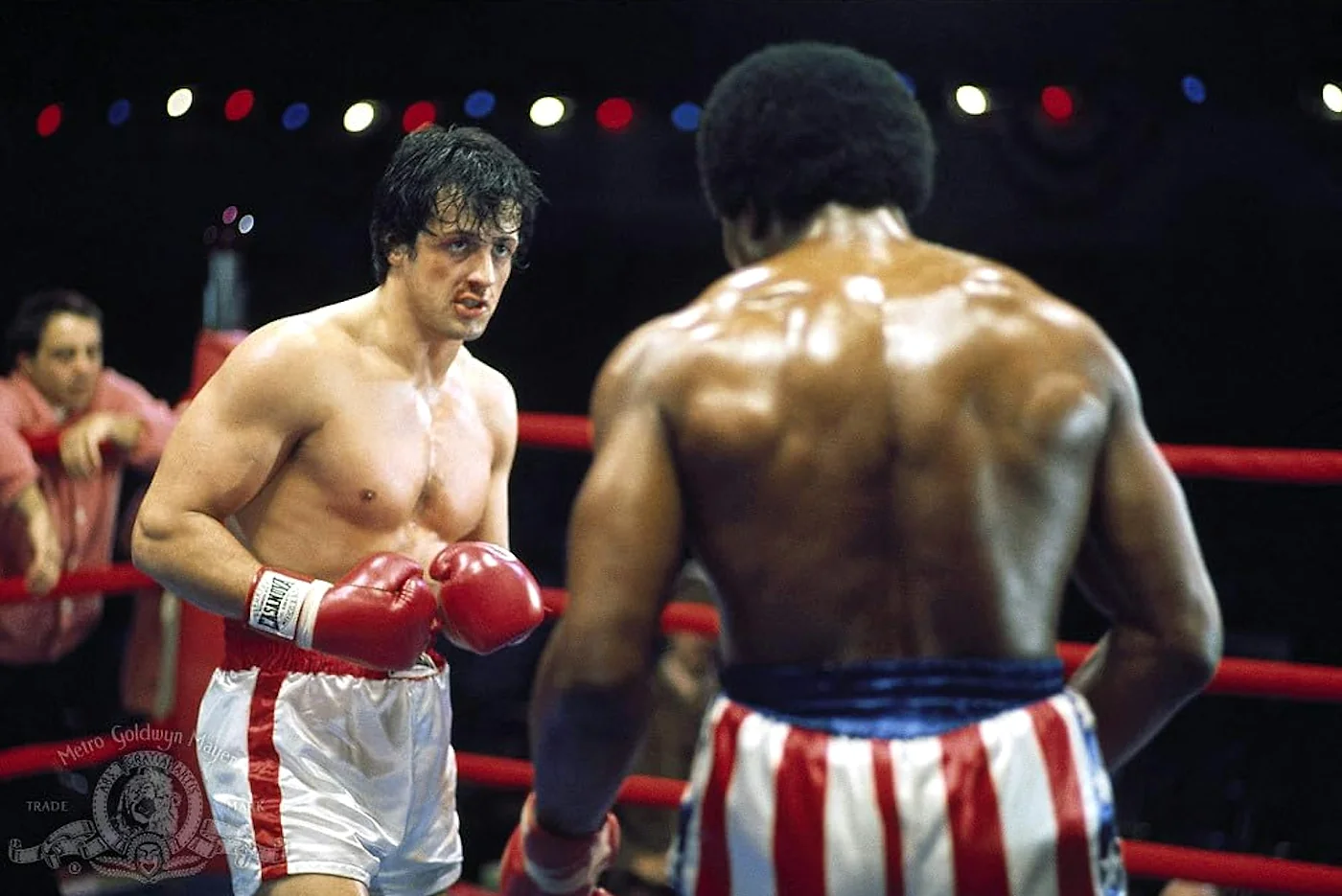
Instead, Wepner delivered a breathtaking display of raw resilience. Absorbing Ali’s punishing combinations with granite determination, Wepner shocked the sporting universe in the ninth round by knocking the heavyweight king to the canvas. Though Ali climbed back up to secure a technical knockout with mere nineteen seconds left in the fifteenth round, Wepner’s refusal to surrender captivated the crowd. Sitting in the audience was an obscure, destitute thirty-year-old actor named Sylvester Stallone, who immediately saw in Wepner’s defiance a universal metaphor for the human condition.
Seized by creative fever, Stallone secluded himself in a modest rented room and completed the first draft of Rocky in an astounding eighty-four hours. He channeled his own vulnerability into the character of Rocky Balboa — a gentle-hearted, down-on-his-luck Philadelphia debt collector who boxes in dim, smokey clubs for pennies, harboring no grand delusions until pure fate hands him an impossible shot at glory.
Desperation to Glory: Stallone’s High-Stakes Gamble
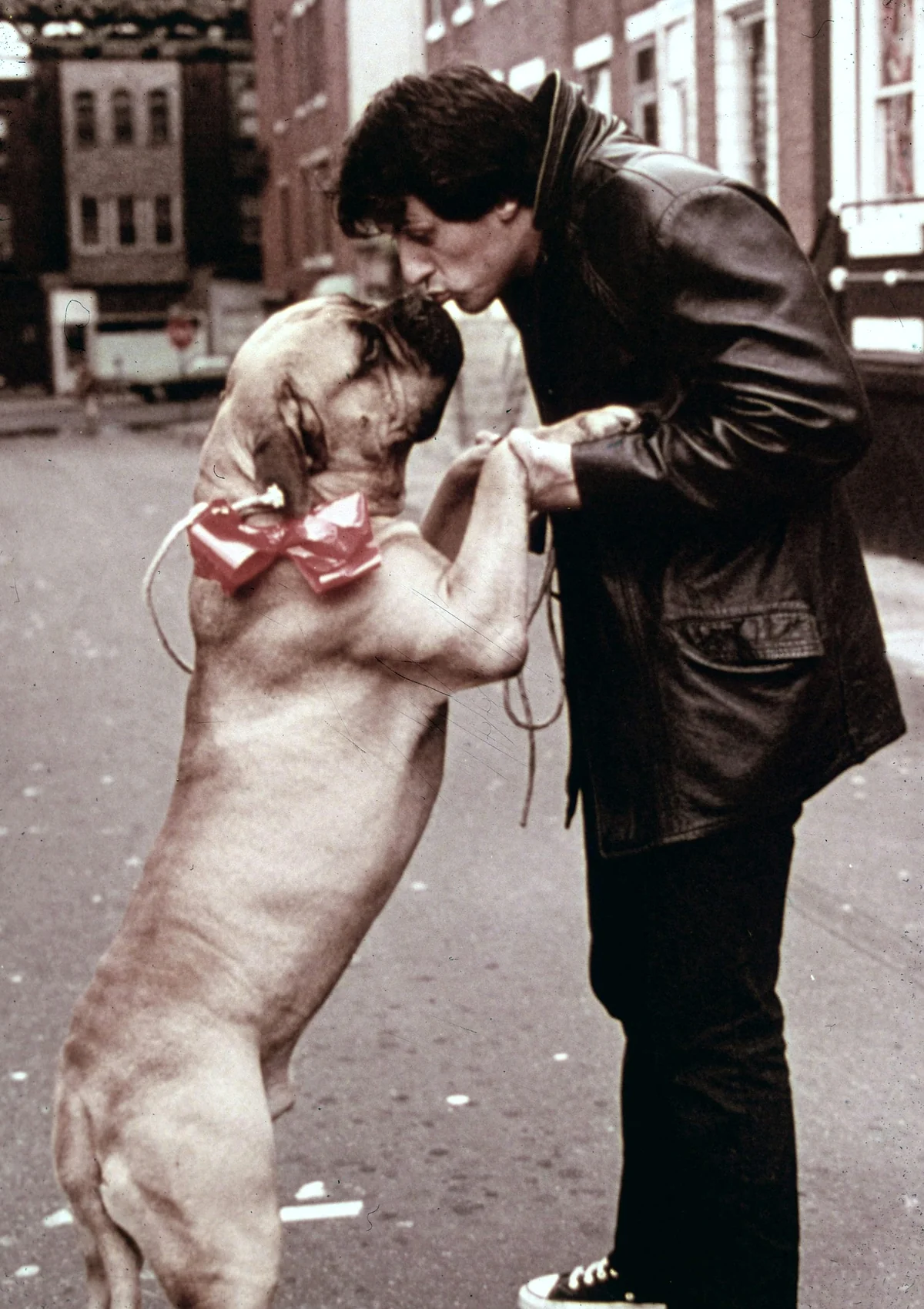
Stallone’s real-world circumstances in 1975 were every bit as grim as those of his on-screen counterpart. With barely $106 remaining in his bank account, behind on rent, and his pregnant wife Sasha Czack facing imminent hardship, Stallone was forced into one of the most agonizing decisions of his life: selling his beloved bullmastiff, Butkus, outside a liquor store for forty dollars just to ensure the dog wouldn’t starve.
When veteran film producers Irwin Winkler and Robert Chartoff optioned the script, they recognized its commercial brilliance and offered Stallone staggering sums — reaching $360,000 — on the strict condition that an established box-office star like Robert Redford, James Caan, or Burt Reynolds play the titular role. Despite facing genuine poverty, Stallone adamantly refused every cash buyout, gambling everything on his demand to portray Rocky himself.
Faced with his unwavering resolve, United Artists reluctantly greenlit the project with an austere $1.075 million budget and a lightning-fast twenty-eight-day shooting schedule. The moment Stallone received his modest upfront pay, he tracked down Butkus’s buyer and paid an astonishing $15,000 to buy back his loyal companion. Butkus was promptly cast as Rocky’s dog, immortalizing their real-life bond on celluoid forever.
«The world ain’t all sunshine and rainbows. It’s a very mean and nasty place, and I don’t care how tough you are, it will beat you to your knees and keep you there permanently if you let it. But it ain’t about how hard you hit. It’s about how hard you can get hit and keep moving forward.»
Sylvester Stallone, Academy Award-nominated screenwriter and star of Rocky
The Core Philosophy: Redefining Victory Through Self-Worth
Prior to 1976, conventional sports cinema adhered strictly to fairy-tale formula: the mistreated hero undergoes gruelling training, triumphs conclusively in the arena, and revels in public adoration. Stallone and director John G. Avildsen deliberately dismantled this Hollywood trope.
The emotional climax of Rocky takes place not in the ring, but in a quiet bedroom on the eve of the championship bout. Rocky confesses to his introverted girlfriend Adrian that he knows he cannot knock out the formidable Apollo Creed. His singular ambition is simply to «go the distance» — to endure fifteen rounds against the best in the world, proving to himself that he is not just another bum from the neighbourhood.
When the final bell rings and Creed retains his title via split decision, Rocky doesn’t even wait to hear the official verdict. Battered, bruised, and swollen shut, he turns his back on the ring and screams one word: «Adrian!». It is an immortal statement of personal validation over external validation, echoing modern inquiries into athletic motivation and the psychology of achievement.
Rocky Balboa connects universally because he is deeply flawed, riddled with self-doubt, yet possesses an indomitable will to confront impossible odds.
Garrett Brown’s revolutionary Steadicam on the Philadelphia Museum steps ushered in a transformative era of smooth, dynamic fluid camerawork.
The film boldly established that conquering personal insecurity and finding genuine love vastly outshines official accolades or championship belts.
Stallone’s real-life decision to reject lucrative payouts while bankrupt mirrored Balboa’s refusal to surrender his identity and dignity.
Cinematic Triumph, Oscar Glory, and the Creed Legacy
Released in late 1976, Rocky transformed into a global box-office juggernaut, grossing more than $225 million worldwide and becoming the highest-earning film of the year. At the 49th Academy Awards in March 1977, this low-budget independent miracle claimed three Oscars, including Best Picture and Best Director, famously defeating Martin Scorsese’s Taxi Driver, All the President’s Men, and Network.
The iconic montage of Rocky ascending the 72 stone steps of the Philadelphia Museum of Art, set to Bill Conti’s rousing score «Gonna Fly Now», cemented itself as an immortal cultural talisman of human willpower. Crucially, camera operator Garrett Brown utilized the brand-new Steadicam stabilization rig during this sequence, running side-by-side with Stallone and fundamentally revolutionizing kinetic motion in cinematography.
The franchise expanded across five sequels and the critically acclaimed Creed trilogy starring Michael B. Jordan, successfully passing the torch to a new generation. As the franchise marks its 50th anniversary, Amazon MGM Studios is releasing I Play Rocky (2026), a biographical feature directed by Peter Farrelly starring Anthony Ippolito as young Stallone, proving that the enduring spirit of the Italian Stallion continues to inspire millions across the globe.
- Emotional Authenticity: The script was forged from true destitution and inspired by Chuck Wepner’s courageous stand against Muhammad Ali.
- Subversion of Easy Triumphs: Losing the split decision preserved Rocky’s humanity and made his personal victory immortal.
- Symphonic Motivation: Bill Conti’s iconic brass fanfare created an enduring anthem for perseverance and human resilience.
- Intergenerational Resonance: Seamlessly passing the mentor mantle in the Creed series kept the saga relevant across multiple generations.