

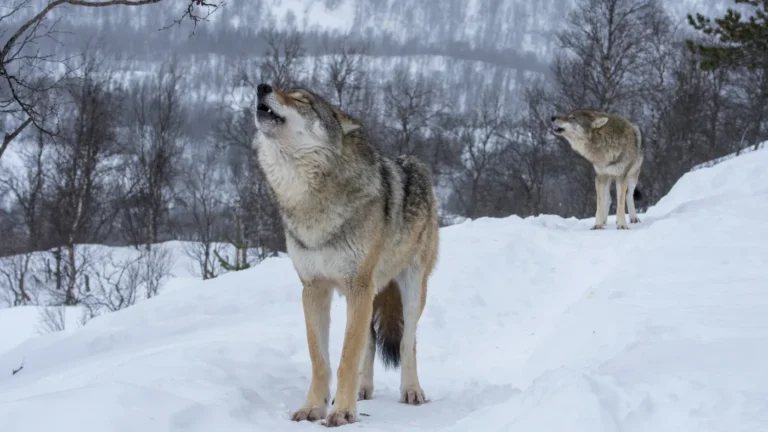

The haunting, spine-tingling howl of a gray wolf echoing through the wilderness has fueled centuries of folklore, werewolf legends, and the enduring belief that canines are drawn to serenade the full moon. Yet modern behavioral ecology and bioacoustics have definitively dismantled these mythologies: the evolutionary reality of why wolves howl lies in a sophisticated communication network of territorial demarcation, social bonding, and distinct acoustic dialects.
Bioacoustic Mechanics: The Physics Behind the 10-Mile Vocal Range
The howl of the gray wolf (Canis lupus) is among the most potent acoustic adaptations in terrestrial mammalian biology. In open landscapes such as arctic tundra or subalpine plains, a single wolf howl can travel up to 10 miles (16 kilometers), penetrating dense pine forests across 3 to 5 miles. This remarkable sonic propagation relies on an exquisite acoustic architecture combining deep fundamental frequencies with high-frequency harmonic overtones.
Bioacoustic spectral analysis shows that wolf howls operate primarily within a frequency band of 150 to 780 Hz, with upper harmonics extending beyond 2,000 Hz. Low-frequency sound waves boast long wavelengths that diffract efficiently around terrain obstacles, boulder fields, and thick tree trunks without substantial dissipation. Meanwhile, the higher harmonic frequencies carry the unique spectral signature of the vocalizing individual.
Each wolf in a pack possesses a distinct vocal timbre, fundamental pitch, and frequency-modulation profile. When a howl reverberates through a mountain valley, pack members do not merely perceive an alert; they decode precisely who is calling, their spatial trajectory, their social rank, and their physiological arousal.
Microclimatic conditions critically enhance this long-range propagation. Wolves predominantly vocalize during twilight, dawn, or deep night. During these hours, nocturnal atmospheric temperature inversions frequently develop, trapping a cold, dense boundary layer of air beneath warmer air aloft. This atmospheric boundary behaves as a natural acoustic waveguide, refracting acoustic waves downward toward the ground and carrying complex harmonic vocalizations across immense geographic expanses with minimal attenuation.
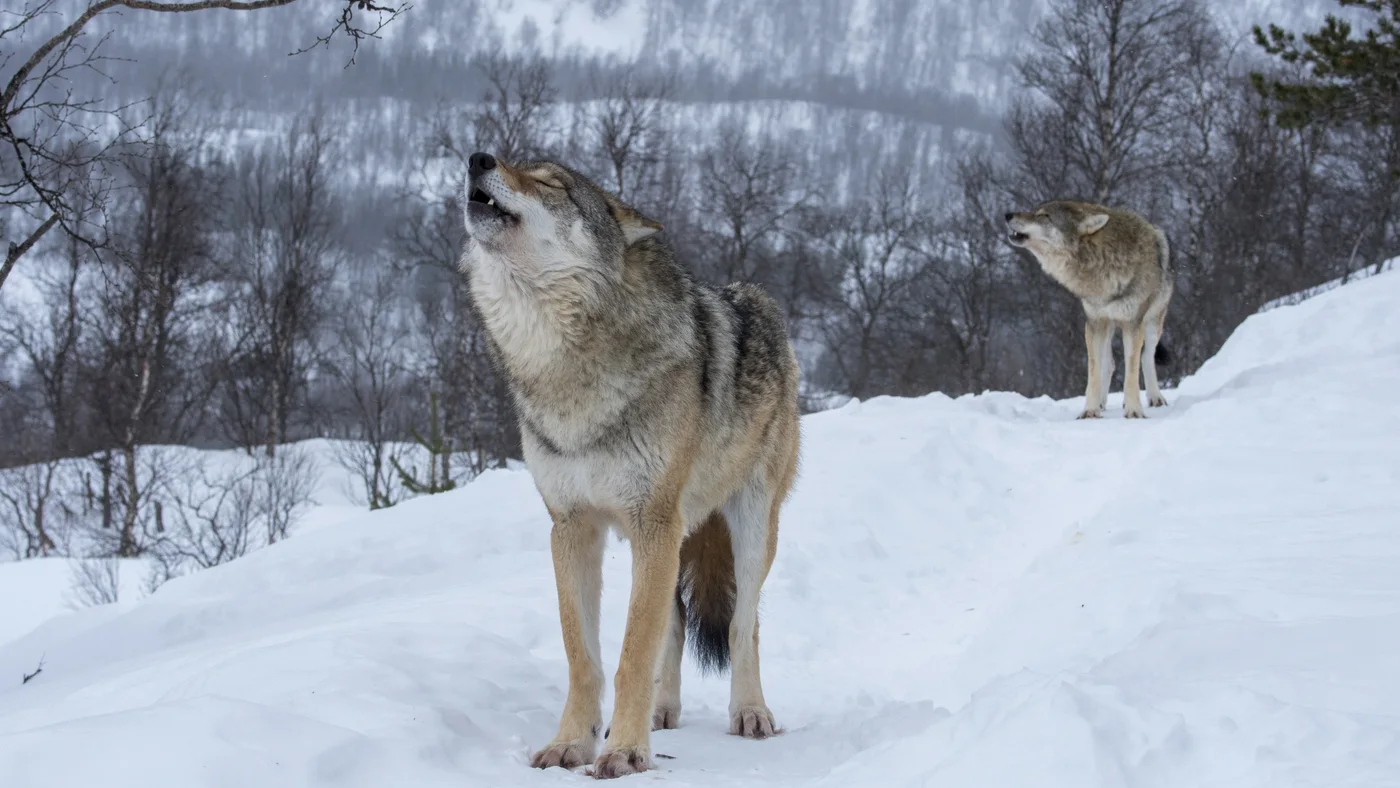
The iconic posture of a wolf tilting its snout toward the heavens—long romanticized as gazing at the lunar orb—is governed strictly by physiological fluid dynamics. Extending the neck straightens the larynx, vocal cords, and trachea into an uninterrupted acoustic horn. This anatomical alignment minimizes aerodynamic resistance in the airway, standardizing lung pressure and maximizing sonic amplitude with minimal metabolic expenditure.
Primary Functions: Boundary Defense and Gathering Dispersed Members
Ethologists categorize wolf howling into two dominant functional spheres: inter-pack territorial deterrence and intra-pack social coordination.
A single pack’s territory routinely spans hundreds to thousands of square kilometers. Physically patrolling every perimeter boundary every single day would consume unsustainable calories. Instead, wolves rely on “acoustic fencing.” Periodic vocal broadcasts serve notice to adjacent packs that the range is vigorously defended by resident predators, preempting costly and lethal inter-pack skirmishes.
Equally vital is the reunion function. During extended hunts across rugged terrain, pack members frequently separate. Lone wolves or dispersal sub-adults use directional howls to navigate back to the family nucleus. Conversely, when a lone dispersing wolf ventures into neighboring territory and hears resident howls, it instinctively adheres to strict radio silence; responding in foreign territory would instantly announce its presence as a vulnerable intruder.
Internal pack hierarchy is vividly mirrored across acoustic exchanges. Alpha breeding pairs typically anchor the vocalization with steady, low-frequency drones indicating stability and maturity. Subordinate yearlings and beta pack members interject with fluctuating, modulated harmonics, while subordinate or omega wolves utilize appeasement vocalizations that alleviate intra-group friction following kills or feeding competitions.
«Most chorus howling is fundamentally social—wolves howl together to build social cohesion. It reinforces pack bonds, makes them feel safe and unified, and synchronizes their emotional arousal right before setting out on a communal hunt.»
Dr. Arik Kershenbaum, Zoologist and Animal Communication Expert, University of Cambridge
Chorus Howling: Acoustic Illusions and Pack Synchronization
Few natural events rival the complexity of chorus howling. When multiple pack members vocalize simultaneously, they do not synchronize in unison; rather, they deliberately stagger their pitches and frequency sweeps across disparate tonal registers.
This intentional discordance generates an extraordinary psychoacoustic illusion. Because sound waves interfere and overlap at differing phases, a compact family of five or six wolves sounds to distant ears like a formidable legion of fifteen to twenty animals. This acoustic bluff causes encroaching rivals to overestimate the resident pack’s numbers and retreat.
Beyond deception, group howling serves an essential neurochemical role. Just as collective singing in humans triggers oxytocin and endorphin cascades while reducing cortisol, synchronized pack howling fosters emotional alignment, relieves intra-pack tensions, and heightens collective arousal immediately before embarking on grueling hunts against dangerous prey like moose or bison.
Field physiological monitoring demonstrates that collective vocalization actively stabilizes heart rates and respiratory rhythms across pack members. This shared neurochemical resonance serves as a vital psychological balm, buffering wild canids against the relentless physical rigors of arctic winters and prolonged resource scarcity.
Wolves howl regardless of the moon’s presence or phase. Tilting the head upward simply straightens the vocal tract to project sound with maximum efficiency.
Every wolf possesses an unrepeatable frequency-modulation signature, allowing pack mates to identify each caller from miles away in complete darkness.
By staggering pitches and avoiding unison, a modest pack of 5 wolves creates an acoustic illusion of 15 to 20 animals, effectively intimidating rivals.
Group vocalizations induce neurochemical bonding, reducing stress hormones and synchronizing psychological focus before dangerous communal hunts.
Species Dialects and Ontogeny: How Pups Learn to Howl
A landmark study led by zoologist Arik Kershenbaum at the University of Cambridge, published in Behavioural Processes, analyzed over 2,000 vocal recordings across 13 canid species and subspecies. The researchers confirmed that canids possess distinct vocal “dialects.”
Using quantitative pitch-tracking algorithms, the researchers showed that timber wolves (Canis lycaon) favor low, flat, unmodulated howls, whereas critically endangered red wolves (Canis rufus) exhibit high-pitched, looping, harmonic sweeps. Coyotes and golden jackals interlace their howls with sharp, staccato yips and barks, demonstrating divergent ecological pressures.
The evolutionary divergence between wild wolves and domestic dogs provides profound ethological contrast. Under millennia of artificial human selection, dogs retained juvenile neotenic behavioral traits, pivoting almost entirely to repetitive, high-frequency barking suited for proximate human interaction. Wolves, conversely, bark only as an extraordinary warning signal when mortal danger threatens the den, relying overwhelmingly on resonant harmonic howls for landscape-scale communication.
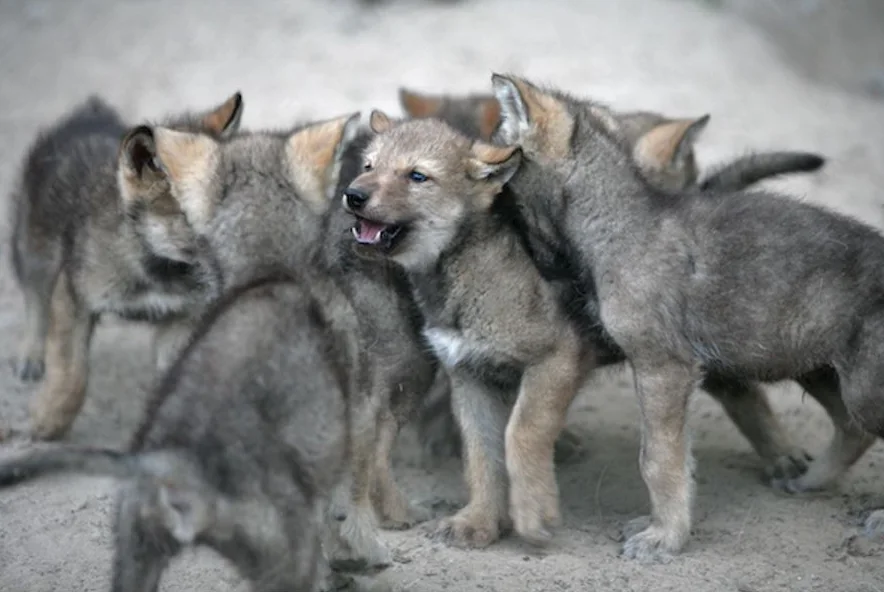
Ontogenetic development mirrors this evolutionary complexity. Wolf pups are born blind and deaf, yet by 2 to 4 weeks of age, they begin making high-pitched squeaks and rudimentary howls outside the natal den. By eight weeks, these juvenile vocalizations mature into harmonic structures that seamlessly integrate into the pack’s collective chorus.
- Wolves do not howl at the moon; the upward posture is a fluid dynamics mechanism optimizing airway resonance.
- Low frequencies (150–450 Hz) carry sound across 10 miles, while high harmonics convey individual identity signatures.
- Lone wolves practice strict acoustic concealment when traversing foreign territories to prevent territorial confrontation.
- Bioacoustic AI monitoring identifies individual wolves by unique spectrograms with over 97% non-invasive accuracy.
Non-Invasive Acoustic Monitoring in Modern Conservation
In modern wildlife conservation, bioacoustic understanding has revolutionized predator ecology. Instead of capturing wolves for invasive radio-collaring, field biologists deploy autonomous microphone arrays equipped with machine learning classifiers across wilderness areas.
These AI algorithms identify individual wolves by their unique acoustic spectrograms with over 97% accuracy, tracking pack composition, pup recruitment rates, and dispersal corridors without human interference. As explored in broader studies of evolutionary predator ethology, vocalizations remain nature’s most sophisticated balance between social cohesion and ecosystem governance.
Restoring and safeguarding apex wolf populations generates profound trophic cascades, curbing wild ungulate overgrazing, preventing riverbank soil erosion, and rejuvenating native floral diversity. Decoding the linguistic subtleties of wolf vocalizations empowers scientists to safeguard these charismatic apex predators while preemptively resolving potential ranching conflicts through non-lethal acoustic deterrents.