

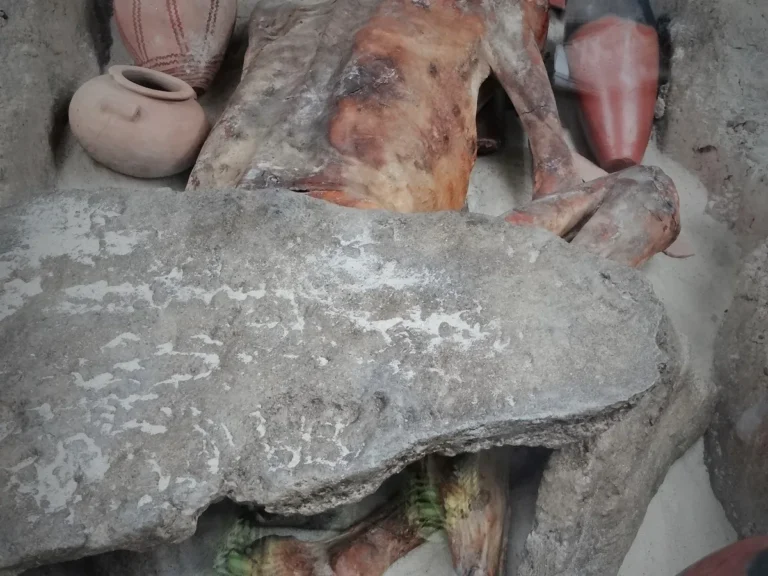

For centuries, European apothecaries and Arabic physicians prescribed a macabre concoction known as Mumia vera aegyptiaca—a powder derived from ground Egyptian mummies, reeking of pitch and embalming resins, hailed as a miraculous cure-all for hemorrhages, ulcers, and plagues. While modern medicine long categorized this practice as corpse medicine rooted in superstition, an interdisciplinary study from the University of Marburg (Philipps-Universität Marburg, Germany) published in PNAS reveals a startling biological insight: authentic museum specimens of historical mummy remedies exhibit statistically significant protective properties against influenza virus-induced damage in laboratory cell cultures.
Corpse Medicine: How European Apothecaries Turned Pharaohs into Pharmaceuticals
The history of Western medicine contains numerous bizarre chapters, but few rival the prolonged phenomenon of medicinal cannibalism. From the twelfth century through the dawn of the twentieth century, powdered human remains sourced from ancient Egyptian burial grounds were standard stock across reputable pharmacies in London, Paris, Venice, and Nuremberg. Esteemed physicians prescribed Mumia vera aegyptiaca for contusions, internal hemorrhages, epilepsy, gout, and respiratory ailments.
The origins of this practice trace back to a monumental linguistic misunderstanding. Medieval Arab medical scholars, including Ibn Sina (Avicenna), extensively praised ‘mūmiyā’—a black mineral asphalt naturally seeping from Persian rock fissures renowned for wound healing. However, when Western crusaders observed that Egyptian mummies were coated in dark, resinous encrustations, they mistakenly assumed the embalmed bodies were impregnated with this miracle pitch. What followed was centuries of tomb desecration.
As demand rapidly outstripped supply, fraudulent supply chains emerged. Egyptian merchants and unscrupulous European traders began mummifying the bodies of executed prisoners, embalming them with cheap bitumen, and selling the cured remains to apothecary guilds as authentic Pharaonic specimens. It was not until the early twentieth century that leading pharmaceutical firms, including Merck, removed Mumia from their commercial catalogs.
Molecular Archaeology: Decoding 24 Authentic Mumia Specimens in Marburg
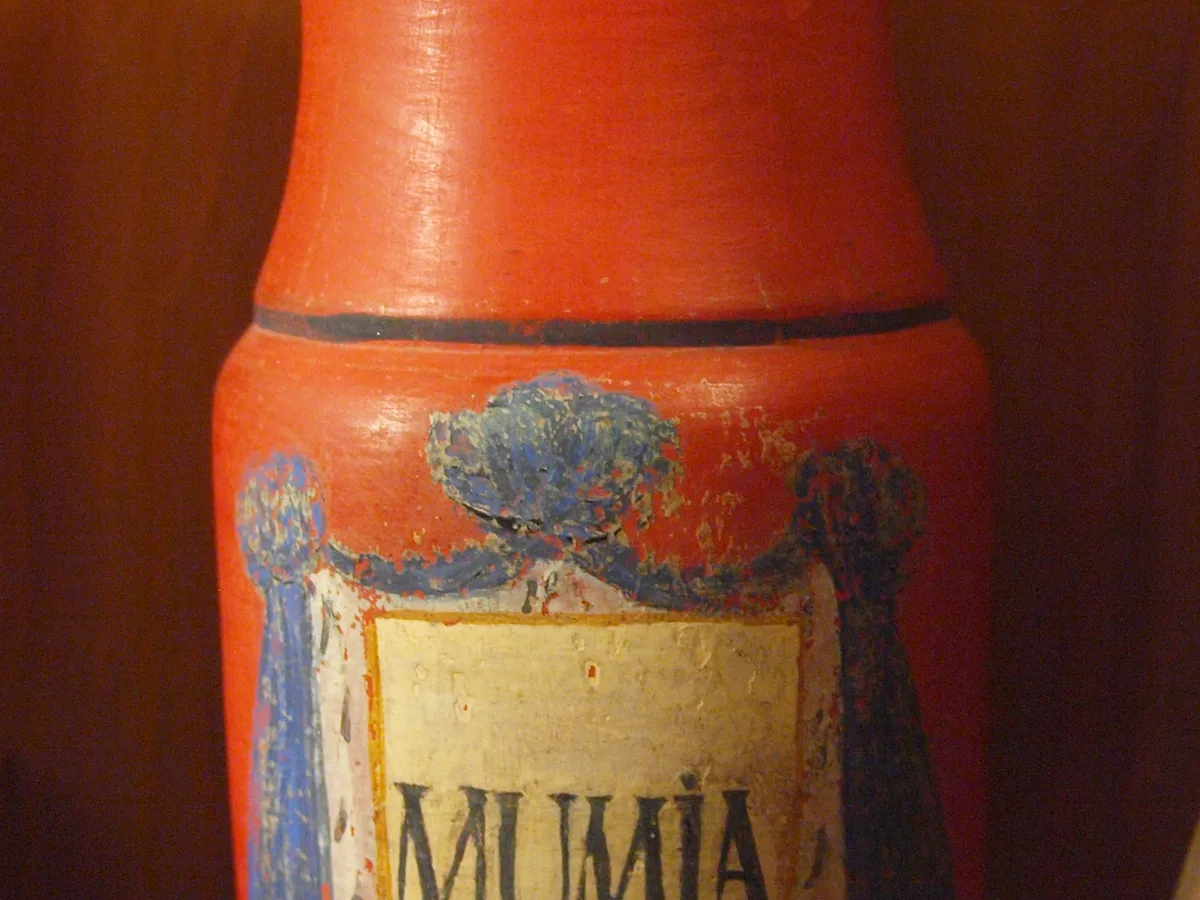
A century after the disappearance of mummy medicine from clinical practice, researchers at the Institute of Pharmaceutical Biology at the University of Marburg, led by medical historian Dr. Florian Bruns and analytical chemist Christian Karstens, reopened the cold case. Collaborating with university collections and German pharmacy museums, the team acquired 24 well-preserved historical specimens of Mumia vera, preserved bandages, and embalming balms.
Employing ultra-high-performance liquid chromatography coupled with high-resolution tandem mass spectrometry (UHPLC-ESI-HRMS/MS), the researchers constructed the most comprehensive chemical atlas of historical mummy preparations ever produced. The results revealed dramatic batch variations: while some containers held genuine Dead Sea asphalt, others were primarily mixtures of aged coniferous resins from Cedrus, Pinus, and Juniperus species, blended with beeswax and aloe extracts.
Crucially, the chemical analysis identified dozens of oxidized diterpenoids. Over millennia of slow autoxidation within arid tomb environments, primary resin acids transformed into rare, highly stable oxidized metabolites, notably 7-oxodehydroabietic acid (7-O-DHA), known for membrane-stabilizing characteristics.
The chemical profiles reconstructed via high-resolution metabolomics reflect the sophisticated trade networks of the ancient Mediterranean. Ancient Egyptian embalmers deliberately imported conifer resins from Lebanese cedar and Cilician fir forests, prized specifically for their preservative oils. Over consecutive millennia, these unsaturated resin acids underwent stereoselective oxidative cross-linking, forming chemically inert polymer networks that preserved both organic tissue and unique bioactive diterpenoids.
«We are certainly not suggesting that medieval doctors successfully cured influenza by feeding patients powdered corpses. Our goal was to determine whether the centuries-long medical use of Mumia vera had any empirical foundation by screening authentic historical specimens with state-of-the-art analytical chemistry.»
Professor Christian Karstens, lead analytical chemist and pharmacologist, University of Marburg
In Vitro Antiviral Screening: Protection Against Influenza A Cytolysis
To test whether these aged chemical mixtures possessed any genuine biological activity, the team tested hydroalcoholic extracts against mammalian kidney epithelial cell cultures (MDCK) infected with influenza A virus strains (H1N1 and H3N2), which typically induce rapid cytopathic cell lysis.
The findings, published in the Proceedings of the National Academy of Sciences (PNAS), demonstrated a surprising biological effect: pre-treatment with historical Mumia vera extracts provided modest but statistically significant cytoprotection. Host cells exhibited extended survival times, and the formation of viral lytic plaques was measurably suppressed compared to untreated controls.
When the researchers synthesized and tested pure 7-oxodehydroabietic acid in isolation, it showed zero antiviral effect. This demonstrates that the protective bioactivity is entirely emergent—a consequence of complex synergy between aged diterpenoids, bitumen fractions, and botanical polyphenols. In our earlier research into biological adaptation and behavioral resilience, we examined how cognitive offloading alters neural problem-solving, illustrating how systems adapt under stress.
Biophysical assessments suggest that the protective mechanism against influenza A infection operates primarily at the level of cellular membrane rigidity. The aged diterpenic fractions appear to intercalate within the outer phospholipid bilayer of epithelial cells, altering membrane fluidity and thereby presenting a steric hindrance that impairs viral hemagglutinin-mediated membrane fusion.
Scientists screened historical apothecary vessels, mummy balms, and embalmed textiles dating from the 18th to early 20th centuries.
High-resolution mass spectrometry mapped hundreds of oxidized diterpenoids from conifer resins, Dead Sea bitumen, and desert aloe.
Extracts from historical Mumia significantly enhanced the survival of mammalian epithelial cells challenged with influenza A viruses.
Isolated 7-oxodehydroabietic acid failed to replicate the effect alone: bioactivity arises from complex aged multi-resin synergy.
Scientific Caution: Why Mummy Powder Was Never a Human Cure
The Marburg researchers explicitly warn against misinterpreting these in vitro findings. Observing that a chemical extract protects cultured cells in a Petri dish does not mean historical patients derived any therapeutic benefit from ingesting mummy powder. In reality, oral consumption exposed patients to lethal risks from pathogenic mold spores (such as Aspergillus), toxic bacterial endotoxins, and heavy metal contamination.
Furthermore, gastrointestinal digestion would have broken down the majority of delicate resinous complexes long before they could reach systemic circulation or respiratory tissues. Nonetheless, the findings reveal that the empirical popularity of topical pitch ointments on wounds had genuine chemical merit.
The research demonstrates that historical folklore often harbored fragments of authentic pharmacognosy, even when wrapped in superstitious and macabre theories.
- Aged diterpenic resin acids derived from Pinaceae conifers (cedar, juniper, pine, and fir);
- Natural asphalt and bitumen biomarkers characteristic of the Dead Sea basin;
- Residual phytochemical indicators of desert aloe, myrrh, and beeswax utilized during tissue preservation;
- Stable autoxidation products accumulated over millennia within arid tomb microclimates.
Translational Implications for Modern Phytopharmacology
By bridging archaeological chemistry with virology, the Marburg study opens intriguing avenues for modern natural product discovery. As respiratory viruses continuously evolve resistance against commercial synthetic drugs, complex oxidized terpenoid scaffolds represent a compelling template for novel antiviral therapeutics.
Understanding how multi-component conifer resin mixtures stabilize host cell membranes against viral entry may inspire innovative botanical formulations—achieving medical efficacy without ever disturbing the solemn resting places of the ancients.