

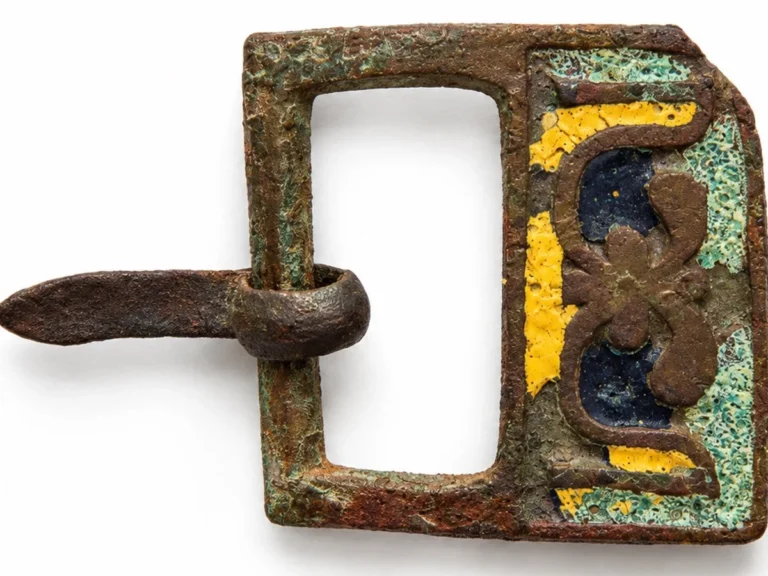

The forested slopes of Bukovyna in western Ukraine have long served as a vital frontier crossroads where Mediterranean empires clashed with nomadic steppe cultures. A breathtaking archaeological discovery has brought this turbulent past to light: an ancient sarmatian warrior belt buckle in Ukraine dating back roughly 1,800 years has been recovered by local residents in the Tsetsyn forest near Chernivtsi. Embellished with vibrant three-color champlevé enamel, this miniature bronze masterpiece offers unprecedented insight into the military, economic, and diplomatic interactions bridging Roman Dacia, nomadic equestrian warriors, and indigenous tribes during the second and third centuries A.D.
The Tsetsyn Forest Discovery: Artifact Assembly and Preservation
The remarkable assembly was accidentally unearthed by local residents navigating the wooded slopes of Mount Tsetsyn, an ancient nature preserve situated on the southwestern outskirts of Chernivtsi, Ukraine. Recognizing its potential antiquity, the finders transferred the artifacts to Dr. Antonii Moisei, head of the Department of Social Sciences and Ukrainian Studies at Bukovinian State Medical University.
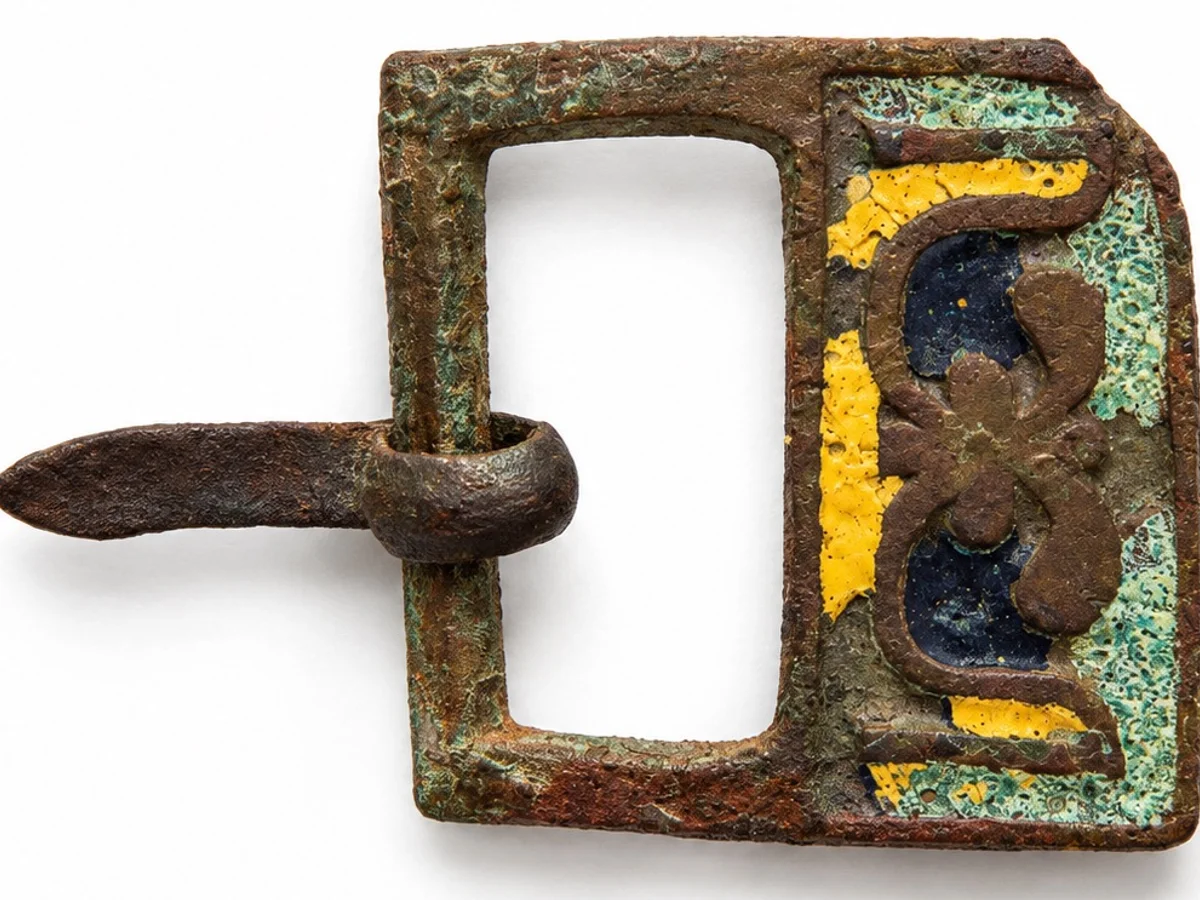
The centerpiece of the assemblage is a miniature square belt buckle cast from a copper alloy, measuring approximately 0.8 by 0.8 inches (2.1 by 2.2 centimeters). Its face features intricate cellular recesses inlaid with molten champlevé glass enamel, preserved in three vibrant shades: teal-green, bright yellow, and deep navy blue.
Complementing the buckle, the discovery yielded an elongated strap end mount and three small circular metallic plaques matching the decorative motifs of the buckle. Dr. Moisei executed a meticulous structural reconstruction of the original military belt, revealing a prestigious accessory reflecting mastery of ancient Roman metallurgical craftsmanship and decorative metalwork.
Mount Tsetsyn boasts an illustrious, layered archaeological pedigree. While celebrated in later medieval history as the site of a Moldavian frontier stronghold, systematic surveys demonstrate that this commanding hill overlooking the Prut river basin served as a strategic redoubt and fortified observation post continuously since the early Iron Age and Roman imperial era.
The metallic components were recovered from dense subsoil clays that effectively sealed the artifacts against bronze disease. An elegant dark-olive patina covers the bronze surfaces, highlighting the vivid contrast of the colorful enamel inlays and testifying to the superior metallurgy of the leaded-tin bronze alloy.
The Roman Dacian Frontier: Geopolitical Crossroads of the 2nd–3rd Century
Understanding the context of this high-ranking belt buckle requires revisiting the Roman frontier following the Dacian Wars (A.D. 101–102 and 105–106). Emperor Trajan defeated King Decebalus, annexing Dacia into a prosperous imperial province protected by extensive limes fortifications.
The fortified perimeter extended into the Carpathian foothills, creating an active contact zone with neighboring ‘Free Dacians’, Carpi, and nomadic Sarmatians wandering the Pontic-Caspian steppes and Dniester basin.
Dating to the Marcomannic Wars under Marcus Aurelius and the reign of Septimius Severus, this artifact reflects intense frontier diplomacy, trade, and skirmishing, mirroring archaeological expeditions uncovering trade contacts and frontier warrior culture.
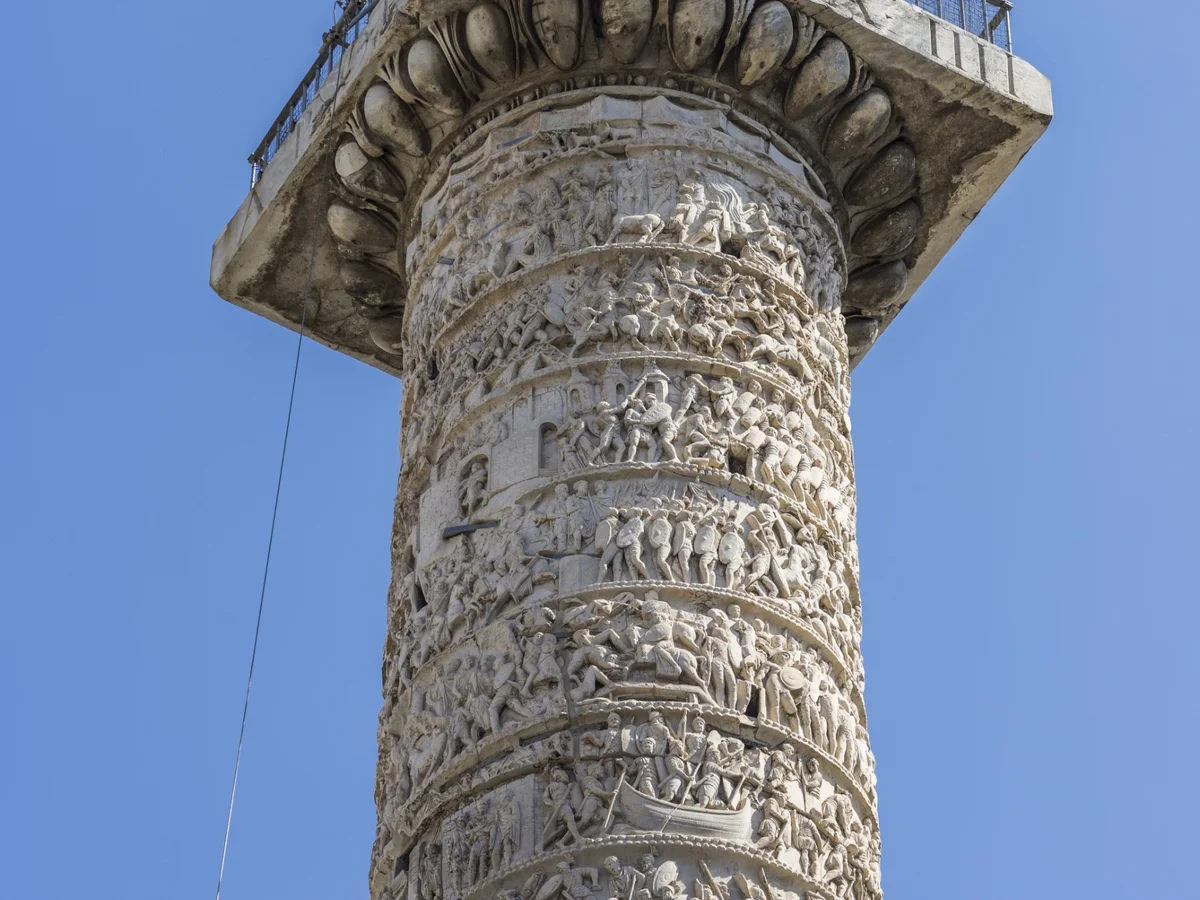
Trajan’s Column in Rome provides a stunning contemporary visual counterpart to the Ukrainian discovery. Across Scenes XXXI and XXXVII of the spiral relief, nomadic Sarmatian Roxolani horsemen battle Roman infantry clad entirely in flexible scale armor (lorica squamata) encasing both rider and steed. Suspended from their military sword belts are square fittings and strap tongues matching the dimensions of the Tsetsyn assemblage.
Cross-border mercantile routes connecting Roman Danubian commercial centers like Apulum and Sarmizegetusa with the Carpathian hinterlands channeled elite imports. In exchange for Italian vintage wines, glass vessels, and champlevé bronzes, steppe nomadic chieftains traded warhorses, hides, salted fish, and cattle.
«The ornamental design, geometric composition, and provincial Roman champlevé enameling technique place this artifact securely in the late second to early third century A.D. During this period, the Bukovyna region sat on the direct doorstep of Roman Dacia, and a high-status belt of this craftsmanship was worn by an equestrian Sarmatian aristocrat or mercenary leader allied with or fighting against Roman legions.»
Dr. Antonii Moisei, Doctor of Historical Sciences, Bukovinian State Medical University
The Sarmatian Nomads: Status Symbols of Equestrian Warriors
Dr. Moisei’s foremost working hypothesis is that the military belt belonged to an elite Sarmatian equestrian warrior. The Sarmatians, Iranian-speaking pastoral nomads renowned across the ancient world for their heavy cataphract cavalry, dominated the steppes from the Don to the Danube.
In nomadic warrior society, the sword belt was far more than functional hardware; it functioned as the supreme insignia of military honor, clan rank, and personal wealth. Lavishly decorated fittings distinguished seasoned commanders and noble champions.
The warrior may have acquired this provincial Roman accessory as diplomatic payment for auxiliary cavalry service, through trans-border trade, or as a battlefield trophy captured from a fallen legionary officer.
In Sarmatian aristocratic society, equestrian panoply carried sacred significance. The sword belt represented the focal point of a warrior’s heroic identity. Bearing an imported Roman enamel buckle publicly projected the owner’s elevated rank, whether earned as a battle commander or an allied frontier mercenary chieftain.
In Sarmatian aristocratic society, equestrian panoply carried sacred significance. The sword belt represented the focal point of a warrior’s heroic identity. Bearing an imported Roman enamel buckle publicly projected the owner’s elevated rank, whether earned as a battle commander or an allied frontier mercenary chieftain.
Found near Chernivtsi, Ukraine, and entrusted to historian Dr. Antonii Moisei of BSMU for scientific study.
Miniature 2.1×2.2 cm bronze buckle features pristine teal, bright yellow, and navy blue vitreous enamel.
Worn as an elite status symbol by a nomadic cavalry commander or Roman mercenary along the frontier.
Direct archaeological evidence of Roman provincial craft and barbarian military interaction in Ukraine.
Champlevé Enamel Engineering: Defying 18 Centuries of Subterranean Decay
Metallurgists note that the buckle’s durability is owed to the sophisticated champlevé technique. Roman provincial craftspeople carved precise geometric hollows into the bronze casting, filling them with pulverized vitreous paste pigmented with metal oxides—copper for teal, antimony for yellow, and cobalt for blue.
Firing the assembly at temperatures exceeding 750°C fused the glass paste into a rock-hard enamel hermetically bonded to the bronze substrate.
This vitrified barrier shielded the pigments from acidic forest humic acids, allowing the colors to retain their lustrous brilliance over 1,800 years.
- Chronology: late 2nd to early 3rd century A.D. (Antonine to Severan dynastic epoch).
- Assemblage components: square bronze buckle (2.1×2.2 cm), strap-end mount, and three circular plaques.
- Manufacturing technology: lost-wax bronze casting, champlevé glass enameling, mechanical abrasive polishing.
- Cultural affiliation: Roman provincial military craft in the service of high-status Sarmatian cavalry.
Significance for Ukraine’s Classical Archaeological Heritage
The recovery of the Tsetsyn belt buckle dismantles outdated impressions of ancient western Ukraine as an isolated frontier backwater, demonstrating that the region was dynamically integrated into Greco-Roman and nomadic cultural exchange.
Following non-destructive X-ray fluorescence spectrometry, the artifact set will be preserved and exhibited in the regional museum collections of Chernivtsi.
This magnificent 1,800-year-old buckle stands as enduring testament to the rich, cosmopolitan tapestry of ancient Ukrainian history on the periphery of the Roman Empire.