

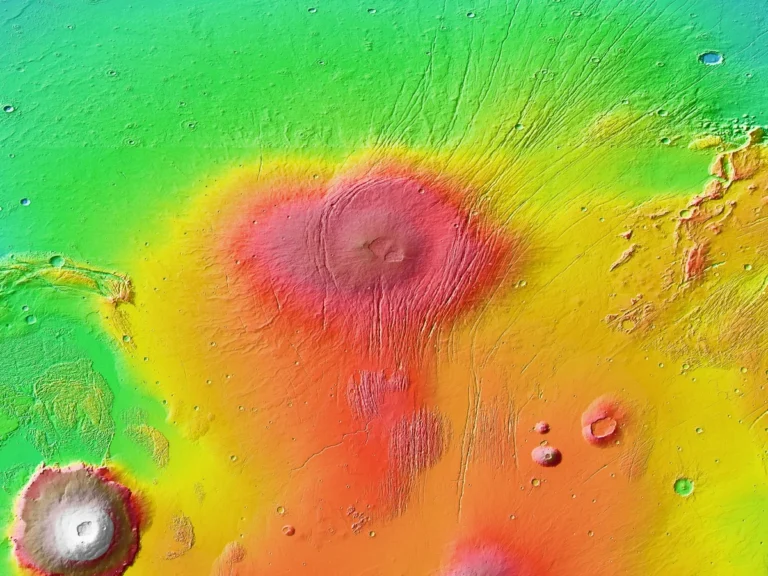

For generations, planetary scientists treated Mars as a geologically deceased planet whose once-towering shield volcanoes grew cold and extinct billions of years ago. However, unexpected spectroscopic observations from the European Space Agency’s (ESA) ExoMars Trace Gas Orbiter have fundamentally upended this paradigm. Atmospheric measurements confirm that Mars volcanoes are not dead, but merely sleeping: anomalous seasonal plumes of hydrogen chloride gas seeping from freshly formed tectonic rifts on the vast volcano Alba Mons point directly to persistent, active subsurface magma chambers.
The ExoMars TGO Discovery: Pinpointing Hydrogen Chloride Gas on Mars
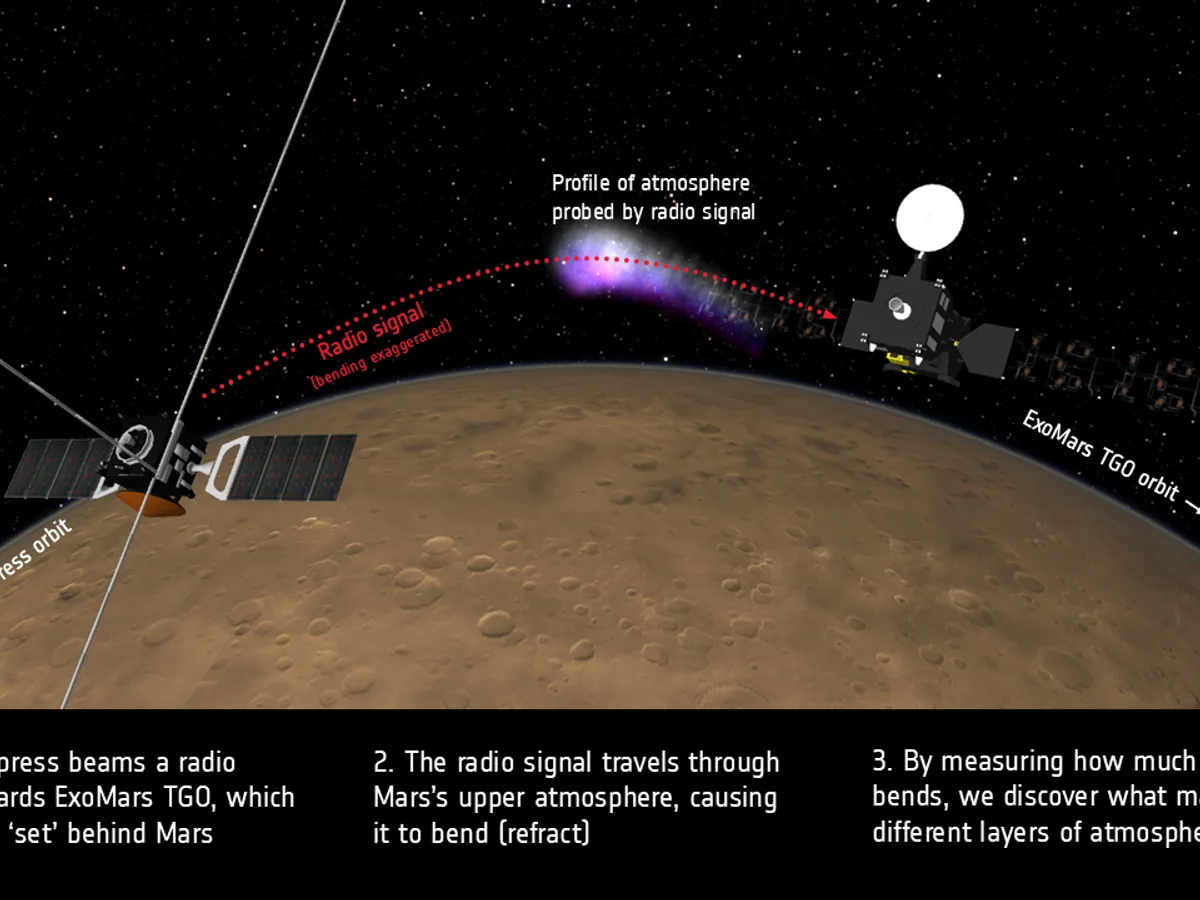
This planetary revelation was achieved using the ultra-high-resolution Atmospheric Chemistry Suite (ACS) aboard ESA’s ExoMars Trace Gas Orbiter (TGO). By performing solar occultation measurements as sunlight filters through the Martian atmosphere at dawn and dusk, the instrument detects trace compounds at sub-parts-per-billion (ppb) sensitivity.
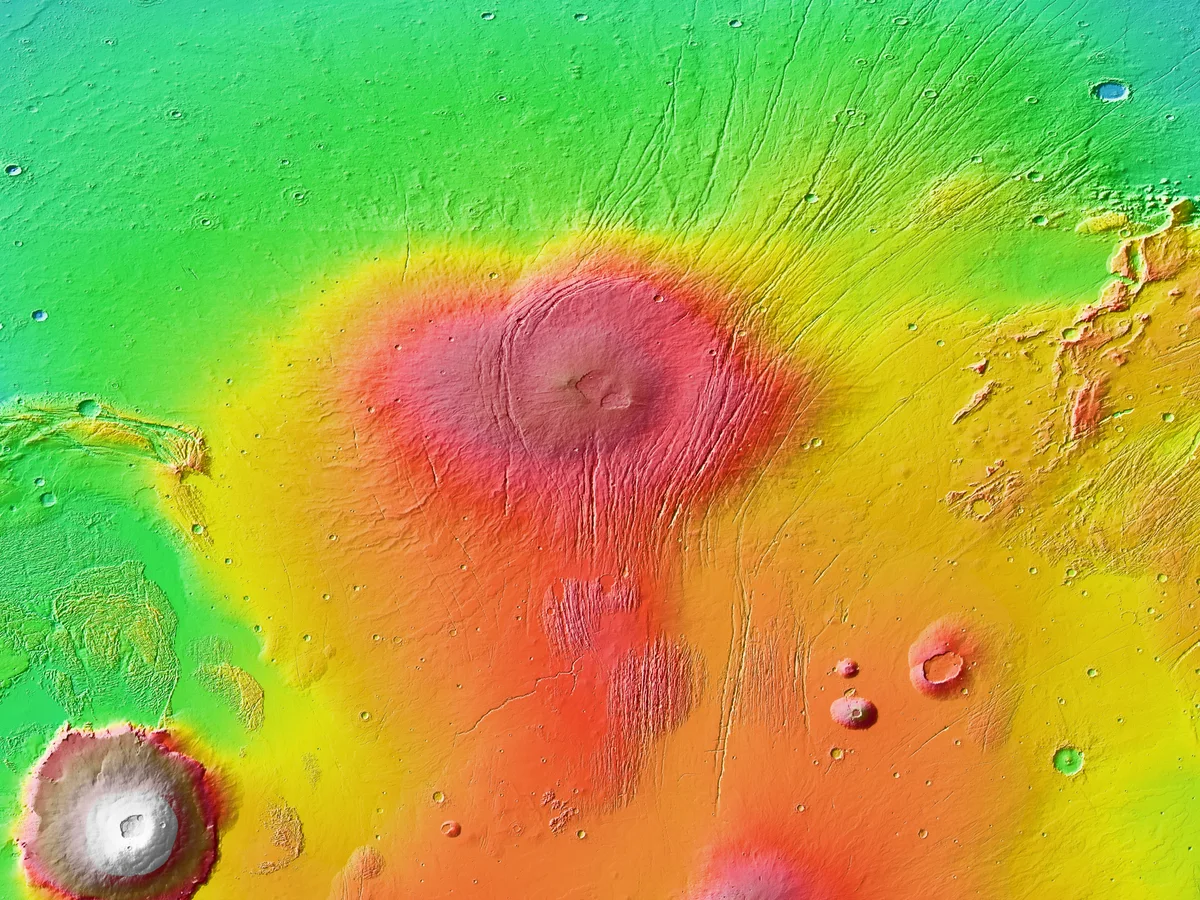
Over multiple observation cycles, an international research consortium spearheaded by Dr. Alexander Trokhimovskiy (Alexander Trokhimovskiy) and planetary scientist Daniel Mège (Daniel Mège) of the University of Bern observed distinct, localized plumes of hydrogen chloride (HCl). Unlike regional dust storms that disperse halogens globally, these emissions emerged exclusively above narrow fracture corridors on the northern flanks of the colossal shield volcano Alba Mons.
Published in the journal Science Advances (Science Advances, 2026), the study demonstrated that the HCl surges peaked during early northern summer. As seasonal surface frost sublimated from the rocky terrain, deep fissures were unblocked, allowing subterranean gases to vent into the atmosphere.
Operating in a circular, near-polar sun-synchronous orbit at an altitude of approximately 400 kilometers with a two-hour orbital period, the ExoMars Trace Gas Orbiter executes occultation sequences every orbit. This orbital geometry allows the Atmospheric Chemistry Suite (ACS) to capture high-resolution vertical atmospheric transmission profiles at dawn and dusk.
The instrument’s detection threshold for gaseous hydrogen chloride reaches an extraordinary 0.1 parts per billion (ppb). This extreme analytical sensitivity enabled researchers to isolate minute localized spectral absorption features above rugged topography while filtering out airborne dust and aerosol extinction.
Alba Mons: The Largest Shield Structure by Surface Footprint in the Solar System
Alba Mons is one of the most enigmatic volcanic complexes in our planetary neighborhood. While Olympus Mons reaches higher altitudes (towering 22 kilometers high), Alba Mons occupies the largest basal surface footprint of any volcano in the Solar System. Its vast basaltic apron sprawls over 1,500 kilometers across, covering a surface area comparable to the whole of Western Europe.
The volcano features exceptionally gentle flank slopes averaging barely 0.5 degrees, indicating that ancestral eruptions unleashed flood basalts of extremely low viscosity. The structure is crisscrossed by an extensive network of radial and concentric grabens known as Alba Fossae, where crustal extension has torn open chasms hundreds of meters deep.
Orbital reconnaissance from the CaSSIS imager aboard ExoMars and NASA’s HiRISE camera reveals that the interior walls of these grabens are remarkably crisp and free of accumulated aeolian sand dunes or micro-cratering. This pristine geomorphology confirms that these fractures ruptured recently in geological time, directly connecting deep outgassing pathways to the surface, complementing findings on space radiation research analyzing human health risks for long-duration interplanetary missions to Mars.
Unlike terrestrial volcanic structures such as Hawaii’s Mauna Loa, which continually drift across a localized mantle plume due to plate tectonics, Martian volcanoes remain fixed over their deep thermal roots. As a result, millions of years of effusive eruptions accumulated in situ, expanding the basal diameter of Alba Mons into a planetary-scale volcanic shield.
Gravitational mapping from NASA’s Mars Global Surveyor and MAVEN missions confirms the presence of a pronounced positive gravity anomaly (mascon) beneath Alba Mons, indicating massive, dense mafic and ultramafic intrusive complexes anchored within the lower crust.
«The localized detection of hydrogen chloride bursts along the northern slopes of Alba Mons represents an extraordinary breakthrough. On Earth, hydrogen chloride is a textbook volcanic degassing signature released as cooling magma depressurizes. If the Martian mantle is still supplying these volatile halogens, Mars is far from a geologically dead rock—it remains an active, slumbering volcanic world.»
Dr. Alexander Trokhimovskiy (Alexander Trokhimovskiy), lead author from the Space Research Institute
Magmatic Degassing Mechanics: How Subsurface Heat Generates Volcanic Vapors
In terrestrial geology, hydrogen chloride is an unmistakable fingerprint of volcanic activity. Magmatic melts contain dissolved halogens that partition rapidly into the vapor phase when tectonic decompression occurs or as subterranean bodies cool. The expanding gases fracture brittle overlying rock, escaping via hydrothermal vents and fumaroles.
Alternative hypotheses suggested photochemical interactions between airborne water vapor, airborne dust, and chlorine-rich surface salts under ultraviolet bombardment. However, detailed thermodynamic transport models formulated by co-author Kevin Olsen (Kevin Olsen) of the University of Oxford proved that photochemical mechanisms can only account for a diffuse, uniform atmospheric background. They cannot produce concentrated local plumes anchored to specific volcanic rifts.
Consequently, cooling magmatic intrusions—dikes or sub-crustal plutons nestled beneath the northern Tharsis rise—remain the only scientifically robust source capable of sustaining these seasonal gas pulses.
Thermodynamic phase equilibrium modeling of volatile halogens in basaltic systems indicates that hydrogen chloride partitions preferentially into the exsolved vapor phase during late-stage magmatic crystallization at temperatures between 800 °C and 900 °C, matching the thermal profile of a slowly cooling sub-crustal pluton.
Seismic recordings from NASA’s InSight lander corroborated this dynamic picture by recording broadband marsquakes up to magnitude 4.0 originating from Cerberus Fossae. These seismic events were attributed to localized hydraulic fracturing driven by ascending magma along extensive subsurface dike swarms.
Alba Mons stretches over 1,500 km across, making it the most expansive volcanic structure in the Solar System.
ExoMars ACS detected seasonal gas emissions escaping from fresh northern tectonic rifts on Alba Fossae.
Orbital imagery reveals fresh fault walls with minimal dust and no impact craters, proving active outgassing.
Subsurface volcanic heat may melt cryospheric ice, harboring protected liquid groundwater ecosystems.
Subterranean Habitable Niches: Hydrothermal Oases Beneath the Red Planet
The verification of lingering magmatic heat reservoirs carries profound implications for Martian astrobiology. While the planet’s surface is sterilized by solar radiation, cosmic rays, and harsh perchlorates, the subterranean realm presents a drastically different environment.
Endogenous volcanic warmth can melt overlying permafrost, creating localized hydrothermal aquifers and liquid mineral-rich groundwater at depths of several kilometers. On Earth, analogous volcanic vents nurture resilient chemoautotrophic microbial communities that flourish entirely independently of sunlight.
The fissures of Alba Mons thus emerge as paramount exploration targets for future rover and drill missions, mirroring insights from geological investigations of arid terrain and extreme planetary desert environments.
- HCl emissions peak as seasonal frost sublimates, opening narrow fracture corridors during northern summer.
- The lack of plate tectonics allows localized magma plumes to persist and channel heat into specific crustal provinces.
- NASA’s InSight seismometer previously registered sub-crustal rumblings linked to magma movement at depths of 30–50 km.
- Alba Mons is established as a prime target for future astrobiological exploration and deep-drilling reconnaissance.
Future Eruptions: Could Mars Awaken into Active Volcanism
Will Mars ever witness incandescent lava flows erupting across its red plains once more? Most geophysicists expect that Martian volcanism operates on immense episodic cycles spanning tens to hundreds of millions of years between major effusive phases.
Because Mars possesses a stagnant, single-plate lithosphere that lacks plate subduction, mantle plumes must accumulate colossal thermal pressure before breaching the crust. Intriguingly, seismic datasets from NASA’s InSight lander previously detected low-frequency marsquakes near Cerberus Fossae, confirming magma migration at depths of 30 to 50 kilometers.
Mars’s volcanoes have not died—they are merely resting across deep geological epochs. The faint exhalations of hydrogen chloride from Alba Mons are proof that the Red Planet still possesses a living, cooling interior.