

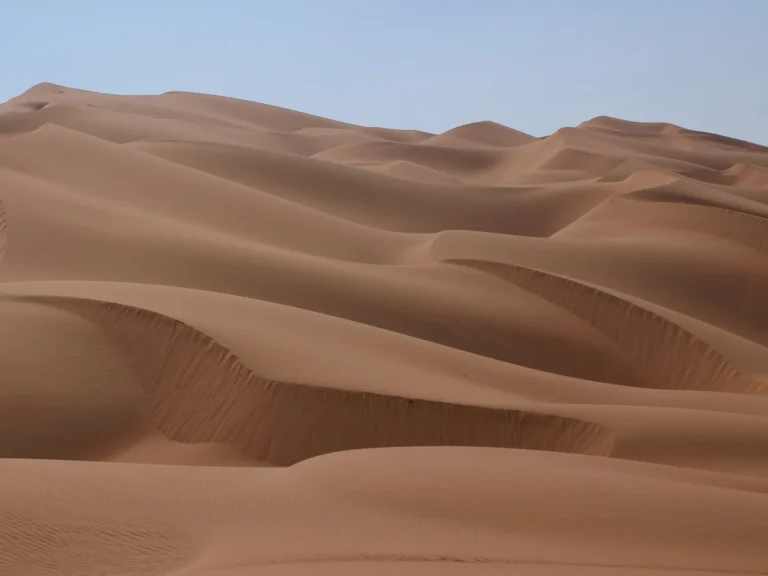

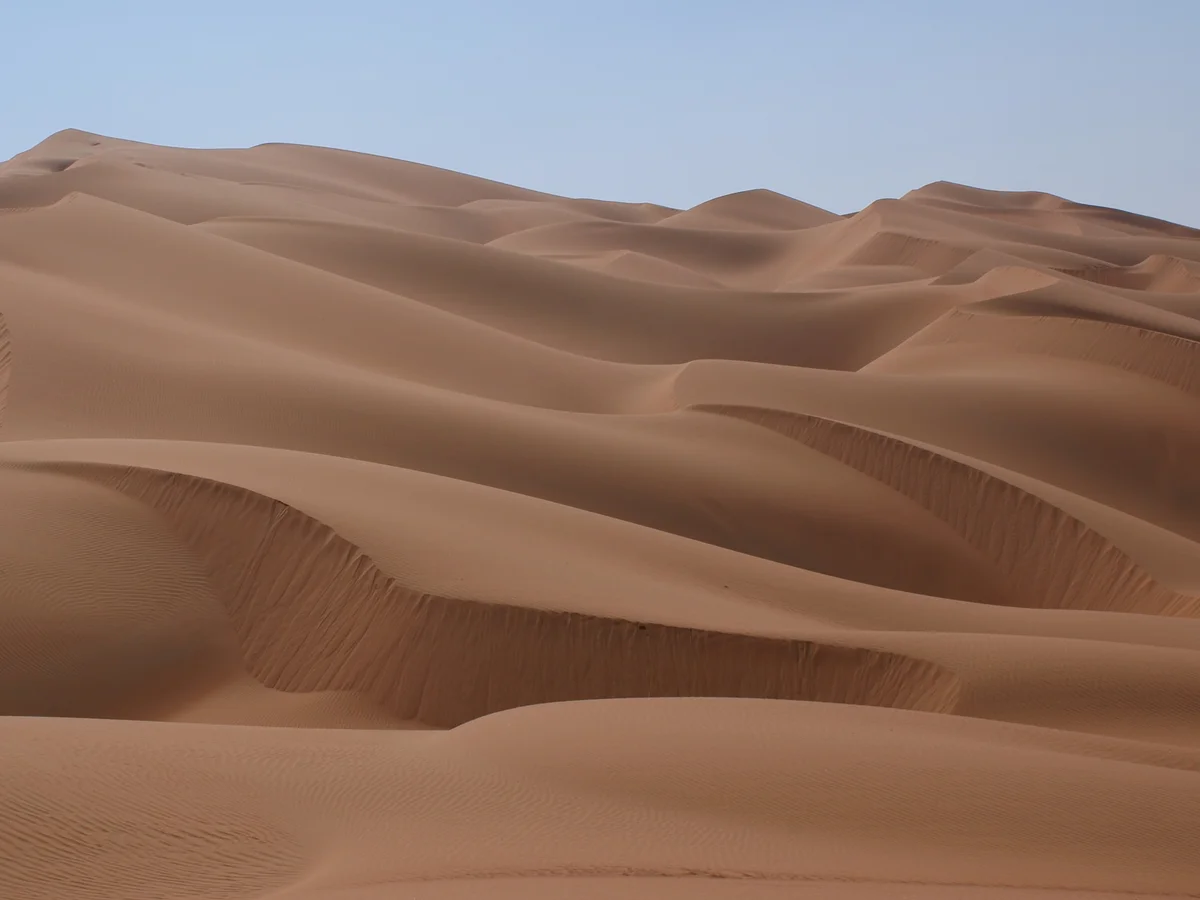
Today, the Rub al Khali desert on the Arabian Peninsula—the infamous ‘Empty Quarter’—stands as one of the most hyper-arid and inhospitable wildernesses on Earth. Yet tens of thousands of years ago, periodic climatic oscillations transformed this ocean of shifting dunes into a lush, savanna-like paradise interwoven with vast river networks and freshwater lakes. Conventional evolutionary models long assumed this ‘Green Arabia’ acted as a natural migratory superhighway for Pleistocene hunter-gatherers radiating out of Africa. However, groundbreaking field research has overturned this assumption: investigating why early humans avoided Rub al Khali across millennia, scientists revealed that freshwater and abundant game meant nothing to Paleolithic hominins without access to knappable tool-grade stone.
A 1,500-Kilometer Desert Traverse: Hunting for Paleolithic Footholds
To test prevailing theories of early human migration across the Arabian Peninsula, an international research consortium spearheaded by archaeologist Dr. Jeffrey I. Rose and geologist Dr. Rudolf W. Dellmour of the University of Vienna embarked on an arduous 35-day expedition. Navigating three specially outfitted cross-country vehicles, the eight-member team traversed more than 1,500 kilometers across the deepest, most remote sectors of the Rub al Khali across Saudi Arabia, Oman, the United Arab Emirates, and Yemen.
Guided by satellite radar telemetry indicating ancient subterranean drainage networks, the scientists investigated 125 target geological localities. Their stratigraphic core drilling validated climatic reconstructions: at 55 discrete sites, the team discovered thick beds of lacustrine and palustrine carbonate sediments dating between 122,000 and 67,000 years ago. Within these ancient lakebeds lay perfectly preserved fossilized freshwater snails (Melanoides tuberculata), bivalve mollusks, and ostrich eggshell fragments, establishing that expansive, perennial water bodies dominated the landscape during Pleistocene humid windows.
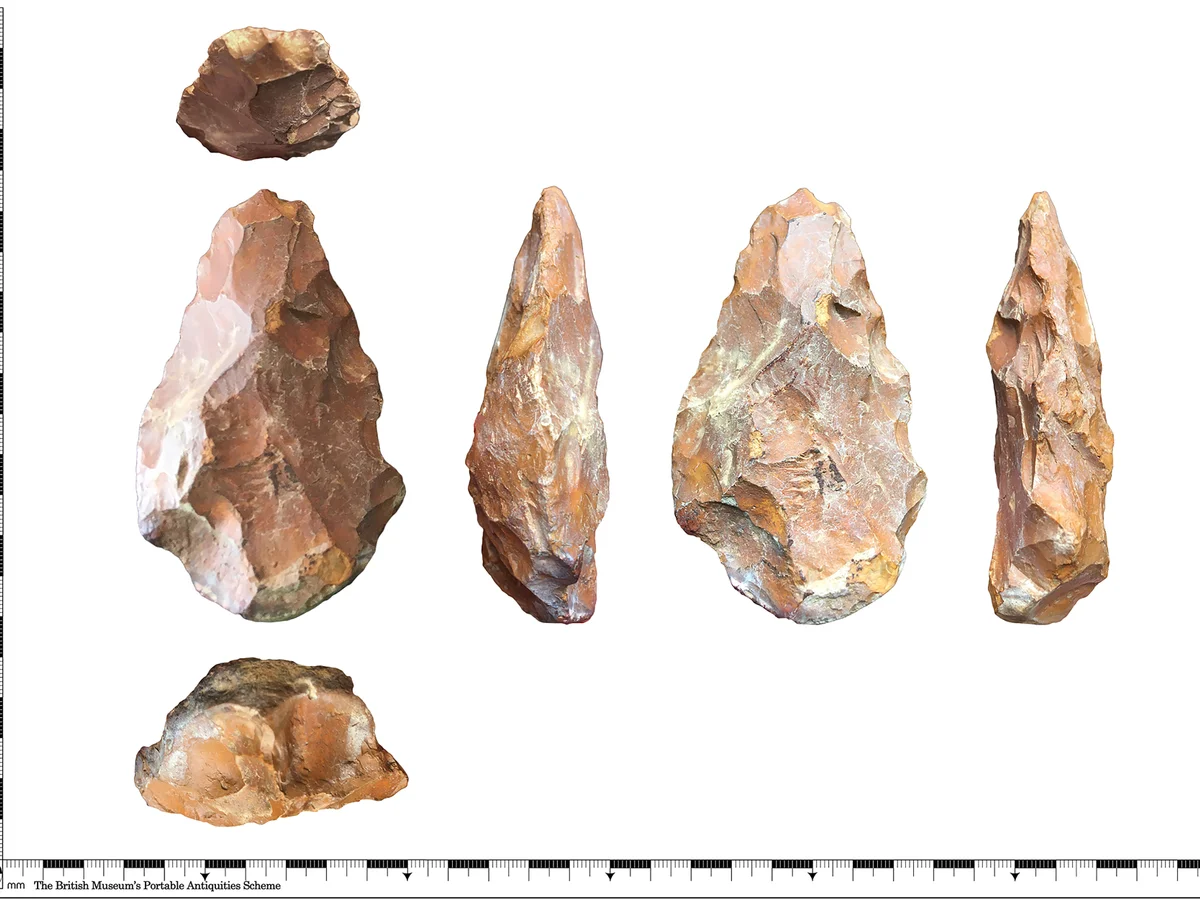
Yet the archaeological survey yielded a stunning blank. Across square kilometers of exposed paleo-shorelines, the researchers discovered not a single biface, flake, scraper, or core. While flint handaxes litter the desert’s periphery, the water-rich interior basin was entirely devoid of human occupation. This absence resonates with other large-scale archaeological surveys investigating ancient monuments in desert sands, demonstrating that environmental habitability is far more nuanced than simple rainfall patterns.
The Tyranny of Lithics: Why Stone Age Humans Could Not Survive on Water Alone
The explanation for this puzzling absence lies in the fundamental mechanical demands of Paleolithic technology. During the Lower and Middle Stone Age, hominins possessed neither metals nor ceramics. Every survival action—butchering a hunted gazelle or oryx, dressing hides for thermoregulation, carving wooden thrusting spears, digging for edible tubers, and repelling apex carnivores—depended entirely on razor-sharp lithic cutting edges.
However, only very specific rock types can be fashioned into tools. To produce a controllable, sharp cutting margin, a mineral must exhibit an isotropic, cryptocrystalline structure that breaks with a conchoidal fracture under percussive force. Suitable rocks include flint, chert, quartzite, and obsidian. Systematic geological mapping across the Rub al Khali interior confirmed that the bedrock consists almost exclusively of soft evaporites, gypsum, and porous marl—completely useless for tool flaking.
Middle Paleolithic hunter-gatherers were inextricably tethered to primary stone outcrops. Ethnographic and archaeological data reveal that foragers rarely transported heavy stone raw materials farther than 20 to 30 kilometers from bedrock quarries. Venturing hundreds of kilometers into the sandy interior would inevitably lead to dull, broken, and exhausted toolkits with zero possibility of replenishment, spelling certain doom for the band, a principle demonstrated in archaeological analyses of prehistoric mineral working and craftsmanship.
«We instinctively assume that water is the ultimate magnet for ancient humans: wherever there was a freshwater lake, archaeologists expect to find campsites. But our expedition proved the exact opposite. Inside the Rub al Khali basin, water was abundant, supporting mollusks, birds, and ungulates, yet hominins left not a single artifact. Water without knappable stone was an evolutionary dead end.»
Dr. Jeffrey I. Rose, archaeologist at the Universidade do Algarve and co-leader of the expedition
The Lithic Archipelago: Redrawing the Out-of-Africa Migration Corridors
The findings by Rose and Dellmour, published in the journal Nature (Nature, 2026), fundamentally overturn the classic ‘Green Arabia’ paradigm. For decades, dispersal models treated the wet Arabian interior as an open corridor where foraging bands freely spread from the Horn of Africa into Eurasia whenever the monsoons shifted northward.
The authors propose replacing this model with the concept of a ‘lithic archipelago’. True habitable zones were not defined by water alone, but strictly by the spatial intersection of freshwater resources and accessible tool-grade stone outcrops. Regions endowed with water but devoid of stone acted as ecological mirages—landscapes that appeared hospitable from afar but were functionally unlivable for tool-dependent primates.
Consequently, early human dispersals were channeled into narrow, rugged corridors along the Red Sea coastal margins, the Hijaz mountain escarpments in western Arabia, and the foothills of the Oman Mountains in the east, where active tectonic uplifting exposed flint-bearing sedimentary sequences. The sprawling interior lake systems, covering tens of thousands of square kilometers, remained pristine, untouched wilderness for tens of thousands of years.
35 days of fieldwork across the Rub al Khali identified 55 ancient lake basins with zero evidence of Paleolithic tool use.
The interior geology consists of soft limestone and gypsum, preventing hunters from fashioning butchery blades and spearpoints.
Human settlement clustered strictly where freshwater lakes overlapped with accessible bedrock chert and flint deposits.
Early hominin dispersals bypassed the desert interior, hugging mountainous margins with exposed lithic raw materials.
Scientific Rigor: Optically Stimulated Luminescence and Isotopic Geochemistry
To substantiate the absence of human occupation beyond doubt, the expedition deployed a rigorous suite of geochemical and chronometric tools. Optically Stimulated Luminescence (OSL) dating of quartz sand grains precisely determined the timing of lake formation and their eventual burial beneath encroaching dunes during arid regressions.
Stable carbon and oxygen isotope analyses extracted from fossil snail shells demonstrated that these lakes were perennial and deep, fed by sustained artesian groundwater discharge rather than brief, ephemeral flash floods. This firmly ruled out the possibility that the water bodies dried up too rapidly to attract humans.
Faunal analysis further confirmed that the lakes supported abundant megafauna, including wild camels, equids, gazelles, and ostriches. The fact that hominins did not exploit this protein-rich ecological haven conclusively proves that the availability of knapping stone was the primary limiting factor, overriding both caloric abundance and water accessibility.
- Stable lake systems flourished 122,000–67,000 years ago, teeming with mollusks, ostriches, and wild herbivores.
- Total absence of hominin tools confirmed across systematic surveys of 55 exposed paleo-lake basins.
- Foraging transport radius for stone cores rarely exceeded 20–30 kilometers in the Middle Paleolithic.
- Demonstrates that lithic raw material availability was more critical for human colonization than water alone.
Broader Implications for Human Evolution and Space Exploration
The Arabian discovery offers profound insights into human evolutionary ecology. Homo sapiens and archaic hominins were never purely biological organisms tracking ecological gradients; we are, and always have been, obligate technological primates. The boundary of human habitability is defined not merely by biological tolerance, but by technological sustainability.
This principle holds deep resonance for modern endeavors, including the planning of human settlements on the Moon and Mars. Water and oxygen are fundamental, yet without in-situ resources to fabricate and maintain structural tools, survival remains impossible.
The golden dunes of the Rub al Khali preserve the memory of an ancient green oasis that remained silent and unpeopled, reminding science that human history was forged not simply by the search for water, but by the transformative spark of struck stone.