

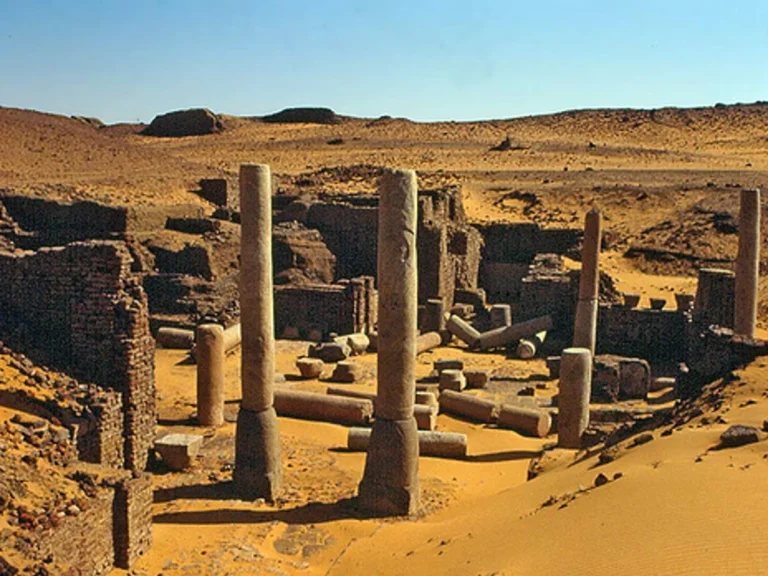

Rising from the golden dunes of northern Sudan along the eastern bank of the Nile, one of precolonial Africa’s most monumental architectural wonders is gradually emerging from centuries of burial. Excavations conducted by the Polish Centre of Mediterranean Archaeology at the University of Warsaw have brought to light a medieval cathedral in the Sudan desert — the monumental Great Church of Jesus at Old Dongola. With a footprint exceeding that of the White House, this magnificent cathedral served as the ecclesiastical heart of the Christian Kingdom of Makuria, commanding an archbishop’s seat that fundamentally overturns modern assumptions about the power, wealth, and sophisticated culture of medieval Nubia between the 6th and 14th centuries.
The Lost Empire of Makuria: A Christian Bulwark Between Byzantium and the Caliphate
For more than eight centuries—from the mid-sixth to the fourteenth century CE—a formidable Christian civilization flourished across what is now northern Sudan. Its capital, Old Dongola, was a bustling, fortified metropolis adorned with stone palaces, grand monastic complexes, and vibrant merchant quarters strategically positioned at the terminus of major trans-Saharan caravan routes. While Western Europe navigated the early Middle Ages, Makurian kings established a sophisticated bureaucracy that married ancient Nile traditions with Byzantine theological and architectural models.
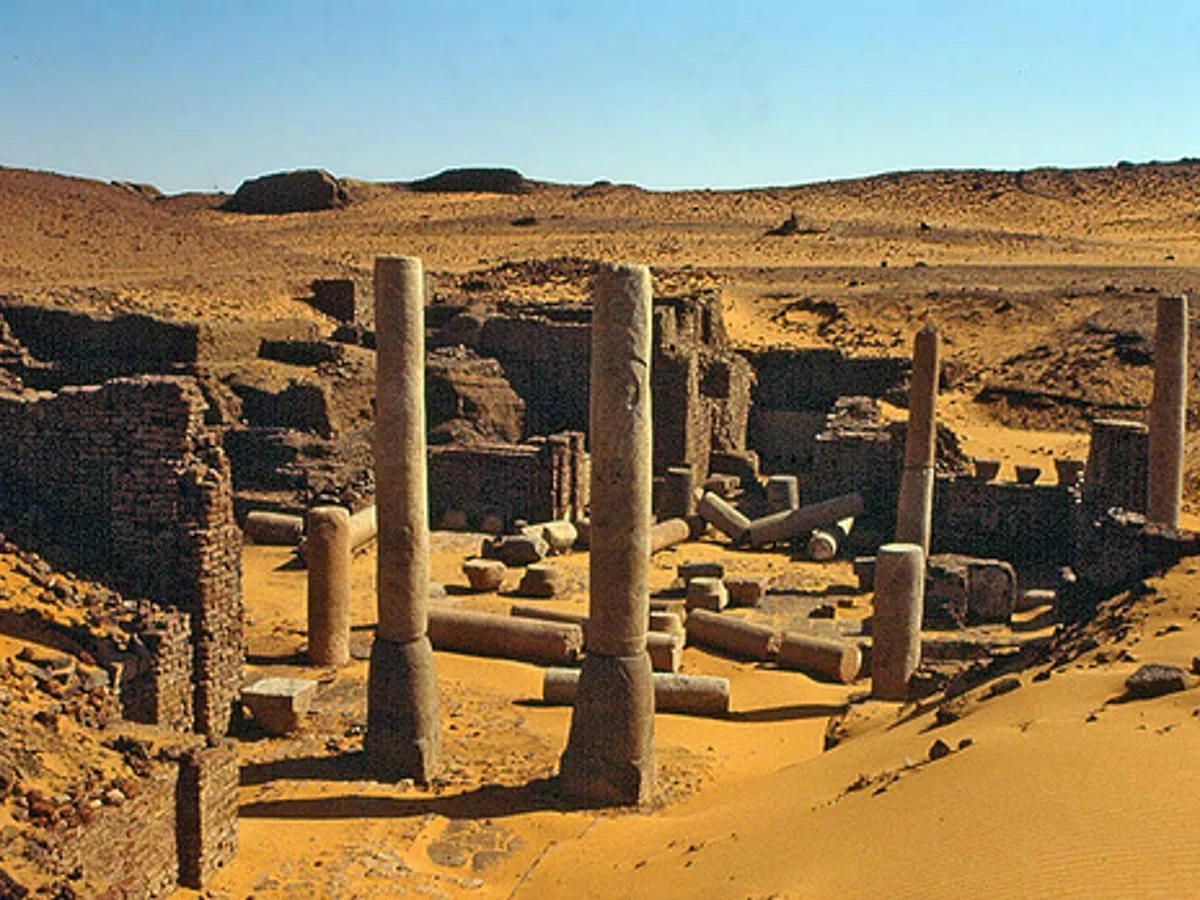
Makuria’s historical resilience was legendary. In the seventh century, as Islamic armies conquered Sasanian Persia and swept through Byzantine Egypt and the Levant, their southern advance stalled against the deadly precision of Nubian archers. In 652 CE, following the siege of Dongola, Arab commander Abdallah ibn Sa’d negotiated the ‘Baqt’ treaty with King Qalidurut of Makuria. This pact of non-aggression, reciprocal trade, and diplomatic recognition endured for over six centuries—longer than any formal treaty in world history.
Under the enduring stability of the Baqt, Makuria’s golden age witnessed the erection of the Great Church of Jesus inside the royal citadel. Archaeological consensus previously held that Nubian cathedral centers were situated outside royal residences. Finding this monumental church embedded squarely within the seat of political authority reveals that royal and ecclesiastical administration were intimately entwined, with the archbishop wielding immense civic and spiritual authority.
These findings provide invaluable testimony to indigenous African accomplishment, echoing contemporary historical discoveries into indigenous African exploration and culture, which dismantles antiquated Eurocentric historical narratives.
Colossal Architectural Proportions: Surpassing the Footprint of the White House
The cathedral’s sheer scale has astonished specialists in medieval and Near Eastern architecture. Detailed architectural mapping indicates the structure spanned approximately 47 meters in width and 57 meters in length. By comparison, the White House in Washington, D.C. measures approximately 51 by 26 meters, meaning the footprint of this Nubian church is more than 1.5 times larger than the American presidential estate.
Structural calculations indicate the cathedral’s central dome soared up to 21 meters above the stone pavement—roughly equivalent to a seven-story modern building. Even after centuries of scouring desert gales, surviving exterior masonry walls near the grand ceremonial entrance stand over 11 meters tall. To support the weight of these soaring brick vaults, Nubian master builders erected towering monolithic columns carved from gray granite, quarried at the Nile’s First Cataract near Aswan and shipped hundreds of miles upriver.
Inside, excavators cleared a monumental six-meter-wide semicircular apse oriented strictly toward the east, flanked by symmetrical pastophoria chambers for liturgical vessels. Adjoining the sanctuary, archaeologists unearthed a large domed crypt holding the remains of one of Dongola’s archbishops, whose ecclesiastical jurisdiction spanned from southern Egypt to the northern marches of Ethiopia.
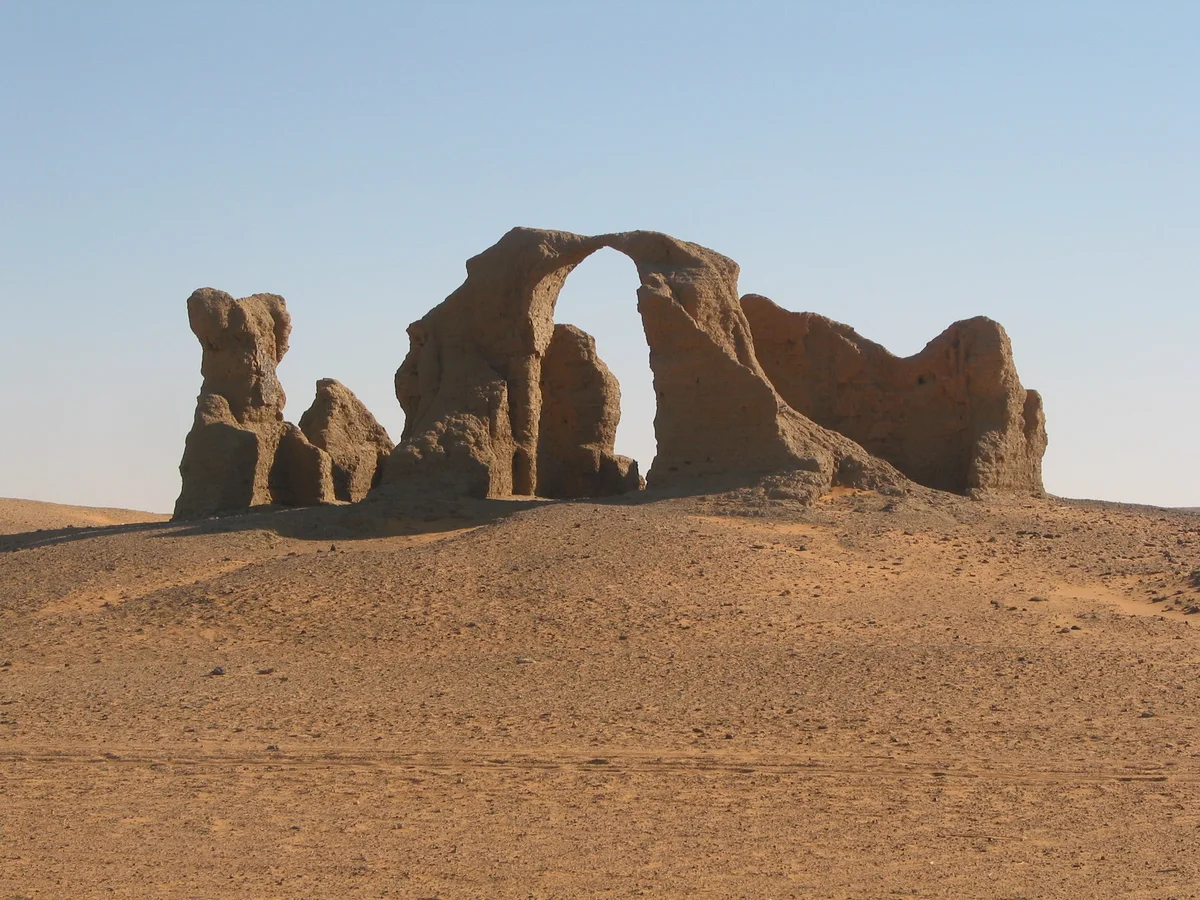
«When we cleared the monumental staircase and exposed standing brick walls reaching eleven meters in height, the magnitude of the discovery stunned the entire team. This was not a modest provincial church, but an architectural trendsetter for East-Central Africa whose vaults commanded the Nile skyline for generations.»
Prof. Artur Obłuski, Director of the Old Dongola Archaeological Mission, University of Warsaw
Masterpieces of Nubian Wall Painting: Apostles, Archangels, and Royal Iconography
The cathedral’s greatest artistic treasure is its extensive wall paintings. Sudan’s arid desert microclimate, combined with centuries of burial under clean desert sand, preserved the vibrant mineral pigments in pristine condition. Adorning the plastered walls of the aisles and apse, archaeologists documented monumental frescoes illustrating a unique Nubian Christian aesthetic that infused Byzantine iconography with expressive African stylization.
Heroic compositions depict Christ Pantocrator flanked by the twelve Apostles, alongside Archangel Michael spreading protective wings over supplicants. The figures feature wide, expressive eyes outlined in rich dark ochre, ornate halos, and elaborately patterned priestly vestments. Pigment spectrometry revealed the liberal use of costly imported lapis lazuli, cinnabar, and gold leaf, testifying to the opulent wealth of Dongola’s patrons.
Equally compelling are the donor portraits depicting Makurian monarchs crowned with divine horned diadems, standing alongside celestial patrons. This fusion of royal sacral authority within sacred architecture mirrors how ancient civilizations elevated craft to sublime heights, reminiscent of other historical breakthroughs like the unraveling the material sophistication of ancient archaeological masterpieces.
The monumental footprint of the cathedral at Old Dongola is more than 1.5 times larger than the White House in Washington, D.C.
Towering brick vaults were borne by solid granite columns, with a central dome reaching the height of a modern 7-story building.
The 652 CE treaty between Christian Makuria and the Arab Caliphate secured centuries of peace and economic prosperity.
Dry desert sands preserved magnificent frescoes of Christ, the Apostles, and Nubian kings rendered with lapis lazuli and gold.
Digital Archaeology: Ground-Penetrating Radar, LiDAR, and Nanoconservation
The discovery of the cathedral was facilitated by state-of-the-art non-invasive prospecting. Before initiating physical excavation, the Polish mission deployed multi-frequency Ground-Penetrating Radar (GPR) and magnetometry across the citadel plateau, piercing through five meters of sand dunes to identify clear rectilinear anomalies matching a massive church layout.
Today, ongoing field documentation relies on millimeter-accurate LiDAR laser scanning and terrestrial photogrammetry. Every brick layer, architectural molding, and inscription rendered in Greek, Coptic, and Old Nubian is integrated into a unified digital Geographic Information System (GIS), enabling researchers to model solar illumination through clerestory windows on solstice mornings.
Simultaneously, a dedicated conservation laboratory operates on site. Because fragile plaster rapidly desiccates and crystallizes upon exposure to ambient air, conservators apply nanostructured calcium hydroxide consolidants and microclimatic shields to stabilize fragile paint layers in situ.
- Site designation: Metropolitan Cathedral and Archbishop’s Seat inside the royal citadel of Makuria (6th–14th centuries).
- Preserved wall height: Standing mud-brick and fired-brick masonry reaches 11 meters near the grand monumental staircase.
- Episcopal crypt: Vaulted adjoining tomb chamber containing historic liturgical burials and Old Nubian and Greek inscriptions.
- Analytical methods: GPR geophysical surveys, millimeter-precision LiDAR scanning, and in situ nanoparticle plaster stabilization.
The Eclipse of Dongola and Reclamation from Oblivion: Rewriting the History Books
Makuria’s zenith waned during the fourteenth century as shifts in the Nile’s flow, dynastic friction, and growing military pressure from Mamluk Egypt weakened the state. In 1317, Dongola’s royal palace throne hall was converted into a mosque, and the Great Church was gradually abandoned to the creeping sands. The Sahara sealed the cathedral beneath an ocean of dust, preserving its secrets for over six centuries.
The modern resurrection of Old Dongola represents far more than an archaeological spectacle—it is a vital chapter in the decolonization of African historiography. For decades, traditional Western scholarship overlooked sub-Saharan Africa’s monumental urbanity. Christian Nubia stands as unequivocal proof of an enduring African superpower complete with written literature, complex masonry, and sophisticated ecclesiastical art.
Working alongside the local community of El-Ghaddar, the PCMA expedition is establishing a sustainable heritage reserve. The emergence of Old Dongola’s cathedral restores to Sudan and the global historical canon one of humanity’s most majestic forgotten civilizations.