

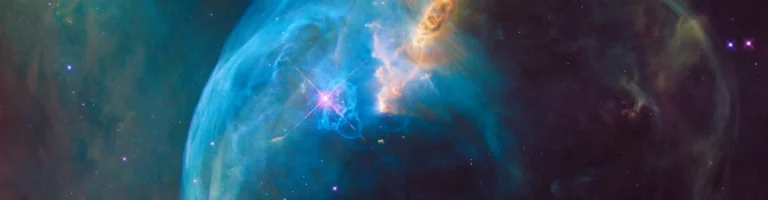

The global astrophysical community is on the verge of a historic cosmological paradigm shift: observational data from the James Webb Space Telescope (JWST) combined with theoretical calculations published in the Proceedings of the National Academy of Sciences (PNAS) strongly indicate the detection of the universe first Dark Stars. A research group led by Prof. Katherine Freese and Dr. Douglas Spolyar has demonstrated that the anomalously luminous, high-redshift point sources detected by JWST (such as JADES-GS-z13-0), which threw the standard Lambda-CDM cosmological model into crisis, may in fact be solitary, supermassive dark stars powered by dark matter particle annihilation rather than massive primordial galaxies.
Crisis in the Standard Model: Why JWST Shocked the Cosmological Community
When NASA James Webb Space Telescope (JWST) commenced operational science in July 2022, astronomers anticipated viewing dim, embryonic proto-galaxies during the epoch of cosmic dawn (roughly 300 to 400 million years after the Big Bang). Under the standard cosmological paradigm, gravitational aggregation had not yet had sufficient time to gather immense baryonic reservoirs into massive, fully structured galactic disks.
Instead, deep infrared surveys using NIRCam and NIRSpec exposed a series of extraordinarily bright objects located at extreme redshifts spanning z=11 to z=14. In terms of photometric luminosity, these objects matched the radiative output of mature galaxies boasting tens of billions of solar masses — structures that should have required over a billion years of hierarchical accretion to form.
This contradiction catalyzed the “Impossible Early Galaxy Problem”. While some theorists contemplated revising Einstein general relativity, theoretical physicists Katherine Freese, Douglas Spolyar, and Cosmin Ilie proposed a much more elegant, verifiable astrophysical mechanism.
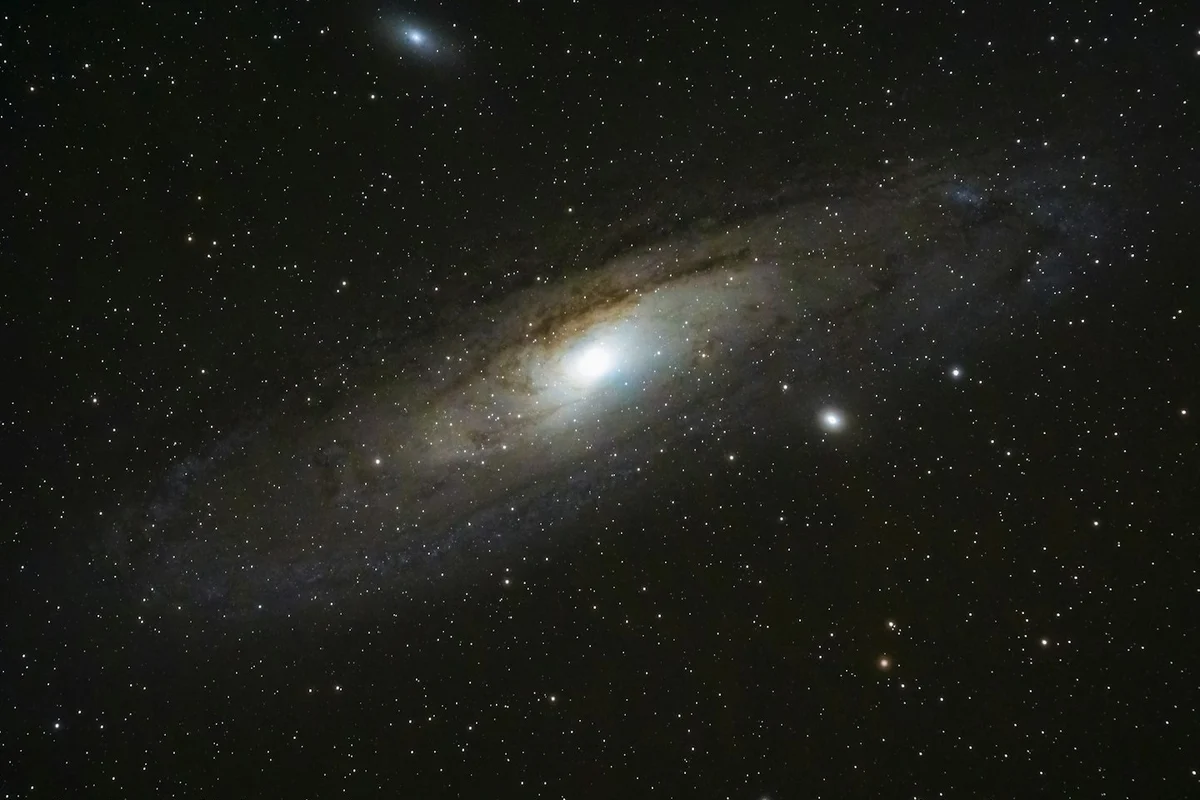
Anatomy of a Dark Star: Thermodynamics of WIMP Annihilation
The concept of dark stars was originally derived by Katherine Freese research group in 2008. Contrary to the colloquial impression of the term, a dark star is neither black nor invisible; in fact, it shines with radiant brilliance, outshining our Sun by billions of times. The designation refers entirely to its exotic interior energy engine.
In the pristine conditions of the early universe, the ambient spatial density of dark matter — specifically weakly interacting massive particles (WIMPs), such as supersymmetric neutralinos or Majorana fermions — was orders of magnitude higher than today. As primordial clouds of primordial hydrogen and helium collapsed gravitationally, dark matter particles were drawn inward into the baryonic core.
When two self-annihilating Majorana particles collide, they annihilate completely, releasing energetic gamma rays, neutrinos, and electron-positron cascades. This thermal energy is efficiently absorbed by the ambient hydrogen gas, generating tremendous radiation pressure that halts gravitational collapse long before the core reaches the temperature and pressure thresholds necessary for thermonuclear fusion.
Dark stars are sustained not by nuclear fusion, but by the continuous mutual annihilation of dark matter particles in the core.
With radii up to 10 AU, supermassive dark stars grow to millions of solar masses without suffering radiative blow-off.
When dark matter fuels run dry, dark stars undergo direct collapse into massive black hole seeds, seeding early quasars.
JWST infrared spectrographs are targeting the isolated singly ionized helium line to confirm pristine dark star atmospheres.
Colossi of the Cosmos: Spatial Dimensions and Photometric Signatures
The biophysical dimensions of dark stars are staggering. Because dark matter annihilation heating is distributed across an immense volume rather than confined to an ultra-dense core, a dark star does not contract into a compact stellar body. Its physical radius typically extends between 1 and 10 astronomical units (150 million to 1.5 billion kilometers) — easily enveloping the orbit of Jupiter.
Crucially, a dark star can continue growing indefinitely. Provided the core continues to accrete dark matter from the host halo, the star avoids supernova destabilization and radiation-driven mass loss. It can accrete mass until it becomes a Supermassive Dark Star (SMDS) harboring hundreds of thousands or millions of solar masses.
The effective surface temperature of such a leviathan remains around 10,000 Kelvin, emitting intensely across optical wavelengths. Over cosmological distances, this radiation is redshifted directly into the infrared bands targeted by JWST. The spectral energy distribution of the JADES candidates (JADES-GS-z11-0, z12-0, and z13-0) matches theoretical dark star spectra with remarkable statistical precision.
«Dark stars upend traditional astrophysics: they are composed almost entirely of normal hydrogen and helium, yet they shine not through thermonuclear fusion, but via the annihilation of a minute admixture of dark matter. If the JADES candidates are confirmed as dark stars, it resolves two of cosmology greatest enigmas at once: the identity of dark matter and the origin of supermassive black holes.»
Prof. Katherine Freese, Director of the Texas Center for Theoretical Physics, published in PNAS
Cosmic Seeds: The Birth of Supermassive Black Holes
Beyond resolving the early galaxy dilemma, dark stars solve another longstanding astrophysical mystery: the origin of billion-solar-mass quasars observed at redshift z=7. Conventional stellar-mass black hole remnants could not have accreted sufficient matter without violating the Eddington luminosity limit.
The life cycle of a supermassive dark star provides the missing evolutionary link. Once the dark matter reservoir within the host halo core is exhausted, the outward radiative pressure of annihilation abruptly ceases. Deprived of its energy engine, the multi-million-solar-mass gaseous monolith collapses catastrophically under its own gravity without undergoing a supernova detonation.
This Direct Collapse event spawns an intermediate-to-supermassive black hole seed weighing between 100,000 and 1,000,000 solar masses. Such a seed requires only modest subsequent accretion to blossom into the supermassive black holes anchoring early galactic cores. In a parallel to how cutting-edge photochromic biotechnology formulations build functional matrices at the nanoscale, dark stars forged the gravitational architecture of the cosmos.
- Anomalously bright JWST candidates (JADES-GS-z11/z12/z13) match the theoretical profile of supermassive dark stars.
- Composed of 99.9% pristine hydrogen/helium, dark stars derive their immense radiative power from 0.1% dark matter annihilation.
- Direct collapse of dark stars neatly resolves the cosmological mystery of how supermassive black holes formed so quickly.
- Confirming dark stars via JWST spectroscopy will yield humanity first direct experimental detection of dark matter particles.
The Crucial Test: The Helium II 1640 Å Spectral Emission Line
Decisive validation of the dark star hypothesis will emerge from upcoming high-resolution spectroscopy on JWST. The definitive spectroscopic discriminator separating a solitary dark star from an unresolved starburst galaxy is the singly ionized helium emission line (He II at 1640 Å rest-frame wavelength).
In a composite galactic spectrum, the He II line is broad and blended with emissions from heavier stellar elements. In an authentic pristine dark star, the He II 1640 Å feature will appear sharp, unblended, and devoid of metal lines, reflecting an unpolluted primordial atmosphere.
Verification of this isolated feature will provide the first direct observational identification of dark matter particle interactions. The comprehensive theoretical analysis is published in the Proceedings of the National Academy of Sciences (PNAS).