

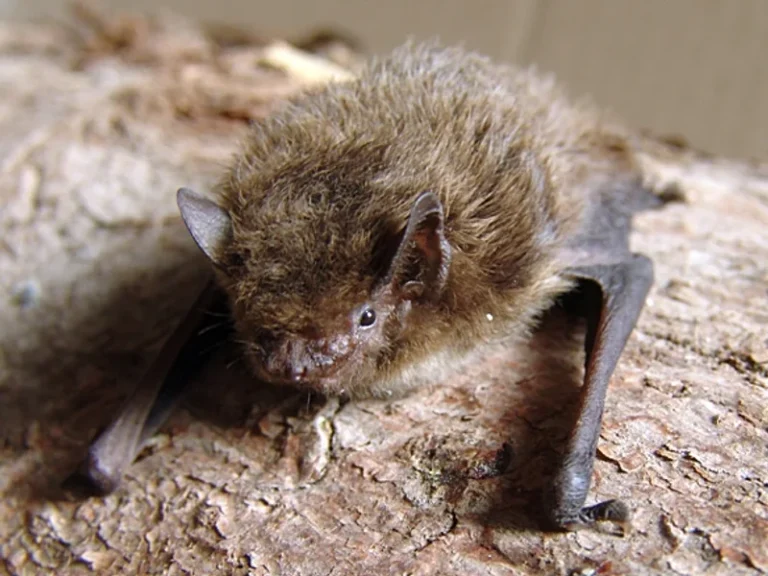

In the vertebrate animal kingdom, epic long-distance seasonal migrations spanning entire continents are traditionally considered the exclusive domain of robust pelagic birds like wandering albatrosses or Arctic terns possessing multi-meter wingspans. Yet long-term ecological tracking of European microchiroptera has produced a biological sensation: a diminutive Nathusius’ pipistrelle bat (Pipistrellus nathusii), weighing less than eight grams—roughly equivalent to the weight of two US nickels or a small table tennis ball—successfully completed a grueling transcontinental flight exceeding 2,224 kilometers from coastal Latvia all the way to northern Spain. This unprecedented athletic journey has forced zoologists to fundamentally rewrite the biomechanical limits of mammalian flight.
A Featherweight Wanderer: Meet Nathusius’ Pipistrelle
Nathusius’ pipistrelle (Pipistrellus nathusii) is among the smallest insectivorous woodland bats populating the temperate zones of Eurasia. With a head-and-body length of barely five centimeters and a narrow wingspan of approximately 24 centimeters, these delicate creatures spend their summers roosting in tree hollows, peeling bark, and eaves across the Baltic States, Poland, and Scandinavia, where breeding females raise their pups.
As autumn approaches and nocturnal ambient temperatures drop below the activity thresholds of flying insects, most temperate bat species retreat to local limestone caves and abandoned mines for winter hibernation within a radius of a few dozen kilometers.
Nathusius’ pipistrelles, however, belong to an elite cohort of seasonal long-distance migrants. Every autumn, these animals embark on vast transcontinental journeys toward southwestern Europe, where mild oceanic winters allow them to periodically arouse from torpor and feed.
From Pape to Navarra: The Forensic Discovery of a Continental Record
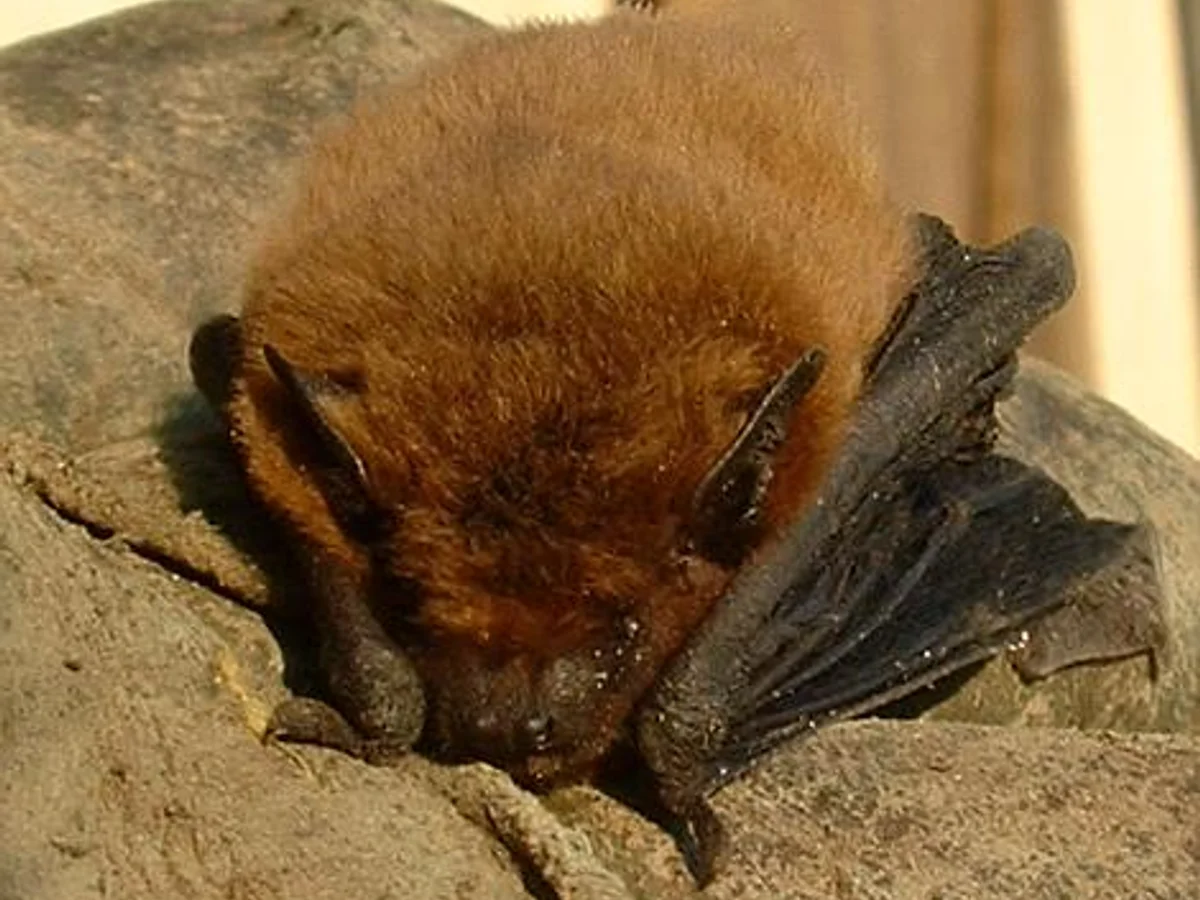
The paper trail documenting this record-breaking feat began at the Pape Ornithological Station on the Baltic coast of Latvia. During the late summer migration surge, researchers banded a juvenile female pipistrelle weighing roughly eight grams with a specialized lightweight aluminum alloy forearm ring.
Nearly two years later, field naturalists recovered the banded specimen in the Navarra region of northern Spain. The straight-line Euclidean distance between the banding site and the recovery point measured an astounding 2,224 kilometers.
Crucially, chiropterologists emphasize that the actual flight path was substantially longer—likely exceeding 3,000 kilometers. Bats systematically avoid open maritime expanses and alpine mountain passes, following instead the winding contours of the Baltic and North Sea coastlines before cutting southward along major river basins.
Nathusius’ pipistrelles weigh a mere 6 to 9 grams, resting comfortably within the palm of a child’s hand.
The banded bat flew between Pape Bird Station in southwestern Latvia and the province of Navarra in Spain.
Bats systematically hug coastlines and riparian corridors to avoid maritime storms and alpine topography.
Heart rates during sustained nocturnal flight surge to 800–1,000 beats per minute while burning concentrated lipid stores.
The Biomechanics of Flight: An Aerodynamic Hand Membrane
The aerodynamics of bat flight are vastly more versatile than those of birds. A bat’s wing is fundamentally a modified mammalian hand, featuring elongated finger bones supporting a highly compliant, multilayered cutaneous membrane known as the dactylopatagium.
Microscopic elastin bundles and specialized muscular fibers embedded within the wing skin enable the bat to dynamically adjust camber, angle of attack, and span at frequencies exceeding ten wingbeats per second. Nathusius’ pipistrelles possess high-aspect-ratio wings that minimize induced drag during sustained cruising.
Furthermore, their metabolism exhibits breathtaking efficiency. Migrating pipistrelles combust subcutaneous fat reserves with extreme rapidity, while periodically hawking insects on the wing to replenish glycogen stores without breaking their forward navigational momentum.
«For a tiny mammal roughly the size of a human thumb to navigate and cross the entire European continent is a biophysical masterpiece. It demonstrates the astonishing metabolic efficiency and aerodynamic elegance engineered into chiropteran physiology.»
Dr. Gunārs Pētersons (Gunārs Pētersons), Chiropterologist, Latvia University of Life Sciences and Technologies
Geomagnetic Compasses and Polarized Twilight Cues
Navigating across thousands of kilometers of unfamiliar European geography without daylight references demands a formidable sensory apparatus. Recent neurobiological investigations confirm that migratory bats utilize magnetic receptor cells containing biogenic magnetite crystals situated in their cranial anatomy, functioning as a real-time geomagnetic compass.
Prior to nocturnal departure, bats calibrate this magnetic compass against polarized twilight patterns cast across the horizon at sunset. Once aloft, they integrate this internal directional sense with prominent topographical landmarks such as shorelines, motorway corridors, and river valleys.
Just as cognitive ethology continues to reveal remarkable problem-solving and awareness in wild species—as detailed in research demonstrating that corvids and advanced mammals possess profound self-awareness and cognitive faculties—the diminutive brain of an eight-gram bat executes complex mathematical navigation routines in real time.
- Landscape navigation: tracking coastlines, broad river valleys, and prominent linear forest belts;
- Geomagnetic orientation: biogenic magnetite crystals in the ethmoid region coupled with retinal cryptochromes;
- Atmospheric harvesting: riding favorable tailwinds associated with high-pressure autumn anticyclones;
- In-flight foraging: utilizing agile echolocation sweeps to intercept nocturnal moths and dipterans without landing.
Modern Infrastructure Hazards: Wind Energy and Light Pollution
Tragically, the ancient migration corridors of European bats increasingly intersect with hazardous modern infrastructure. Offshore and coastal wind energy installations have emerged as a primary mortality vector for migratory bats traversing the Baltic and North Sea littorals.
Bats succumb not only to direct blade strikes, but to barotrauma—a sudden catastrophic pressure drop near rotating blade tips that ruptures delicate pulmonary capillaries, causing instantaneous internal hemorrhage. Additionally, excessive artificial light pollution around expanding urban sprawls degrades navigational twilight cues.
Conservation scientists advocate for standardized smart-curtailment protocols: automatically pitching turbine blades to idle during warm, low-wind autumn evenings reduces bat fatalities by up to 90% while causing negligible losses in annual power generation.
Redefining the Frontiers of Vertebrate Endurance
The transcontinental odyssey of this tiny Latvian bat is a poignant testament to the boundless resilience of the natural world. It underscores that extreme athletic endurance in biology is not governed solely by physical mass, but by millions of years of evolutionary refinement.
Protecting these extraordinary nocturnal flyers requires coordinated international conservation policies that transcend national frontiers. Preserving coastal migratory flyways ensures that these minute masters of the night sky continue their epic continental journeys for generations to come.
Ecosystem Services: The Unsung Guardians of European Agriculture
Beyond their breathtaking athletic accomplishments, Nathusius’ pipistrelles deliver indispensable ecological services across European landscapes. Over a single night of intensive foraging, a solitary seven-gram bat can consume up to 3,000 mosquitoes, gnats, and damaging agricultural defoliators, including moth caterpillars and bark beetles.
Ecological valuation studies demonstrate that chiropteran insect suppression saves European agriculture and forestry billions of euros annually by curtailing the necessity for toxic chemical pesticides. Conserving mature woodlands and establishing connected ecological corridors is an essential investment in sustainable planetary health.