


Archaeological excavations at the monumental Bronze Age mound of Tavşanlı Höyük in western Turkey’s Kütahya province have unveiled an extraordinarily charming and visceral connection across four millennia: researchers unearthed a sun-dried mudbrick dating back more than 4,000 years, stamped with the unmistakable impression of a dog’s paw. A canine companion trotted across the soft, freshly molded mudbrick while it was curing in the sun around 2000 BCE, and an ancient catastrophic blaze that consumed the settlement centuries later accidentally fired the clay into permanent terracotta ceramic, preserving an endearing domestic mishap for eternity.
The Great Mound of Western Anatolia: Excavating Tavşanlı Höyük
Occupying an expansive, fertile plateau in western Turkey, Tavşanlı Höyük is recognized by archaeologists as one of the most significant Bronze Age settlements in the Near East. Standing nearly 50 meters tall and sprawling across more than 45 hectares, this massive tell is considered by researchers to have been a regional capital connecting Aegean maritime trading hubs with inner Anatolian and Mesopotamian trade networks.
Led by Professor Dr. Erkan Fidan (Erkan Fidan) of Bilecik Şeyh Edebali University, ongoing systematic excavations have uncovered massive stone fortification circuits, complex administrative quarters, metallurgic workshops, and extensive grain silos.
Yet amid the grand monumental architecture of Bronze Age kings and merchants, it is the intimate micro-narratives of everyday domestic life that evoke the deepest human resonance across deep time.
An Anecdote from Antiquity: When a Dog Ruined a Builder’s Work
While clearing the rubble of a domestic residential compound, excavators noticed a fallen wall segment. Upon brushing away layers of dark destruction debris, they were astonished to find a pristine impression of a dog’s paw stamped squarely onto the flat surface of an ancient mudbrick.
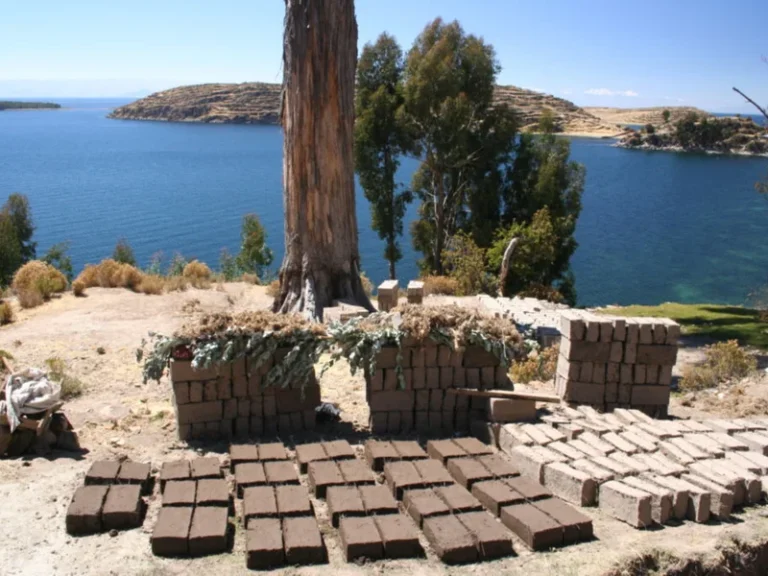
The reconstruction of that ancient afternoon is instantly relatable. A Bronze Age brickmaker mixed a batch of silt, water, and chopped straw, molding rectangular blocks and setting them out in rows to cure under the scorching Anatolian sun.
While the clay was still wet, an inquisitive neighborhood dog trotted across the drying field, sinking its paw deep into the malleable sediment. The builder clearly decided the footprint did not compromise structural integrity, allowing the block to cure before laying it into the house’s exterior wall.
The architectural block dates to the Early Bronze Age of western Anatolia (circa 2000–2100 BCE).
One of the largest Bronze Age proto-urban settlements in western Turkey, spanning over 45 hectares.
Unbaked sun-dried clay was vitrified into durable ceramic during an intense fire that engulfed the city.
Pad depth and claw indentations reflect an agile, medium-sized working dog akin to modern shepherd breeds.
The Fire That Saved History: How Sun-Dried Clay Became Ceramic
Standard sun-dried adobe bricks are inherently ephemeral building materials. Exposed to moisture, groundwater, and frost, unbaked mud inevitably softens, dissolving back into the earth within centuries.
The canine print survived thanks to a Bronze Age catastrophe. Approximately 4,000 years ago, a devastating fire engulfed Tavşanlı Höyük. Timber roof beams and reed matting ignited, generating localized temperatures exceeding 800 °C.
The fire effectively turned the collapsed wall into a massive ceramic kiln, vitrifying the sun-dried mud into durable terracotta. Buried under meters of protective rubble, the brick remained sealed against weathering until archaeologists uncovered it.
«Four millennia ago, a builder shaped this mudbrick out of river silt and straw. While it was drying under the sun, a dog casually walked over it. Rather than discarding the marked brick, the mason incorporated it into the house wall. It is a wonderful reminder that our ancestors shared their daily lives with dogs just as we do today.»
Prof. Dr. Erkan Fidan (Erkan Fidan), Head of Tavşanlı Höyük Excavations, Bilecik Şeyh Edebali University
Bronze Age Dogs: Working Partners and Beloved Companions
Morphometric analysis of the paw print reveals an animal weighing approximately 18 to 25 kilograms—a sturdy, agile working dog capable of defending sheep and goat herds from wolves and wild boars.
The discovery confirms that dogs enjoyed unrestricted movement within Anatolian settlements, living in close companionship with their human families.
Just as ancient hunting camps illuminate early human-animal relationships—as explored in recent studies detailing human hunting settlements across the Americas during the Pleistocene—the Tavşanlı mudbrick offers an endearing testament to our enduring bond with canines.
- Canines served versatile pastoral, protective, and companionship roles across early urban societies;
- Traditional adobe formulation: composite blend of local clay, alluvial sand, water, and chaff temper;
- Thermal pyrotechnology: conflagrations exceeding 800 °C permanently transform fragile mud into terracotta;
- Bioglyphic imprint analysis: unintentional animal tracks providing authentic taphonomic snapshots.
Why Simple Footprints Resonate More Than Monuments
While royal palaces and gold treasures command awe, they often feel distant. A humble brick bearing a pet’s paw print collapses four thousand years in a heartbeat.
Anyone who has ever poured wet concrete only to have their dog gleefully leave an imprint will instantly recognize the timeless charm of this scene. The Bronze Age mason and his mischievous dog remind us that human warmth remains unchanged across millennia.
Bioglyphs in Archaeology: Accidental Snapshots of Ancient Life
Animal footprints on architectural ceramics—known as bioglyphs—provide invaluable, unvarnished records of ancient biodiversity and domestic routines.
As excavations continue at Tavşanlı Höyük, this terracotta brick stands out as one of the most memorable discoveries, proving that the bond between dogs and humans is truly timeless.
Digital Epigraphy: Laser 3D Scanning and Biomechanical Kinematics
To extract the maximum taphonomic data from the footprint, the research team utilized structured-light 3D surface scanning combined with photogrammetric modeling. The resultant ultra-high-resolution mesh revealed the exact distribution of plantar pressure exerted across the drying mud matrix.
Biomechanists analyzing the digital elevation model determined that the dog was moving at a comfortable trot, angling slightly toward an interior courtyard. The asymmetrical depth of the lateral digital pads illustrates an active gait cycle, digitally resurrecting the fleeting motion of an animal running through a Bronze Age settlement four millennia ago.
Tavşanlı Höyük and the Great Caravan Routes of the Early Bronze Age
Beyond its evocative domestic archaeology, Tavşanlı Höyük holds strategic prominence in Near Eastern prehistory. Positioned along natural geographic corridors connecting the tin-rich regions of central Anatolia with Aegean maritime gateways like Troy, the site served as a vital emporium facilitating regional metallurgy and cultural exchange.
The standardized proportions of the sun-dried mudbricks demonstrate sophisticated municipal planning and modular architectural traditions. The endearing canine intrusion immortalized within this brick offers an authentic glimpse into the daily life that underpinned this major Bronze Age civilization.