


For centuries, human experiences along the threshold between life and biological extinction hovered precariously between mystical lore and unexplained psychic anomalies. Most cardiac arrest survivors awaken in intensive care units with profound retrograde amnesia, leading physicians to assume that the oxygen-deprived brain shuts down into absolute unconscious darkness within seconds. However, a groundbreaking clinical investigation published in the peer-reviewed medical journal EXPLORE by Dr. Marjorie Woollacott of the University of Oregon has fundamentally challenged conventional neurology: examining whether an individual can see yourself die hypnosis and targeted memory-retrieval techniques proved that the human brain can encode complex operating room events even while clinical cardiac arrest is underway.
At the Edge of the Void: The Case of Stephanie Arnold and Her Medical Premonitions
In 2013, within the surgical suites of the University of Chicago Medicine, an extraordinary medical case unfolded that would challenge basic tenets of cognitive neuroscience. Thirty-eight-year-old television producer Stephanie Arnold was pregnant with her second child. Yet months before her scheduled caesarean delivery, Arnold became besieged by terrifying, hyper-realistic forebodings of catastrophic intraoperative death. She envisioned blood pooling across the floor, heard frantic monitor alarms, and experienced sensations of looking down upon her own lifeless body.
While obstetric clinicians routinely encounter maternal anxiety, Arnold’s persistent insistence was unusual. She systematically informed her care team, eventually persuading her attending anesthesiologist, Dr. Nicole Higgins, to prepare for severe hemorrhagic and cardiovascular collapse. Dr. Higgins arranged for cell-saver autotransfusion equipment, central venous access lines, and immediate blood bank reserves to be on standby directly outside the operating room.
The precaution proved life-saving. Seconds after delivering her healthy newborn son, Arnold suffered an amniotic fluid embolism (AFE)—a catastrophic obstetric syndrome wherein amniotic debris enters maternal systemic circulation, sparking severe pulmonary vasoconstriction, acute right-ventricular failure, and disseminated intravascular coagulation (DIC). Arnold flatlined into cardiac arrest for 37 seconds as clinicians initiated emergency chest compressions, electrical defibrillation, and massive transfusion protocols.
Returning from Flatline: Why the Brain Conceals Critical Near-Death Events
Through immediate resuscitation and the pre-staged blood reserves, Arnold survived. Physicians placed her into an induced therapeutic coma for several days to safeguard neurological tissue from reperfusion injury. Upon regaining consciousness, Arnold made a full physical recovery, yet she was haunted by fractured, disorienting memories of floating beneath the ceiling lamps and observing the surgical team fight for her life.
For decades, standard emergency neurology posited that conscious recollection during cardiac arrest is physiologically impossible. Within 10 to 20 seconds of circulatory arrest, cerebral perfusion ceases, resulting in an isoelectric (flatline) electroencephalogram across the neocortex. Consequently, physicians historically dismissed patient accounts of out-of-body perceptions as post-resuscitation confabulations or anesthesia-induced hallucinations occurring during emergence.
However, Dr. Marjorie Woollacott, an eminent neuroscientist at the University of Oregon, proposed a different framework. She suggested that the low incidence of reported near-death experiences among cardiac survivors is driven primarily by traumatic retrograde amnesia. The cataclysmic flood of adrenaline, noradrenaline, and endogenous opioids released during cardiac collapse disrupts synaptic consolidation in the hippocampus, burying vivid perceptions beneath conscious recall.
The patient suffered total hemodynamic collapse due to an amniotic fluid embolism (AFE) during an emergency caesarean section.
Under deep hypnosis, she recalled the physical locations of surgical staff, the color of defibrillator pads, and verbatim medical dialogue.
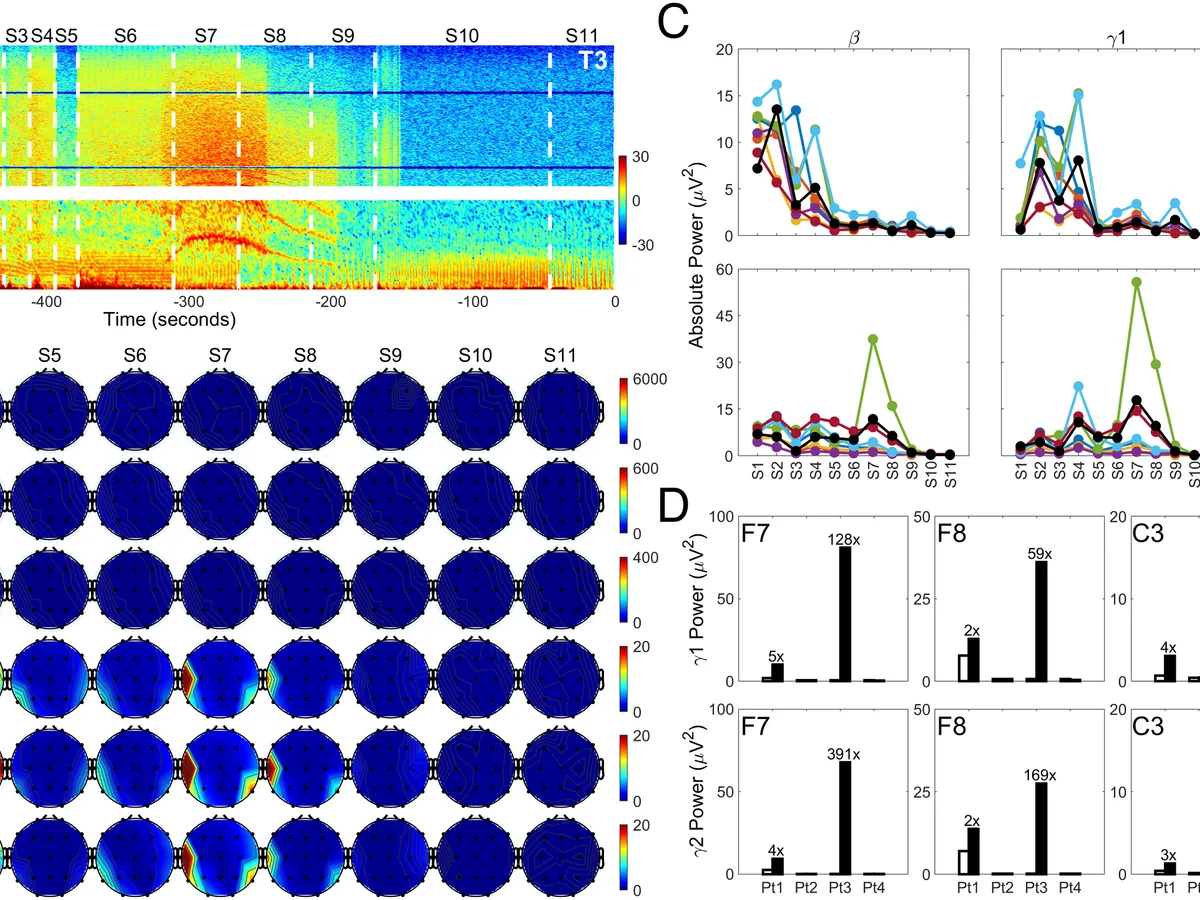
Neurophysiological recording confirms that acute cerebral hypoxia triggers a paradoxical burst of coherent gamma oscillations (30–80 Hz).
Regressive hypnosis accesses encoded hippocampal memory traces that were biochemically gated by massive catecholamine surges during shock.
Unlocking Subconscious Traces: Can You See Yourself Die Hypnosis Case Analysis
To alleviate severe post-traumatic stress and investigate whether veridical sensory memories were preserved, Arnold underwent specialized clinical hypnotic regression. The goal was neither suggestive therapy nor imaginative fantasy, but rather the systematic down-regulation of conscious filtering to access deep episodic memory stores. Under structured hypnosis, the inquiry into whether an individual can see yourself die hypnosis served as an analytical probe into suppressed cognition.
In deep hypnotic trance, Arnold systematically narrated the resuscitation sequence with surgical precision. She identified the specific physical layout of scrub nurses positioned behind her head (outside her normal field of view), detailed the arrival of a consulting intensivist carrying a portable ultrasound transducer, and correctly identified the sequence of drugs administered through her central line.
When these transcripts were scrutinized alongside official hospital time-logs and verified through interviews with attending physicians, clinicians were astonished. Arnold’s recollections matched the documented sequence of cardiac resuscitation, down to verbatim quotes uttered by the resuscitation team during her period of asystole.
«The case of Stephanie Arnold reveals that the historically reported 10 to 12 percent prevalence of near-death experiences among cardiac arrest survivors may be an artifact of traumatic amnesia. The brain continues to process sensory streams during acute physiological crises, but extracting these sequestered traces requires targeted cognitive modalities such as therapeutic hypnosis.»
Marjorie Woollacott (Марджори Вуллакотт), Professor Emerita of Neuroscience at the University of Oregon
Neurobiology of the Dying Brain: Coherent Gamma Waves at the Threshold
Arnold’s verified recall aligns remarkably with discoveries spearheaded by Dr. Jimo Borjigin (Джимо Борджигин) at the University of Michigan Medical School. Recording neurophysiological signals from dying patients during terminal withdrawal of life support, Borjigin’s laboratory discovered that cardiac arrest does not result in instantaneous brain death. Instead, global anoxia induces a dramatic, synchronized surge of high-frequency gamma oscillations (30 to 80 Hz).
Crucially, this surge exhibits robust functional connectivity across the temporo-parieto-occipital junction—the cortical hub responsible for sensory integration, cross-modal perception, and the conscious processing of self-location in physical space. Rather than a fading whisper, the brain under acute hypoxia appears to activate an intense, heightened state of neuroelectric organization.
The findings published in EXPLORE provide empirical evidence that out-of-body near-death experiences may be supported by real, albeit hyper-synchronized, neural mechanisms. Clinical hypnosis enables the non-invasive reactivation of these latent cortical networks, allowing survivors to integrate profound experiences without psychological distress.
- The investigation was authored by neuroscientist Dr. Marjorie Woollacott in collaboration with University of Chicago critical care specialists.
- Patient Stephanie Arnold experienced documented, highly specific premonitions of her fatal intraoperative collapse months before delivery.
- Her persistent warnings persuaded anesthesiologist Dr. Nicole Higgins to pre-stage massive blood transfusion products, directly saving her life.
- Regressive hypnotic recall demonstrated accurate visual and auditory perception of the surgical suite during periods of zero arterial pressure.
- These observations harmonize with research from Dr. Jimo Borjigin’s lab showing hyper-synchronized neural activity at the moment of cardiac death.
Ethical Implications and the Evolution of Critical Care Medicine
The convergence of hypnosis research and neuroresuscitation science carries profound ramifications for clinical ethics and bedside manner in emergency care. For generations, medical personnel have assumed that unconscious patients with unmeasurable vital signs are entirely insensible to ambient sounds and room conduct. The proven veracity of near-death perceptions necessitates a re-evaluation of operating room decorum.
Maintaining professional silence, eliminating despairing verbal commentary, and treating the comatose patient with profound dignitary respect must be recognized as vital clinical duties. Auditory processing and spatial perception can endure well beyond the cessation of a palpable pulse.
Ultimately, the case of Stephanie Arnold illustrates that the human mind retains remarkable capacities for resilience and awareness at the outermost boundary of mortal existence. As science develops increasingly sophisticated tools to evaluate human consciousness, we come to appreciate that the threshold of death is not an abrupt blackout, but a complex and structured neurocognitive frontier.