

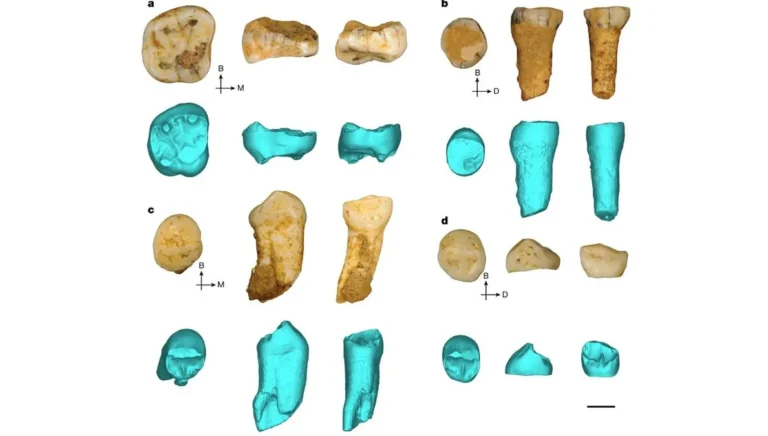

An international team of palaeoanthropologists and molecular biologists has uncovered striking evidence that East Asia’s prehistoric landscape was far more crowded than once believed. By extracting ancient proteins from four 100,000-year-old fossil teeth in southern China, researchers confirmed that an unknown human ancestor—an unresolved archaic Homo lineage—shared the subtropical forests with Denisovans.
Four Teeth From Guangxi: Why Ancient Proteins Succeed Where DNA Fails
For decades, reconstructing human evolution across Pleistocene East Asia has been hampered by geography and climate. While freezing Siberian caves and the high Tibetan Plateau preserve ancient DNA from Neanderthals and Denisovans for tens of millennia, the warm, humid subtropics of southern China rapidly degrade delicate genetic strands. As a result, isolated fossil teeth recovered from karst caves frequently resisted definitive taxonomic classification.
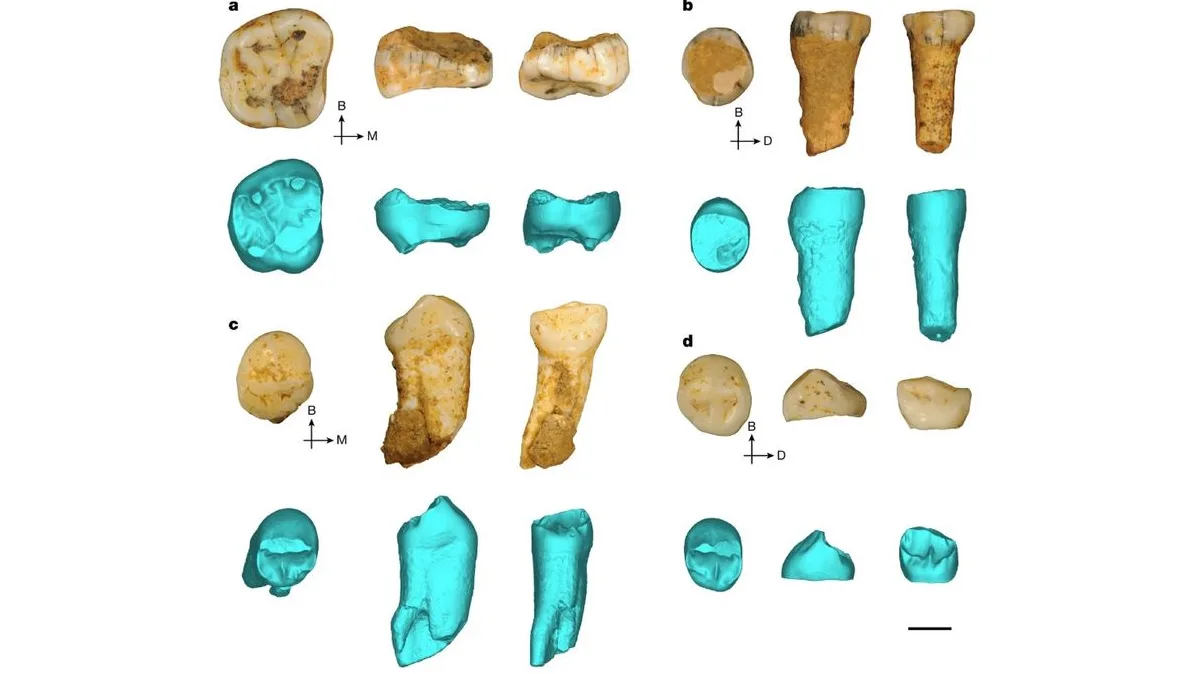
A landmark study published in November 2026 in Nature overcame that barrier through palaeoproteomics. First author Song Xing (Song Xing) of the Centro Nacional de Investigación sobre la Evolución Humana (CENIEH) and the Institute of Vertebrate Paleontology and Paleoanthropology (IVPP) in Beijing, working with senior author Qiaomei Fu (Qiaomei Fu) and co-authors Guangmao Xie (Guangmao Xie) and Huiyun Rao (Huiyun Rao), targeted structural proteins locked inside tooth enamel, which survive far longer than DNA.
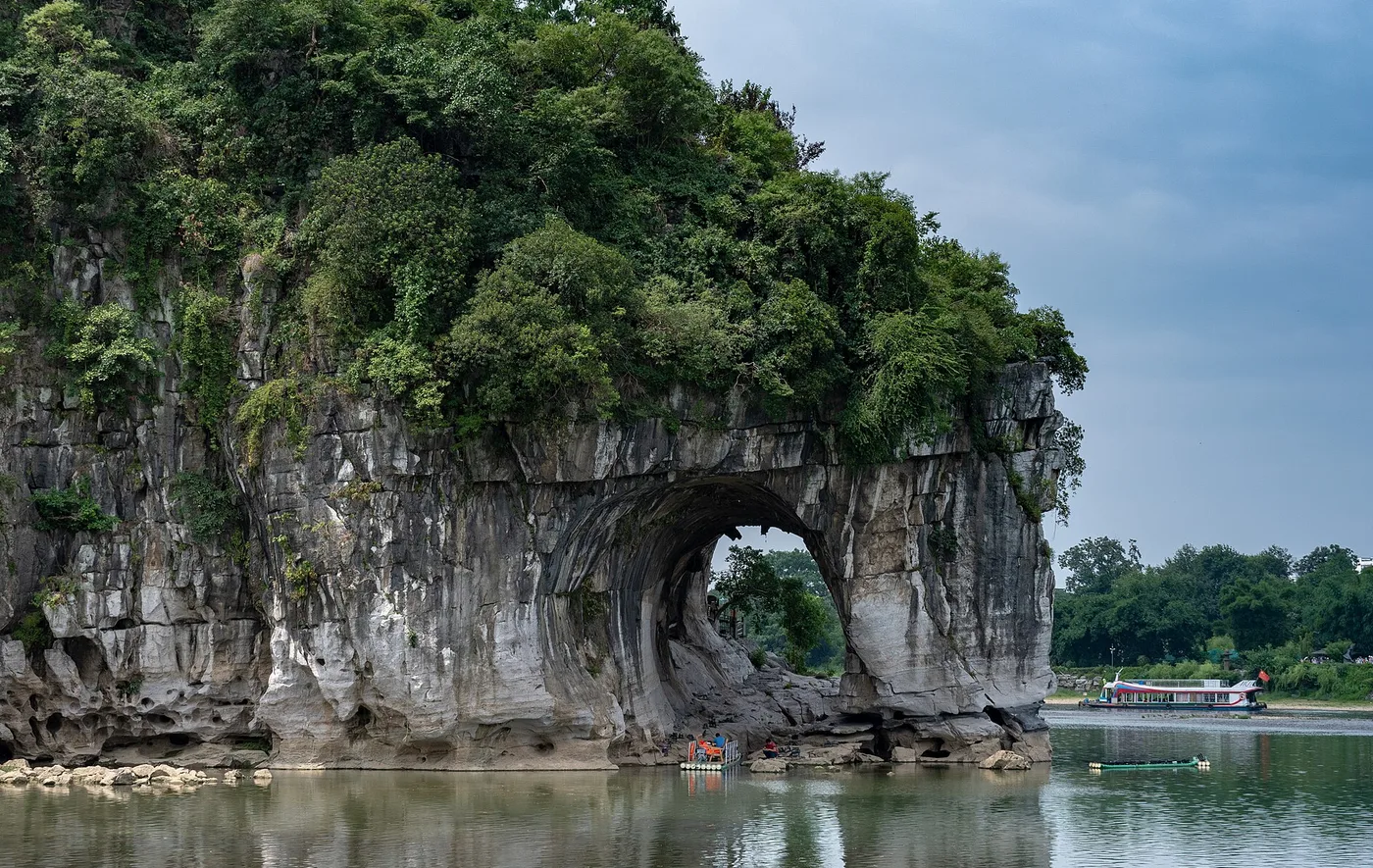
As reported by IFLScience, the researchers analyzed four isolated hominin teeth recovered from two karst caves in China’s Guangxi Zhuang Autonomous Region: Longchuandong and Chuanshandong.
Longchuandong: Confirming Denisovans Thrived in Subtropical China
The two fossils from Longchuandong—a molar and a premolar dated between 104,500 and 42,600 years ago—yielded an unmistakable evolutionary signature. Both dental morphology and single amino acid polymorphisms preserved inside the enamel matched known Denisovan specimens from the Altai Mountains in Siberia and other East Asian sites such as Harbin.
This molecular match extends the confirmed ecological range of Denisovans far south of icy steppe and alpine environments into lush subtropical ecosystems. Rather than being restricted to high latitudes or high altitudes, Denisovans successfully adapted to warm southern latitudes.
Yet the neighboring cave of Chuanshandong told a dramatically different story. Uranium-series dating placed two lower premolars—likely belonging to a single individual—at a minimum age of roughly 100,800 years, meaning this mysterious population overlapped chronologically with the region’s Denisovans.
«Denisovans were not the only hominin population living in East Asia during the Middle and Late Middle Pleistocene. A previously unresolved Homo population may also have lived in subtropical southern China.»
Qiaomei Fu (Qiaomei Fu), Institute of Vertebrate Paleontology and Paleoanthropology (CAS), Nature study author
The Chuanshandong Enigma: An Unknown Human Ancestor in a Southern Refugium
When Song Xing and Qiaomei Fu compared the Chuanshandong premolars against every known Pleistocene hominin reference, the teeth defied placement. Neither their crown and root anatomy nor their enamel proteins aligned with Denisovans, Neanderthals, or Homo sapiens. Instead, the specimens displayed a puzzling blend of primitive features reminiscent of far older species such as Homo erectus and Homo antecessor.
Enamel proteomics sharpened the mystery: the Chuanshandong individual shared one amino acid mutation with Homo erectus yet differed from it at another amino acid site and in overall tooth morphology. Rather than forcing a premature species name, the researchers classified the fossils as an “unresolved archaic Homo” population—an unknown human ancestor that may represent a sister group to the last common ancestor of modern humans, Neanderthals, and Denisovans.
If this interpretation holds, subtropical southern China acted as a late Pleistocene refugium where an archaic lineage persisted long after its close relatives had vanished elsewhere. Insights into how interbreeding with vanished hominins shaped our own biology are also explored in our report on how Neanderthal DNA still influences modern human brain size and neurobiology.
Where subtropical humidity destroys ancient DNA, tooth enamel proteins preserved clear evolutionary signatures after 100,000 years.
Longchuandong fossils confirm Denisovans thrived far south in warm Guangxi forests, well beyond Siberia and Tibet.
The Chuanshandong teeth share one protein mutation with Homo erectus yet diverge in both morphology and another amino acid site.
Researchers suggest the mystery group may be a sister lineage to the common ancestors of Homo sapiens, Neanderthals, and Denisovans.
From a Linear Tree to a Braided Bush of East Asian Hominins
Until recently, many paleoanthropologists treated Middle and Late Pleistocene East Asia as a relatively simple chapter dominated almost exclusively by Denisovans prior to the arrival of Homo sapiens. The Guangxi findings dismantle that streamlined narrative.
Having both Denisovans and an unresolved archaic Homo group occupying karst valleys in the same southern Chinese province roughly 100,000 years ago reinforces the model of human evolution as a braided stream rather than a single linear ladder. Multiple distinct lineages coexisted across neighboring habitats, raising compelling questions about ecological competition, cultural exchange, and potential gene flow.
Qiaomei Fu and her colleagues emphasize that larger fossil assemblages and deeper molecular sampling are still needed before researchers can formally assign the Chuanshandong hominin to a named species. Even so, this newly recognized unknown human ancestor proves that our family tree in Asia held far more surviving branches than science ever imagined.
- Researchers examined four isolated fossil human teeth from Longchuandong and Chuanshandong caves in Guangxi, China.
- Uranium-series dating placed the Chuanshandong premolars at a minimum age of roughly 100,800 years.
- The unknown archaic Homo lineage survived into the Late Pleistocene inside a southern Chinese ecological refugium.
- The findings overturn models that assumed Denisovans were the sole archaic hominin population in Late Middle Pleistocene East Asia.