

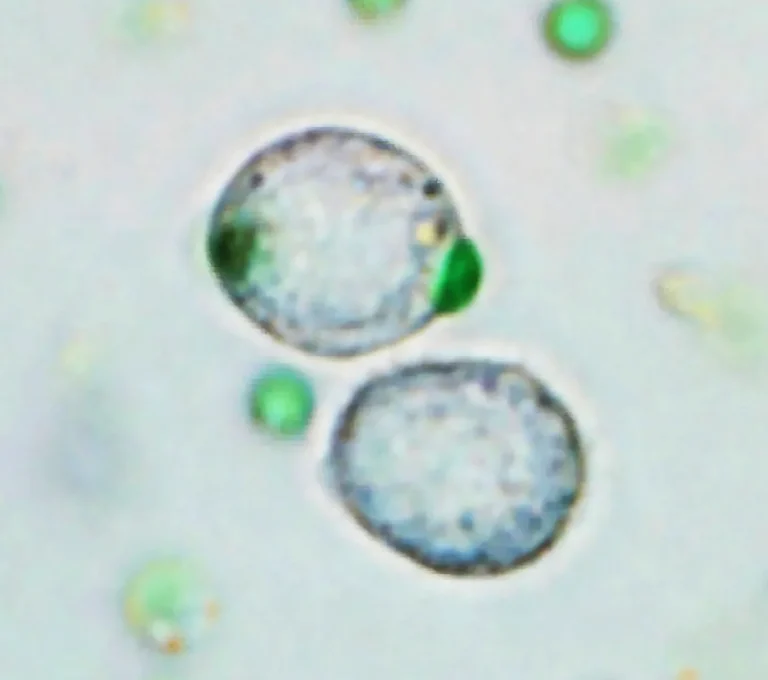

Plants and animals split on the evolutionary tree roughly 1.5 billion years ago, and their genomes have long been treated as incompatible inside a single dividing cell. Now, researchers in Japan have crossed that divide by engineering living plant-animal hybrid cells that not only survive, but replicate asexually for more than 150 generations. Dubbed “planimals,” these chimeric cells open unexpected possibilities ranging from light-assisted lab-grown meat to bioengineered tissues.
How Tokyo Researchers Created Plant-Animal Hybrid Cells
The landmark study was led by Professor Sachihiro Matsunaga at the Laboratory of Integrated Biology at the University of Tokyo alongside collaborating Japanese institutions. Published in the peer-reviewed journal Nature Communications and highlighted by IFLScience, the work demonstrates genome-scale horizontal gene transfer in complex eukaryotes.
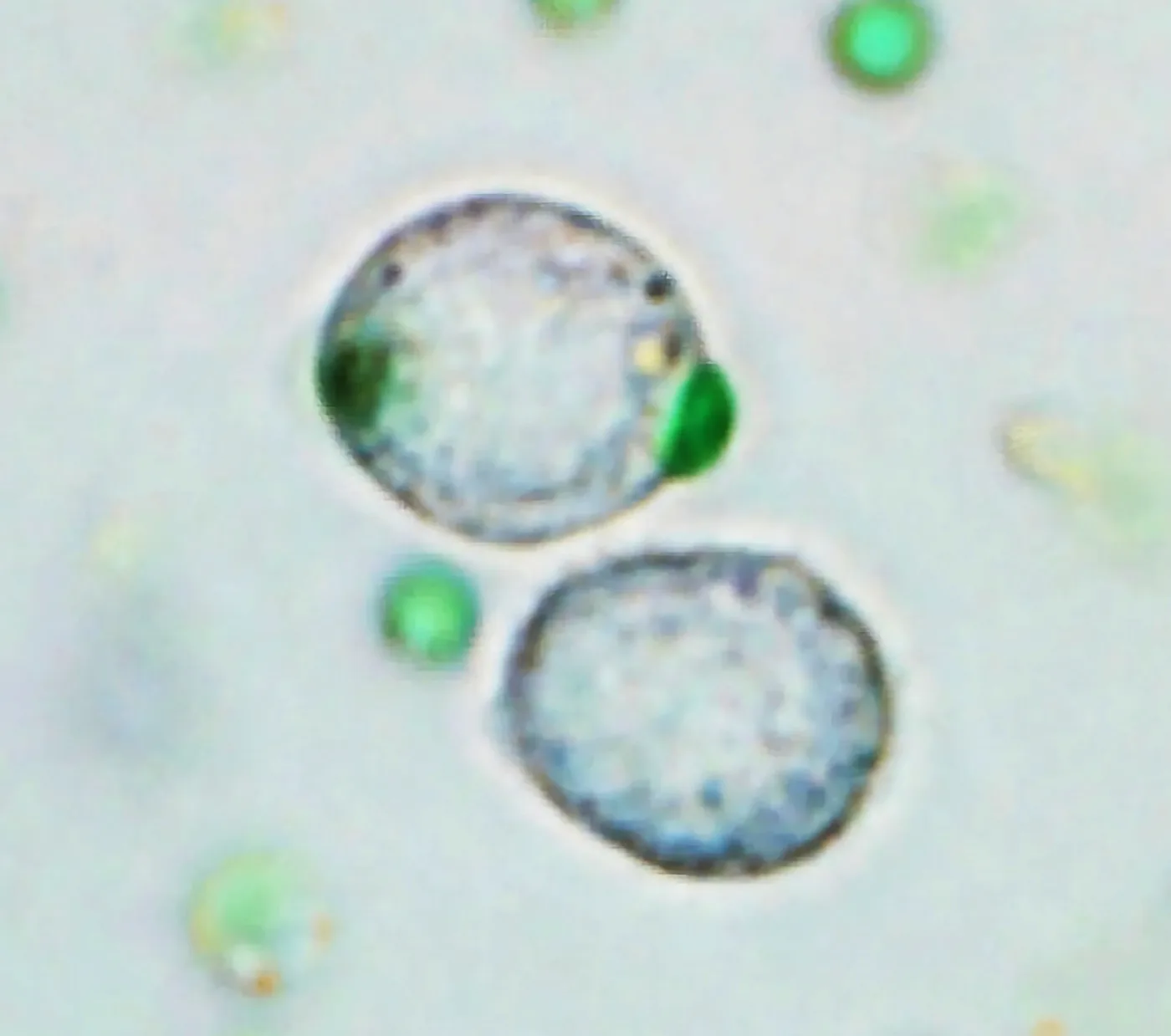
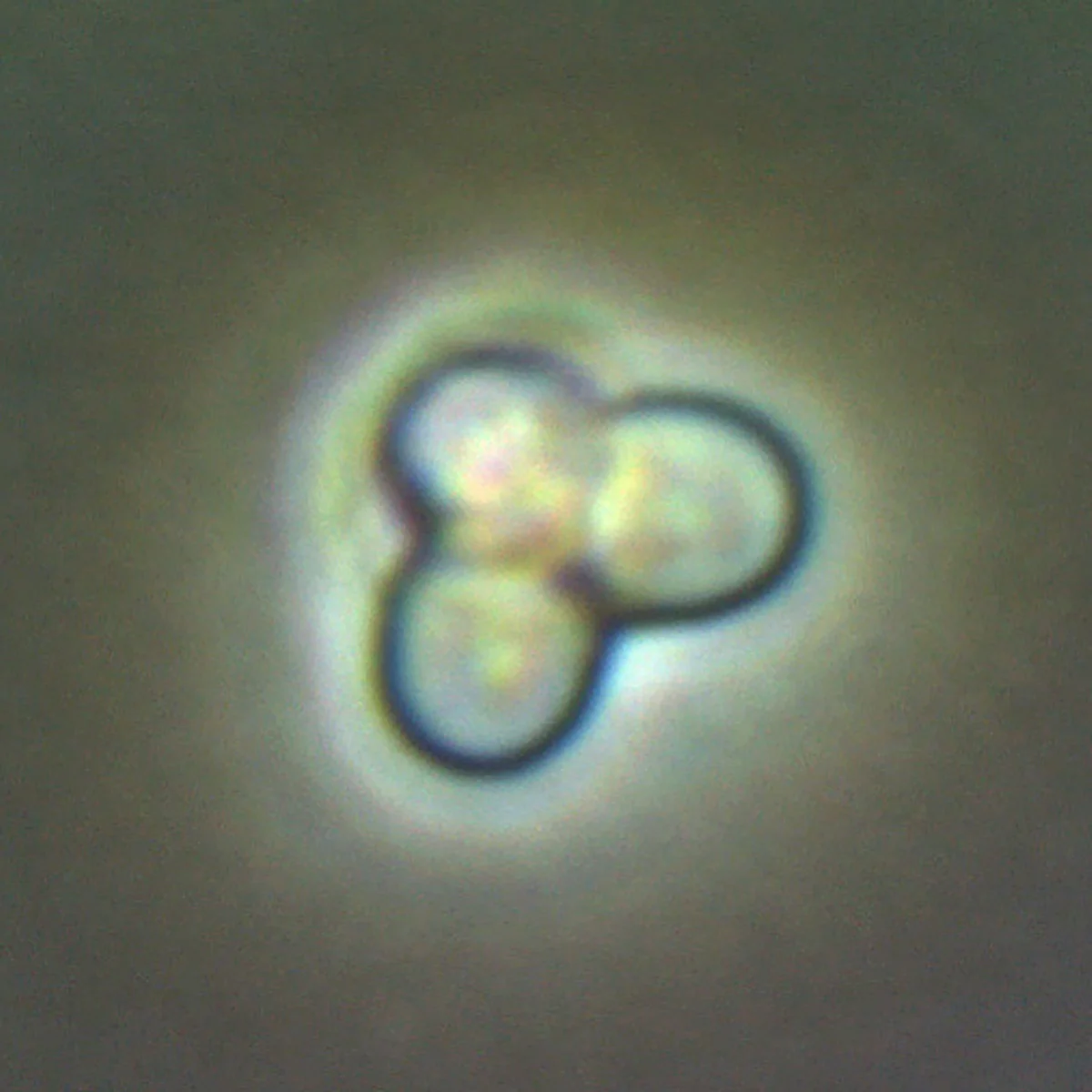
Rather than starting with a typical land plant encased in a thick cellulose wall, the team chose Cyanidioschyzon merolae, a microscopic unicellular red alga. Two features made this organism ideal for cellular fusion: it naturally lacks a rigid cell wall, and its entire genome is remarkably compact, packed into just 20 small chromosomes.
On the animal side, the scientists used cultured mammalian cells—Chinese hamster ovary (CHO) cells, a workhorse of modern biotechnology, as well as human cells. Before fusion, the researchers equipped the red alga with mammalian-compatible antibiotic-resistance genes and a green fluorescent protein (GFP) marker so successful hybrids would glow visibly under fluorescence microscopy.
The Mechanics of Fusion: 150+ Generations and Epigenetic Silencing
To merge two kingdoms without sexual reproduction, the team applied polyethylene glycol (PEG), a chemical agent that temporarily destabilizes cell membranes and encourages them to fuse. The mixed culture was then treated with antibiotics: unmodified mammalian cells died off, while cells carrying the algal DNA survived and glowed bright green.
What surprised biologists most was the long-term stability of the resulting plant-animal hybrid cells. The planimals divided normally through asexual mitosis for more than 150 generations. Chromosome mapping revealed that large portions of the C. merolae genome—including entire algal chromosomes—integrated into the hamster chromosomes and were stably inherited for up to 95 generations, with algal gene copy numbers even increasing in one cell line.
At the same time, the researchers observed a built-in safeguard: during fusion, the algal chloroplasts broke down, and most of the transferred algal DNA was silenced by DNA methylation, acting like an epigenetic “off” switch. Functionally, the hybrids still behaved as animal cells and did not immediately photosynthesize. Even so, proving that foreign DNA from another kingdom can persist in mammalian chromosomes resonates with broader studies of how archaic DNA endures inside host genomes—such as research showing how inherited Neanderthal DNA shapes human brain traits.
«Our findings show that genome-scale horizontal gene transfer can cross 1.5 billion years of evolutionary distance in dividing eukaryotic cells when epigenetic gatekeeping prevents cellular conflict.»
Professor Sachihiro Matsunaga, University of Tokyo
An Evolutionary Lesson: Horizontal Gene Transfer Without Immediate Reward
In evolutionary biology, the wholesale transfer of genes between unrelated species—known as horizontal gene transfer—is common among bacteria and archaea, yet generally considered rare among complex eukaryotes. The University of Tokyo experiment proves that a mammalian cell can absorb and retain an entire foreign eukaryotic genome across a 1.5-billion-year evolutionary gap.
Equally striking is what the Nature Communications paper reveals about natural selection. Foreign DNA does not need to confer an instant survival advantage to stick around inside a host chromosome. As long as the incoming genes are not actively harmful, epigenetic silencing lets the host cell neutralize potential biochemical conflicts while quietly archiving the new genetic code across dozens of generations.
Over much longer evolutionary timescales, dormant genes acquired this way could occasionally reactivate under environmental stress and spark novel traits. In effect, Matsunaga’s lab has recreated one of evolution’s most mysterious mechanisms inside a controlled culture dish.
Polyethylene glycol merged wall-less red algal cells with cultured hamster and human cells without sexual reproduction.
The planimal hybrids divided normally and passed integrated algal chromosomes down through dozens of generations.
DNA methylation silenced most algal genes, allowing both genomes to coexist peacefully in one nucleus.
Reactivating photosynthesis could eventually cut costs in lab-grown meat and light-assisted tissue engineering.
Solar-Powered Tissues or Light-Assisted Cultured Meat?
The next challenge for the Tokyo team is learning how to selectively lift the epigenetic lock on the algal genes and pair them with functional chloroplasts. In earlier experiments, Matsunaga’s group already demonstrated that isolated chloroplasts can remain photosynthetically active inside animal cells for several days rather than being immediately digested.
If scientists can unite a stably inherited algal genome with active chloroplasts, plant-animal hybrid cells could harvest supplemental energy directly from light. One immediate target is the cultured meat industry: growing animal cells in bioreactors currently demands expensive nutrient broths and constant oxygenation, whereas light-assisted metabolism could sharply lower production costs.
Professor Sachihiro Matsunaga has also pointed to bolder long-term visions he outlined back in 2018, including engineered tissues capable of generating oxygen and energy in low-supply environments or supporting cellular health during long-duration spaceflight. Photosynthetic humans remain firmly in science fiction for now, yet the first biological bridge across 1.5 billion years of evolution is already dividing in the lab.
- Plant-animal hybrid cells replicated for more than 150 generations while retaining whole chromosomes from the red alga Cyanidioschyzon merolae.
- The study demonstrates large-scale horizontal gene transfer across a 1.5-billion-year divide in complex eukaryotes.
- While methylation currently keeps algal genes switched off, future reactivation could enable light-powered biotech and cultured meat.