

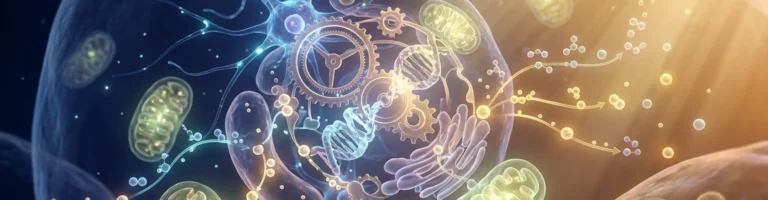

Peripheral metabolic clocks circadian rhythms time-restricted eating are profoundly restructuring clinical endocrinology and preventive medicine: pioneering investigations conducted at the Salk Institute by Prof. Satchin Panda, published in Cell Metabolism, establish that the human organism is orchestrated not merely by a single master clock in the brain, but by millions of cell-autonomous molecular chronometers operating inside hepatocytes, pancreatic beta-cells, enterocytes, and myocytes. While the central pacemaker responds to ocular light input, peripheral metabolic clocks synchronize strictly to the temporal timing of food ingestion. Chronic misalignment between these systems (chronodisruption) stands revealed as the covert driver of metabolic syndrome, hepatic steatosis, and type 2 diabetes.
Anatomy of Biorhythms: The Master Pacemaker vs. Cellular Clocks
Historical physiology maintained a monocentric model of biological timekeeping, attributing master circadian control to the suprachiasmatic nucleus (SCN) — a compact cluster of roughly 20,000 neurons situated in the anterior hypothalamus. The SCN receives photic cues from melanopsin-expressing intrinsically photosensitive retinal ganglion cells (ipRGCs), coordinating systemic sleep-wake cycles through melatonin suppression and morning cortisol surges.
At the turn of the 21st century, molecular geneticists discovered that autonomous clock machineries are embedded inside virtually every nucleated somatic cell in the human body.
Over 15% to 20% of the mammalian transcriptome oscillates in a circadian fashion. Lipolytic enzymes, glucose transporter type 4 (GLUT4), insulin receptor cascades, and detoxification pathways turn on and off according to strict transcriptional timetables.

The Molecular Pendulum: The BMAL1-CLOCK Feedback Loop
At the core of cellular timekeeping lies an evolutionary transcription-translation feedback loop (TTFL).
Every morning, the transcription factors CLOCK and BMAL1 heterodimerize in the cytoplasm, translocating into the nucleus where they bind canonical E-box elements within target promoters. This activates the transcription of hundreds of clock-controlled genes, including their own repressive feedback inhibitors: Period (PER1, PER2, PER3) and Cryptochrome (CRY1, CRY2).
Throughout the day, PER and CRY proteins accumulate, undergo phosphorylation, and by nightfall translocate into the nucleus to physically suppress CLOCK-BMAL1 transactivation. During the nocturnal phase, PER and CRY undergo ubiquitination and proteasomal degradation, resetting the 24.2-hour molecular oscillation at dawn.
Every liver, pancreatic, and muscle cell maintains an independent genetic clock governing metabolic enzyme programs.
The 24-hour TTFL molecular pendulum coordinates the circadian expression of 20% of the entire human genome.
Late-night eating decouples hepatic metabolic clocks from hypothalamic timers, driving hepatic steatosis and diabetes.
Time-Restricted Eating (TRE) restores metabolic biorhythms, reducing visceral fat and inflammation without caloric deficits.
Chronodisruption: The Internal Clash Between Light and Food Cues
The central dilemma of industrialized life is chronodisruption. While the hypothalamic SCN remains aligned to ambient light, peripheral metabolic organs — predominantly the liver, gut, and pancreas — are indifferent to photon flux; their dominant zeitgeber is nutrient intake.
Consuming late-night snacks under artificial lighting generates profound physiological discord. The central SCN prepares the body for nocturnal rest, depressing core temperature and releasing melatonin. However, incoming macronutrients force the hepatic clock into daytime operational mode.
This forces pancreatic beta-cells and hepatocytes to process carbohydrates when peripheral insulin sensitivity is naturally suppressed. Just as advanced photochromic biotechnology formulations require precise energetic calibration, human metabolic tissues require temporal alignment.
«Every metabolic pathway in the body operates on a rigid physiological timetable. The pancreas downregulates insulin secretory capacity after sundown, while the liver shifts from glycogen storage to autophagy and cellular repair. Midnight snacking floods sleeping metabolic tissues with glucose, igniting cellular chaos.»
Prof. Satchin Panda, leading circadian biologist at the Salk Institute for Biological Studies, published in Cell Metabolism
Time-Restricted Eating (TRE): Restoring Metabolic Homeostasis
Preclinical animal studies at the Salk Institute produced startling evidence. Isogenic rodent cohorts fed identical high-fat, high-sugar Western diets exhibited divergent phenotypes based solely on feeding windows: one cohort had ad libitum 24-hour access, while the second consumed identical caloric volume restricted to an 8-to-10-hour daytime window.
The ad libitum group rapidly developed morbid obesity, non-alcoholic steatohepatitis (NASH), and severe insulin resistance. The time-restricted eating (TRE) cohort remained completely protected against hepatic steatosis, displaying normal body weight and optimal glycemic control despite the obesogenic diet.
Human clinical trials have replicated these findings: restricting daily caloric intake to an 8-to-10-hour window (e.g., 9:00 AM to 6:00 PM) without intentional caloric restriction reduces glycated hemoglobin (HbA1c), lowers blood pressure, and improves visceral lipid oxidation.
- The hypothalamic SCN synchronizes to light, whereas peripheral metabolic clocks entrain to nutrient timing.
- Insulin sensitivity and pancreatic endocrine capacity decline significantly following sundown.
- Restricting feeding to an 8-to-10-hour daytime window prevents obesity and fatty liver on high-calorie diets.
- Chronopharmacology optimizes drug efficacy and reduces systemic toxicity by targeting peak receptor phases.
Chronopharmacology: Aligning Therapeutics with Internal Timers
Deciphering peripheral chronobiology has established chronopharmacology as an essential medical discipline. Hepatic HMG-CoA reductase, the rate-limiting enzyme in cholesterol biosynthesis, exhibits peak activity during the night; hence, evening statin administration reduces low-density lipoprotein cholesterol with significantly greater potency than morning doses.
Similarly, oncological chemotherapeutics exhibit reduced toxicity and heightened efficacy when timed to phases when healthy bone marrow and intestinal stem cells are in quiescent cell-cycle stages.
Synchronizing daily nutrition and pharmacology with internal peripheral clocks provides a potent lever for human healthspan optimization. Detailed academic monographs are published in Cell Metabolism.