

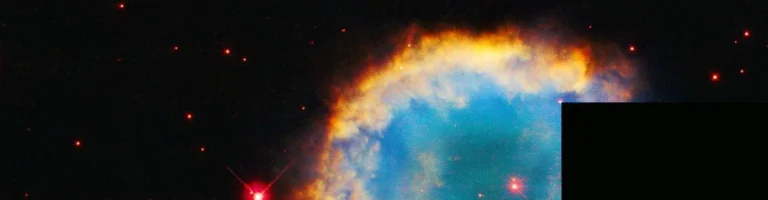

For nearly a century since the formulation of quantum degenerate electron gas physics by Subrahmanyan Chandrasekhar and Ralph Fowler, white dwarfs—the gravitationally collapsed stellar embers left behind by low- and intermediate-mass stars—were universally considered the most predictable and monotonically uniform relics in observational astronomy. Standard astrophysics textbooks dogmatically asserted that within the stupendous gravitational acceleration of a white dwarf, which exceeds Earth’s surface gravity by a factor of over 100,000, gravitational sedimentation operates almost instantaneously. Heavy metallic elements were presumed to plunge downward into the dense degenerate carbon-oxygen interior within days, leaving behind a pristine, chemically sterile atmospheric veneer of pure hydrogen or helium. Yet, groundbreaking multi-observatory spectroscopy spearheaded by astrophysicists at the University of Warwick and the Royal Astronomical Society (RAS Techniques) has decisively shattered this classical paradigm. Astronomers have catalogued a mesmerizing “rainbow of white dwarfs”—compact remnants exemplified by WD J1330+6435 whose atmospheres blaze with vivid emerald-green, azure, and amber hues fueled by ultra-dense metallic plasmas forged by the unrelenting tidal destruction of rocky exoplanetary systems.
The Breakdown of Stellar Order: Why Degenerate Dwarfs Should Be Chemically Pure
In main-sequence stars such as our Sun, vigorous turbulent convection and radiative heat transfer continually stir the stellar interior, keeping chemical elements well-mixed throughout the convective envelopes. However, once a star exhausts its core hydrogen and helium reserves, it sheds its tenuous outer envelope into space as an ethereal planetary nebula. The residual stellar core—packing the mass of the Sun into a volume no larger than Earth—halts further gravitational collapse exclusively through electron degeneracy pressure.
The gravitational acceleration at the photosphere of such an object reaches an astonishing $10^8$ cm/$s^2$. Under these extreme physics, gravitational settling timescales are brutally swift: any elements heavier than helium (astronomical “metals”) sink below the visible photosphere within mere days or weeks. Classical stellar atmosphere models strictly demanded an unblemished, chemically pure photosphere.
Astronomers were therefore thoroughly flabbergasted when high-resolution spectroscopic surveys utilizing data from the Gaia space observatory and the Very Large Telescope unveiled prominent absorption and emission lines of iron, silicon, calcium, chromium, and magnesium etched deeply into the light of hundreds of white dwarfs.
This theoretical paradox compelled astrophysicists to deduce that these heavy elements could not possibly represent primordial relics from the star’s birth. Instead, they must be actively raining down onto the stellar surface from circum-stellar reservoirs in real time.
Necroplanetology: Accreting the Shredded Corpses of Planetary Systems
Unravelling this chemical mystery gave birth to an entirely new scientific discipline: necroplanetology—the forensic study of destroyed planetary systems around dying stars. When a host star expands into a luminous red giant, it engulfs and incinerates its innermost terrestrial worlds. However, exterior asteroid belts, Kuiper-belt analogues, and gas giants endure, albeit cast into chaotic gravitational trajectories as the star sheds over half its systemic mass.
Surviving gas giants gravitationally sculpt the chaotic orbits of surviving rocky planetesimals, perturbing multi-kilometer asteroids into eccentric plunge trajectories aimed squarely at the central white dwarf. As an incoming rocky body crosses the star’s tidal Roche limit, intense gravitational gradient forces mechanically pulverize it into a circumstellar accretion disk of glowing dust and gas.
From this disk, metallic debris continuously rains down onto the white dwarf’s photosphere at rates reaching millions of kilograms per second, establishing a steady-state metal abundance that balances gravitational sinking.
By analyzing these metal-polluted photospheres, astrophysicists can perform direct geochemical assays of extrasolar planet interiors—measuring the core-to-mantle ratios, volatile content, and water fractions of shattered terrestrial worlds light-years away.
«We were taught to imagine white dwarfs as sterile, monochromatic globes of crystallized carbon. But when you examine an exotic star like WD J1330+6435, you do not see a sterile white light; you observe a vibrant emerald emission spectrum sculpted by millions of tons of vaporized iron, magnesium, and nickel. It is quite literally an exoplanetary graveyard glowing across the cosmic rainbow.»
Dr. Boris Gänsicke, Professor of Astrophysics at the University of Warwick
The Optical Illusion of Color: How a Star Shines Emerald Green
In standard stellar physics, a “green star” is famously regarded as an optical impossibility: Planck’s black-body radiation curve dictates that a stellar spectrum peaking in the green band inevitably radiates copious red and blue wavelengths simultaneously, blending into human perception as stark white.
However, the extreme atmospheric physics of white dwarf WD J1330+6435 completely circumvents black-body equilibrium. Under hydrostatic surface pressures reaching millions of Earth atmospheres and plasma densities hundreds of times greater than ambient air, atoms undergo extreme quantum Stark line broadening and continuum opacity blocking.
Vast atmospheric concentrations of singly ionized iron (Fe II) and magnesium (Mg II) act as a monumental natural optical bandpass filter, aggressively absorbing incoming red and deep ultraviolet radiation while permitting photons between 500 and 540 nanometers to escape unimpeded.
Consequently, the emerging flux concentrates almost exclusively within the emerald-green spectral window. A compact star whose effective surface temperature would normally confer a blistering bluish-white appearance instead radiates an unmistakable, luminous emerald green.
✦ Challenging Purity Dogma
Contrary to classic theory, white dwarfs retain massive reservoirs of heavy metals continuously fed into their photospheres.
✦ Necroplanetology Forensics
Atmospheric metals originate from circumstellar disks created by the tidal pulverization of rocky exoplanets.
✦ Emerald Green Stellar Remnant
Dense iron-magnesium plasma absorbs red and blue light, focusing radiation into an emerald window on WD J1330+6435.
✦ The Sun’s Ultimate Fate
In 5 billion years, our dying Sun will accrete shattered asteroids and planets, mirroring these metal-polluted dwarfs.
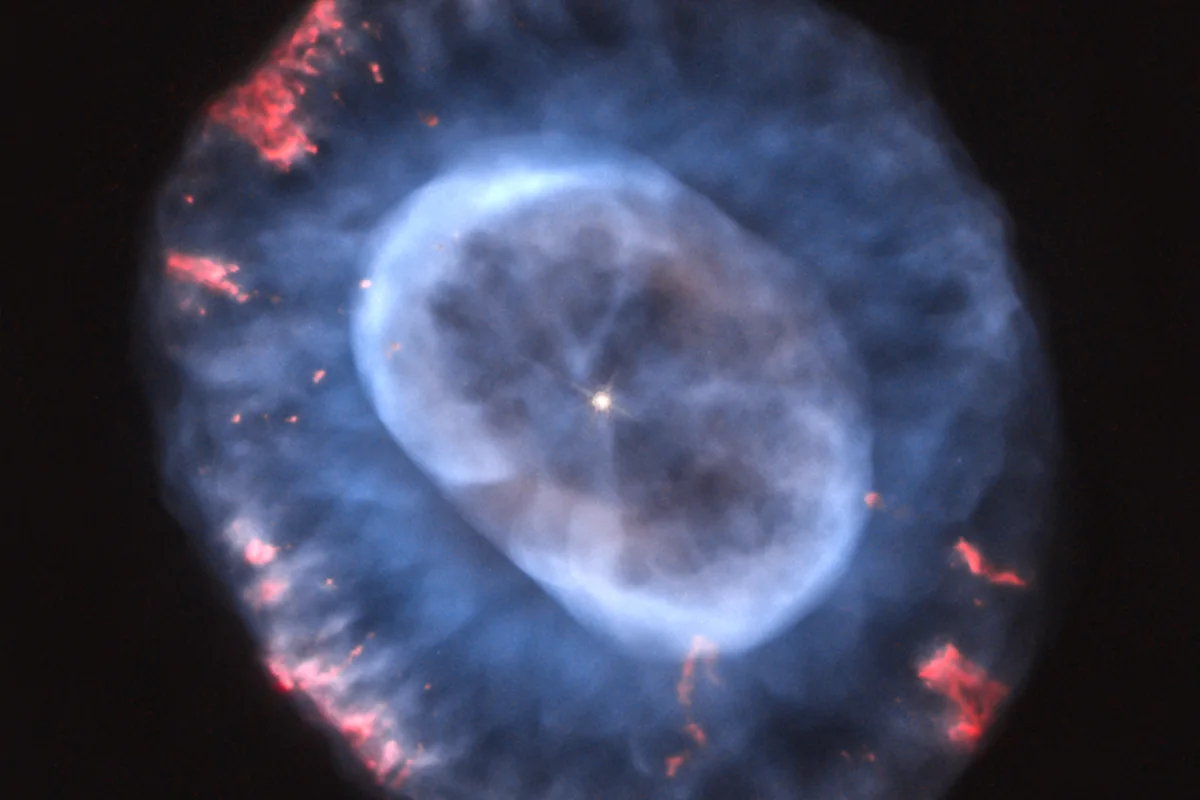
Megagauss Magnetic Fields and Exotic Quantum Plasmas
The kaleidoscopic diversity of the white dwarf rainbow is amplified by gargantuan relic magnetic fields, which in certain ultra-metallic dwarfs reach intensities of hundreds of megagauss. Within such immense magnetic regimes, atomic electron orbitals deform from spherical symmetry into slender quantum cylinders oriented parallel to magnetic field lines.
This phenomenon, known as the quadratic Zeeman effect, splits conventional atomic transition lines into complex polarized multiplets, imbuing the star’s luminosity with bizarre non-thermal spectral signatures.
Furthermore, magnetic field reconnection channels infalling planetary material directly onto magnetic poles, generating localized “hot spots” where temperatures soar tens of thousands of degrees higher than the surrounding photosphere. As the star rotates on its axis, observers detect rapid multi-wavelength chromatic shifts transitioning from violet to fiery amber.
These stellar corpses effectively serve as unearthly physical laboratories, allowing quantum mechanicians to observe high-energy density plasmas under physical conditions utterly unattainable within terrestrial laser confinement facilities.
Key Scientific Discoveries in White Dwarf Astrophysics:
- White dwarf surface gravity exceeds Earth’s by 100,000x, normally precipitating heavy metals beneath the photosphere.
- Continuous exoplanet asteroid accretion replenishes heavy metals, revealing direct geochemical compositions of alien worlds.
- Stark broadening and continuum opacity filtering produce true green-shifted stellar emissions on WD J1330+6435.
- Megagauss magnetic fields distort electron shells into quantum cylinders, triggering quadratic Zeeman multiplets.
A Glimpse into the Solar System’s Destiny: Earth’s Epitaph Written in the Stars
The study of metal-polluted, rainbow-hued white dwarfs is far more than a specialized inquiry into distant astrophysical anomalies; it constitutes an exact preview of the ultimate fate awaiting our own solar neighbourhood. In approximately 5 billion years, our Sun will exhaust its nuclear fuel, swell into a red giant, and eventually contract into a cooling white dwarf roughly 0.54 times the mass of the Sun.
Mercury and Venus will be completely devoured, and Earth’s biosphere will be stripped away, yet Jupiter, Saturn, and exterior debris reservoirs will endure in expanded orbits. Hundreds of millions of years thereafter, gravitational resonances will deflect remnants of Mars, the Main Asteroid Belt, and Oort Cloud comets inward toward the dormant solar core.
Our Sun’s degenerate photosphere will subsequently ignite with iron, silicon, and calcium. For brief astronomical epochs, the dying Sun may radiate an amber or emerald glimmer as the elemental building blocks of Earth’s mountains and evaporated oceans dissolve into its degenerate crust.
By decoding the vibrant rainbow of white dwarfs, science reads the penultimate chapter in the epic saga of matter, memory, and stellar metamorphosis across the cosmos.