

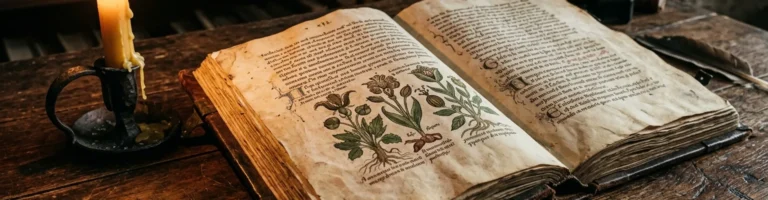

We may have been reading the Voynich manuscript in the wrong order for over a century: new codicological research has revealed that the enigmatic 15th-century document was never intended to be a single bound codex. A peer-reviewed study demonstrates that the pages were scrambled by an unsuspecting late Gothic bookbinder who mistakenly folded independent leaves into nested quires. This medieval binding error misled codebreakers, linguists, and computer scientists for more than 110 years, obscuring the true structure of the undeciphered text.
A Century of Frustration: Why We Were Reading the Voynich Manuscript in the Wrong Order
The Voynich Manuscript (cataloged as Beinecke MS 408 at Yale University’s Beinecke Rare Book and Manuscript Library) has long stood as the holy grail of historical cryptology. Acquired in 1912 by antiquarian Wilfrid Voynich near Rome, the illustrated volume contains 240 extant pages of calfskin vellum. Radiocarbon testing dated the parchment to between 1404 and 1438 with 95 percent probability. Yet its script (“Voynichese”) and bizarre illustrations have defied every decryption effort for over a century.
From cryptanalyst William Friedman to modern supercomputers, researchers operated under a fundamental assumption: that the manuscript was composed as a continuous codex meant to be read linearly from front to back. However, every structural model collapsed into noise, fueling theories of Renaissance hoaxes or occult ciphers.
Now, a landmark study published in the peer-reviewed Digital Medievalist journal by computer scientist Colin Layfield and paleographer Dr. Lisa Fagin Davis has upended the field. Their research proves that scholars failed to decipher the manuscript because its leaves were bound and read in a jumbled sequence.
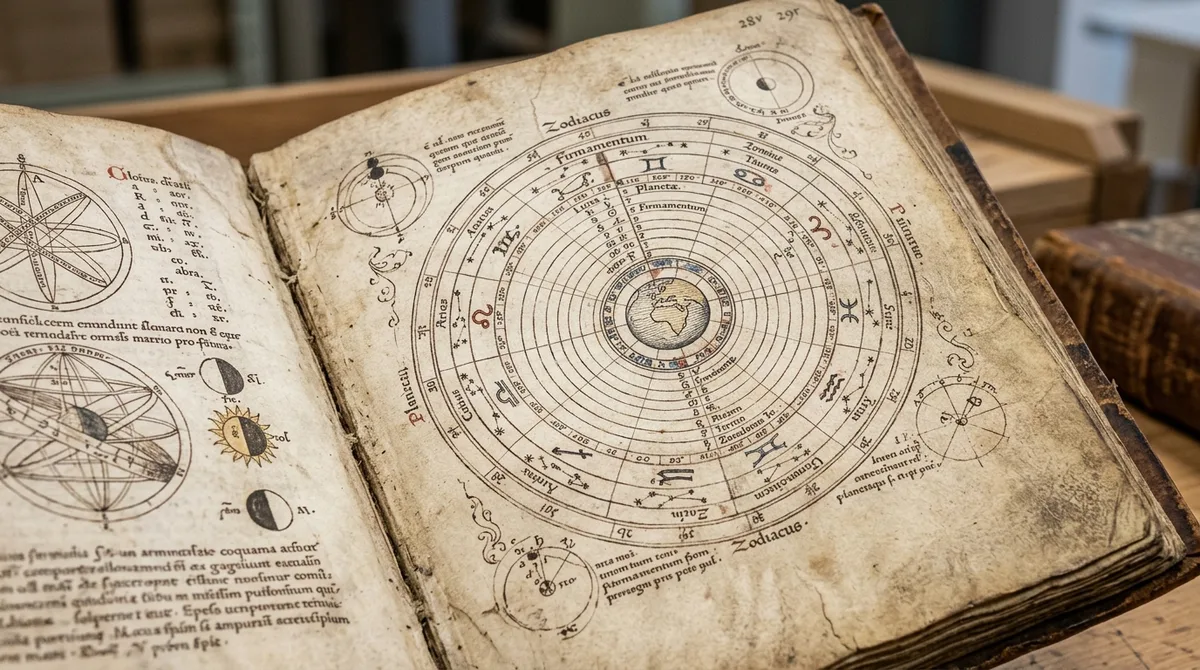
The Late Gothic Blunder: How Nested Quires Scrambled Independent Singulions
In traditional 15th-century book production, scribes assembled quires by nesting folded bifolia inside one another like Russian nesting dolls to form gatherings sewn through the center fold. However, Layfield and Davis discovered that the Voynich manuscript was never designed as a conventional quired volume.
Instead, its authors created it as an assemblage of standalone folded sheets, termed “singulions.” These singulions functioned as self-contained leaflets—akin to pamphlets or greeting cards—intended to be stored in an ordered pile and read consecutively leaf by leaf.
The disruption occurred in the late Gothic era (between 1450 and 1500). An early owner consigned the loose vellum sheets to a local binder. The artisan, unable to read the script, assumed the loose leaves were ungathered quires and mechanically nested one singulion inside another. This nested binding severed continuous passages, pushing concluding portions of texts dozens of folios into the future.
The manuscript was created as an unbound stack of standalone folded leaflets (singulions) designed for sequential leaf-by-leaf reading.
A late Gothic binder mechanically nested separate leaflets into traditional quires, catastrophically shuffling the text and illustrations.
Forensic tracking of liquid stains, interrupted artwork, and ink offset smudges proved the original physical sequence of the parchment.
High-dimensional NLP mathematics reconstructed statistical vocabulary continuity between separated folios without guessing word meanings.
Forensic Codicology: Water Stains, Offset Ink Smudges, and Severed Artwork
The singulion hypothesis is corroborated by physical evidence etched onto the vellum. First, researchers documented illustrations that terminate abruptly at the gutter. On several spreads, a botanical stem or an astrological wheel plunges into the central binding, only for the facing leaf to display completely unrelated text. The missing continuation was found folios away.
Second, the team analyzed ink offsets—pigment transfers left behind when damp storage pressed adjacent sheets together. Multispectral analysis revealed that pigment deposits on certain leaves chemically match leaves currently separated by multiple quires, confirming they originally rested against one another in an unbound stack.
Third, historic liquid damage provided a forensic footprint. When the manuscript was kept as a loose stack, liquid spilled onto the parchment, leaving a distinctive tide-mark across the margins. In the bound codex, these water stains jump erratically across unrelated leaves. When digitally dismantled into their singulion layout, the stains align into a single continuous percolation pattern.
«There are a lot of people who wanted the Voynich to have been created by one mad genius working in their attic in medieval London or wherever. In fact, the evidence suggests we’re talking about a more communal object, perhaps a set of booklets through which information was passed down from one generation to the next – the “lone genius” idea is kind of out of the door.»
Dr. Lisa Fagin Davis, medieval manuscript paleographer and executive director of the Medieval Academy of America, interview with The Guardian
Mathematical Proof: Latent Semantic Analysis Reconstructs the Original Sequence
To mathematically validate the reconstruction, Colin Layfield utilized Latent Semantic Analysis (LSA), an NLP technique that detects semantic relationships across text segments. Crucially, researchers did not attempt to translate individual words; LSA evaluated purely mathematical patterns of vocabulary clustering and lexical continuity.
The team calibrated their methodology against control medieval manuscripts with established codicological histories, including the Aberdeen Bestiary and the Speculum Humanae Salvationis. In every benchmark, the algorithm successfully reassembled deliberately shuffled leaves back into their verified authorial sequence.
When applied to Voynich transcriptions, LSA exposed sharp linguistic discontinuities at existing page boundaries while identifying strong affinities between separated leaves. The algorithmic alignments matched physical water-stain maps and sewing holes with 100 percent fidelity. Just as modern interdisciplinary methods unlock secrets in deciphering complex scientific mysteries, mathematics restored the manuscript to its genuine sequence.
- The manuscript was never meant to be a single bound book, but an ordered collection of standalone singulion booklets.
- The sequencing disorder occurred between 1450 and 1500 when an artisan bound the loose sheets into nested quires.
- Latent Semantic Analysis (LSA) and water damage patterns conclusively mapped the genuine original reading order.
- Forensic paleography confirms at least five distinct scribes, framing it as a communal herbal compendium.
Shattering the Lone Genius Myth: A Medieval Communal Women’s Health Handbook
Restoring the original order dismantles myths that framed the document as an occult prank or the solitary cipher of Roger Bacon. Paleographical handwriting analysis conducted by Dr. Lisa Fagin Davis established that at least five distinct scribes contributed to the text. It was not a private cipher, but a communal reference manual compiled across multiple generations.
Its six sections—botanical, astrological, balneological, cosmological, pharmaceutical, and recipe—reflect the practical science of late medieval Europe. The famous balneological section, showing nude women in thermal baths connected by green plumbing, represents a compendium of women’s health, balneotherapy, and herbal pharmacology from Alpine traditions.
These herbal insights were tied to celestial rhythms, mirroring how early naturalists recorded astronomical observation and celestial charts. While the 15th-century binder inadvertently created a cryptographic puzzle, their stitching ultimately protected the delicate vellum from destruction. With the architectural blueprint restored, scholars finally stand on firm ground to decipher the Voynich manuscript.