

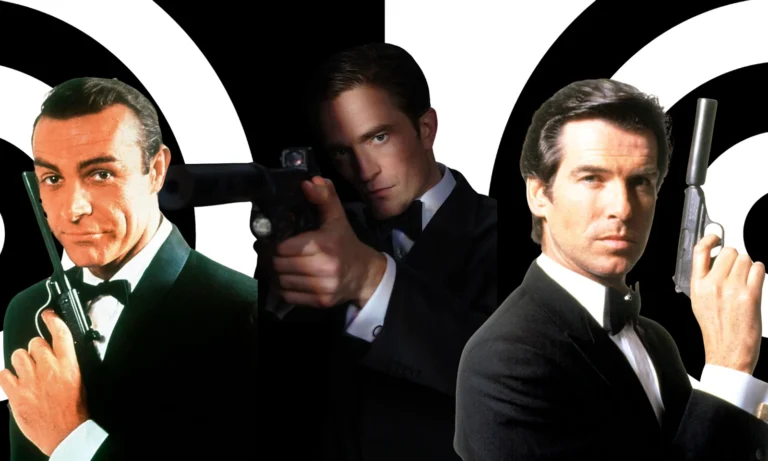

For over six decades, legendary British secret agent James Bond has operated not merely as the world’s most enduring cinematic action hero, but as a dynamic cultural barometer of Western masculinity, shifting continuously from post-war imperial bravado to the psychologically bruised, emotionally vulnerable realism of the 21st century.
The Spy as Cultural Barometer: Six Decades of Shifting Masculine Archetypes
The cinematic universe of agent 007, inaugurated in 1962 with Terence Young’s Dr. No, has never operated in a cultural or geopolitical vacuum. On the contrary, each actor donning the iconic dinner jacket has inevitably absorbed and refracted the predominant anxieties, political tensions, and gender politics of his respective generation. James Bond has consistently functioned as a living mirror reflecting Western society’s evolving definition of manhood.
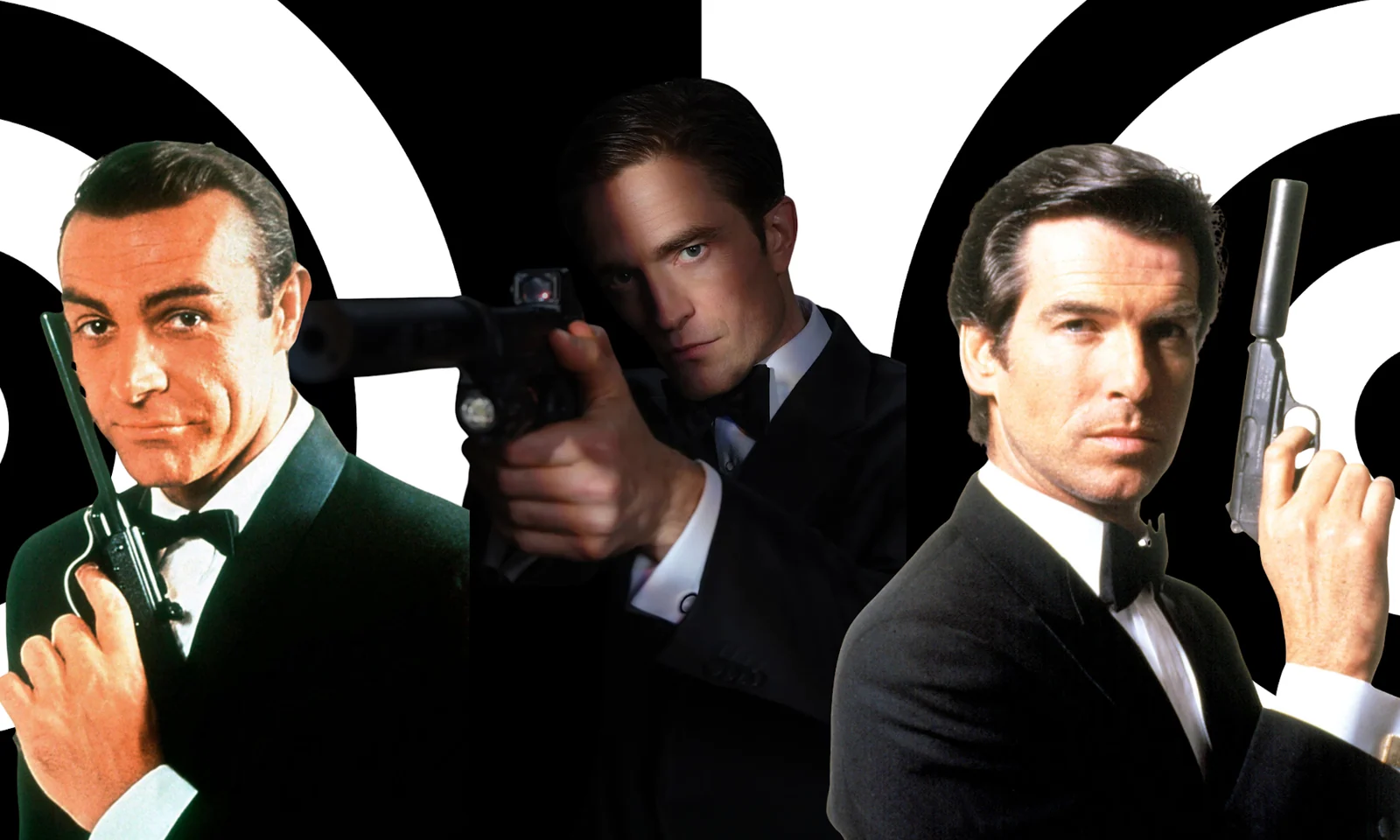
In Sean Connery’s definitive breakthrough performance, the secret agent embodied the unapologetic confidence of post-World War II Western powers navigating the chill of the early Cold War. His masculinity drew strength from physical dominance, imperial pedigree, an unyielding heterosexual appetite, and colonial prestige. Yet by 1969, George Lazenby’s solitary turn in On Her Majesty’s Secret Service laid bare an unprecedented emotional fragility, presenting an agent capable of domestic romance and profound, tearful bereavement beside an Alpine highway.
The 1970s arrived with Roger Moore infusing the franchise with camp theatricality, double-entendre wit, and flamboyant safari suits, providing cinematic escapism during an era besieged by industrial stagflation and the energy crisis. By the late 1980s, Timothy Dalton decisively stripped away this comedic veneer, restoring Ian Fleming’s literary darkness. Dalton’s brooding, ruthless, and morally conflicted operative reflected late-Cold War anxieties as established geopolitical binaries collapsed into regional chaos.
From Pierce Brosnan’s High-Gloss Charm to Daniel Craig’s Fractured Body
The 1990s demanded a sophisticated renegotiation of masculinity following the fall of the Iron Curtain, captured impeccably by Pierce Brosnan. His suave, Brioni-clad elegance engaged in sharp ideological friction with modern sensibilities: Samantha Bond’s acerbic Moneypenny routinely disarmed his predatory chauvinism, while Dame Judi Dench’s groundbreaking casting as M famously confronted him as a “sexist, misogynist dinosaur, a relic of the Cold War.”
The definitive paradigm shift erupted in 2006 with Daniel Craig’s blistering debut in Casino Royale. Craig presented a Bond of formidable muscularity paired with raw psychological fracture. For the first time, audiences witnessed a protagonist whose body bore brutal torture scars and whose emotional armor concealed the devastating trauma of childhood orphanhood. Over five films, Craig explored aging, grief, toxic isolation, and ultimately fatherhood, culminating in total self-sacrifice in No Time to Die.
The architectural majesty of high-budget film production requires an exquisite harmony between visuals and acoustic engineering. Discover how modern cinema crafts sensory spectacle in our comprehensive analysis on cinematic sound engineering and acoustic thresholds in modern blockbusters.
| Era & Actor | Cultural & Geopolitical Context | Screen Masculinity Paradigm | Landmark Film & Core Transformation |
|---|---|---|---|
| Sean Connery (1962–1971) | Early Cold War, twilight of British Empire | Unapologetic machismo, class superiority, imperial masculine authority | Goldfinger (1964): codification of suave hedonism and invulnerability |
| Roger Moore (1973–1985) | Détente, 1970s energy crisis, disco pop culture | Camp self-mockery, flamboyant dandyism, theatrical escapism | The Spy Who Loved Me (1977): shift toward gadgetry and lighthearted parody |
| Timothy Dalton (1987–1989) | Late Cold War glasnost, rise of narco-insurgency | Psychological realism, moral ambiguity, unvarnished ruthlessness | Licence to Kill (1989): abandoning MI6 sanctioned rules for raw vengeance |
| Daniel Craig (2006–2021) | Post-9/11 war on terror, digital surveillance | Bodily trauma, childhood psychological scars, emotional vulnerability | Casino Royale (2006) & Skyfall (2012): physical torture and mortal tragedy |
| Robert Pattinson (New Era) | Metamodernism, gender redefinition, consent ethics | Subversive irony, deconstructed male vanity, intellectual agility | Upcoming Steven Knight reboot: uniting auteur cinema depth with global action |

«In Pattinson’s cinematic DNA lies something far more intricate than the traditional romantic leading man. His proven affinity for dark camp, physical fragility, and existential absurdity creates vital space for the franchise to playfully interrogate male vanity and embrace authentic vulnerability.»
Monica Germanà, Professor of English Literature and Film at the University of Westminster
Robert Pattinson: Why the Auteur Icon Is the Provocative Choice for 007
Following Craig’s historic farewell, EON producers Barbara Broccoli and Michael G. Wilson face a defining aesthetic crossroads. Persistent industry speculation surrounding Robert Pattinson initially triggered skepticism among purists who remembered him solely through the teen vampire melodrama of Twilight. Yet over the past fifteen years, Pattinson has systematically forged one of the most audacious, daring, and eclectic resumes in contemporary world cinema.
His filmography reads like an adventurous masterclass in unconventional masculinity: from Robert Eggers’ claustrophobic, delirium-drenched period nightmare The Lighthouse to the Safdie brothers’ frenetic nocturnal sprint Good Time and Claire Denis’ existential space odyssey High Life. Even his mainstream transition in Matt Reeves’ The Batman (2022) delivered not an invulnerable billionaire vigilante, but a reclusive, gothic, and deeply melancholic Bruce Wayne.
Visually, Pattinson presents an extraordinary composite of previous 007 traditions. Declared scientifically the “world’s most handsome man” in 2020 by facial symmetry mapping algorithms, he possesses the sculpted jawline of Brosnan, while his rigorous athletic conditioning for Batman proves his ability to command the physical demands of high-octane espionage.
The 007 franchise has flourished across six decades precisely because the character continually evolves alongside cultural definitions of manhood.
From Connery’s invulnerable hedonist to Craig’s bruised, mourning operative, the lineage has steadily dismantled superficial machismo.
Collaborations with directors like Eggers, Cronenberg, and Denis prove Pattinson avoids formulaic tropes in favor of deep psychological nuance.
A modernized Bond demands an authentic ecosystem: independent female allies, incisive villains, and open dialogue on post-colonial elitism.
Subverting Toxic Vanity: What Screenwriter Steven Knight Brings to the Table
The reported involvement of Peaky Blinders creator Steven Knight as screenwriter signals Amazon and EON’s commitment to literary depth and narrative audacity. Ian Fleming originally envisioned his creation as an “unobtrusive, neutral figure – an anonymous blunt instrument.” Knight faces the thrilling opportunity to treat Bond as a complex canvas, highlighting the friction between mid-century institutional traditions and fluid modern sensibilities.
The one critical dimension Craig’s era notably starved was lightness and satirical wit. Beneath Pattinson’s brooding intensity resides a nuanced, subversive comic actor. In the revisionist western Damsel (2018), he skewered conventional heroism by playing a laughably inept cowboy whose masculine arrogance far outstripped his competence, while his grotesque turn in The King dismantled royal posturing.
A contemporary Bond must exist within a transformed ecosystem: surrounded by multifaceted female intelligence operatives who exist independent of his libido, antagonists who critique post-colonial entitlement, and narrative arcs that examine consent and male mental health. For complete scholarly analysis, explore the academic publication under DOI: 10.64628/AB.fxadn3xkn.
- Every recasting of James Bond has signaled a profound cultural reassessment of masculine strength and emotional vulnerability.
- Robert Pattinson unites classic aristocratic symmetry with a proven dedication to complex, subversive characters.
- Screenwriter Steven Knight has the opportunity to utilize Fleming’s “blunt instrument” concept to examine modern ethical quandaries.
- Pattinson’s comic sensibility could provide the vital antidote to franchise fatigue, infusing 007 with self-aware intellectual wit.
The Post-Craig Frontier: Geopolitics, Imperial Echoes, and a Redefined 007
The casting of a 40-year-old Robert Pattinson markedly recalibrates the producers’ original strategic roadmap. Franchise custodian Barbara Broccoli had previously indicated a preference for an actor in their early thirties capable of anchoring the series for at least fifteen years. Yet Pattinson’s mature vintage affords a vastly richer dramatic canvas: rather than another conventional origin narrative chronicling a brash rookie’s initiation, cinema-goers will encounter a seasoned operative bearing the accumulated psychological scars, moral compromises, and systemic fatigue of modern intelligence tradecraft.
In an era defined by ubiquitous digital surveillance, cyberwarfare, and geopolitical multipolarity, the romanticized mythology of British imperial dominance is an untenable relic. Steven Knight faces the vital imperative of recalibrating MI6 into a believable 21st-century institution. The supporting ensemble—from field operatives to antagonists—must genuinely reflect the global reality of its audience, introducing complex female leads whose agency is independent of Bond’s orbit and antagonists who articulate incisive critiques of Western privilege.
Can the franchise preserve its quintessential adrenaline and glamorous escapism while discarding anachronistic chauvinism? Pattinson’s exceptional collaborative history with auteur visionaries—including David Cronenberg (Cosmopolis), Claire Denis (High Life), and Matt Reeves (The Batman)—demonstrates his rare capacity to synthesize cinematic spectacle with profound psychological depth. If Pattinson and Knight succeed, this next iteration of 007 will not merely survive modern scrutiny; it will redefine masculine heroism for a generation.