

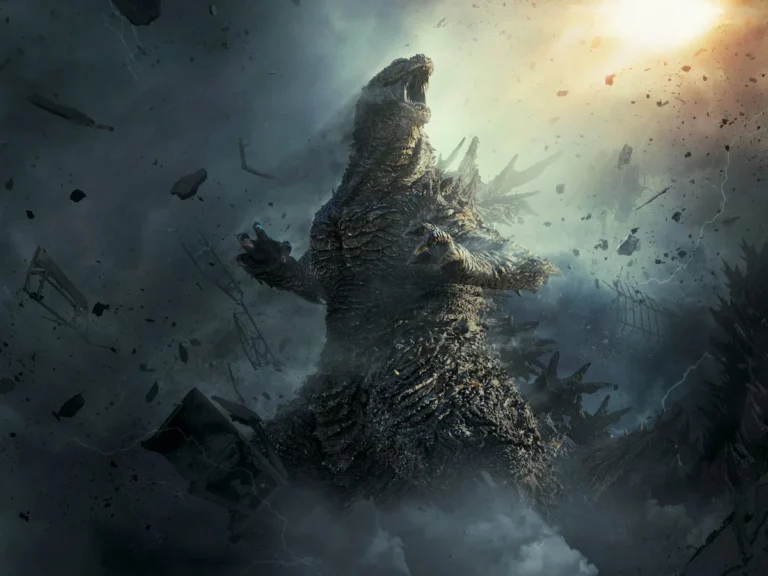

The theatrical release of Godzilla Minus Zero across global IMAX auditoriums has unleashed a genuine seismic phenomenon, transforming a routine cinema visit into an intense physiological confrontation. Audiences leaving screenings describe not merely witnessing the colossal reptile, but literally feeling its terrifying roar shake their chests: smartwatch decibel monitors routinely flash hazard warnings exceeding 90–95 decibels (dB). In social media forums, film lovers and sound engineers are fiercely debating the boundaries of cinema volume and hearing safety, probing the acoustic standards governing Hollywood dubbing stages and questioning who truly controls the volume knob in modern multiplexes.
The Godzilla Phenomenon: When a Blockbuster Becomes a Physical Seismic Ordeal
The theatrical invasion of Godzilla Minus Zero into IMAX cinemas worldwide has proven to be an extraordinary sensory spectacle, blurring the boundary between cinematic entertainment and physiological endurance. From the opening moments, moviegoers have expressed sheer astonishment: the beast does not merely dominate the silver screen; it physically rattles seats, compresses the diaphragm, and causes chest cavities to vibrate in sympathetic resonance. Attendees wearing Apple Watches or smart fitness bands frequently find their screens lighting up with automatic high-noise notifications, warning that prolonged exposure to sound levels peaking over 90–95 dB poses tangible risks to auditory health.
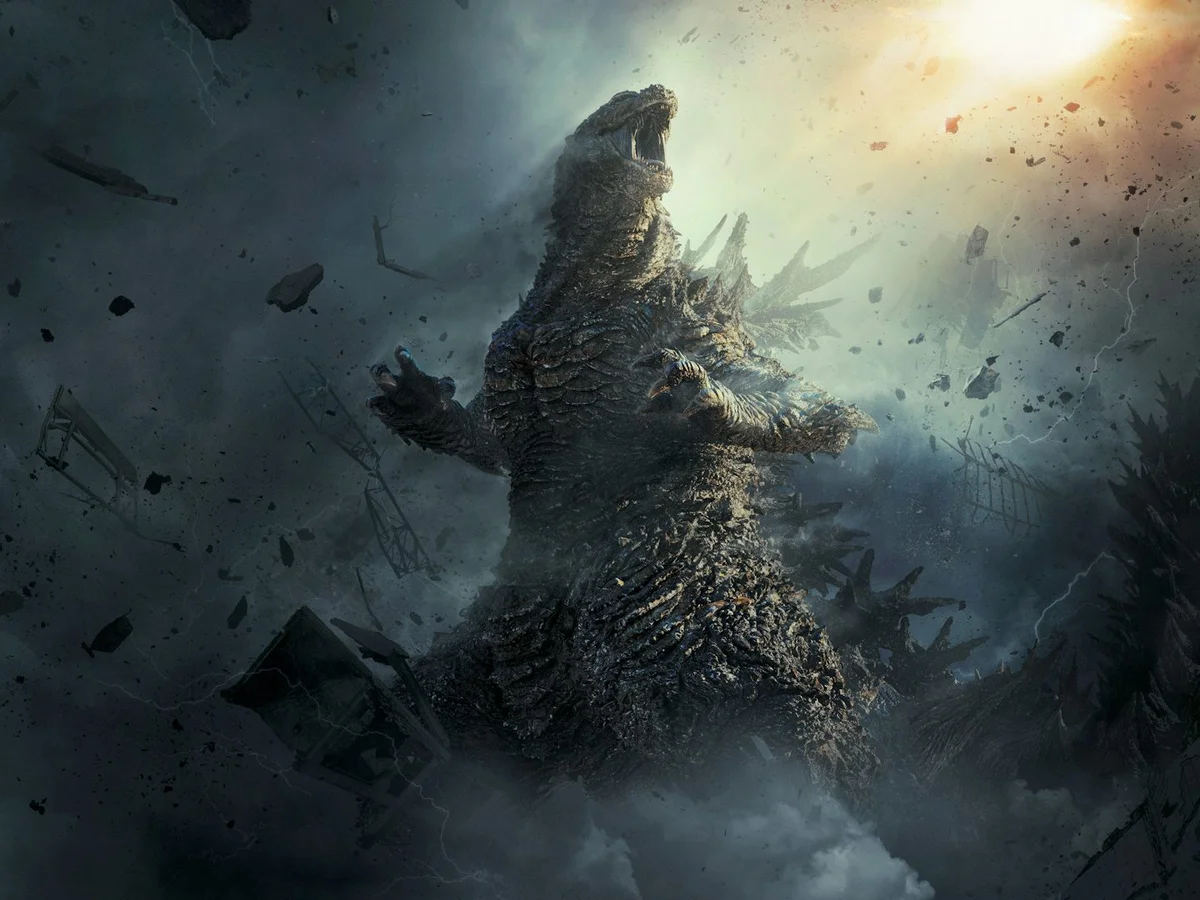
This visceral audience reaction has reignited a perennial debate across the exhibition industry: why are certain cinema screenings comfortably balanced, while others feel aggressively deafening? Frustrated viewers often assume that projectionists or theater managers carelessly cranked up the master volume knob to draw attention. In reality, perceived cinema volume is the culmination of acoustic physics, psychoacoustics, intricate sound engineering, strict studio mixing guidelines, and the commercial realities of local multiplex management.
Understanding this sonic powerhouse requires examining the acoustic lineage of cinema’s most famous radioactive titan. In 1954, when director Ishiro Honda and composer Akira Ifukube were creating the original Japanese masterpiece, they confronted an unprecedented artistic challenge: how does one design the voice of an irradiated prehistoric leviathan taller than Tokyo’s skyline? Initial attempts to record lions, tigers, and trumpeting elephants slowed down on magnetic tape sounded disappointingly organic and familiar. In an inspired stroke of avant-garde ingenuity, Ifukube uncoiled an unvarnished double bass string, coated a thick leather glove in crushed pine rosin, and drew his hand firmly along the wire. The resulting visceral, screeching friction roar—rich in harsh metallic harmonics and subterranean resonance—became an immutable cinematic archetype for seven decades.
In Godzilla Minus Zero, sound supervisors preserved that iconic acoustic DNA while expanding it through 12-channel immersive audio engineering. Today’s Godzilla roar is an intricate acoustic composite: shattering concrete transients, supersonic shockwaves of pressurized air, and an overwhelming infrasonic rumble that sweeps through the theater like a localized tsunami.
The Physics of Loudness: Dynamic Range, Spectral Density, and Subwoofer Viscerality
From an engineering standpoint, volume is never merely a matter of decibel amplitude. The defining hallmark of high-end cinematic sound is dynamic range—the span between the quietest whisper and the loudest explosion. Modern film soundtracks possess a massive dynamic range of 80 dB or more, allowing subtle atmospheric rustling at 30 dB to give way instantly to a 105 dB shockwave.
In stark contrast, audio mastered for television broadcasts, commercial radio, or streaming services undergoes aggressive multi-band compression, narrowing the dynamic window to 10–14 dB to ensure dialogue remains audible over household noise or laptop speakers. In a dedicated cinema, however, soundtracks are delivered uncompressed. When a deafening roar shatters an extended period of dramatic silence, the contrast impacts the central auditory cortex as a visceral jolt.
Furthermore, psychoacoustic science demonstrates that perceived loudness depends heavily on spectral frequency density. The human ear integrates acoustic energy across the entire frequency spectrum. If a climactic battle scene simultaneously deploys full brass fanfare, exploding bridges, wailing civil defense sirens, shouting crowds, and a roaring monster, the acoustic energy occupies every critical band simultaneously, producing an impenetrable wall of sound.
Equally vital is the role of low-frequency effects (LFE) below 60 Hz. Because human hearing sensitivity drops sharply at the low-frequency limit, reproducing a 30 Hz sub-bass note with the same subjective loudness as a 1,000 Hz human voice requires 40 to 50 dB of additional acoustic pressure. High-excursion cinema subwoofers displace vast air volumes, converting sound waves into tactile pressure pulses. These low-frequency vibrations are registered not by the eardrum alone, but by Pacinian corpuscles in the skin and internal organs, evoking an instinctual fight-or-flight response.
«Apparent theatrical loudness is not merely a function of peak decibels, but a sophisticated synthesis of psychoacoustics, spectral frequency density, and narrative intent. Cinema subwoofers allow audiences to physically feel a monster’s footsteps through bone conduction, yet the ultimate question of auditory safety remains tied to the local cinema’s volume calibration.»
Alison Cole, Senior Lecturer in Screen Composition, Sydney Conservatorium of Music, University of Sydney
IMAX with Laser Architecture: 12-Channel Spatial Sound and Room Acoustics
Godzilla Minus Zero was specifically optimized for IMAX with Laser auditoriums, which utilize an advanced 12-channel audio configuration that substantially surpasses traditional 5.1 and 7.1 surround systems. In addition to high-output screen speaker clusters and side surrounds, the system incorporates overhead ceiling channels and dedicated sub-bass towers strategically placed to equalize low-frequency dispersion.
This multi-channel architecture empowers sound designers to pinpoint sonic objects with remarkable vertical precision. As Godzilla towers over Tokyo, the monster’s thunderous breath begins in the overhead ceiling array, cascades downward into the front left and right channels, and culminates in a 360-degree earthquake rumble. This immersive design delivers unparalleled theatrical realism, but it also tests the acoustic limits of the auditorium itself.
The propagation of acoustic waves inside enclosed theaters closely reflects the fundamental physics of acoustic wave propagation and resonance. In poorly damped rooms, long low-frequency wavelengths bounce between parallel concrete surfaces, establishing destructive standing waves or room modes. This creates acoustic dead spots in some rows while producing extreme ‘bass nodes’ in others, doubling the local sound pressure and intensifying auditory fatigue.
To mitigate these acoustic flaws, certified IMAX auditoriums utilize laser alignment, non-parallel structural walls, and specialized bass traps. Yet, even in acoustically calibrated spaces, peak decibel bursts during high-octane blockbusters can push the envelope of acoustic comfort for sensitive listeners.
GODZILLA MINUS ZERO is the loudest movie I’ve ever heard in my entire life.
— patrick. (@imPatrickT) November 3, 2026
This will be a reference title for testing theater setups. Unbelievable film, and the definition of FILMED FOR IMAX. pic.twitter.com/miNvoegXKY
Viewer reaction to the extraordinary acoustic volume of Godzilla Minus Zero in IMAX. Source: X (@imPatrickT)
The global SMPTE industrial dubbing benchmark ensuring perfect dialogue intelligibility while preserving full dynamic impact for explosions.
Infrasonic pressure waves within the 20–60 Hz band, reproduced by massive subwoofers and detected by somatic mechanoreceptors as vibrations.
The auditory system’s biological tendency to perceive dense, multi-track acoustic layering as substantially louder than isolated peaks.
Cumulative acoustic energy exposure limits beyond which hair cell synaptopathy, tinnitus, and hidden hearing loss can emerge.
Who Controls the Volume Knob: Studio Calibration 85 dB vs Multiplex Realities
A common misconception is that film volume is arbitrary. In truth, Hollywood follows a stringent industrial calibration benchmark pioneered by SMPTE and Dolby in the 1970s. In professional dubbing suites, a standardized test signal of pink noise at −20 dBFS is calibrated to generate an exact sound pressure level of 85 dBC at the primary listening position. The processor fader mark that achieves this reference is labeled ‘7.0’.
Theoretically, if every cinema in the world set its processor to 7.0, every movie would playback exactly as the filmmakers intended: conversational dialogue would register at a comfortable 65–70 dB, while climactic explosions would reach design peaks of 105 dB. However, in practice, the vast majority of commercial multiplexes deliberately reduce their fader settings to 5.5, 5.0, or even 4.5.
Several factors drive this everyday volume reduction. First, general audiences, particularly elderly patrons and families with young children, frequently complain that full reference 85 dBC playback is painfully loud. Second, modern commercial multiplexes often share thin acoustic partition walls; running a blockbuster at reference volume would cause heavy bass bleeding that ruins an adjacent drama. Consequently, theater managers habitually turn down the master level.
IMAX and premium large-format venues, however, maintain a reputation for uncompromised fidelity. In these auditoriums, proprietary audio processors are calibrated to strictly adhere to studio reference levels. When moviegoers accustomed to lowered multiplex volume step into an IMAX presentation of Godzilla Minus Zero, they encounter the raw, uncompressed dynamic power of the mix at full scale, prompting astonishment on social media.
- Theatrical dynamic range spans up to 80–90 dB: the vast difference between an intimate whisper (30 dB) and a devastating atomic breath detonation (105–115 dB).
- Perceived loudness is generated by continuous multi-layered spectral saturation across full-orchestral and sub-bass frequencies below 40 Hz.
- The industrial standard Dolby / SMPTE dubbing stage reference is calibrated to 85 dBC at fader level ‘7.0’, but theater operators routinely modify playback levels.
- Continuous exposure to acoustic pressure exceeding 85–90 dB over a two-hour theatrical presentation can trigger temporary threshold shifts (TTS) and metabolic hair cell fatigue.
Audiological Safety: Safeguarding Your Hearing Without Diminishing Cinematic Awe
From an audiological and occupational health perspective, acoustic risk depends on the cumulative dose of sound energy. World Health Organization (WHO) and OSHA guidelines establish 85 dB as the threshold for safe continuous exposure up to 8 hours. However, because the decibel scale is logarithmic, every 3 dB increase doubles the acoustic energy: safe exposure drops to 4 hours at 88 dB, 2 hours at 91 dB, and a mere 15 minutes at 100 dB.
Fortunately for filmgoers, blockbuster movies do not subject audiences to sustained, unremitting noise. Extreme 95–100 dB peaks last only a few seconds at a time, followed by quieter dialogue that permits the inner ear a brief respite. Nonetheless, individuals with auditory hyperacusis, autonomic sensitivity, or recent middle-ear infections can experience temporary threshold shift (TTS)—manifesting as a muffled sensation, auditory fullness, or mild tinnitus lasting hours or days after the screening.
These physiological challenges reflect the physiological mechanisms processing acoustic pressure and vibration in biological tissues. Excessive sound waves subject cochlear hair cells to intense metabolic strain, generating reactive oxygen species that damage delicate synaptic ribbons connecting hair cells to the auditory nerve. Repeated acoustic trauma without adequate recovery intervals can cause hidden hearing loss, where standard audiograms appear normal but speech comprehension in noisy settings becomes significantly impaired.
To enjoy the awe-inspiring spectacle of Godzilla Minus Zero without compromising hearing health, audiologists recommend sensible precautions: select seats in the auditorium center (roughly two-thirds back from the screen), avoid the front rows directly adjacent to horn-loaded screen speakers, and consider carrying high-fidelity musician earplugs. These specialized acoustic filters attenuate overall volume evenly by 12–15 dB without distorting frequency balance or muffling dialogue, allowing you to relish the monster’s earth-shattering roar while safeguarding your auditory health.