

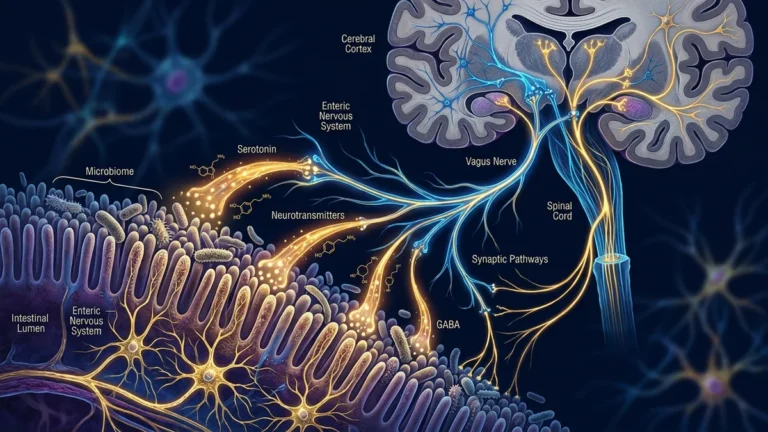

Dwelling within the human intestinal tract is a staggeringly complex microbial ecosystem weighing nearly two kilograms and comprising over 38 trillion bacteria, archaea, and fungi. For generations, medical dogma relegated the digestive tract to mechanical digestion and nutrient absorption. However, the psychobiotic revolution overturned this paradigm: the Gut-Brain Axis operates as an autonomous biochemical command center where commensal microbes synthesize up to 90% of circulating serotonin and directly modulate neurocircuitry within the amygdala and prefrontal cortex.
The Body’s Second Brain: The Enteric Nervous System and 500 Million Neurons
Embedded within the submucosal and myenteric plexuses of the digestive tube (Auerbach’s and Meissner’s networks), the Enteric Nervous System (ENS) is capable of autonomous reflex control. In vivo, however, it conducts continuous bi-directional crosstalk with the central nervous system across three interconnected highways: neural (vagal afferents), endocrine (gut peptides), and immune (cytokines).
Commensal microbiota serve as the master neurochemical modulators of this axis. Strains including Lactobacillus rhamnosus and Bifidobacterium longum synthesize primary neuroinhibitory transmitters—most notably gamma-aminobutyric acid (GABA)—dampening hyper-excitability within central fear circuits.
The Serotonin Factory: 90% of Serotonin Originates in the Gut
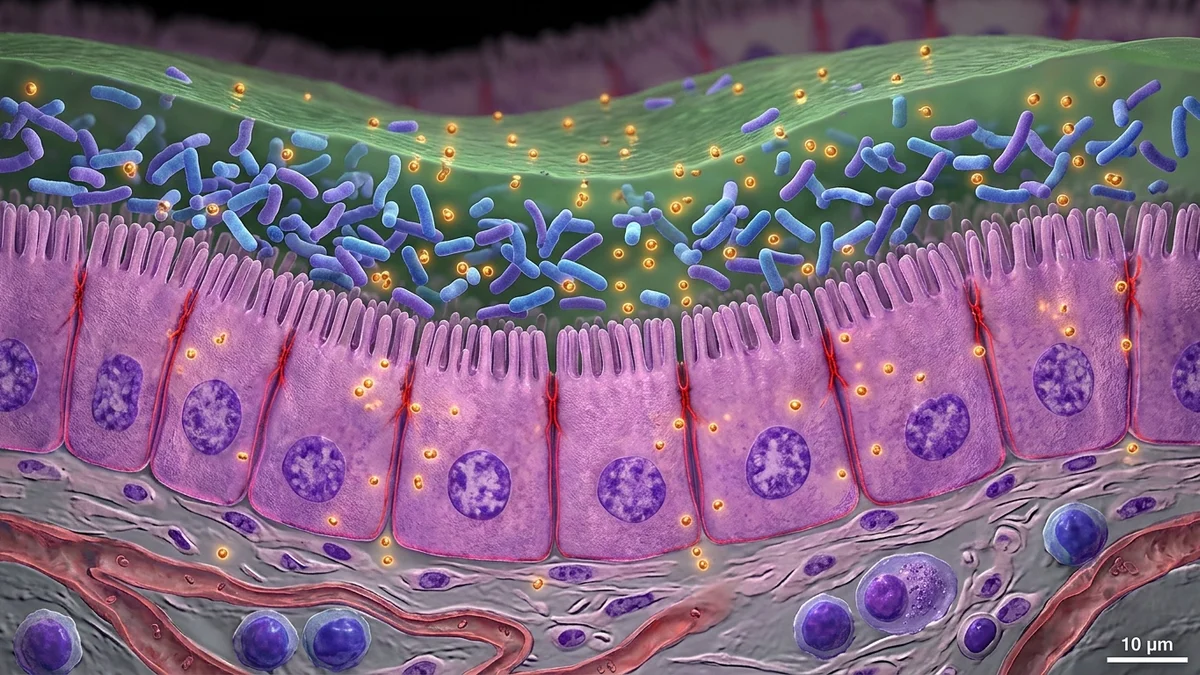
A pervasive lay misconception presumes serotonin is synthesized primarily within cerebral cortical tissue. In reality, over 90% of total organismal serotonin is generated by specialized enterochromaffin cells lining the gut mucosa, which convert dietary L-tryptophan into 5-HT under direct stimulation by bacterial short-chain fatty acids.
While peripheral serotonin cannot cross the blood-brain barrier, it activates luminal 5-HT3 receptors on vagus nerve terminals, relaying potent soothing signals to the medulla. When microbial biodiversity collapses, tryptophan is shunted down the neurotoxic kynurenine pathway, generating quinolinic acid and precipitating depressive phenomenology.
The vast majority of systemic serotonin is synthesized by intestinal enterochromaffin cells.
The enteric nervous system autonomously controls digestion while communicating with the brain.
Microbial short-chain fatty acids stimulate new synaptic plasticity and brain growth.
Intestinal permeability permits bacterial toxins to cross into the brain, causing neuroinflammation.
Leaky Gut Syndrome and Systemic Neuroinflammation
Healthy intestinal epithelium is sealed by tight junction proteins (occludin, claudin-1, and zonula occludens-1), establishing an impenetrable barrier against toxic bacterial byproducts. Depriving the microbiome of prebiotic dietary fibers degrades the protective mucin layer, permitting opportunistic pathobionts to erode the epithelial wall.
This permits the translocation of lipopolysaccharide (LPS, a potent bacterial endotoxin) into portal circulation, initiating metabolic endotoxemia. Systemic LPS breaches the blood-brain barrier, triggering microglial activation and neurotoxic cytokine cascades that degrade hippocampal dendritic arborization, manifesting as brain fog, chronic anhedonia, and affective blunting.
«The gastrointestinal tract possesses an intrinsic enteric nervous system housing over 500 million neurons—exceeding the neuronal count of the entire spinal cord. We literally think, feel, and intuit through our gut. Microbial dysbiosis is no longer regarded as an ancillary symptom, but as a primary causal driver of psychiatric disorders and neuroinflammation.»
Professor John Cryan, Chair of Anatomy and Neuroscience, University College Cork
Short-Chain Fatty Acids: The Neuroprotective Power of Butyrate
When beneficial anaerobic taxa ferment non-digestible prebiotic fibers, they generate short-chain fatty acids (SCFAs): acetate, propionate, and butyrate. Butyrate serves as the primary energetic substrate for colonocytes, suppresses mucosal inflammation, and functions as a powerful histone deacetylase (HDAC) inhibitor.
Circulating butyrate upregulates Brain-Derived Neurotrophic Factor (BDNF) expression in the neocortex and hippocampus, stimulating adult neurogenesis and reinforcing blood-brain barrier tight junctions. High fecal and circulating butyrate concentrations correlate directly with stress resilience and superior cognitive processing speed.
- Consume a minimum of 30–35 grams of diverse dietary prebiotic fiber daily to fuel beneficial flora.
- Incorporate live active fermented foods daily (kefir, raw sauerkraut, kimchi, fermented tempeh).
- Eliminate ultra-processed emulsifiers (carboxymethylcellulose, polysorbate-80) that degrade gut mucin.
- Deploy verified psychobiotic strains (L. rhamnosus GG, B. longum 1714) following antibiotic exposures.
Psychobiotics and the Clinical Dietary Framework for Mental Health
The clinical frontier of psychobiotics investigates targeted probiotic formulations for mitigating neuropsychiatric pathology. Randomized double-blind trials demonstrate that administering therapeutic strains such as Bifidobacterium infantis and Lactobacillus helveticus significantly reduces salivary cortisol awakening responses and attenuates panic reactivity on par with selective serotonin reuptake inhibitors.
To optimize the gut-brain axis naturally, neuroscientists recommend the Mediterranean prebiotic protocol: consuming at least 30 diverse plant species weekly (alliums, crucifers, berries, nuts), incorporating fermented foods (kimchi, unpasteurized sauerkraut, kefir), and eliminating artificial emulsifiers and non-nutritive sweeteners.