



On the surface, the era of coercive linguistic assimilation in contemporary Europe appears to have been permanently relegated to history. In Wales, the Welsh language enjoys robust legislative protection, decorates dual-language traffic signs, and resonates across parliament; in Finland, Swedish holds constitutional status as an equal national language. Yet, breakthrough sociolinguistic fieldwork from Cardiff University exposes an uncomfortable everyday reality: minority language speakers continue to navigate covert prejudice, subtle snubs, and pervasive microaggressions in public spaces, proving that formal legal recognition does not automatically guarantee social acceptance.
The Cardiff Cafe Incident: How Modern Linguistic Intolerance Operates
‘How very rude to be speaking Welsh!’—such was the indignant complaint directed at Patsy, a resident of Cardiff, as she relaxed over coffee with her family in a local cafe in the capital city of Wales. Stunned by the remark, she could hardly believe her ears: ‘But you’re in Wales. What on earth are you talking about?’ This seemingly isolated everyday encounter, documented in research by Dr. Kaisa Pankakoski of Cardiff University’s School of Welsh, illuminates an enduring sociological fault line running beneath the surface of modern European multiculturalism.

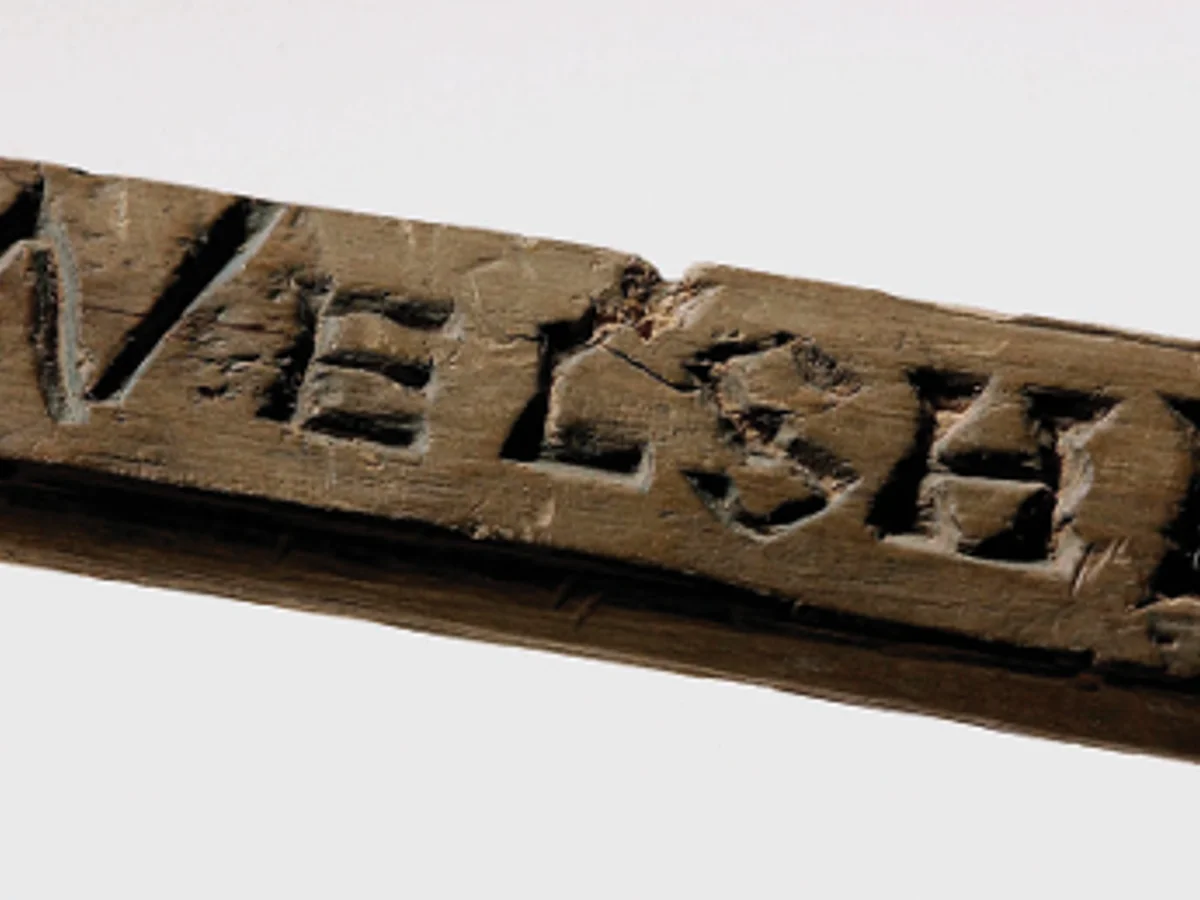
On paper, Wales has traveled an immense historical distance since the Victorian era. In the nineteenth century, British authorities enforced the infamous ‘Welsh Not’—a heavy wooden plaque bearing the carved letters W.N. hung around the neck of any pupil overheard speaking their native Celtic tongue in school. At the conclusion of the school day, whichever child remained holding the disciplinary token suffered severe corporal punishment with a cane. The explicit objective of British imperial educational policy was the eradication of Cymraeg in favor of the English language.
Today, Welsh is celebrated globally as one of the most successful language revival stories. The Welsh Language Act 1993 and the Welsh Language Measure 2011 established formal equality between Welsh and English in public life. Road signage across the nation is bilingual, the Welsh government finances the dedicated public broadcast channel S4C, and the national ‘Cymraeg 2050’ policy ambitiously targets reaching one million fluent speakers. Yet, as sociological fieldwork demonstrates, statutory decrees and dual-language road markers cannot instantly overturn unconscious social biases held by the linguistic majority.
This dynamic echoes the historical roots and heritage of Celtic regional communities. Celtic languages defined the cultural tapestry of Britain millennia before Anglo-Saxon migrations, and the contemporary defense of Cymraeg represents the vital preservation of indigenous living memory against homogenizing global forces.
Generational Shifts: From Overt Hostility to Covert Microaggressions
In her qualitative fieldwork, Dr. Pankakoski conducted in-depth interviews with Welsh-speaking families living across Cardiff. The findings revealed a stark generational contrast. Older parents who grew up during the 1970s, 1980s, and 1990s vividly recounted direct, aggressive hostility. One father recalled being verbally harassed and physically threatened on the streets of Cardiff simply for speaking Welsh with his mother in public.
A Welsh-medium schoolteacher recalled that when she transitioned to a mainstream English-medium school, she was stunned by the disdain expressed by fellow educators, who dismissed Welsh as a useless ‘relic’ and an impediment to socioeconomic advancement. Among older generations, these experiences forged an instinctual defensive posture: speaking the mother tongue behind closed doors to avoid confrontation with unilingual neighbors.
Conversely, younger participants have grown up within a vastly more supportive educational ecosystem. For modern Welsh youth, the language is far from marginal: they engage with Welsh indie music, stream teen dramas on S4C’s Hansh, and text in Welsh as an everyday habit. Yet, the overt hostility experienced by their parents has not disappeared; it has merely evolved into covert microaggressions.
Contemporary linguistic prejudice frequently disguises itself as sarcastic humor, feigned politeness, or etiquette grievances. Unilingual English speakers in the presence of Welsh speakers often adopt a defensive suspicion, accusing them of speaking Welsh deliberately to exclude others. The reality that bilingual individuals naturally default to their native language for intimate familial communication is routinely disregarded by an ethnocentric majority.
«Official recognition and widespread institutional visibility can transform the legal status of a language, but they do not automatically dismantle deeply rooted social prejudices. The foremost challenge facing minority languages today is ensuring that speakers feel entirely at ease using their language in everyday civic life, without being made to feel rude, divisive, or out of place.»
Kaisa Pankakoski, Sociolinguistics Researcher, School of Welsh, Cardiff University
Nordic Parallels: Why Finland Swedes Experience Identical Pressures
To evaluate whether this social tension was an idiosyncratic British phenomenon, Dr. Pankakoski conducted comparative research with the Swedish-speaking minority in Finland (the *finlandssvenskar*). The historical trajectory of Swedish in Finland differs markedly from that of Welsh: for centuries, Swedish was the language of the ruling political, commercial, and intellectual elite during Swedish administrative rule.
Today, Swedish speakers comprise approximately 5% of Finland’s population (roughly 290,000 citizens). The Constitution of Finland guarantees strict bilingual parity, entitling citizens to healthcare, judicial proceedings, and public education in Swedish. Nevertheless, the lived social experience of Swedish-speaking Finns closely mirrors the testimonies collected in Cardiff.
One Swedish-speaking Finnish father recounted joining colleagues for lunch at a prestigious new workplace, only to witness his Finnish-speaking peers openly venting disparaging stereotypes about Swedish speakers, unaware of his background. He was taken aback that highly educated, cosmopolitan professionals would casually indulge in such prejudice in a professional setting.
Another participant recalled an incident during her teenage years: while conversing in Swedish on a train with a friend, two adult passengers loudly vacated the carriage, remarking that they refused to sit beside Swedish speakers. That identical exclusionary dynamics manifest in nations with distinct histories and political frameworks proves that linguistic friction stems from universal social-psychological tendencies regarding in-groups and out-groups.
Statutory rights, bilingual public signage, and civil administration frameworks safeguarding minority linguistic heritage.
The domestic passing of language from parents to infants within the home as the fundamental biological lifeline of linguistic survival.
Everyday social friction where speaking a native minority tongue in a cafe or on transit is branded by bystanders as ‘anti-social’ or ‘rude’.
Welsh-medium immersion schools shaping bilingual proficiency among youth and transforming language into a natural peer-group code.
Sociolinguistics of Survival: Why Legal Frameworks Fail Without Daily Use
Theoretical sociolinguistics establishes that legal recognition represents merely the administrative skeleton of a language; its living tissue is formed by daily conversational practice. The long-term survival of any minority tongue is determined not in parliamentary chambers, but in family living rooms through intergenerational mother-tongue transmission. If parents cease speaking the language to their infants, it faces extinction within three generations regardless of state subsidies.
In this light, everyday linguistic prejudice presents a profound existential hazard. When a young mother, encountering judgmental looks in a shop or criticisms in a cafe, begins feeling self-conscious about speaking her native tongue to her child in public, the transmission chain weakens. A psychological barrier arises, confining the language to an intimate private domain while surrendering public life to the dominant language.
These core principles are intertwined with the intergenerational transmission of language and linguistic heritage. Human language evolved as our paramount social bonding technology. When regional dialects and indigenous tongues are extinguished, human cognition is permanently impoverished: each language encodes unique ecological observations, poetic metaphors, and cultural taxonomies that resist translation into global lingua francas.
Wales’s expanding network of Welsh-medium immersion schools (*Ysgolion Rhydd-Gymraeg*) has proven that children from non-Welsh homes can achieve complete bilingual fluency by age seven. Research indicates that bilingual education enhances executive cognitive function and facilitates the learning of additional languages. Yet, upon graduation, young adults must be able to use their language in workplaces, banks, and recreational clubs without facing social disapproval.
- Legislative equality and official constitutional status are necessary, yet fundamentally insufficient on their own to eliminate social bias.
- The historical trauma of corporal punishment like the ‘Welsh Not’ has evolved into subtle, covert microaggressions disguised as humor or politeness.
- Striking parallels between Wales and Finland demonstrate that minority language communities in disparate democracies share identical social anxieties.
- Long-term linguistic survival relies not merely on classroom instruction, but on sustained intergenerational mother-tongue transmission at home.
Cultivating Spaces of Dignity: Overcoming the Linguistic Barriers of Tomorrow
The overarching conclusion of Cardiff University’s sociolinguistic research is that the battle for minority languages has transitioned from legal entitlement to the realm of social psychology and civic etiquette.
It is no longer necessary to convince legislators that Welsh or Swedish have a constitutional right to exist. The genuine modern challenge is fostering a civic culture where conversing in a minority language in a restaurant, hospital, or city bus is received with natural respect, rather than suspicion, irritation, or accusations of discourtesy.
Meeting this challenge requires empathetic outreach to the unilingual majority. Dominant language speakers must recognize that overheard minority speech is not an intentional act of exclusion. It is an authentic, fundamental expression of identity and human dignity that deserves uninhibited public space.
The resilient resurgence of Cymraeg demonstrates that even centuries of systemic oppression cannot erase a language if a community remains resolved to protect it. For that revitalization to achieve permanence, society must embrace a timeless democratic truth: the health of a democracy is measured not by the ease of the majority, but by the security, dignity, and public vitality afforded to its smallest minority.