


The prospect of structural human brain preservation following clinical death has long resided at the speculative frontier of science fiction and boutique biostasis facilities. However, a landmark cross-sectional study published in the peer-reviewed journal PLOS ONE marks a significant turning point in mainstream medical thought: verified United States physicians estimate a median 25.5% probability that high-quality brain preservation could successfully retain enough neural information to enable future patient revival.
The PLOS ONE Investigation: Surveying 334 US Physicians on Biostasis and Revival
The groundbreaking investigation was conceived and led by a distinguished international team: neuroscientist Ariel Zeleznikow-Johnston (Ariel Zeleznikow-Johnston) of Monash University and the Brain Preservation Foundation, Dr. Emil F. Kendziorra (Emil F. Kendziorra) of Tomorrow Bio and the European Biostasis Foundation, and biomedical data scientist Andrew T. McKenzie (Andrew T. McKenzie) of the Icahn School of Medicine at Mount Sinai.
Conducted across the verified clinical network Sermo, the study gathered formal evaluations from 334 actively licensed United States physicians. The cohort was balanced between 150 primary care practitioners and 184 medical specialists, including neurosurgeons, neurologists, anesthesiologists, intensivists, oncologists, and palliative care doctors routinely engaged in end-of-life clinical care.
Participants were presented with a rigorously framed clinical scenario: an irreversibly declining patient receives state-of-the-art cryopreservation or aldehyde-based vitrification immediately upon cardiac cessation, preserving cellular and synaptic connectomic ultrastructure intact down to nanometer fidelity. Physicians were subsequently asked to estimate the probability that future technological developments—such as molecular nanotechnology, biological regeneration, or whole-brain computational emulation—could retrieve this preserved information and restore conscious identity.
The findings defied conventional assumptions: the median estimated probability was 25.5%, while the mean reached 32.8%. Crucially, 27.9% of surveyed doctors evaluated the concept of future revival as either «somewhat» or «very» plausible. This demonstrates that mainstream medical professionals increasingly acknowledge the profound distinctions between cellular cessation and the informational architecture of the biological human cognitive architecture.
The Connectomic Hypothesis: Long-Term Memory as a Physical Spatial Matrix
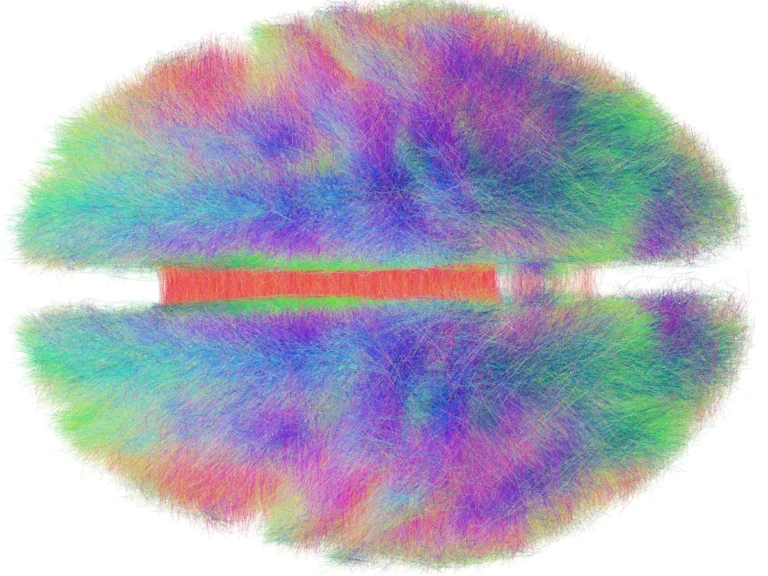
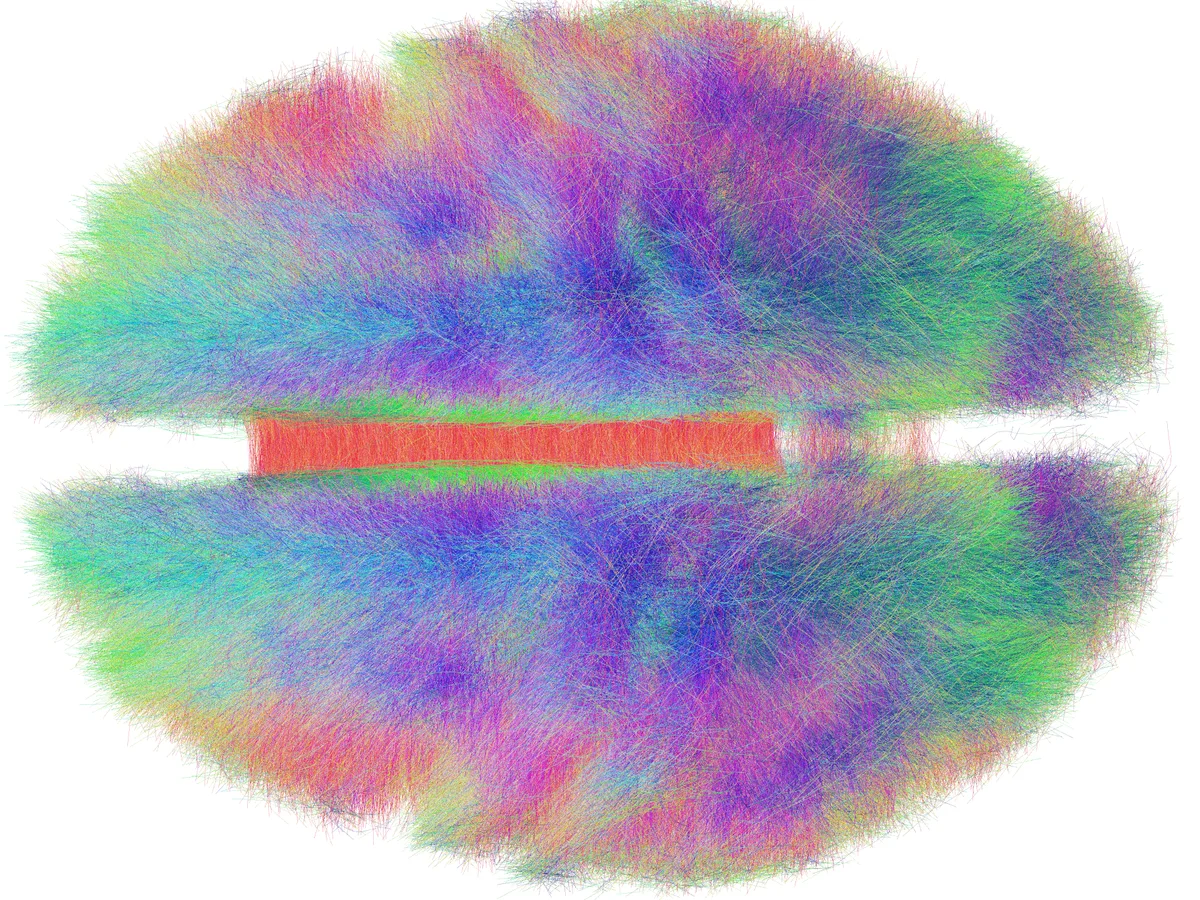
Underpinning this medical re-evaluation is modern connectomics—the comprehensive mapping of neural circuits. Classical clinical paradigms frequently treated human consciousness as an ephemeral byproduct of continuous metabolic throughput and electrical firing. Yet contemporary neuroscience has firmly established that biographical memory, acquired knowledge, and personal identity are encoded primarily within the spatial architecture of the brain’s synaptic wiring.
The human brain contains an estimated 86 billion neurons interconnected by upwards of 100 trillion synaptic junctures. Synaptic plasticity, structural dendritic spine geometries, receptor subunit densities (such as AMPA and NMDA receptor arrays), and presynaptic vesicle distributions form the tangible physical substrate of the connectome.
The philosophical foundation of continuous personal identity echoes John Locke’s classic theories of memory continuity and Derek Parfit’s modern concepts of psychological connectedness. If the physical substrate sustaining an individual’s cognitive patterns and autobiographical narrative remains preserved, personal identity does not perish upon cardiac standstill.
From an information-theoretic standpoint, the cessation of heartbeats or an isoelectric electroencephalogram does not signify the instantaneous erasure of personal data. So long as the cellular microarchitecture of the connectome remains intact, informational death has not occurred. Irreversible destruction takes place only when prolonged warm ischemia and hydrolytic autolytic cascades disintegrate physical synapses into thermal entropy.
«Physicians often approach preservation with instinctive skepticism, yet when presented with concrete neuroanatomical data showing connectomic ultrastructure intact, their estimated probability of future revival is surprisingly high—over 25%.»
Ariel Zeleznikow-Johnston, Lead Study Author and Neuroscientist at Monash University
Preservation Modalities: Cryonics vs. Aldehyde-Stabilized Cryopreservation
The historic quest for human biostasis began in earnest following the 1962 publication of Robert Ettinger’s foundational manifesto, The Prospect of Immortality. However, early whole-body freezing efforts in the 1970s suffered severe setbacks due to uncontrolled ice crystallization. When tissue freezes slowly, expanding ice needles shear lipid bilayer membranes, crush axonal sheaths, and fracture delicate synaptic structures.
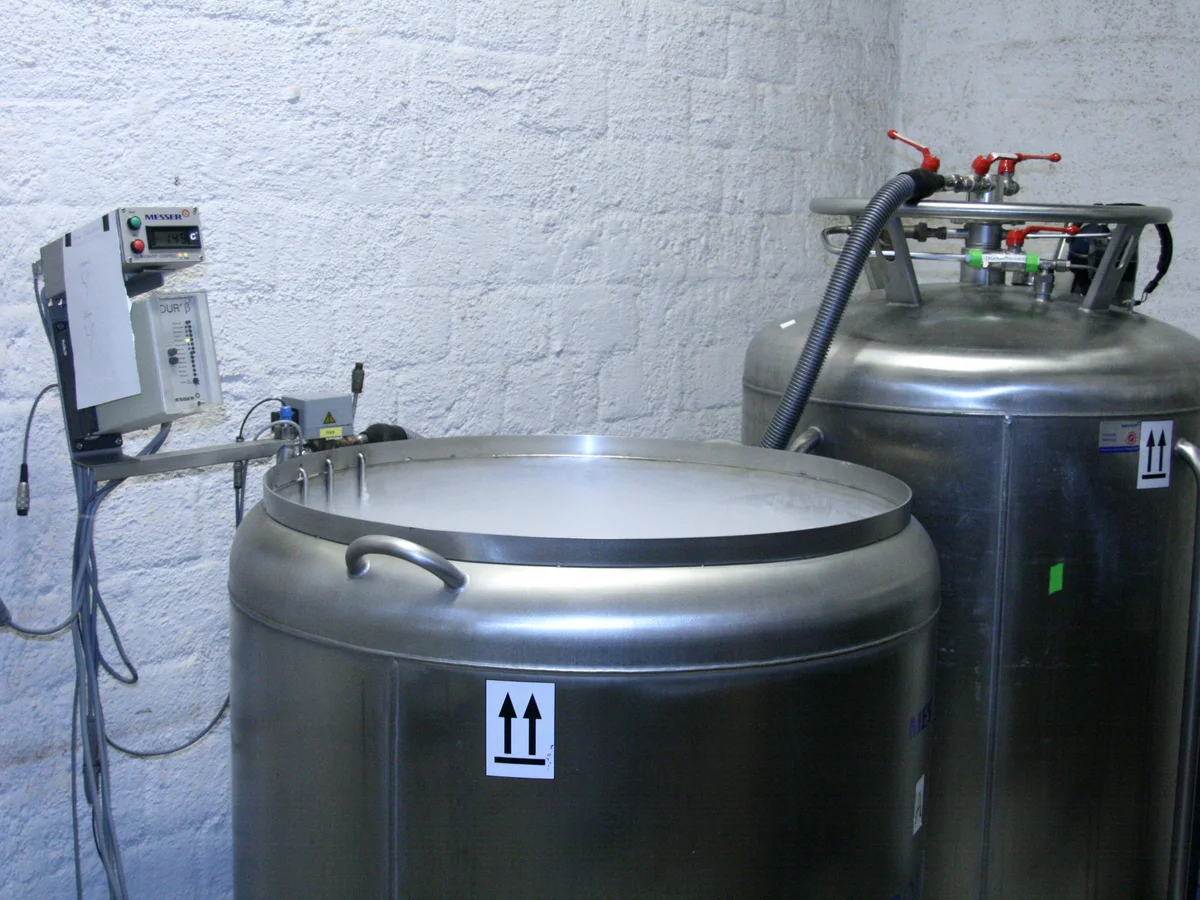
A paradigm shift occurred in the early 2000s through the groundbreaking work of cryobiologists Gregory Fahy and Brian Wowk, who pioneered whole-organ vitrification. By replacing bodily water with concentrated cryoprotective vitrification cocktails (such as M22 or VM3), biological tissues transition directly into an amorphous, glass-like vitrified state without any ice formation at liquid nitrogen temperatures (-196°C).
In the published research paper in the journal PLOS ONE, the authors emphasize Aldehyde-Stabilized Cryopreservation (ASC). Developed by biomedical researcher Robert McIntyre and neurobiologist Kenneth Hayworth, ASC won the Brain Preservation Foundation’s Large Mammal Brain Preservation Prize. ASC initiates preservation with vascular perfusion of glutaraldehyde, a potent chemical fixative that cross-links intracellular proteins within minutes, instantly halting enzymatic decay.
Subsequently, high concentrations of cryoprotective vitrification agents (such as ethylene glycol) are perfused through the cerebral vasculature before slow cooling below the glass transition temperature (-124°C). Rigorous ultrastructural evaluations on mammalian brain specimens, documented via 3D serial block-face electron microscopy, have proven that ASC preserves every individual synaptic vesicle and postsynaptic density across whole brains.
The median revival probability estimated by 334 US physicians for patients undergoing structural brain preservation.
A strong majority of doctors support pre-mortem heparin administration to prevent microvascular cerebral thrombosis.
The structural connectomic matrix encoding long-term human memory and personal identity preserved via vitrification.
The first large-scale academic survey published in a premier medical journal legitimizing biostasis and connectomics.
Physician Perspectives: Pre-Mortem Anticoagulants and End-of-Life Autonomy
A pivotal finding of the study revolves around clinical cooperation and pre-mortem interventions. The biological efficacy of brain preservation depends fundamentally upon minimizing warm ischemic delay: within minutes of circulatory arrest, intravascular micro-thrombosis begins occluding cerebral capillary beds, impeding subsequent cryoprotectant delivery.
Remarkably, an overwhelming 70.7% of surveyed US physicians expressed willingness to prescribe pre-mortem anticoagulants—specifically heparin—to terminally ill patients with documented preservation directives, ensuring patent vasculature at the moment of legal pronouncement.
The study’s authors emphasize that the primary barrier remains institutional and legal ambiguity within hospice and palliative care networks. Attending physicians and nursing staff frequently hesitate due to malpractice or liability concerns when interacting with cryonics standby teams, underscoring the urgent imperative for professional medical associations to draft standardized clinical guidelines for patient preservation requests.
Furthermore, 49.1% of surveyed clinicians indicated comfort with patients selecting brain preservation as an end-of-life care pathway. Specialists directly working with the brain, specifically neurosurgeons and neurologists, displayed significantly higher familiarity with preservation science and recorded higher revival feasibility scores than general practitioners.
- Informational death occurs only when the synaptic topology of the connectome dissolves, not at the moment of cardiac arrest.
- Aldehyde-Stabilized Cryopreservation (ASC) demonstrates near-total synaptic preservation verified by 3D electron microscopy.
- Neurologists and neurosurgeons report significantly higher optimism regarding future revival than primary care physicians.
- The medical community must establish formal clinical protocols for integrating preservation options into hospice care.
Pathways to Restoration: Nanomedical Repair vs. Whole Brain Emulation
Should preserved patients ever awaken, how might future science accomplish the feat? Contemporary biostasis researchers envision two primary technological trajectories: biological rejuvenation and digital mind-uploading.
The biological paradigm envisions advanced medical nanorobotics. Microscopic molecular machines traversing the cerebral vascular tree could systematically extract vitrified cryoprotectants, repair cross-linked protein bonds, reconstruct damaged membranes, and restore mitochondrial respiration before re-integrating the brain into a cloned or bio-printed corporeal host.
Conversely, the computational paradigm relies on Whole Brain Emulation (WBE). Preserved connectomes could be scanned at sub-nanometer electron-microscopic resolutions, digitally mapping synaptic weights, receptor channels, and axonal tracts into high-performance neuromorphic quantum computing clusters, resurrecting cognitive identity in virtual reality. The PLOS ONE survey indicates that mainstream medicine is beginning to treat these futures with serious academic and ethical rigor.