

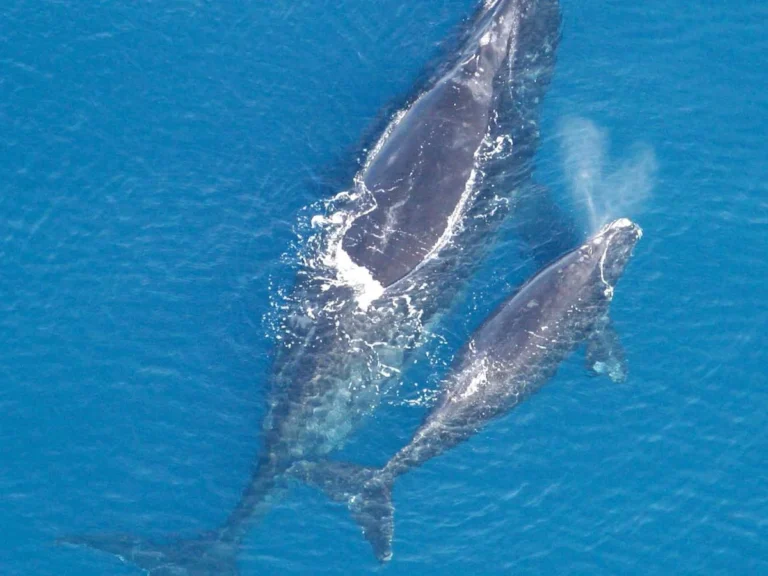

The North Atlantic right whale is currently hovering on the absolute precipice of extinction, with fewer than 360 individuals remaining in the world’s oceans. However, marine biologists tracking the species have just received an exhilarating piece of news from the Gulf of St. Lawrence: a veteran 38-year-old female known as Silt has been photographed with a previously unrecorded newborn calf, boosting the official birth count for the calving season to a 16-year high.
Surprise Encounter in the Jacques-Cartier Passage: How Calf Number 24 Slipped By
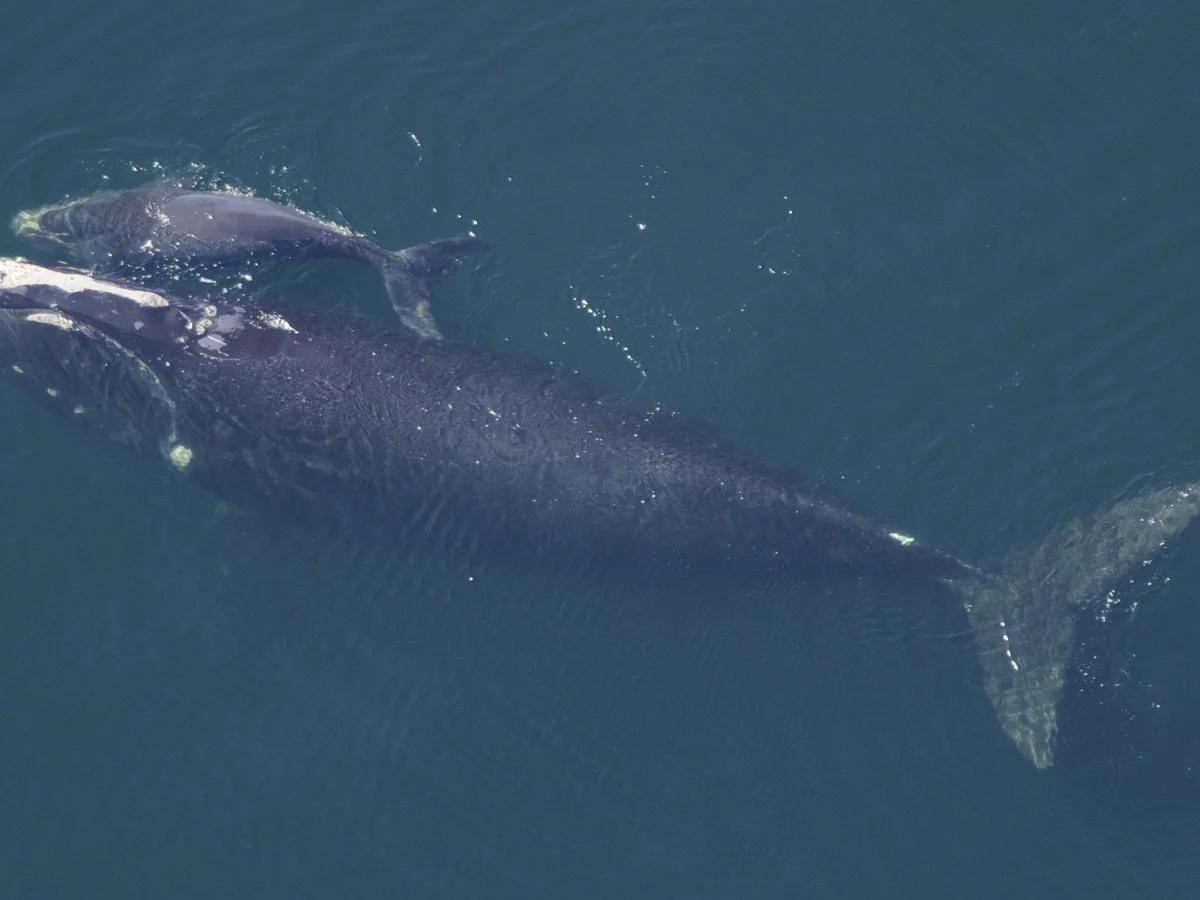
During a late-September marine survey off Anticosti Island in Quebec, Canada, researchers from the Mingan Island Cetacean Study (MICS) made an unexpected discovery in the cold waters of the Jacques-Cartier Passage. Veteran field biologist and photographer Mathilde Laverdière (Mathilde Laverdière) aimed her telephoto lens at a surfacing whale and captured sharp images of a massive female accompanied by an energetic, healthy newborn calf swimming tightly by her flank.
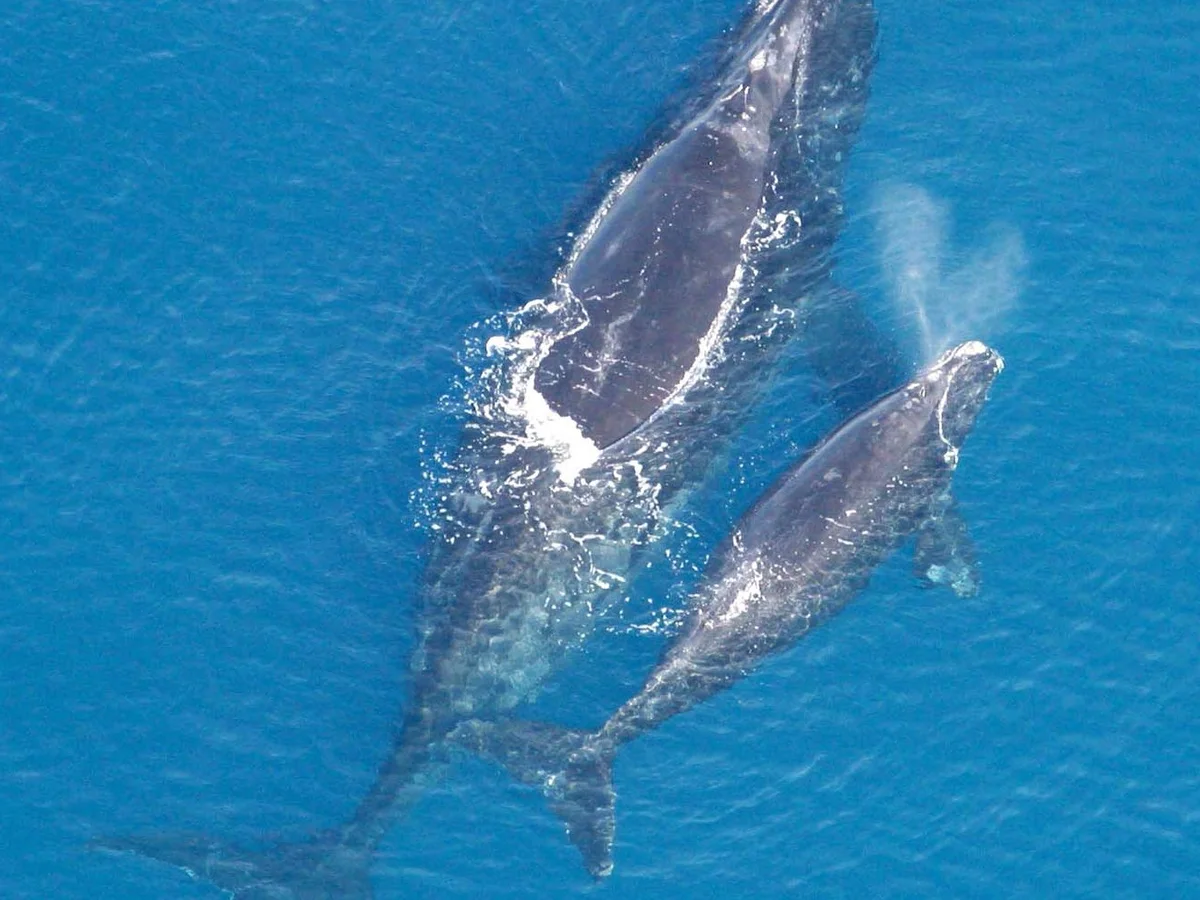
The images were promptly transmitted south to Boston to the Anderson Cabot Center for Ocean Life at the New England Aquarium (New England Aquarium). The institution maintains the definitive North Atlantic Right Whale Catalog, an exhaustive photographic database tracing the life histories, sightings, and entanglements of every identified whale in the population since 1980.
Upon analyzing the unique pattern of white, roughened keratinized skin patches known as callosities on the whale’s head—which host dense colonies of specialized cyamid amphipods or whale lice—senior scientist Philip Hamilton (Philip Hamilton) made a positive identification. The mother was confirmed as Silt, Catalog #1817, an adult female who is at least 38 years old. Silt had been spotted alone in February 2026 on the traditional southeastern calving grounds off the coast of Georgia and Florida. Having evaded detection by aerial survey teams throughout winter and spring, this hidden birth raised the 2025–2026 season total to 24 calves, the highest annual birth cohort documented since 2009.
In a species where every female calf carries the genetic hope of generational survival, unrecorded births offer profound hope. They demonstrate that conservation programs for critically endangered species can succeed when targeted habitat protection is rigorously enforced.
Reproductive Biology of Eubalaena glacialis and Demography Under Threat
North Atlantic right whales (Eubalaena glacialis) were historically targeted by early commercial whalers because their thick blubber kept them afloat post-mortem, while their coastal feeding behaviors made them exceptionally easy to hunt. By the time international treaties banned right whale hunting in 1935, the population had been depleted to near-total collapse.
Recovery in the modern era has been severely constrained by the species’ slow life history. Females do not attain sexual maturity until roughly 9 or 10 years of age, and gestation lasts approximately 12 to 13 months. Under pristine environmental conditions, a healthy mother should produce a calf once every three years: one year of pregnancy, one year of intense lactation, and one year of lipid replenishment. However, modern anthropogenically induced stressors have stretched the average calving interval to between 7 and 10 years.
Silt represents an invaluable maternal lineage. At 38 years of age, this is her sixth documented calf; she is already a grandmother and a great-grandmother to surviving descendants. With fewer than 70 reproductively active females remaining in the entire ocean, every successful birth by a proven matriarch buffers the population against genetic bottlenecks and inbreeding depression.
«To encounter a mother with a newborn calf so late into the season is an incredible thrill for our entire team. Silt continues to demonstrate the astonishing resilience of these whales, but it is entirely our duty to give them an ocean safe from ropes and propellers.»
Philip Hamilton, Senior Scientist at the New England Aquarium’s Anderson Cabot Center
Climate Shifts: Foraging Northward Into the Unprotected Gulf of St. Lawrence
A key reason Silt and her calf managed to migrate unnoticed lies in the dramatic climate-driven restructuring of marine ecosystems in the Northwest Atlantic. Decades ago, right whales congregated reliably during summer in the Gulf of Maine and Roseway Basin off Nova Scotia, grazing upon dense, lipid-rich swarms of the copepod Calanus finmarchicus.
Yet the Gulf of Maine has warmed faster than 99% of global oceans, disrupting deep-water nutrient upwelling and devastating southern copepod densities. Starving whales responded by shifting their primary summer foraging grounds northward into the deep submarine canyons of the Gulf of St. Lawrence.
This geographic redistribution caught maritime authorities off guard. While shipping lanes in the Gulf of Maine had long been governed by seasonal vessel speed caps and gear restrictions, the busy St. Lawrence Seaway—a primary commercial artery for deep-draft container ships—lacked systematic protections. Following a catastrophic series of vessel strikes and entanglements in 2017, Canadian transport authorities instituted mandatory acoustic monitoring and dynamic 10-knot speed limits to prevent collisions.
The perilous remaining global population of Eubalaena glacialis, with fewer than 70 breeding females capable of calving.
The highest single-year calving cohort recorded since 2009, boosted by the late discovery of Silt’s undocumented newborn.
Catalog #1817 produced her 6th documented calf, continuing a resilient family line that includes grandchildren and great-grandchildren.
Acoustically triggered trap recovery eliminates deadly vertical entangling ropes from commercial offshore fisheries.
Anthropogenic Mortality: Heavy Fishing Entanglements and Ocean Acoustics
The twin existential threats confronting right whales remain vertical commercial fishing lines and lethal blunt-force trauma from vessel strikes. Comprehensive assessments by NOAA Fisheries reveal that over 86% of all living right whales bear scarring from fishing gear entanglements, with more than 60% having been entangled multiple times.
Heavy polypropylene ropes securing offshore snow crab and lobster traps become wrapped around whale flukes, pectorals, and baleen plates. Dragging hundreds of pounds of gear for months or years causes chronic agonizing injuries, prevents efficient filtration of micro-crustaceans, and leads to lethal systemic infections or gradual drowning from exhaustion.
Simultaneously, underwater engine cavitation noise from cargo fleets floods low-frequency acoustic channels. Right whale mothers and calves communicate using low-amplitude vocalizations—often described as acoustic whispers—to avoid detection by predatory killer whales. Industrial noise blankets these calls, separating calves from their mothers in murky waters and elevating chronic cortisol levels.
- Mandatory 10-knot speed limits for all vessels over 35 feet within dynamic management areas reduce fatal collision risks by 80%.
- Implementing weak-link rope inserts rated at 1,700 lbs allows adult right whales to break free before catastrophic line entanglement.
- Continuous autonomous glider surveillance and passive hydrophone buoys provide real-time location feeds to commercial ship captains.
- Protecting high-density Calanus finmarchicus zooplankton patches safeguards nursing mothers from fatal energy depletion.
Technological Solutions and the Road to Recovery: Can Right Whales Survive?
Documenting 24 calves during the 2025–2026 season provides undeniable evidence that the remaining right whale females retain strong biological fecundity. Nonetheless, oceanographers estimate that the species requires at least 30 to 35 calves surviving annually for several decades to achieve authentic population recovery.
The most promising technical innovation is the widespread adoption of on-demand or ropeless fishing gear. In these systems, ropes and location buoys remain stowed inside weighted cages on the seabed, deploying to the surface only when triggered by an acoustic transponder on the fishing boat. This entirely removes lethal vertical lines from the ocean water column.
Coupled with infrared satellite imaging and autonomous underwater gliders patrolling critical corridors, marine science is constructing an active defense network around vulnerable whales. The survival of Silt’s latest calf stands as an urgent reminder of our shared responsibility to preserve marine giants for generations to come.