



For over four decades, international wildlife conservation has been shadowed by a defeatist conceptual doctrine known as ‘conservation triage’: the assumption that once a vertebrate population plummets below a threshold of several dozen individuals, severe inbreeding depression and mutational accumulation render extinction inevitable, justifying the diversion of funds to less imperiled organisms. However, an exhaustive global study published in the prestigious Proceedings of the Royal Society B has decisively dismantled this fatalistic premise. Researchers have demonstrated that critically endangered species recovery conservation is remarkably achievable even after microscopic genetic bottlenecks, provided conservationists actively suppress invasive predators and repair degraded habitats.
The Collapse of the 50/500 Dogma: Why Genetic Bottlenecks Are Not Fatal
In 1980, population biologist Ian Franklin formulated the influential ’50/500 rule,’ postulating that an effective population size of at least 50 reproductive individuals is mandatory to avert acute inbreeding depression, while 500 individuals are required to maintain long-term evolutionary adaptability. Wildlife populations falling below these thresholds were frequently classified as the ‘living dead.’
Yet the authors of the new international study tracked the empirical recovery trajectories of 141 avian and mammalian species that endured catastrophic demographic crashes. Their findings, published in Proceedings of the Royal Society B (Proc. R. Soc. B, 2026), overturned decades of mathematical defeatism.
The data revealed that rapid, severe population contraction triggers a powerful evolutionary counterbalance termed ‘genetic purging’: deleterious recessive mutations are swiftly unmasked in homozygous pairings and eliminated by strong natural selection, thereby cleansing the surviving lineage of substantial mutational load.
When biologists pair this natural purge with studbook-guided captive breeding to optimize genetic variance, reproductive fitness rebounds with startling speed, reflecting fundamental evolutionary behavioral biology.
Striking precedents include the European bison, re-established entirely from twelve zoo founders, the Chatham Island black robin, and the northern elephant seal, which recovered to over 200,000 individuals from fewer than one hundred survivors.
The Mauritius Kestrel: How Four Raptors Reversed Extinction
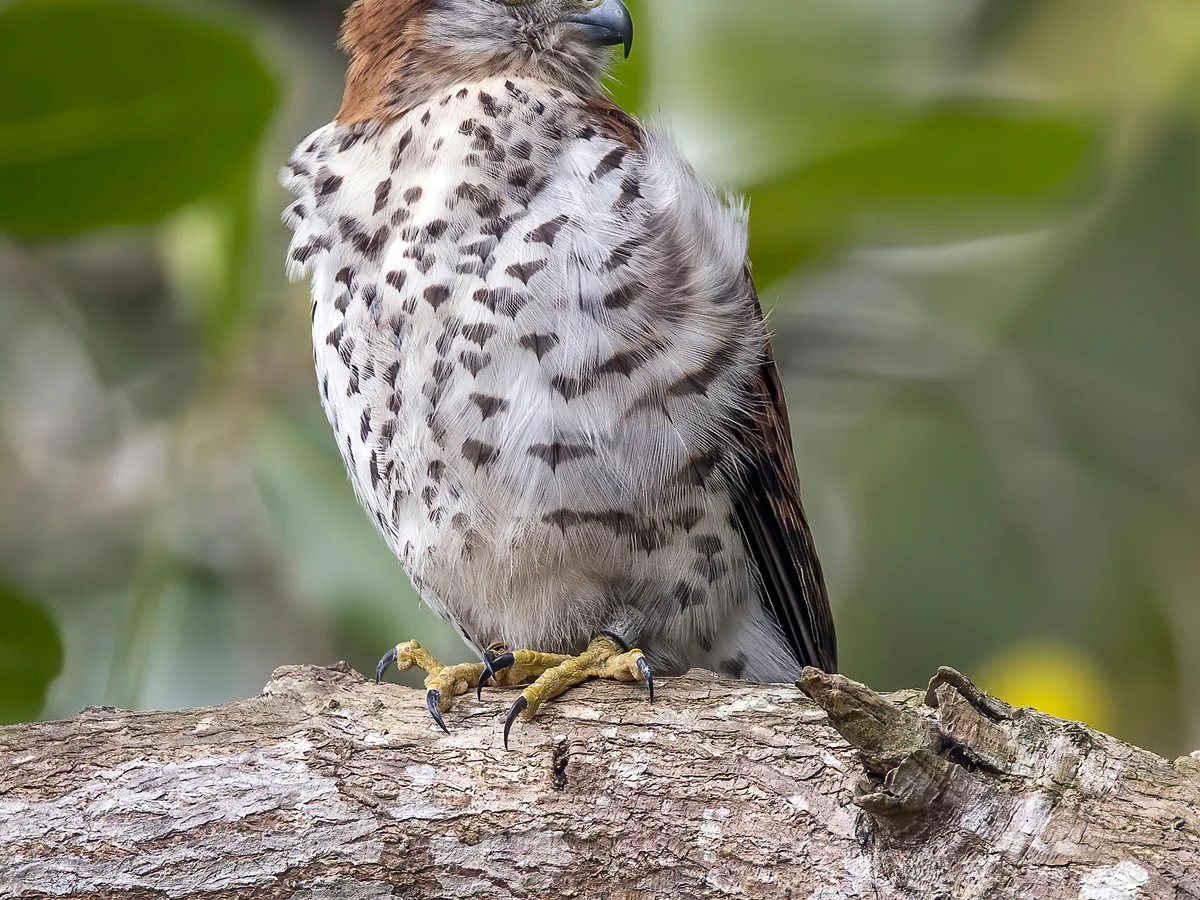
Few avian recovery narratives match the dramatic trajectory of the Mauritius kestrel (Falco punctatus). By 1974, extensive deforestation of native ebony forests combined with pervasive agricultural organochlorine pesticides (DDT) collapsed the endemic raptor population to just four wild individuals, including only a single reproductively active female.
Global conservation panels initially advised abandoning the species as an unrecoverable loss. However, pioneering Welsh conservation biologist Carl Jones refused to capitulate, introducing the intensive avicultural technique of ‘double-clutching.’
By harvesting first-laid eggs for artificial incubation, Jones induced the wild female to produce secondary clutches. Hand-reared fledglings were inoculated against avian pathogens and reintroduced into predator-proof nest boxes affixed to steep basalt cliffs, safely insulated from invasive crab-eating macaques.
The intervention achieved historic success: today, approximately 400 Mauritius kestrels hunt freely throughout Black River Gorges National Park, serving as an enduring international beacon of active interventionist biology.
«Writing off an endangered species merely because its wild numbers have fallen to twenty or thirty individuals is a grave, unscientific policy error. Our meta-analysis across 141 vertebrate populations on the absolute brink of oblivion revealed that over 60% rebounded to populations numbering in the hundreds or thousands once direct, science-backed interventions were applied. Nature possesses astonishing genetic resilience if we actively sever the external drivers of mortality.»
Professor Carl Jones, MBE, Chief Biologist at the Mauritian Wildlife Foundation and Indianapolis Prize Laureate
Lord Howe Island: Overcoming Predatory Carnivores
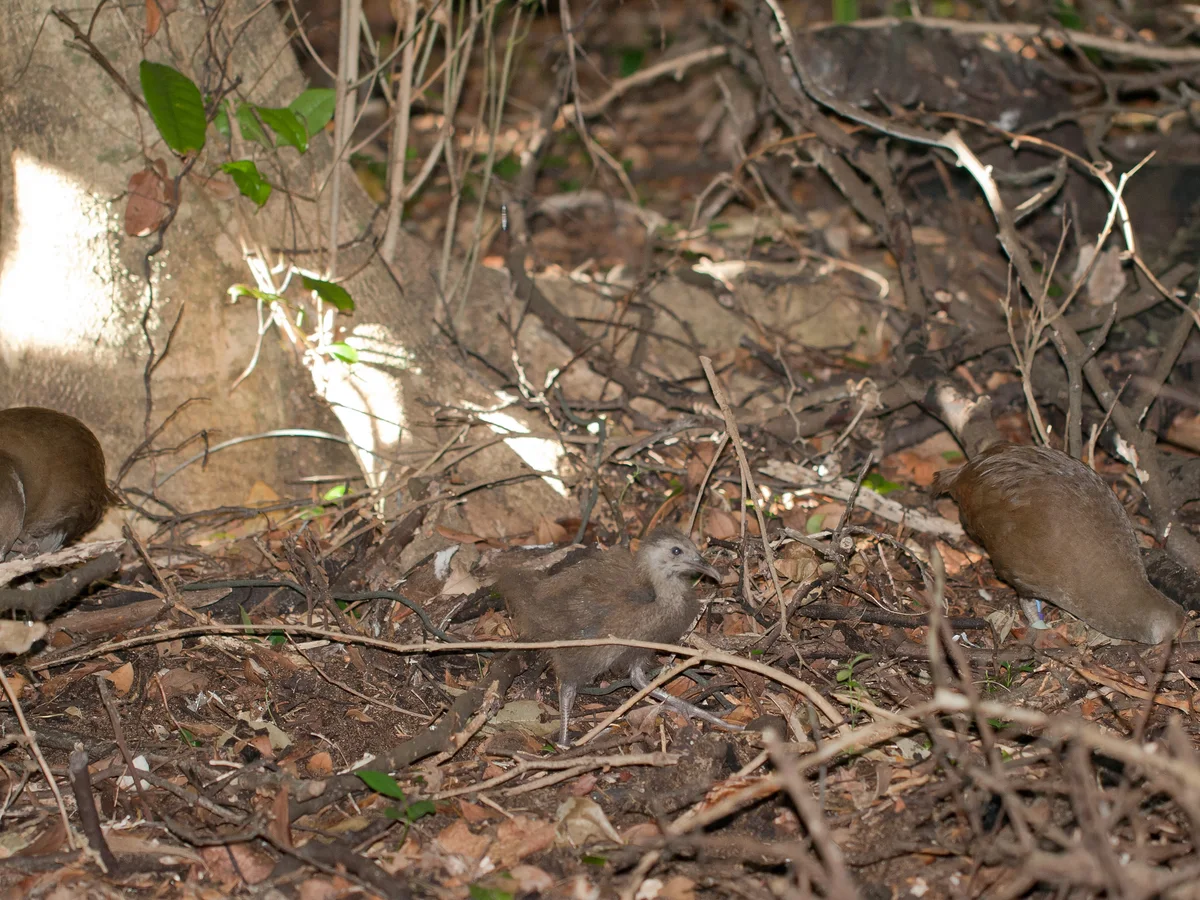
A parallel victory materialized on Australia’s World Heritage-listed Lord Howe Island in the Tasman Sea. The island’s endemic flightless rail, the Lord Howe woodhen (Hypotaenidia sylvestris), was driven to the verge of extinction following the historical introduction of feral pigs, goats, cats, and black rats from visiting whaling ships.
By the late 1970s, the species was reduced to a precarious 23 individuals confined to the misty cloud-forest summits of Mount Gower and Mount Lidgbird. Australian wildlife agencies initiated a ruthless invasive species eradication protocol, eliminating feral pigs and goats while establishing a captive rearing program on the island.
The crowning milestone occurred between 2019 and 2021, when a monumental island-wide rodent eradication program permanently purged Lord Howe of destructive rats and mice.
Unshackled from predatory mortality, the woodhen population staged an explosive demographic recovery: recent surveys have documented over 1,600 wild birds inhabiting beaches, lowland palm forests, and residential gardens, demonstrating an innate capacity to overcome ecological shocks that parallels agricultural resilience against climate impacts on delicate ecosystems.
Empirical analysis of 141 vertebrate populations proves that severe demographic bottlenecks are reversible with active support.
Extreme population compression accelerates the unmasking and purging of lethal recessive mutations by natural selection.
The Mauritius kestrel rebounded from just 4 wild birds in 1974 to over 400 individuals through double-clutch aviculture.
Invasive rodent and feral pig eradication on Lord Howe Island drove a 70-fold population explosion of endemic woodhens.
The Dual Mandate: Captive Management Paired with Ecological Eradication
A primary synthesis of the Royal Society investigation is that passive conservation—merely demarcating reserve borders without active ecological management—fails severely bottlenecked populations.
Successful species recovery requires a coordinated dual strategy. The first pillar entails aggressive reproductive assistance: artificial incubation, supplemental provisioning, pedigree studbook management, and disease prophylaxis to shield microscopic cohorts from stochastic disasters.
The second, equally vital pillar requires the complete eradication of the proximate drivers of decline, specifically alien invasive predators and habitat destruction. Without eliminating invasive rodents, feral predators, and pathogens, releasing captive-reared stock into the wild is futile.
- Conservation triage policies that discard species below 50 individuals are refuted by empirical ecological data.
- Recovery requires a dual mandate: active reproductive aviculture combined with total invasive predator eradication.
- Inbreeding depression can be systematically managed through studbook-guided genetic pair selection.
- Island rodent eradication allows endemic flightless bird species to rebound dramatically within a single decade.
- Preserving critically endangered lineages maintains irreplaceable genomic diversity and ecological food-web integrity.
Beyond Triage: The Ethical and Ecological Imperative to Fight for Every Lineage
The empirical evidence synthesized in 2026 mandates a profound transformation in conservation funding philosophy. Bureaucratic frameworks that write off species under fifty individuals as lost causes are scientifically invalid and ethically bankrupt.
Every living vertebrate species represents a bespoke evolutionary masterpiece sculpted across millions of years, harboring unique biochemical pathways, behavioral repertoires, and trophic connections. Historical revivals from California condors to Przewalski’s horses confirm that hope persists as long as a single breeding pair survives.
Investing in critically endangered species recovery is not an act of sentimental folly; it is a vital imperative that repairs damaged biomes, yields profound genomic insights, and safeguards Earth’s irreplaceable evolutionary heritage.