

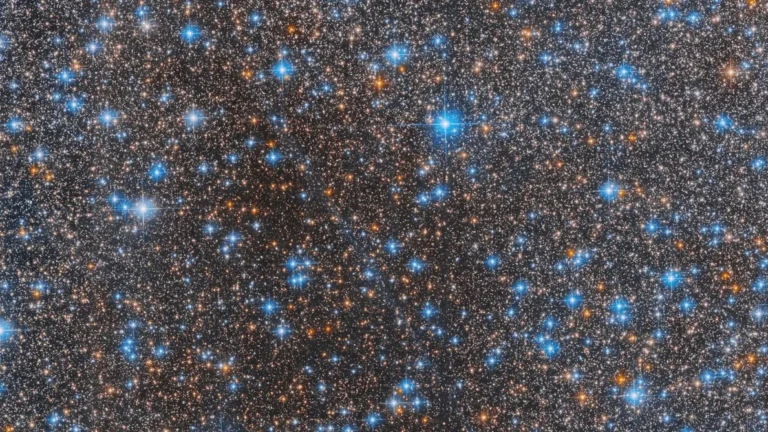

NASA’s Hubble Space Telescope has delivered a breathtaking new view of the heart of our galaxy—an expanse so dense with blue, white, orange, and crimson points of light that mission scientists describe it as an “ocean of stars.” Beyond its visual splendor, this survey provides the essential high-resolution reference map needed before the Nancy Grace Roman Space Telescope begins hunting thousands of exoplanets.
Inside the Galactic Bulge: A Densely Packed Stellar Metropolis
In our local neighborhood around the Sun, stars are relatively sparse—separated on average by roughly 4 light-years. Turn a telescope inward toward the Milky Way’s galactic bulge, the packed spherical hub encircling the center of our spiral disk, and stellar spacing shrinks dramatically. Stars there sit hundreds of times closer together, concentrating nearly a quarter of the entire galaxy’s stellar mass into one radiant core.
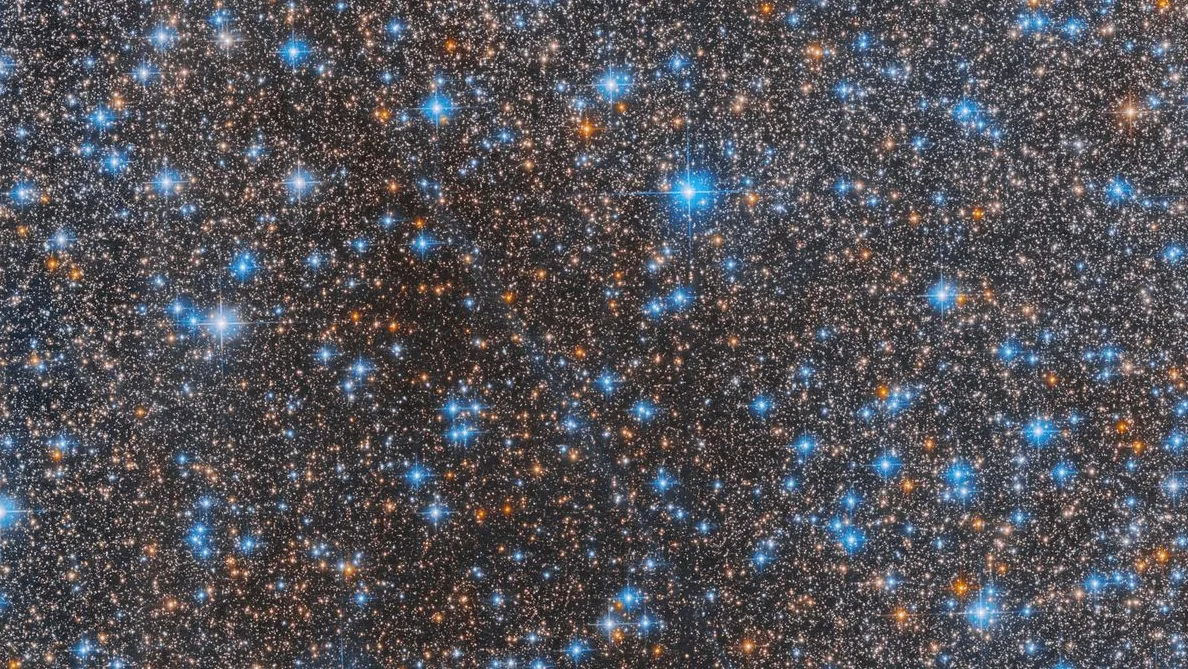
Released by NASA on November 25, 2026, the new imagery stems from Hubble observing program #17776, led by Sean Terry (Sean Terry) of the University of Maryland with image processing by Gladys Kober (Gladys Kober) at NASA’s Goddard Space Flight Center and the Catholic University of America. Even in darker patches veiled by dusty nebulae, Hubble’s crisp optics resolve swarms of faint background stars.
As IFLScience notes, astronomers can spot glowing bulges in distant galaxies, yet those regions are simply too remote and crowded to pick out individual suns. Only in our own Milky Way can space telescopes dissect this stellar ecosystem star by star.
Gravitational Microlensing: Using Spacetime as a Planet Magnifier
The new campaign lays crucial groundwork for NASA’s Nancy Grace Roman Space Telescope, scheduled to begin its scientific mission in early 2027. Among Roman’s flagship efforts is the Galactic Bulge Time-Domain Survey, an ambitious search for exoplanets, free-floating rogue worlds, black holes, and neutron stars using gravitational microlensing.
First predicted by Albert Einstein’s (Albert Einstein) theory of general relativity in 1915, gravitational lensing occurs when the mass of a foreground star warps spacetime, magnifying and distorting light from a more distant background star passing directly behind it. If a planet orbits that foreground star, its gravity adds a brief telltale blip to the brightening curve, betraying worlds otherwise too faint or distant to image directly.
Because exact stellar alignments are rare, microlensing surveys must stare into the most star-stuffed regions of the sky. As Euclid Consortium scientist Jean-Philippe Beaulieu (Jean-Philippe Beaulieu) of the Institut d’Astrophysique de Paris and the University of Tasmania explained, nearly 300 exoplanets have been discovered through microlensing over the past twenty years—almost all toward the galactic center—and Euclid’s wide bulge view already encompasses 51 known planetary systems.
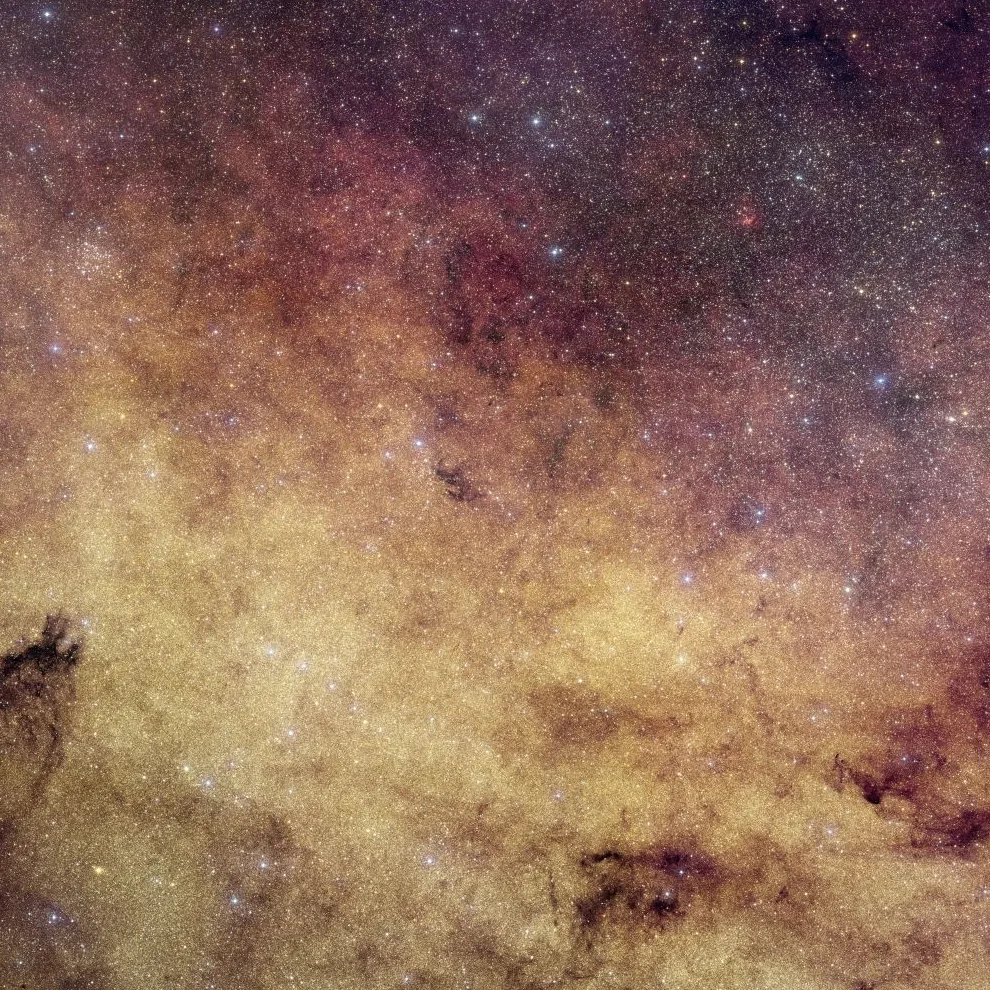
«During the last twenty years, almost 300 exoplanets have been discovered using microlensing, all with ground-based telescopes and all towards the centre of our galaxy. This image from Euclid includes 51 known planetary systems.»
Jean-Philippe Beaulieu (Jean-Philippe Beaulieu), Euclid Consortium, Institut d’Astrophysique de Paris & University of Tasmania
Why Roman Needs Hubble’s New View of the Heart of Our Galaxy
Extreme stellar crowding cuts both ways: while it boosts microlensing odds, it also blends neighboring stars together inside infrared pixels, making it tricky to tell which star actually brightened or how fast the lensing system is moving. That is why this new view of the heart of our galaxy is indispensable.
Hubble observes across ultraviolet, visible, and near-infrared wavelengths, whereas Roman specializes in near-infrared light alongside a sliver of visible wavelengths. By targeting the same survey fields in overlapping red-visible and near-infrared bands, Sean Terry’s team used this new view of the heart of our galaxy to build a sharp “before picture” documenting stellar positions, ages, compositions, and baseline brightness years ahead of future lensing events.
When Roman catches a microlensing flare in 2027 or beyond, astronomers can immediately cross-reference Hubble’s baseline catalog to separate foreground lenses from background sources and calculate planetary masses accurately. Joint multi-telescope campaigns are rapidly transforming astronomy, echoing how James Webb and Euclid teamed up to confirm the earliest known quasar.
The galactic bulge packs roughly 25% of our galaxy’s total stellar mass into a dazzling central sphere.
Program #17776 records exact star positions and brightness in wavelengths matching Roman ahead of 2027.
Microlensing reveals distant exoplanets, rogue worlds, and hidden black holes when foreground gravity bends starlight.
Hubble’s sharpness, Euclid’s wide sweep, and Roman’s infrared cadence unlock the Milky Way’s crowded center.
Instagram Reel highlighting gravitational microlensing and deep-sky views toward the Milky Way’s dense core. Post: Instagram Reel
From SWEEPS Legacy Surveys to Mapping Our Galaxy’s Hidden Worlds
Observing program #17776 builds upon decades of Hubble bulge campaigns, including the WFC3 Galactic Bulge Treasury Program and the Sagittarius Window Eclipsing Extrasolar Planet Search (SWEEPS), which monitored 180,000 stars near the Milky Way’s core.
Clean space-based datasets are becoming even more precious as crowded low Earth orbit mega-constellations raise growing alarms among astronomers, highlighted by debate over plans to deploy up to a million satellites that risk streaking sky surveys.
Together, Hubble’s razor-sharp archive, Euclid’s sweeping infrared mosaic, and Roman’s upcoming time-domain survey will turn the Milky Way’s glittering heart into a precision laboratory for exoplanet demographics and galactic evolution.
- Stars near the Sun sit roughly 4 light-years apart, while stars in the galactic bulge pack hundreds of times closer.
- Hubble observed overlapping red-visible and near-infrared wavelengths tailored to calibrate future Roman data.
- Pre-event measurements let astronomers pinpoint which crowded star magnified during a microlensing flash.
- Earlier Hubble bulge surveys like SWEEPS tracked 180,000 stars near the Milky Way’s core.