

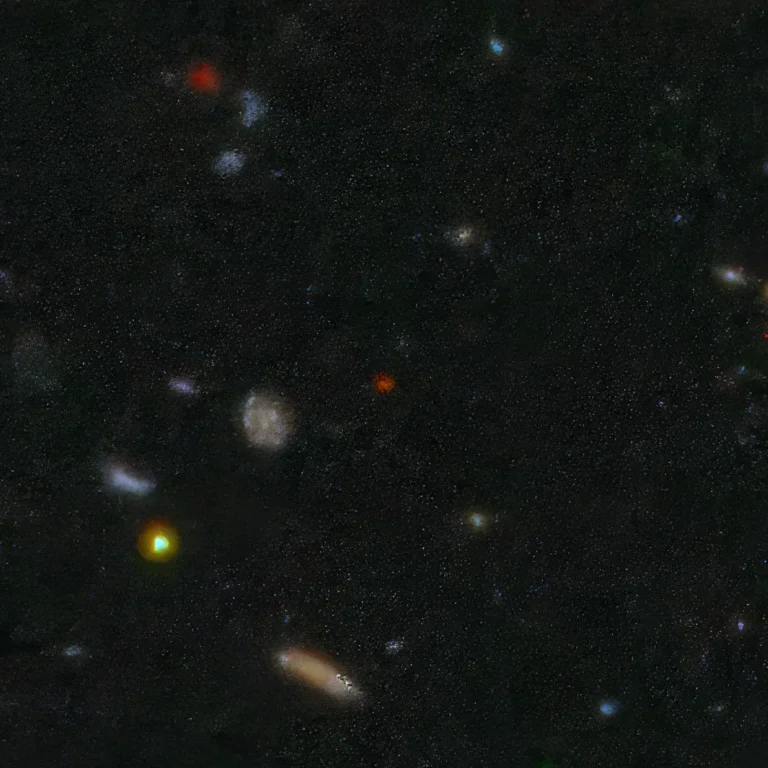

Using observations from NASA’s James Webb Space Telescope (JWST) and the European Space Agency’s Euclid mission, astronomers have confirmed the earliest quasar ever observed. Nicknamed Dún Aonghasa, the cosmic beacon shines from just 630 million years after the Big Bang—shattering the previous age record by 40 million years.
A Record at Redshift 8.13: Finding the Earliest Quasar
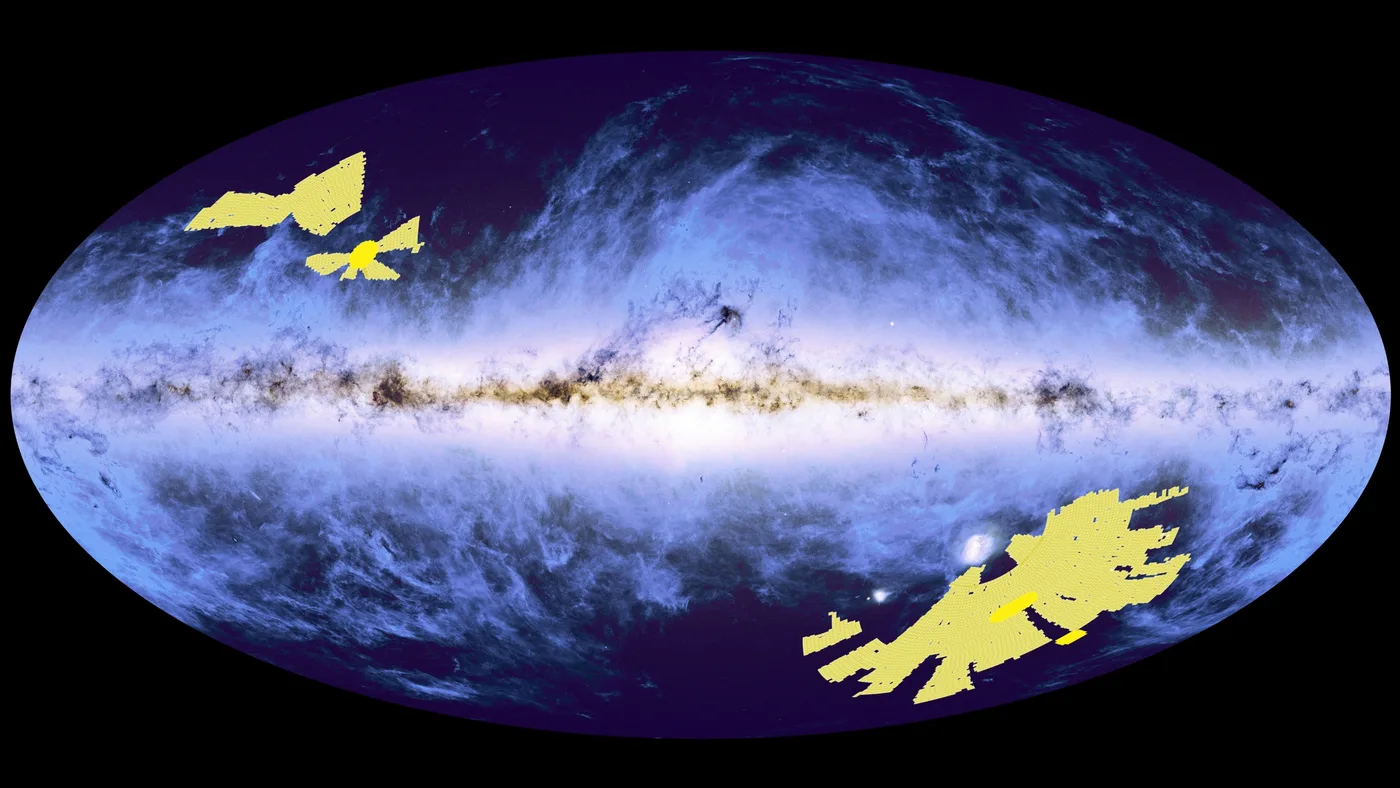
The earliest quasar was initially flagged in wide-field survey data from ESA’s Euclid space telescope before follow-up spectroscopy with JWST, the Keck Observatory, and the Large Binocular Telescope (LBT) nailed down its distance. Led by Julien Wolf of the Max Planck Institute for Astronomy, the international team published their discovery in Astronomy & Astrophysics.
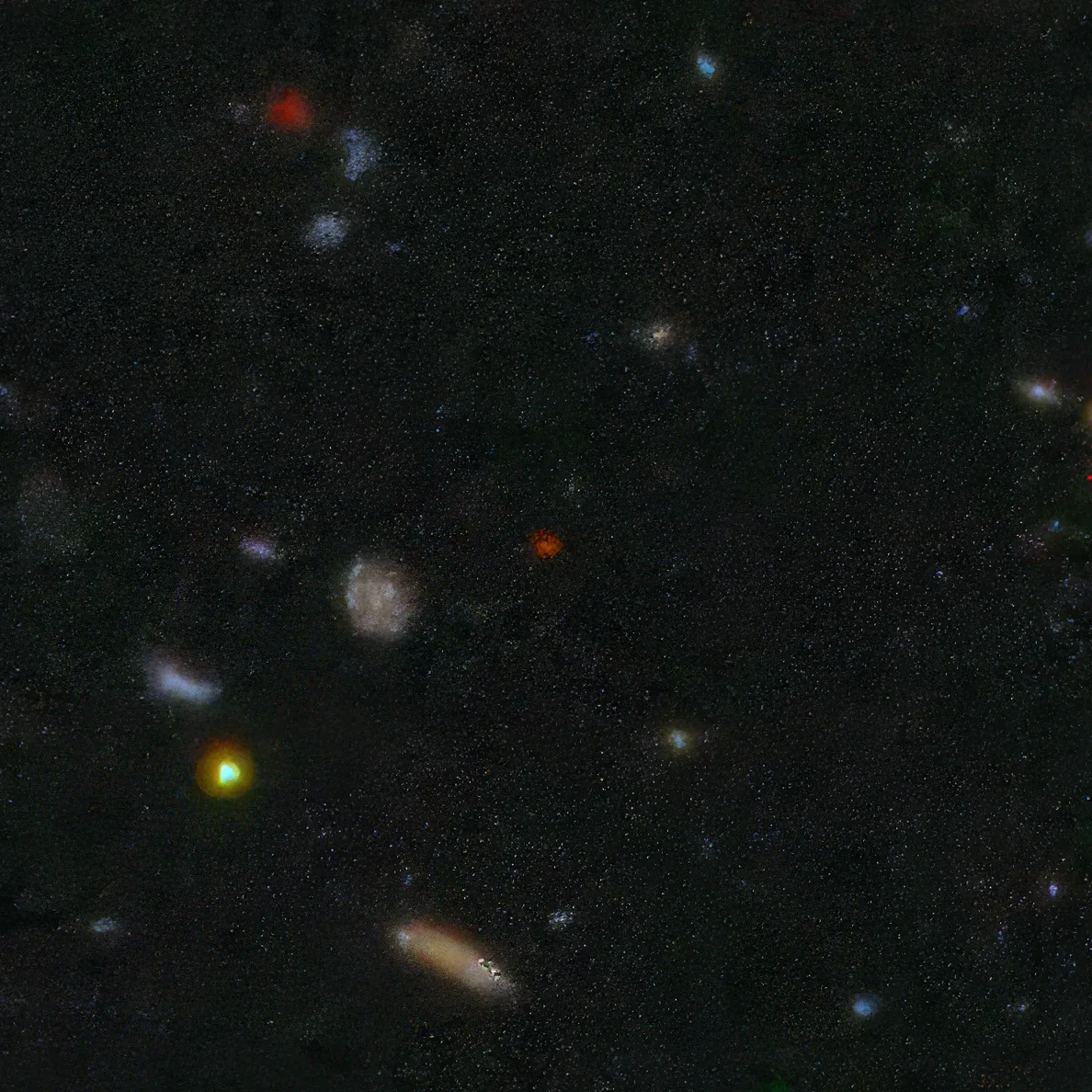
Measurements revealed that the object, cataloged as J1504+6252, lies at a cosmological redshift of z = 8.13—making it the first confirmed quasar ever detected beyond redshift 8. Its light traveled roughly 13.1 billion years to reach Earth, capturing the universe when it was less than 5 percent of its current age.
As reported by Live Science, pushing the quasar frontier back by 40 million years represents the largest single leap in nearly a decade.
Why Astronomers Named It Dún Aonghasa and What Powers Quasars
Researchers named the record-breaking beacon Dún Aonghasa after an ancient prehistoric stone cliff fort perched on the Atlantic-facing edge of Inis Mór off the coast of Ireland. The name reflects the quasar’s position at the very edge of humanity’s observable cosmic frontier.
A quasar—short for “quasi-stellar radio source”—is an extraordinarily luminous active galactic nucleus (AGN) powered by a central supermassive black hole. As surrounding gas and dust spiral inward, friction heats the accretion disk to extreme temperatures, outshining all the stars in its host galaxy combined.
Because quasars peaked in abundance roughly 10 billion years ago, spotting one blazing at full strength just 630 million years after the Big Bang offers a rare window into how galaxies and black holes co-evolved.
«The closer to the Big Bang we find them, the faster their black holes must have grown or the more massive they must have been at birth—or both.»
Julien Wolf, Max Planck Institute for Astronomy
The Puzzle of a 360-Million-Solar-Mass Black Hole Growing Slowly
JWST spectroscopy revealed that Dún Aonghasa’s central black hole already weighs approximately 360 million times the mass of our Sun. Yet the biggest surprise is not just its sheer size, but how calmly it is currently feeding.
Data show the black hole is accreting matter below its Eddington limit—slower than astronomers expected for such an early giant. This implies Dún Aonghasa either underwent intense, rapid growth spurts earlier in its youth or formed from an unusually massive initial seed.
Coordinated space missions are rapidly reshaping astrophysics: we recently covered BepiColombo’s historic arrival in Mercury orbit as well as new theoretical models explaining dark energy through known particles.
Observed when the universe was less than 5% of its current 13.8-billion-year age.
Pushes the quasar frontier 40 million years earlier than the previous record holder.
Currently feeding slowly, pointing to violent growth spurts in its earlier past.
Euclid’s wide-field scan spotted the target, while JWST confirmed its spectrum.
Challenging Theories of Early Supermassive Black Hole Growth
This earliest quasar deepens one of modern cosmology’s toughest puzzles: how supermassive black holes reached hundreds of millions of solar masses so soon after the Big Bang. Standard models relying on steady growth from stellar-mass black holes struggle to explain such rapid assembly.
Astrophysicists are increasingly testing alternative pathways, including the direct collapse of pristine primordial gas clouds or brief episodes of super-Eddington accretion where black holes temporarily gorge on matter faster than radiation pressure normally permits.
Such heavy black hole seeds could form when intense ultraviolet radiation from nearby starbursts prevents a massive primordial gas cloud from fragmenting into ordinary stars. Instead of sparking a cluster of suns, tens of thousands of solar masses collapse directly into a single black hole within a few million years, giving cosmic monsters like Dún Aonghasa an extraordinary head start.
Just as importantly, extreme-redshift quasars act as cosmic searchlights: measuring how intergalactic hydrogen absorbs their light along its journey to Earth helps astrophysicists map exactly when the first stars and black holes reionized the early universe.
- Dún Aonghasa (J1504+6252) is the first confirmed quasar discovered beyond redshift z = 8.
- Slow current accretion despite a 360M-solar-mass black hole points to episodic early growth.
- Pairing Euclid’s wide survey with JWST spectroscopy is unlocking the earliest era of galaxy evolution.
What Euclid and JWST Will Reveal Next
The discovery highlights the power of pairing Euclid’s wide-sky survey capability with JWST’s deep infrared sensitivity. Euclid casts a broad net to spot rare high-redshift “red dots” across vast swaths of sky, while JWST confirms their exact ages and black hole masses.
As both observatories continue scanning the early universe, astronomers hope to learn whether Dún Aonghasa is an outlier or part of a hidden population of ancient sleeping giants.
Infrared spectroscopy played a decisive role in confirming the record: cosmic expansion stretched the quasar’s ultraviolet emission more than ninefold into near-infrared wavelengths invisible to standard optical cameras. Using JWST’s sensitive instruments, researchers isolated telltale emission lines of ionized magnesium and hydrogen, pinning down both the black hole’s mass and its calm feeding rate during the epoch of reionization.