

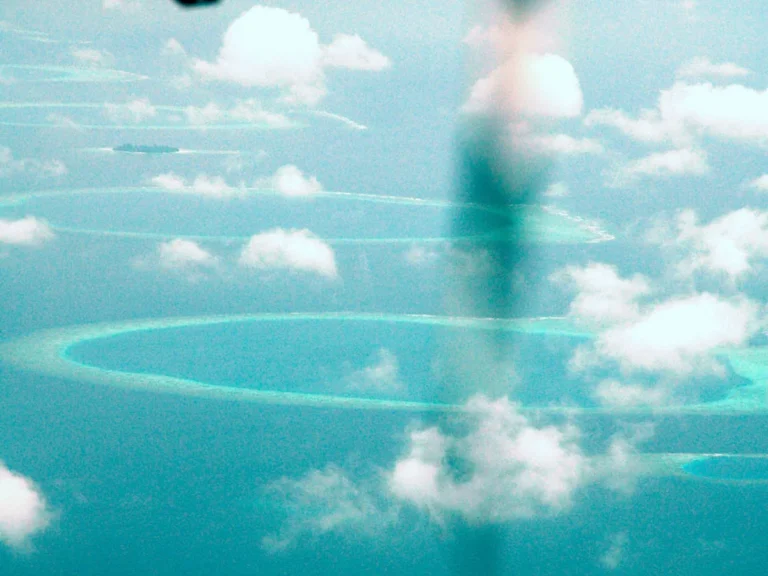

Across a planet where over 95% of ocean waters suffer under severe human disturbance, scientists have uncovered a breathtaking living time capsule: a comprehensive expedition by National Geographic Pristine Seas reveals that untouched ocean ecosystems surrounding the uninhabited Pacific atolls of Bikar and Bokak remain pristine, offering an invaluable ecological baseline of pre-industrial ocean health.
An Ocean from 1,000 Years Ago: The untouched ocean ecosystems of Bikar and Bokak
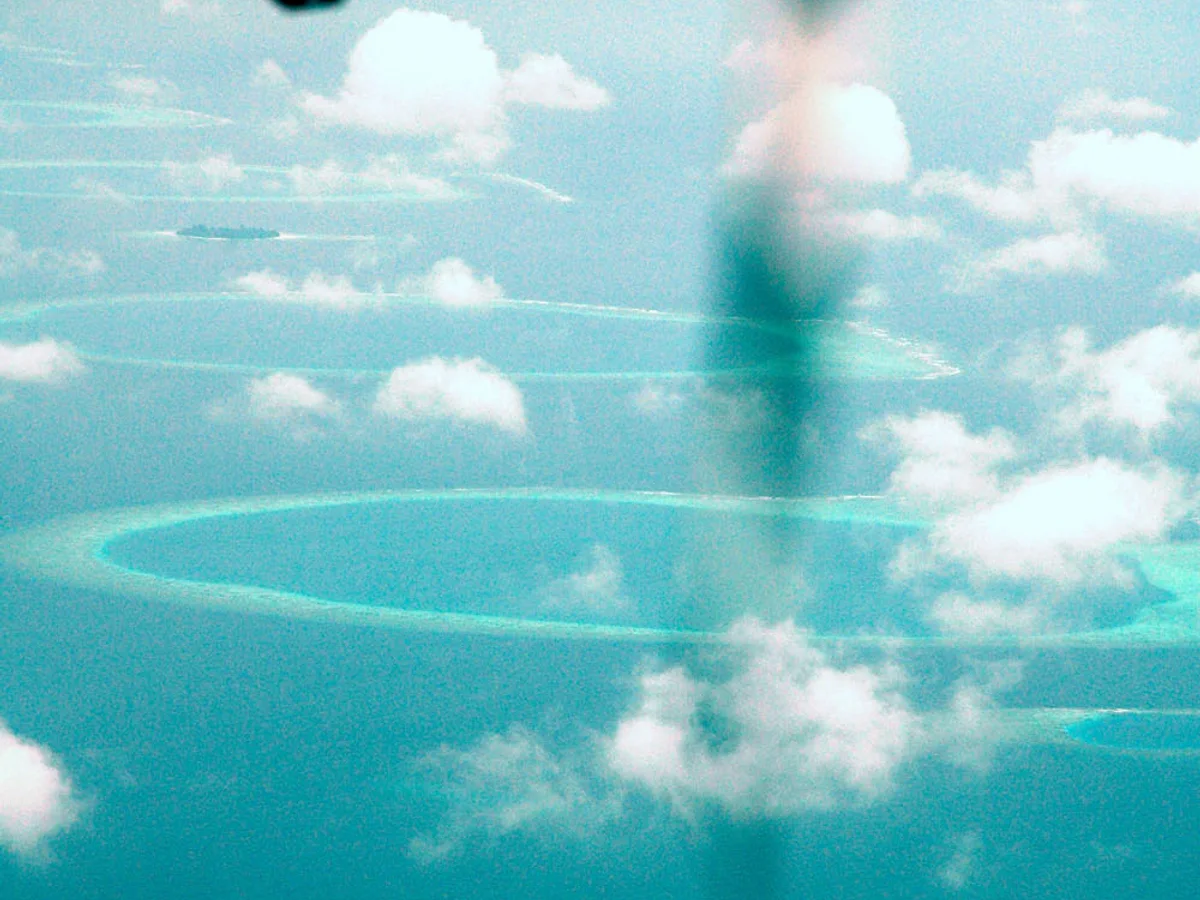
In the far northern Ratak Chain of the Republic of the Marshall Islands, hundreds of kilometers from civilization and commercial shipping routes, sit two isolated coral atolls: Bikar (Bikar) and Bokak (Bokak, historically known as Taongi). Defended by treacherous reefs, relentless swells, and a total absence of freshwater, neither atoll has ever sustained permanent human settlement, while ancient Marshallese traditional taboos (Mo) historically restricted resource extraction.
Under a groundbreaking initiative, marine ecologists from National Geographic Pristine Seas, in partnership with the Marshall Islands Marine Resources Authority (MIMRA) and the University of Hawaiʻi, executed the first multi-ecosystem baseline survey spanning from terrestrial littoral forests down to abyssal ocean depths beyond 2,000 meters. The landmark peer-reviewed findings were published in Frontiers in Marine Science.
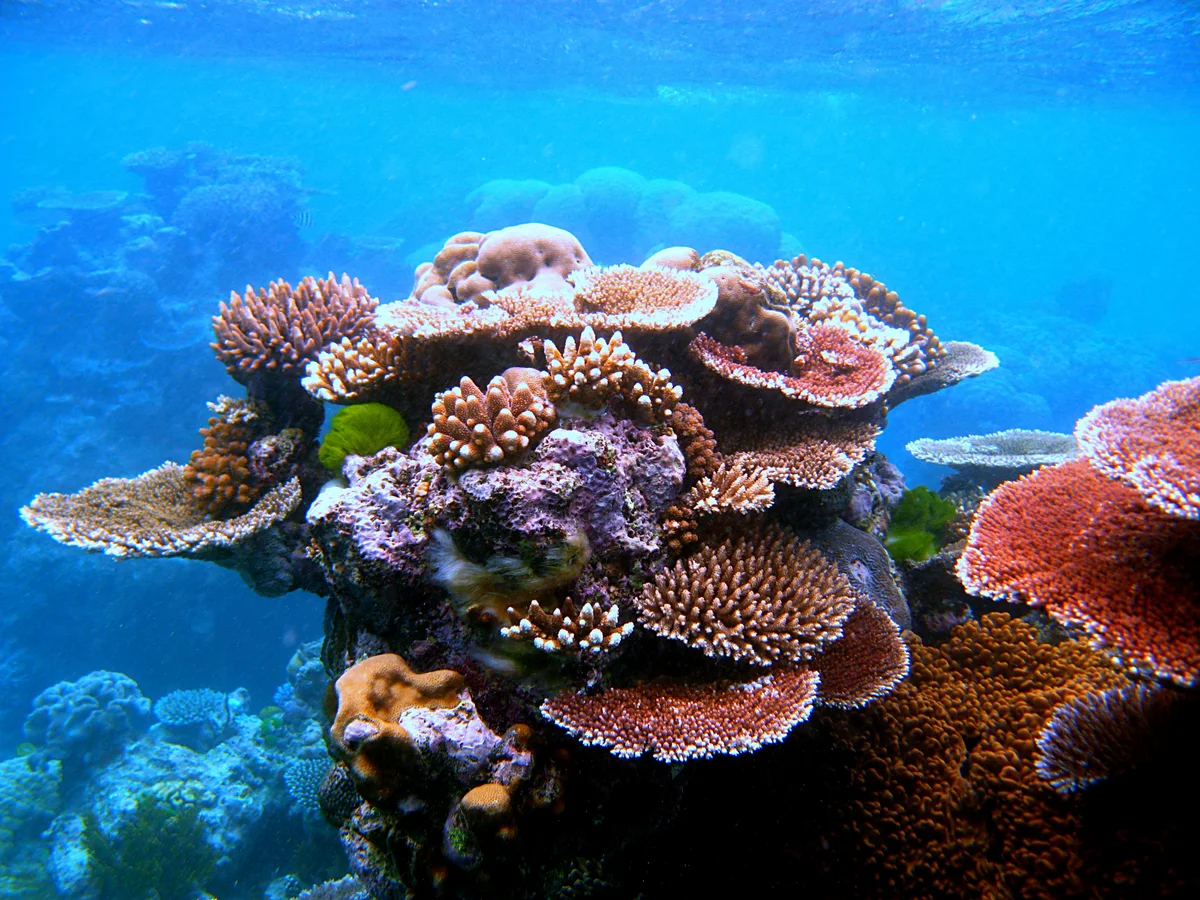
Pristine Seas founder Enric Sala (Enric Sala) described the underwater reality as “a time machine, like diving in the ocean of 1,000 years ago”: live coral coverage across reef crests averages 70% to 85%, horizontal visibility exceeds 60 meters, and the total absence of commercial fisheries has preserved intact predatory trophic webs. Documenting such pristine wilderness expands our understanding of planetary environmental resilience, a concept closely mirrored in our analysis of how orbital mechanics and vast oceanic masses shape planetary climate systems.
The Inverted Biomass Pyramid: Where Apex Predators Rule the Reef
In heavily degraded modern coastal waters, marine food webs exhibit classic overfished structures: small herbivorous and planktivorous fish dominate, while large predatory species have been stripped away by longlines and gillnets. At Bikar and Bokak, marine biologists documented the rare ecological phenomenon of an “inverted biomass pyramid,” characteristic only of virgin wilderness.
Over 60% of total fish biomass on these reefs is composed of apex predators. Massive schools of grey reef sharks (Carcharhinus amblyrhynchos), blacktip, whitetip, and silky sharks patrol outer drop-offs alongside giant trevally (Caranx ignobilis) and dogtooth tuna. Rather than depleting the reef, apex carnivores maintain disease control and prevent herbivorous damselfish from choking out live coral colonies.
Along the blinding white sand spits of the atolls lies one of the largest nesting rookeries in the central tropical Pacific for the endangered green sea turtle (Chelonia mydas). Thousands of female turtles arrive each season to lay eggs completely undisturbed by artificial light pollution or poaching.
«Exploring Bikar and Bokak was like stepping into an ocean from 1,000 years ago. This is an irreplaceable baseline that shows humanity how a fully intact, thriving marine ecosystem truly functions.»
Dr. Alan Friedlander (Alan Friedlander), Lead Scientist for National Geographic Pristine Seas and Professor at the University of Hawaiʻi
The Guano Nutrient Bridge: Seabirds Fueling Coral Growth
A defining ecological engine of Bikar and Bokak is the intimate nutrient coupling uniting land and sea. The tiny, low-lying islets (motus), crowned by ancient stands of Pisonia grandis and Tournefortia argentea, harbor massive breeding colonies of more than 20 seabird species, including hundreds of thousands of red-footed boobies (Sula sula), sooty terns, and great frigatebirds (Fregata minor).
Foraging hundreds of miles out in the pelagic open ocean for squid and flying fish, these seabirds return to roost, depositing metric tons of nitrogen- and phosphorus-rich guano. Torrential tropical rains wash these organic nutrients into the lagoon, fueling the growth of symbiotic zooxanthellae microalgae living within coral tissues.
Capitalizing on the expedition’s baseline data, the Cabinet of the Marshall Islands officially declared the Bikar and Bokak National Marine Sanctuary, encompassing more than 48,000 square kilometers (18,500 square miles). This expansive marine protected area imposes a total ban on commercial fishing, seafloor mining, and extractive vessel traffic.
The vast expanse of the newly designated Bikar and Bokak National Marine Sanctuary, strictly closed to fishing.
Coral health and clarity reflect the pristine conditions of Earth’s tropical oceans prior to industrialization.
Grey reef and silky sharks comprise over 60% of fish biomass, establishing an inverted trophic pyramid.
Deep-sea exploration unveiled ancient octocoral forests and biological species previously unknown to science.
Giant Clam Super-Colonies and the Indigenous Reimaanlok Ethos
Another staggering indicator of ecological integrity is the unparalleled density of giant clams (Tridacna gigas and Tridacna squamosa). Across most of Southeast Asia and the Pacific, these colossal bivalves have been virtually wiped out by poachers seeking adductor meat and ornamental shells. In the lagoons of Bikar and Bokak, pristine giant clam gardens carpet the carbonate pavement, filtering millions of liters of seawater daily.
Crucially, the sanctuary’s permanent legal standing is rooted in the indigenous Reimaanlok («Looking to the Future») conservation framework developed by Marshallese communities. For centuries, traditional chiefs (Iroij) designated sacred marine areas under «Mo» taboos—strict no-take zones reserved as ecological insurance against famine and environmental disruption.
By uniting ancestral Pacific stewardship with high-resolution satellite vessel monitoring systems (VMS), the Marshall Islands government has created a replicable conservation paradigm that keeps industrial fishing fleets at bay without relying on costly naval patrols.
- These isolated Pacific atolls act as a living time machine, displaying what natural oceans look like without humans.
- Seabird colonies fertilize coral reefs with essential pelagic nutrients, driving rapid coral growth.
- Zero plastic pollution and absence of fishing maximize coral resilience against marine heatwaves.
- The sanctuary provides a critical stepping stone toward the UN goal of protecting 30% of the world’s oceans by 2030.
Deep-Sea Wonders and the Approaching Shadow of Climate Change
Deploying deep-sea drop cameras and submersibles to bathyal depths of 2,000 meters revealed mesophotic and abyssal habitats never before witnessed in Micronesia. Biologists documented cold-water gorgonian octocoral gardens, stalked crinoids, and rare deep-sea fish, identifying numerous species never before recorded in the Marshall Islands alongside several candidate species new to science.
Yet even geographic isolation and full sanctuary legal protection cannot erect a physical dome against planetary atmospheric warming. The existential peril facing Bikar and Bokak is climate change. Ocean thermal spikes trigger catastrophic coral bleaching events, while seawater acidification hinders the calcification of aragonite coral skeletons.
Nonetheless, because these reefs boast dense grazer populations and zero agricultural runoff, their natural recovery resilience is extraordinarily high. Bikar and Bokak stand as irreplaceable living laboratories: by preserving the genetic blueprints of healthy, unpolluted coral ecosystems, they offer humanity a vital benchmark to restore dying oceans across the globe.