

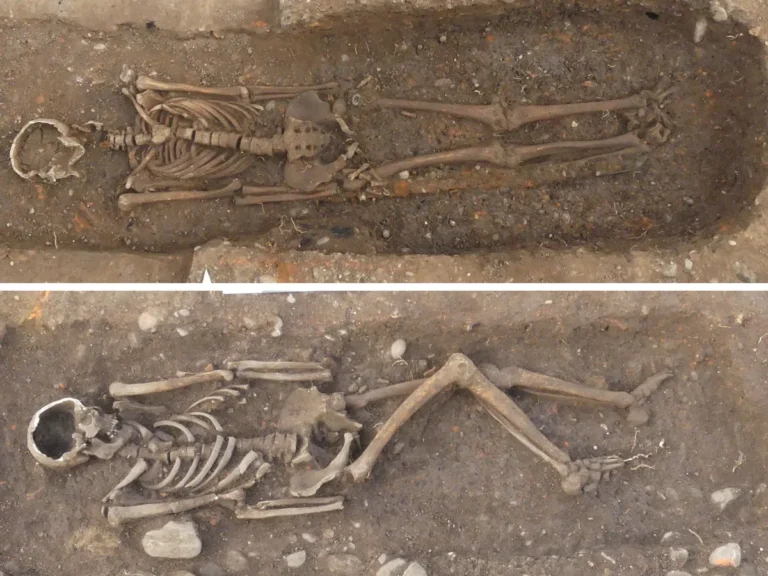

The twilight of the Western Roman Empire during the fifth century AD was a turbulent era of immense geopolitical transformation, as waves of migrating tribes, military allies, and mercenaries reshaped the landscape of ancient Gaul. A remarkable new archaeological discovery in Alsace, France, located just miles from the Rhine River frontier, offers rare insights into the military aristocracy of this transitional period. Excavations by the French National Institute for Preventive Archaeological Research (Inrap) have uncovered exceptional germanic chieftain burials, complete with sacrificed warhorses, round shields, javelins, and a magnificent scramasax sword embellished with gold and garnets.
From Gallo-Roman Settlement to Elite Necropolis: The Historical Context
The archaeological site was uncovered near the city of Colmar in the Alsace region of northeastern France, situated merely a few miles west of the Rhine River. For centuries, the Rhine served as the heavily fortified imperial frontier (limes) separating Roman Gaul from the tribal territories of Magna Germania. During the initial excavation phase, archaeologists from the French National Institute for Preventive Archaeological Research (Inrap) exposed the well-preserved remains of a Gallo-Roman agricultural village dating from the first to the third centuries AD, featuring domestic stone foundations, thermal hearths, deep wells, and artisanal ceramic production areas.
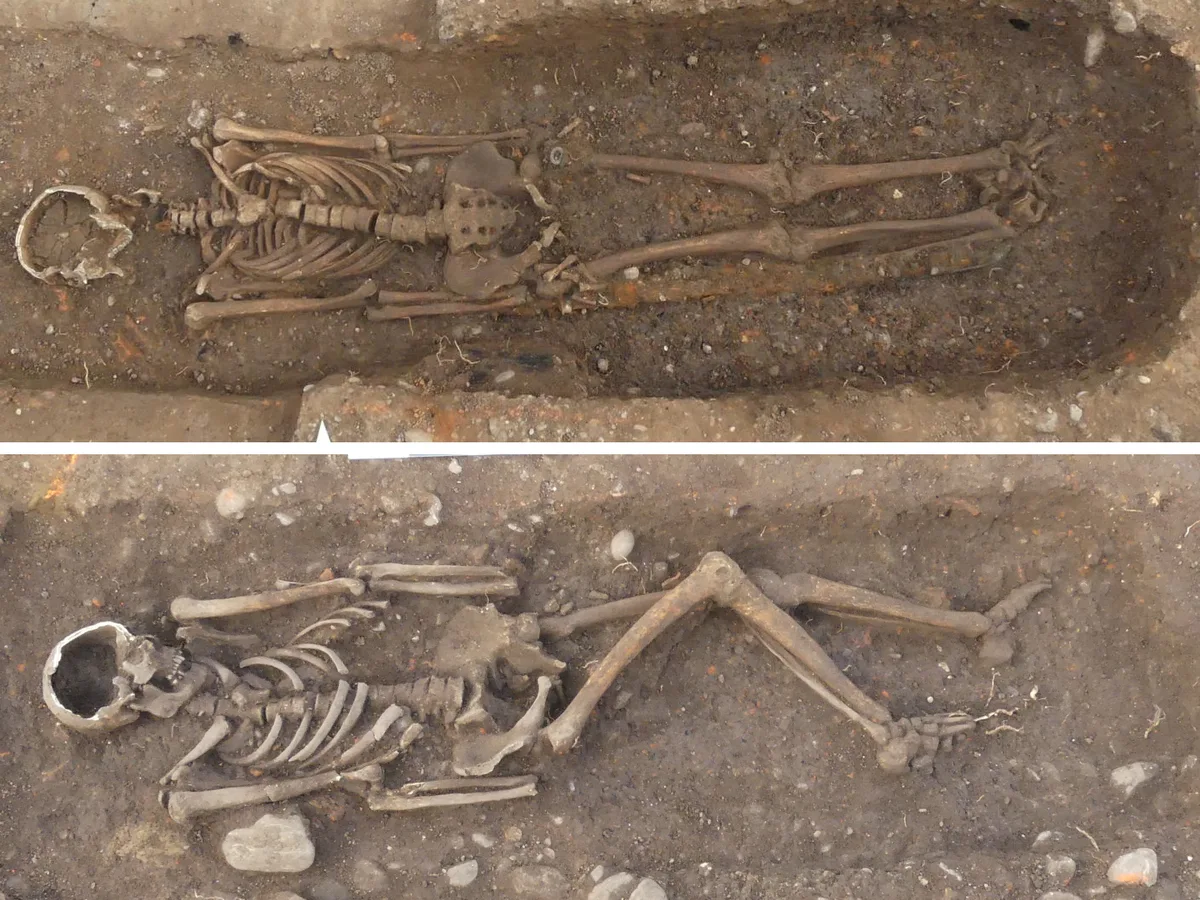
However, the most significant historical discovery occupied the upper stratigraphic layer. Directly overlying the abandoned Roman-era buildings, archaeologists identified a rare, high-status cemetery dating from roughly 450 to 500 AD. This fifty-year window represents one of the most volatile turning points in Western European history: the Roman administrative apparatus in Gaul dissolved, regular legions withdrew, and migrating confederations of Germanic tribes—including Alamanni, Franks, Burgundians, and Visigoths—established regional military hegemony.
The presence of such wealthy graves along the Rhine corridor highlights the emergence of a new ruling warrior class. Germanic federated chieftains who previously served as auxiliary cavalry for Rome stepped into the political vacuum to control strategic river crossings, reflecting historical parallels seen where elite warrior grave goods and equestrian frontier burials marked the consolidation of barbarian military nobility across Europe.
Weapons of the Barbarian Nobility: The Cloisonné Gold and Garnet Scramasax
Among the 14 human burials documented at the site, two male graves stood out due to their extraordinary concentration of high-status weaponry. In the first warrior tomb, archaeologists uncovered a long, double-edged iron spatha cavalry sword resting in a partially mineralized wooden scabbard, accompanied by an iron javelin head and a circular wooden shield identified by its heavy iron boss (umbo), designed to deflect deadly blows and parry opponent blades in close-quarters combat.
The crowning artistic achievement of the excavation, however, emerged from the adjacent chieftain grave. Here, researchers unearthed an exquisite scramasax (a single-edged Germanic combat blade and hacking knife). The hilt and belt-attachment fittings of this weapon were decorated with geometric gold cloisonné cellwork inlaid with dark red almandine garnets, cut and polished to perfection.
This distinctive polychrome jewelry style, combining precious gold and vivid garnets, became the supreme hallmark of regal authority across Migration Period Europe. Influenced by Pontic and Hunnic craft techniques, it was eagerly adopted by early Merovingian Frankish kings in Gaul and Ostrogothic rulers in northern Italy. Possessing such a weapon demonstrates beyond doubt that the deceased commanded considerable wealth and commanded high-ranking status within the regional military hierarchy.
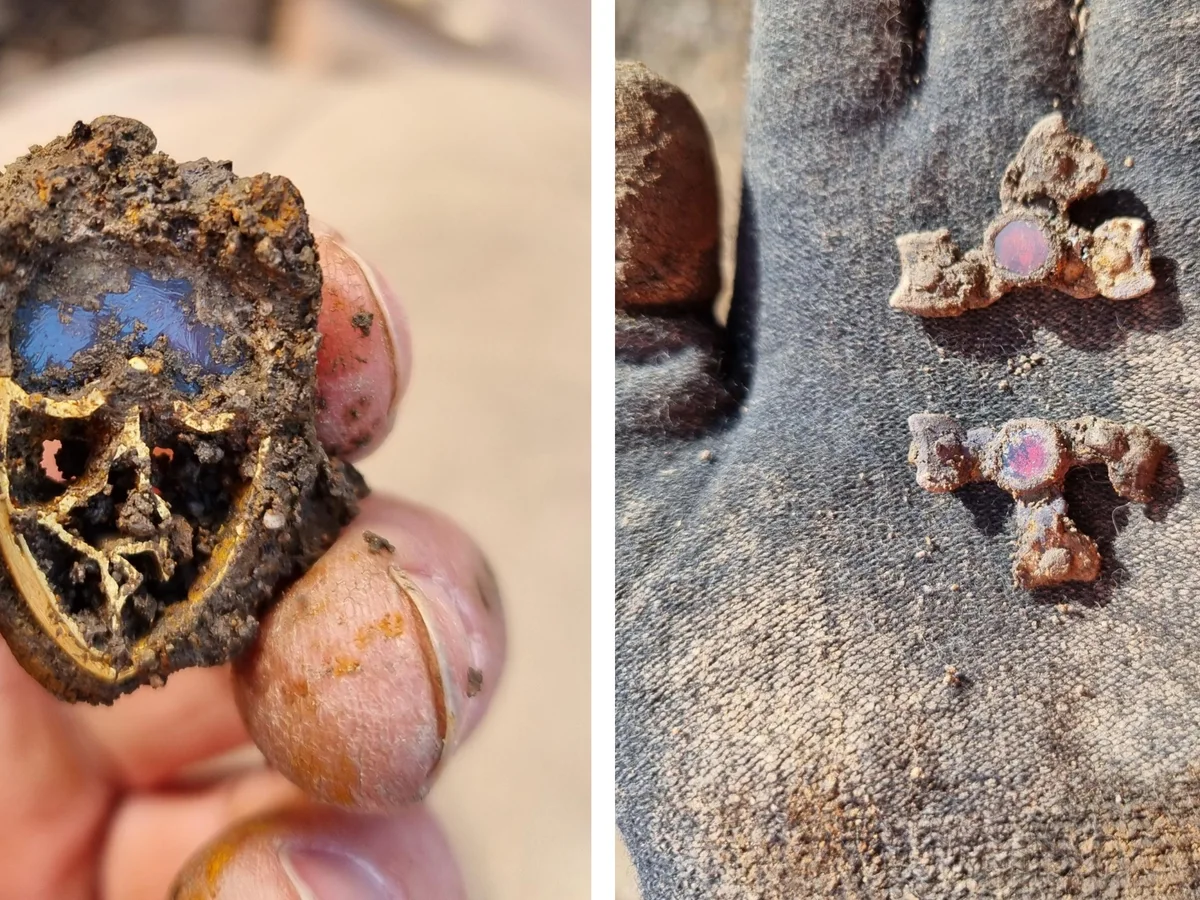
«The high-caliber weapon ensemble, including a long sword with wooden scabbard, javelin, shield, and a scramasax adorned with gold-and-garnet cloisonné, combined with sacrificed warhorses, unambiguously demonstrates the elite status of these individuals. These were prominent Germanic chieftains or military commanders exercising regional authority during the collapse of Roman administrative power.»
Y. Méchadi, lead archaeologist and excavation director at Inrap Alsace
Equine Sacrifice and Martial Rituals: The Warhorses of the Germanic Elite
A particularly striking dimension of the Colmar excavation was the discovery of two separate pit graves located adjacent to the elite male tombs. Each pit held the complete, articulated skeleton of a mature horse carefully laid on its side in anatomical order. On the skulls and jaws of the animals, archaeologists documented preserved iron bits, bridle mounts, and bronze strap buckles, confirming that the horses were fully outfitted in riding gear prior to sacrifice.
In fifth-century Germanic culture, the warhorse was far more than an agricultural animal; it represented a sacred companion and an indispensable symbol of warrior prestige. As heavy cavalry ascended to dominate European battlefields, replacing traditional Roman legionary infantry formations, horses became vital military assets. Sacrificing a prized stallion ensured that a chieftain would retain his mounted status and martial authority in the afterlife.
While horse burials are frequently documented in Central Europe and Thuringian contexts, finding paired, fully equipped equestrian graves in Alsace from the late fifth century is exceptionally rare, testifying to the strong integration of eastern cavalry customs among the local nobility.
The cemetery dates precisely from 450 to 500 AD, coinciding with the collapse of Roman frontier defense and the rise of Germanic barbarian kingdoms.
Cloisonné ornamentation using almandine garnets encased in pure gold signifies royal court jewelry traditions favored by Merovingian and Ostrogothic elites.
Two dedicated horse burials equipped with iron bits and bronze harness fittings underscore the high equestrian military status of the chieftains.
Osteological analysis revealed multiple healed fractures and blade traumas, confirming these noblemen lived and fought as professional cavalry warriors.
Skeletal Trauma and High-Status Female Graves: Life in the Barbarian Court
Detailed bioarchaeological examination of the skeletons carried out by Inrap anthropologists revealed the physically demanding realities of warrior life. Both high-status male skeletons exhibited pronounced healed bone fractures, cut marks, and cranial impact trauma. The substantial bone remodeling and healing indicates that these commanders survived multiple vicious battlefield encounters, thanks to robust physical resilience and skilled medical care from their community.
Alongside the warrior tombs, the cemetery revealed essential evidence regarding aristocratic women. In two female graves, archaeologists discovered paired silver bird-shaped fibulae (brooches), polychrome glass and amber beaded necklaces, and a finely carved bone comb crafted from red deer antler.
Bird-shaped brooches were quintessential elements of high-status female dress among Alamannic and Frankish tribes, serving to fasten woolen tunics at each shoulder. According to the official excavation findings by the French archaeological institute Inrap, the superior craftsmanship and precious materials confirm that these women held prominent matriarchal standing within the ruling dynasties.
- The cemetery complex comprises 11 adult graves, three children’s burials, and two dedicated pit burials containing complete sacrificed horses with riding gear.
- Skeletal analysis of the adult male warriors revealed healed battle wounds, blunt-force cranial fractures, and blade cuts sustained in active combat.
- Elite weapons include a double-edged spatha sword with mineralized wooden scabbard remains, a wooden shield with an iron boss (umbo), and throwing javelins.
- A centerpiece artifact is a prestigious scramasax (single-edged combat knife-sword) lavishly adorned with gold foil and polished red garnet cloisonné fittings.
- Two female graves contained silver bird-shaped fibulae (brooches), polychrome glass bead necklaces, and an intricately carved antler comb.
Archaeological Legacy: Uncovering the Foundations of Medieval Europe
The excavations at Colmar provide invaluable empirical evidence for understanding the so-called ‘Dark Ages’—a period contemporary scholars recognize as a sophisticated transition rather than an abrupt cultural collapse. Rather than mere devastation, the archaeological record demonstrates dynamic cultural synthesis, combining late Roman metallurgical techniques with Germanic martial traditions and steppic artistic influences.
This cemetery illustrates that late fifth-century Alsace was a bustling cultural crossroad where the foundations of early medieval Europe were laid. The aristocratic families buried in these graves were direct contemporaries and local precursors to the Merovingian kingdom unified under King Clovis I.
Ongoing scientific analysis, including strontium isotope studies and ancient DNA sequencing, will soon determine the geographic origins and kinship ties of these chieftains, tracing their historical journey from the heart of the barbarian frontier to their final resting place in Alsace.