


The question of how men ought to empty their bladders has circulated for generations as the subject of domestic jokes, marital disputes, and deeply entrenched cultural folklore surrounding masculine identity. Yet beneath this seemingly trivial daily habit lies the intricate biomechanics of the pelvic floor, fluid dynamics, and long-term prostatic health. Landmark clinical investigations by urologists and fluid physicists have established that evaluating the sit or stand to pee men health equation yields definitive medical and hygienic conclusions dictated by chronological age, prostate histology, and aerosol contamination physics.
Urodynamic Biomechanics: Pelvic Floor Muscle Relaxation and Detrusor Force
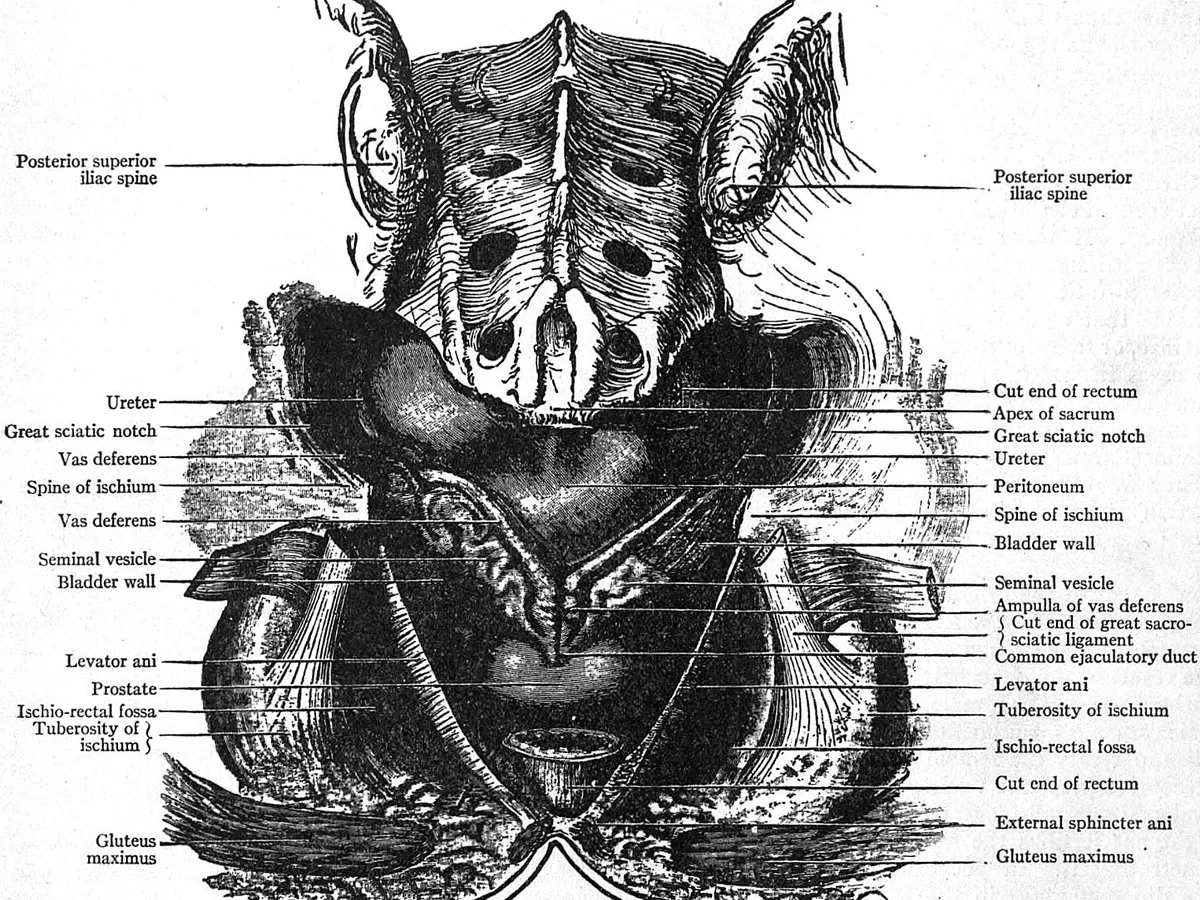
The physiological act of micturition represents an intricate, finely orchestrated neuro-muscular reflex. To achieve unimpeded, low-resistance urinary evacuation, the smooth muscle of the bladder wall—the detrusor muscle—must contract synchronously while the internal and external urethral sphincters and the surrounding pelvic floor musculature (levator ani) completely relax.
When a man stands erect at a commode, the postural anti-gravity muscles of his lumbar spine, hips, and pelvic girdle remain continuously engaged in tonic contraction to maintain balance. This structural tension inevitably transmits mechanical tone into the pelvic floor fascia. In contrast, assuming a seated posture instantly discharges anti-gravity postural workload.
Electromyographic recordings during urodynamic profiling reveal that sitting down drops pelvic floor bioelectric tone to baseline quiescent levels. This profound relaxation lowers the bladder outlet opening pressure, optimizing fluid expulsion in a manner thoroughly validated by rigorous clinical benchmarks, akin to the exacting standards seen in rigorous clinical trial evaluations.
For young men with small, pliable prostate glands, this posture-dependent pelvic compliance difference is negligible. However, as the male gland undergoes hormonal and cellular hypertrophy with advancing age, mechanical posture assumes critical significance.
Evidence-Based Meta-Analysis: Healthy Young Cohorts vs BPH Patients
To establish empirical consensus, a team of clinical researchers at Leiden University Medical Center in the Netherlands performed an exhaustive systematic review and meta-analysis of worldwide clinical trials, published in the peer-reviewed journal PLOS ONE (PLOS ONE, 2014).
The researchers scrutinized urodynamic tracings across diverse cohorts, assessing three fundamental hydrodynamic parameters: maximum urinary flow rate (Qmax), total voiding duration, and post-void residual volume (PVR).
For young, asymptomatic men without urinary tract pathology, the meta-analysis found no statistically significant difference between standing and sitting: peak flow rates varied by less than 1.2 mL/s, and post-void residual volume remained virtually non-existent under both postures.
Conversely, for men exhibiting Lower Urinary Tract Symptoms (LUTS) or Benign Prostatic Hyperplasia (BPH)—conditions affecting over 50% of men in their 50s and up to 80% in their 70s—sitting down produced pronounced clinical superiority.
In the seated posture, BPH patients demonstrated a statistically significant reduction in post-void residual volume averaging 25 to 35 mL, accompanied by an increase in maximum flow rate and shorter voiding times. Fully relaxed pelvic floor tone allowed the aging detrusor to expel urine without fighting urethral sphincter resistance.
«If a man is young, healthy, and exhibits no lower urinary tract obstruction, his bladder mechanics function with near-identical efficiency whether standing or seated. However, once benign prostatic hyperplasia (BPH) or hesitance develops, sitting down transforms into an essential clinical recommendation. Seated posture releases residual pelvic floor tension, facilitating comprehensive bladder evacuation without detrusor overstrain.»
Dr. Rena Malik, M.D., Urologist and Pelvic Surgeon, Member of the American Urological Association
The Pathology of Residual Urine: Bladder Calculi, Cystitis, and Renal Decline
Why do urologists place such intense clinical emphasis on post-void residual volume? The human adult bladder possesses a functional capacity of 350 to 500 mL. In healthy physiology, voiding leaves behind fewer than 20 mL of stagnant fluid.
When a man with an enlarged prostate chronically voids standing up, incomplete detrusor emptying leaves 50 to 100 mL of stagnant urine pooled at the base of the bladder. Over weeks and months, this warm, stagnant pool becomes an ideal incubator for bacterial pathogens, while concentrated uric acid and calcium oxalate salts crystallize into painful bladder calculi (stones).
Chronic urinary stasis fosters ascending bacterial colonization, precipitating recurrent prostatitis, intractable cystitis, and pyelonephritis, presenting persistent threats to organ function that mirror the resilience observed in complex bacterial biofilms and pathogen control.
Over prolonged periods, chronic detrusor over-distension destroys bladder compliance (myogenic failure), ultimately causing vesicoureteral reflux and irreversible chronic renal insufficiency.
Sitting down deactivates anti-gravity postural tone, allowing the external urethral sphincter to fully relax without resistance.
In men with prostate enlargement (BPH), seated micturition reduces post-void stagnant volume by over a third.
Complete bladder evacuation prevents uric acid crystallization, guarding against bladder stones and recurrent cystitis.
Seated voiding eliminates the invisible cloud of micro-droplets that disperses bacterial pathogens across a 2-meter radius.
Fluid Mechanics of Invisible Aerosols: Splashback and Microbial Dispersion
Beyond clinical urology, sitting down carries profound sanitary and epidemiological validation established by high-speed fluid dynamics and ultraviolet dye dispersion trials.
When a male urinary stream falls from standing height (approximately 75 to 85 cm above the bowl water) at a velocity of 2 to 3 meters per second, its kinetic impact into the standing pool triggers Rayleigh-Taylor instability and surface cavitation breakup.
High-speed cinematic fluid imaging demonstrates that the impact generates an invisible aerosol cloud composed of hundreds of thousands of micro-droplets ranging from 20 to 150 micrometers in diameter, readily lofted by ambient indoor air currents.
Ultraviolet tracer trials reveal that the contamination ‘splash zone’ extends up to 1.5 to 2 meters outward from the toilet bowl. These microscopic aerosol droplets, carrying fecal coliforms and uropathogens such as Escherichia coli, settle continuously onto surrounding bathroom floors, walls, bath towels, and adjacent exposed toothbrushes.
Sitting down reduces the stream’s free-fall trajectory by more than 65%, while altering the impingement angle to completely eliminate aerosol rebound, ensuring absolute environmental cleanliness.
- In young, healthy males without urinary obstruction, standing and sitting yield identical flow velocities.
- For men over 45 or those with BPH, sitting down is clinically proven to improve bladder emptying and flow.
- Post-void residual urine is the primary driver of bladder stone formation and ascending kidney infections.
- Standing urination produces invisible droplet aerosols that settle on nearby towels and toothbrushes up to 2 meters away.
- Over 60% of men in Germany and 70% in Japan routinely sit down to urinate for optimal hygiene and prostate wellness.
Cultural Paradigm Shifts: Why Germany and Japan Adopted the Seated Posture
Societal attitudes toward male voiding postures are undergoing rapid global modernization. While certain traditional cultures historically stigmatized sitting as an affront to masculine identity, technologically advanced societies have recognized the undeniable health and hygiene advantages.
In Germany, the cultural shift produced the term Sitzpinkler—describing a man who urinates seated. Once viewed with mild irony, sitting has evolved into the celebrated standard of domestic consideration and hygiene. Demographic surveys by YouGov indicate that over 62% of German men exclusively sit to urinate in domestic environments.
An even more pronounced consensus exists in Japan, where modern smart-toilet washlet technology and high aesthetic standards have guided over 70% of the male population to sit. Urologists emphasize that abandoning outdated gender dogma in favor of seated voiding is not a surrender of masculinity, but an intelligent, science-backed lifestyle decision safeguarding pelvic longevity and domestic hygiene.