


For centuries, standard accounts of the Roman conquest of Britain in AD 43 were framed around a desperate appeal by a deposed male monarch: Celtic King Verica, driven from power by tribal rivals, fled to Rome to implore Emperor Claudius for legionary intervention. However, revolutionary archaeological research spearheaded by Dr. Miles Russell of Bournemouth University has upended classical historiography. Comprehensive scrutiny of Celtic coinage, Brittonic linguistics, and imperial records demonstrates that Iron Age ruler Verica was a woman, whose diplomatic alliance with Rome forever reshaped European geopolitics.
Dismantling a Victorian Myth: Who Was Verica Really
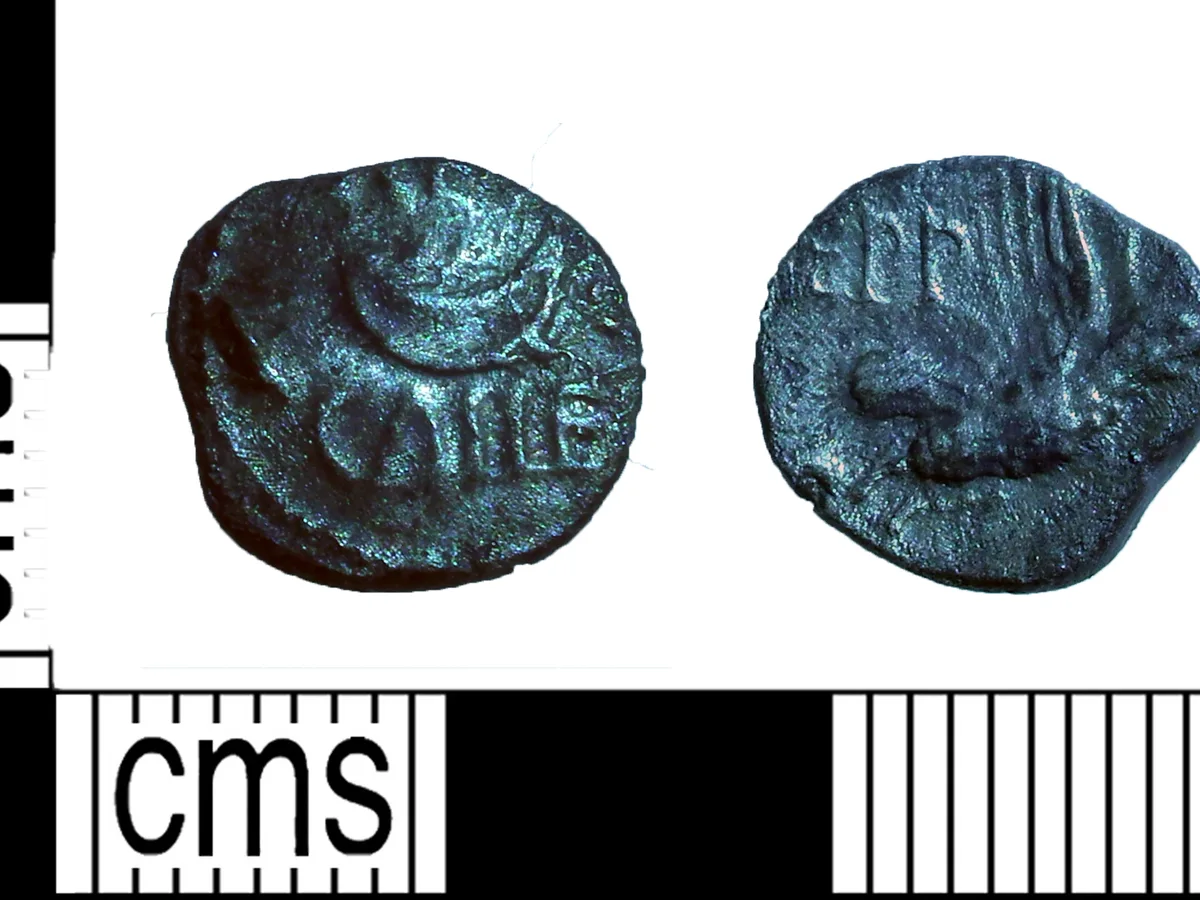
Around AD 40, the Atrebates, a prosperous Celtic kingdom controlling the southern coast of Britain (modern Sussex and Hampshire), were overrun by aggressive northern expansionists — the Catuvellauni led by prince Caratacus. Following the fall of the royal capital at Calleva Atrebatum (Silchester), the ruler Verica traversed the English Channel to plead for imperial justice in Rome.
As recorded by the Roman senator and historian Cassius Dio, this dethronement handed newly inaugurated Emperor Claudius the perfect geopolitical justification to mount a grand military conquest. In AD 43, four veteran legions under Aulus Plautius made landfall in Kent, inaugurating nearly four centuries of Roman rule.
Yet the ruler’s biological identity was profoundly misunderstood. Dr. Russell demonstrated that 19th-century antiquarians systematically overlooked fundamental Celtic grammatical rules and numismatic iconography, mirroring insights from archaeological discoveries revealing diplomatic and military interactions between Rome and frontier tribal societies.
Extensive archaeological excavations at Calleva Atrebatum (modern Silchester), the royal seat of the Atrebates, revealed a sophisticated pre-Roman oppidum spanning more than 40 hectares. The settlement boasted a planned street grid, monumental timber architecture, advanced metallurgical furnaces, and massive deposits of imported Roman Arretine fine tableware and Mediterranean amphorae.
The sovereign’s geopolitical standing rested upon generational diplomacy with Rome. Verica’s ancestral forebear Commius originally governed continental Atrebatic territories as an ally of Julius Caesar before establishing an independent, Rome-aligned hegemony in southern Britain.
Linguistic and Numismatic Evidence: The ‘-a’ Suffix and the Title REX
The most direct clue resides in Brittonic onomastics. In Celtic dialects spoken across Iron Age Britain, names terminating in the suffix ‘-a’ consistently signified feminine gender. Celebrated historical female leaders of this period bore identical onomastic structures: the Iceni queen Boudica and Cartimandua of the Brigantes. The name Verica conforms perfectly to this female lineage.
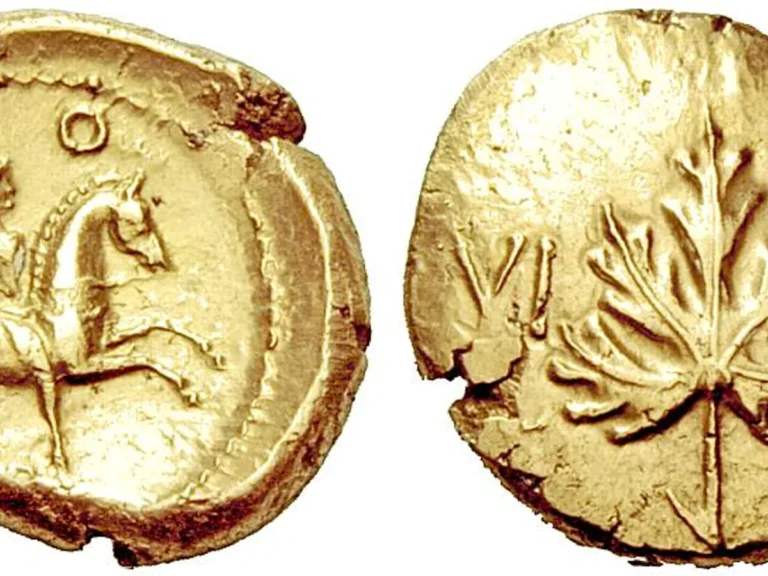
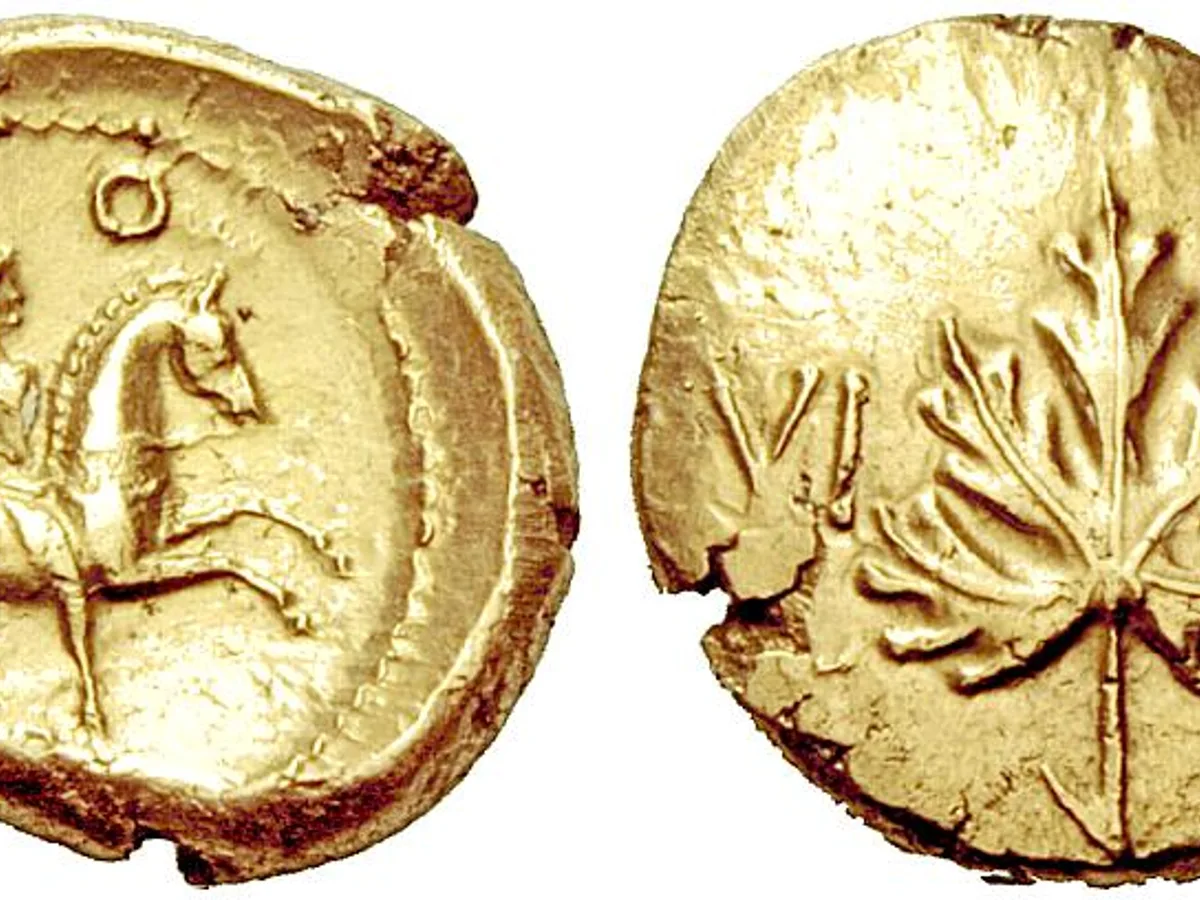
The appearance of the Latin word REX (‘king’) on Verica’s gold staters was long misread as masculine proof. In Julio-Claudian diplomatic parlance, however, the title ‘rex sociusque et amicus populi Romani’ functioned as an official designation of client sovereignty, independent of biological sex.
A celebrated historical parallel is Queen Cleopatra VII of Egypt, who was formally recognized in official Roman administrative treaties under the Latin designation Rex. To Rome and her Brittonic subjects, the title on Verica’s currency represented acknowledged treaty legitimacy rather than gender.
Metallurgical compositional analyses of Verica’s gold staters reveal an exceptional purity averaging between 80% and 85% gold content, directly matching the rigorous metallurgical baseline of the Roman imperial aureus. Striking precious metal coinage with Latin legends was a prominent public display of treaty sovereignty and economic integration.
The coins bear the Latin formula COMMI F, an abbreviation for ‘child of Commius’ (capable of representing either Commii filia or Commii filius). Victorian antiquarians automatically transcribed the formula as masculine ‘son of Commius’, embedding a male bias that persisted unchallenged for over a century.
«Victorian historians viewed antiquity through their own patriarchal prism, hastily assuming that anyone carrying the Latin title REX and issuing military coinage had to be an elderly male patriarch. But the artifacts tell a radically different story: the grammar of the name is female, and the coins depict a graceful, bare-breasted female rider on horseback. Verica was an authoritative Iron Age queen.»
Dr. Miles Russell (Miles Russell), senior lecturer in prehistoric and Roman archaeology at Bournemouth University
Numismatic Iconography: Bare-Breasted Equestrian Versus Bearded Warriors
Visual analysis of Verica’s gold and silver coinage reveals an astonishing stylistic departure from contemporary Celtic leaders. While rulers like Tasciovanus and Cunobeline struck currency featuring heavily armed, bearded male warriors brandishing battle-axes and Celtic carnyxes, Verica’s coinage presents a remarkably distinct aesthetic.
Dies struck at the Calleva mint depict a slender, graceful rider galloping bareback on a steed. On well-preserved examples, the figure is clearly rendered bare-chested with visible breasts and flowing hair, clutching a light javelin.
In Celtic Iron Age civilization, female warrior status was culturally revered. Women routinely commanded tribal alliances, held legal property, and fought alongside men in combat, an egalitarian social framework corroborated by historical studies analyzing ancient territorial movements and early human migration dynamics.
Excavations of elite Iron Age Celtic burials across Yorkshire and Wales regularly unearth female chariot burials furnished with iron swords, spears, and ornate equestrian trappings. These findings confirm that martial leadership and territorial sovereignty were readily accessible to women in Brittonic society.
Roman historian Tacitus famously recorded this cultural reality in his Annals and Agricola, noting with awe that the Britons recognized no distinction of sex in their military and political rulers.
The ending ‘-a’ in Brittonic Celtic signified female gender, matching contemporary queens like Boudica and Cartimandua.
Julio-Claudian Rome used REX to signify client sovereignty regardless of gender (as applied to Cleopatra VII).
High-grade gold staters feature a bare-chested, slender female equestrian rider galloping with a spear.
The ousting of Queen Verica served as the direct political casus belli for Claudius’s invasion of Britain.
Geopolitics of Exile: Why Emperor Claudius Backed a British Queen
Recognizing Verica as a female sovereign illuminates the high-stakes politics behind the AD 43 campaign. Verica was not an anonymous refugee, but Rome’s foremost regional ally, overseeing commercial traffic in metals, grain, and hunting hounds across the Channel.
The overthrow of the Atrebatic dynasty by anti-Roman factions threatened to unify Britain into a hostile military confederation. For Claudius, who ascended the imperial throne under precarious circumstances following Caligula’s assassination, restoring a legitimate allied sovereign provided supreme political capital.
The Roman expedition was originally designed as a strategic intervention to reinstate Verica’s royal house. Following the conquest, the territory was consolidated into the client kingdom of the Regni under Tiberius Claudius Cogidubnus, widely believed to be Verica’s immediate kinsman or successor.
- The Atrebates held wealthy territories across modern Sussex and Hampshire centered at Calleva Atrebatum.
- Verica’s coinage was minted in fine gold and silver bearing the Latin legend VERIC COM F.
- Roman senator and historian Cassius Dio explicitly documented Verica’s diplomatic mission to Rome.
- The Atrebatic heartland later housed the lavish Fishbourne Roman Palace, the grandest Roman residence in Britain.
Rewriting Celtic History: A Third Queen in the British Pantheon
Dr. Russell’s paradigm-shifting analysis adds a monumental new chapter to the history of ancient Britain. Previously, the public consciousness celebrated only two pre-Roman queens — the rebellious Boudica and the pragmatic Cartimandua.
Now, Queen Verica takes her rightful place as the pioneer whose strategic diplomacy and Roman alliances permanently integrated Britain into the Greco-Roman world.
This revelation demonstrates how modern scientific re-examination of archaeological artifacts continues to dismantle long-standing misconceptions, restoring the formidable women of antiquity to their true historical prominence.