

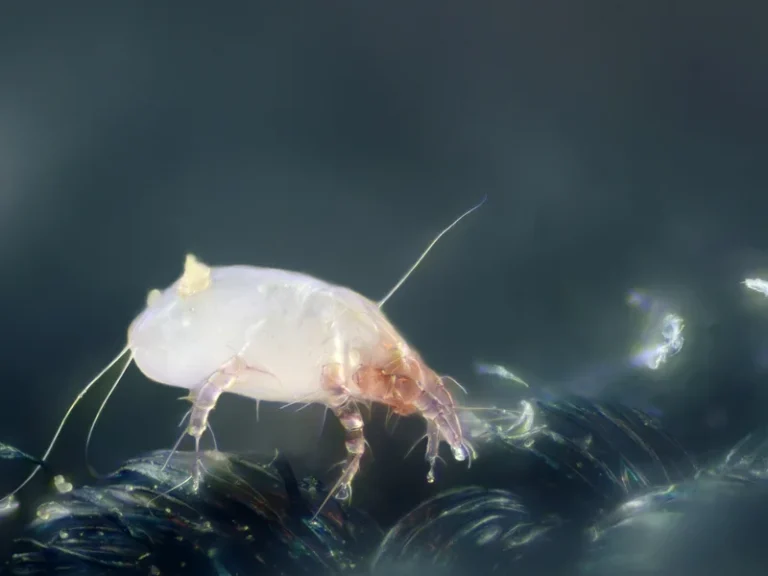

From early childhood, almost everyone is taught that an orderly household begins with crisp sheets and neatly arranged pillows straight after waking up. However, pioneering research in indoor microbiology and building physics turns this age-old domestic habit completely upside down. It turns out that making your bed first thing in the morning could actually be a serious health mistake, creating a thriving moisture trap for a population of up to 1.5 million microscopic arachnids known as house dust mites, which exacerbate asthma, allergic rhinitis, and chronic respiratory inflammation.
The Hidden Life of the Mattress: Meet Your Microscopic Bedmates
Every night as we retreat into our bedrooms seeking peaceful slumber, we instinctively assume our beds are sanctuaries of cleanliness and personal safety. Yet to environmental biologists and building scientists, the average domestic bed represents a densely populated and thriving ecosystem. Within the core of pillows, blankets, and mattresses lives a concealed community of approximately 1.5 million microscopic arachnids known as European house dust mites (Dermatophagoides pteronyssinus). Measuring barely 0.2 to 0.3 millimeters in length, these creatures remain utterly invisible to the naked human eye, enabling them to inhabit homes completely undetected for centuries.
Unlike bedbugs or fleas, house dust mites are not direct parasites; they do not bite, sting, or burrow beneath the human dermis. Instead, their ecological role is that of specialized scavengers, feeding almost exclusively on shed human skin scales (dander). An average adult sheds approximately one to one and a half grams of dead keratinized skin every single day, a substantial portion of which is sloughed off while tossing and turning against bedding. For an established mite population, this bounty provides an abundant and self-replenishing food supply that supports endless reproductive cycles.
The real clinical danger arises from the waste products these microscopic arachnids leave behind. Throughout its approximately ten-week lifespan, a single mite produces around twenty fecal pellets per day. These minute waste particles are densely packed with potent digestive enzymes, most notably the cysteine protease Der p 1, which the mites use to break down stubborn keratin. When inhaled by sleeping occupants, these proteolytic proteins degrade the protective epithelial barrier of the respiratory tract, triggering intense immune responses that fuel chronic asthma attacks, allergic rhinitis, and persistent skin eczema.
The Morning Moisture Trap: The Hidden Flaw of a Tidy Bed
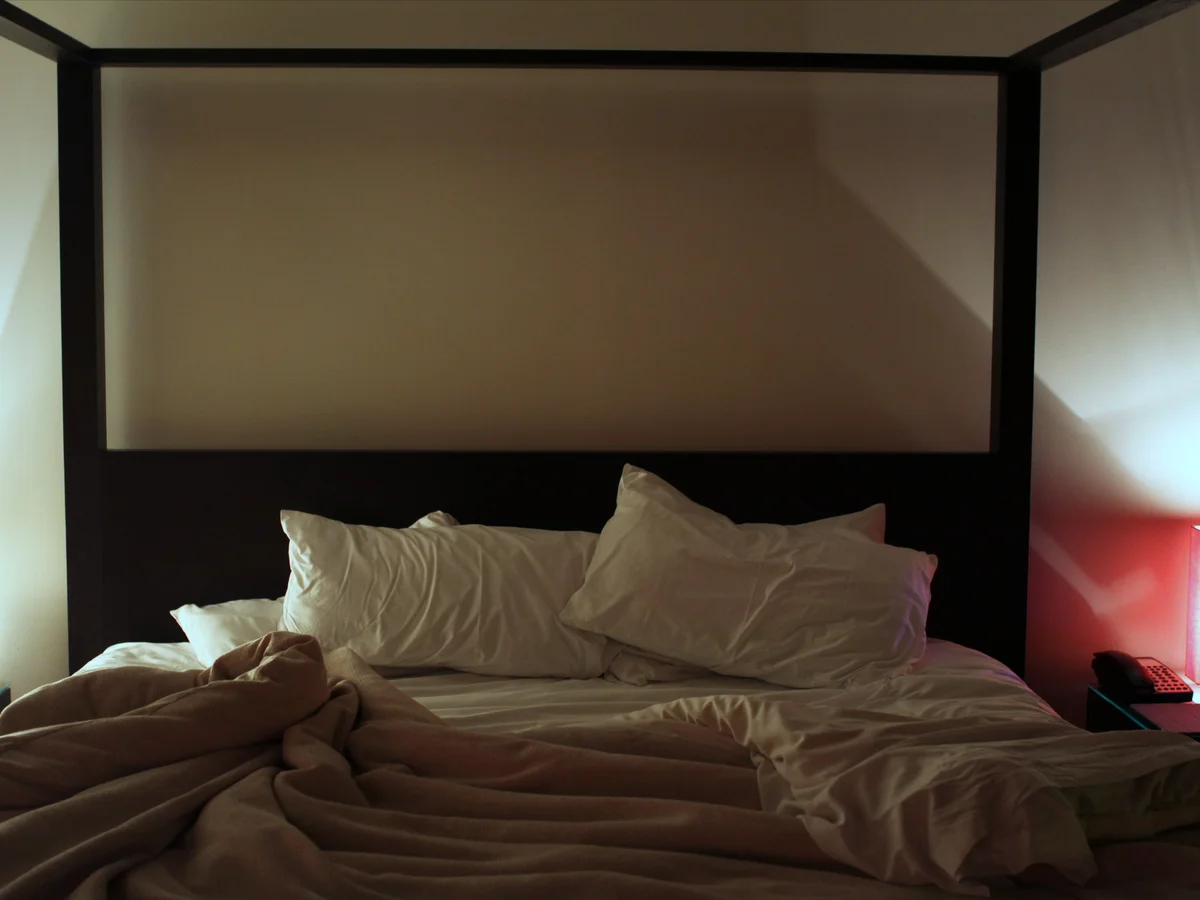
From our earliest developmental years, societal conditioning equates an immaculate, tightly tucked bed with personal cleanliness and moral virtue. Yet viewed through the lens of thermodynamics and biophysics, this persistent urge to practice making your bed first thing in the morning represents a fundamental domestic miscalculation. Over an eight-hour sleep cycle, the average human body produces between 300 and 500 milliliters of moisture through respiration and perspiration, simultaneously warming bedding fibers to an ambient temperature hovering around 35 degrees Celsius (95 degrees Fahrenheit). The mattress and duvet act as expansive thermal and hygroscopic sponges, absorbing this biological moisture.
When an individual immediately rises and snaps the heavy duvet over the mattress, layering it with decorative blankets and heavy throws, an artificial airtight seal is created. This covering acts as an effective vapor barrier, halting the natural evaporation of moisture into the broader room atmosphere. Trapped beneath layers of fabric, the humidity and residual body heat remain insulated within the core of the bedding and mattress filling for twelve to sixteen hours, remaining virtually undisturbed until the occupant returns to bed the following evening.
This sealed microclimate creates an optimal, stable greenhouse environment. Relative humidity levels beneath the duvet routinely hover near 70 percent, precisely matching the biological ideal for house dust mites and fungal spores. Because modern homes are increasingly insulated and double-glazed to maximize thermal efficiency, trapped indoor dampness cannot dissipate on its own. Tightly making the bed simply serves to cultivate a perennial laboratory incubator, directly fueling allergen density.
During sleep, the human body expels up to 500 milliliters of sweat and continuous heat, turning the bed into a warm, damp incubator.
The house dust mite Dermatophagoides pteronyssinus cannot drink liquid water; it absorbs vapor directly from ambient humid air.
Pulling heavy duvets and bedspreads over sheets seals in humidity, sustaining the 70% threshold required for parasite reproduction.
Leaving the mattress exposed, opening curtains for natural UV light, and washing sheets at 60°C decimates allergens without chemicals.
The Kingston University Discovery: Dehydrating Mites to Extinction
The scientific unraveling of this domestic paradox was spearheaded by a team of researchers led by Dr. Stephen Pretlove (Stephen Pretlove) at Kingston University London. Recognizing that chemical sprays and synthetic mite treatments rarely achieve sustained success, Dr. Pretlove and his colleagues developed a sophisticated computer simulation model designed to track how heat, airflow, and humidity fluctuate throughout various bedding configurations across changing seasonal conditions.
The core breakthrough discovered by Dr. Stephen Pretlove (Stephen Pretlove) and his team centers on the unique hydration biology of Dermatophagoides pteronyssinus. Dust mites do not possess mouthparts capable of drinking liquid fluids; they are biologically incapable of drinking water. Instead, their sole mechanism for maintaining hydration is extracting microscopic moisture molecules directly from ambient air via specialized supracoxal glands located on the exterior of their cuticle. However, this physiological absorption system functions successfully only when ambient relative humidity remains comfortably above 60 to 70 percent.
The mathematical models constructed by the Kingston team proved that simply leaving a bed unmade fundamentally alters this delicate moisture balance. With the duvet pulled back and sheets exposed to ambient room currents, surface heat rapidly dissipates and moisture content drops precipitously below the fatal 50 percent threshold. Denied access to ambient moisture, the mites quickly experience acute dehydration. Their internal cellular metabolism collapses, and the organisms wither and perish naturally without requiring harsh chemical acaricides. The findings provide compelling empirical proof that simple passive ventilation can dramatically transform domestic wellness.
«We know that mites can only survive by taking in water from the atmosphere using small glands on the outside of their body. Something as simple as leaving a bed unmade during the day can remove moisture from the sheets and mattress, so the mites will dehydrate and eventually die.»
Dr. Stephen Pretlove (Stephen Pretlove), PhD, indoor environmental specialist at Kingston University London
Sunlight, Ventilation, and Indoor Microclimate Optimization
The dehydrating benefits of an unmade bed can be dramatically amplified by integrating two additional natural sanitizing forces: natural ultraviolet sunlight and cross-ventilation. When morning curtains are opened wide, allowing natural daylight to bathe the exposed mattress and pillows, solar UV rays act as a continuous germicidal agent. Sunlight damages the delicate cellular membranes of mites and bacteria while accelerating the breakdown of moisture within textile fibers.
Concurrently, opening windows to induce thorough air exchange is paramount for indoor health. During the night, human respiration saturates the closed bedroom environment with moisture and carbon dioxide. Opening windows for fifteen to twenty minutes of brisk cross-ventilation flushes out stale, damp air, reducing room humidity down to an ideal 40 to 45 percent. When sweeping across an unmade mattress, this drier exterior air extracts deep capillary moisture from core foam and fabric layers.
Optimizing this indoor environment holds profound implications for human circadian rhythms and restorative sleep hygiene. Sleeping in a clean, low-humidity microclimate with reduced allergen exposure prevents nocturnal nasal congestion and airway resistance. This promotes unbroken deep-wave sleep cycles, stabilizes heart rate variability, and allows the body to awaken feeling genuinely refreshed.
- An average domestic bed serves as host to between 1.5 and 2 million microscopic Dermatophagoides pteronyssinus dust mites feeding on shed skin flakes.
- Mites do not bite or suck blood; their primary health hazard stems from potent digestive protease enzymes (such as Der p 1) excreted in fecal pellets.
- Tightly making the bed immediately upon waking traps humidity in mattress layers and duvets for 12 to 16 consecutive hours.
- Leaving sheets rumpled exposes fibers to ambient bedroom air, lowering relative humidity below the critical 50% threshold necessary for mite survival.
- Capitalizing on natural cross-ventilation, dry air, and sunlight represents a proven, non-toxic strategy for preventing allergen accumulation in homes.
The Healthy Bedroom Protocol: A Science-Backed Morning Routine
Transforming your bedroom into a hypoallergenic environment does not require burdensome labor; in fact, science demands doing less work each morning. The primary rule is simple: abandon the habit of immediate bed-making. Upon waking, completely fold the duvet back toward the foot of the bed or drape it across a chair, ensuring the central mattress surface and bottom sheets remain exposed to the air. Allow the bed to air out for a minimum of two hours, or ideally, leave it completely unmade until you prepare for sleep in the evening.
The second vital pillar of mite management is maintaining high water temperatures during laundry cycles. Because dust mites possess resilient chitinous exoskeletons, standard washing cycles in lukewarm water fail to eradicate them. Bed linen should be laundered every seven to ten days in water heated to at least 60 degrees Celsius (140 degrees Fahrenheit). This thermal threshold denatures the allergenic proteins and kills both adult mites and emerging larvae, thoroughly flushing residue out of the fabric weave.
Finally, consider incorporating physical barrier encasements for pillows and mattresses. High-grade allergen-impermeable covers featuring micro-pore weaves smaller than ten microns create a mechanical barrier that denies mites access to shed skin scales. Pairing these covers with periodic vacuuming using a certified HEPA H13 filtration system ensures that residual particles are captured rather than recirculated into the air. By adopting these evidence-based hygiene principles, anyone can transform their bed into a truly restorative, allergen-free sanctuary.