



Biogerontology has accomplished a historic paradigm shift from passively documenting biological decline toward actively engineering cellular rejuvenation: a landmark series of human clinical trials summarized in Nature Medicine by the Mayo Clinic research consortium, led by Dr. James Kirkland and Dr. Tamara Tchkonia, has validated the clinical efficacy of senolytics. These precision therapeutic agents selectively target and eliminate dysfunctional senescent “zombie cells”. Purging these pro-inflammatory relics from tissues halts fibrotic degeneration, restores vascular and metabolic youth, and substantially extends healthy human healthspan.
The Biology of Senescence: Why Healthy Cells Become “Zombies”
In 1961, Leonard Hayflick discovered that normal somatic cells possess a finite replicative lifespan governed by progressive telomeric erosion (the Hayflick limit). When subjected to critical telomere shortening, persistent DNA double-strand breaks, or acute oxidative stress, the cell encounters an evolutionary crossroads: execute programmed apoptosis or enter a state of permanent, irreversible cell-cycle arrest termed cellular senescence.
Senescence evolved primarily as a potent tumor-suppressive adaptation, halting the proliferation of oncogenically mutated cells. In a youthful organism, transient senescent cells are promptly recognized and cleared by cytotoxic natural killer (NK) cells and resident phagocytic macrophages.
With advanced age, however, immune surveillance falters. Instead of undergoing apoptotic clearance, senescent cells hyper-trophize, accumulate intracellular lipofuscin, and morph into metabolically hyperactive “zombie cells” that relentlessly flood the extracellular matrix with a destructive secretome known as the Senescence-Associated Secretory Phenotype (SASP).
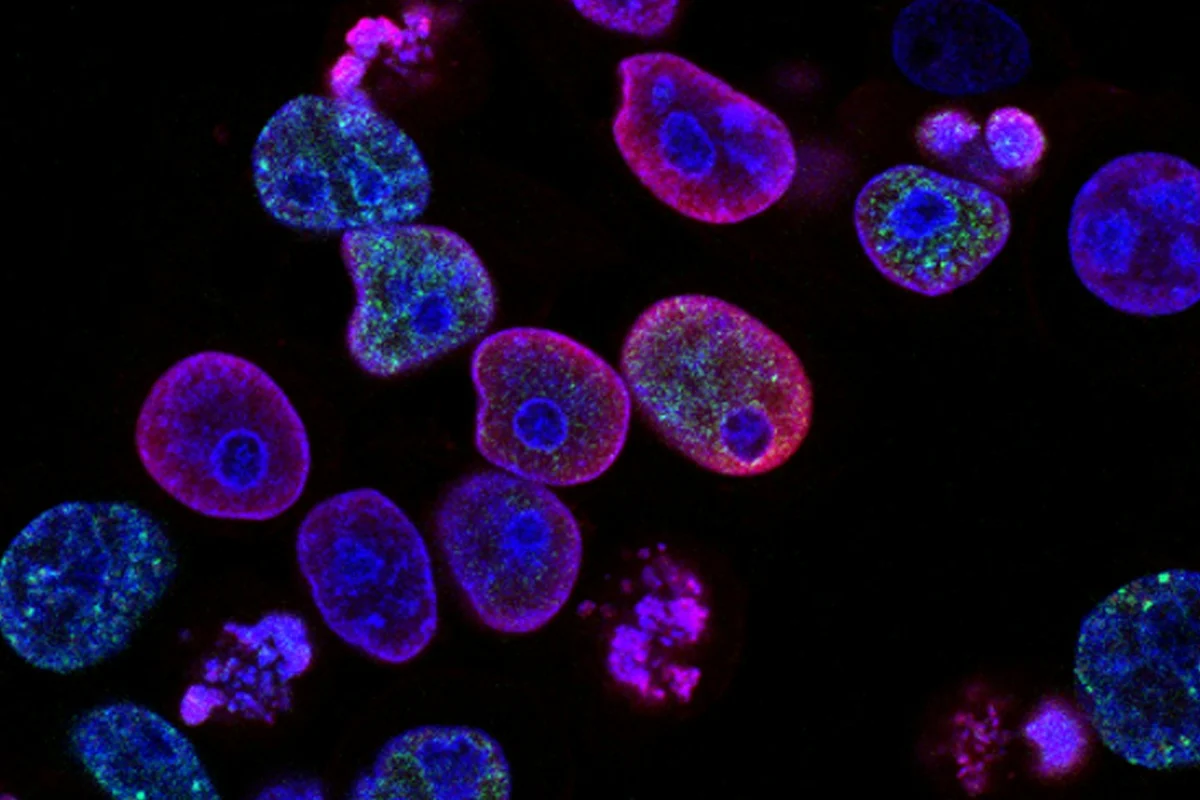
The Toxic SASP Secretome: How the One Percent Destroys the Body
The SASP profile represents a complex pathogenic cocktail comprising high concentrations of proinflammatory cytokines (IL-6, IL-1beta, TNF-alpha), chemokines, matrix metalloproteinases (MMP-1, MMP-3, MMP-12), and fibrogenic growth factors. These metalloproteinases enzymatically degrade extracellular collagen and elastin, causing arterial stiffening, cutaneous atrophy, and articular cartilage degradation in osteoarthritis.
Critically, SASP components exert a potent paracrine contagion: they bombard adjacent healthy differentiated cells, destabilizing their mitochondrial membrane potential and forcing them into secondary paracrine senescence. This initiates a runaway cascade of systemic, low-grade chronic inflammation known as inflammaging.
Rigorous in vivo experiments demonstrated that transplanting minute numbers of senescent cells — representing as few as one senescent cell per 10,000 normal cells — into youthful mice was sufficient to trigger generalized physical frailty, severe muscle weakness, and early cardiovascular mortality.
Replicatively exhausted cells halt division but evade death, poisoning tissues through the inflammatory SASP secretome.
Senolytics transiently block BCL-2 and PI3K shields, triggering selective apoptotic suicide exclusively in senescent cells.
Synergy between dasatinib and quercetin, along with concentrated fisetin, eliminates up to 80% of systemic zombie cells.
Intermittent pulse dosing every few months resets tissue regenerative capacity without requiring continuous daily drug intake.
SCAP Survival Networks: The Achilles Heel of Senescent Cells
How do senescent cells persist for decades within tissues despite harboring catastrophic genomic damage and relentless oxidative stress? The explanation lies in their dependence on specialized pro-survival networks: the Senescent Cell Anti-Apoptotic Pathways (SCAP).
Senescent cells systematically upregulate defensive anti-apoptotic proteins, prominently BCL-2, BCL-xL, BCL-w, serpin PAI-1, ephrin ligands, and the PI3K/Akt signaling axis. These nodes function as molecular shields, intercepting caspase signaling cascades that would otherwise initiate apoptosis. The senescent cell effectively lives on borrowed time, sustained entirely by this hyperactive pro-survival buffering.
This dependence created an exploitable molecular vulnerability. Senolytics are pharmacological compounds designed to transiently inhibit these precise SCAP survival shields. Deprived of their protective buffering, zombie cells immediately activate intrinsic apoptotic cascades, while surrounding healthy cells — which do not rely on hyper-elevated SCAP signaling — remain completely unharmed. Just as cutting-edge photochromic biotechnology formulations functionalize materials at the molecular level, senolytics perform surgical cellular debridement.
«Senescent cells operate precisely like a rotten apple in a basket of fresh fruit: accounting for less than one percent of total tissue mass, they poison surrounding healthy tissue through their toxic SASP secretions. Senolytics do not require chronic daily administration; an intermittent “hit-and-run” dosing schedule suffices to clear the zombie cell burden and reignite endogenous tissue regeneration.»
Dr. James L. Kirkland and Dr. Tamara Tchkonia, Professors of Gerontology at Mayo Clinic, published in Nature Medicine
Clinical Compounds: Dasatinib plus Quercetin (D+Q) and Fisetin
The premier validated senolytic intervention is the combinatorial regimen of dasatinib and quercetin (D+Q). Dasatinib, an established broad-spectrum tyrosine kinase inhibitor, selectively dismantles ephrin-dependent survival signaling in senescent adipocytes. Quercetin, a potent natural flavonoid, inhibits BCL-xL and PI3K/Akt survival nodes in senescent human endothelial cells. Together, they demonstrate broad-spectrum senolytic synergy.
Subsequent high-throughput screening isolated fisetin, a concentrated natural polyphenol that exhibits superior senolytic specificity in clearing senescent cells from splenic, hepatic, and adipose tissue by over 70%.
In early-phase clinical trials involving human cohorts with idiopathic pulmonary fibrosis (IPF) and diabetic kidney disease, intermittent courses of D+Q provoked rapid declines in circulating inflammatory SASP biomarkers, significantly enhanced 6-minute walk distance, and stabilized renal glomerular filtration rates.
- A minute fraction (less than 1%) of senescent cells drives systemic tissue frailty and chronic disease via SASP.
- Senolytics selectively dismantle SCAP pro-survival pathways, sparing healthy dividing and quiescent cells.
- The D+Q regimen has demonstrated clinical functional gains in patients suffering from pulmonary and renal fibrosis.
- The intermittent hit-and-run dosing protocol minimizes toxicity while providing lasting cellular rejuvenation.
The Hit-and-Run Protocol: The Future of Preventive Geroprotection
The defining clinical benefit of senolytic pharmacology is its reliance on intermittent “Hit-and-Run” kinetics. Unlike statins or antihypertensives that require continuous daily ingestion throughout life, senolytics are dosed in brief, pulsing intervals — such as two consecutive days every month or once per quarter.
Because senescent cells require months or years to re-accumulate following clearance, a transient therapeutic pulse is sufficient to reset the local cellular milieu. This eliminates the risk of acquired drug resistance, minimizes off-target hepatic metabolism, and prevents adverse systemic toxicity.
With dozens of clinical trials underway exploring senolytics for Alzheimer disease, osteoporosis, and macular degeneration, the era of cellular rejuvenation has arrived. Comprehensive clinical trial data are cataloged in Nature Medicine.