



The explosive ascent of generative artificial intelligence has catalyzed one of the most ethically contentious industries of our era: the emergence of AI “griefbots” and synthetic digital clones of deceased individuals. Emerging tech platforms invite bereaved relatives to upload chat logs, voice notes, and home videos of departed family members to synthesize perpetual virtual interlocutors capable of mirroring the intonation, cadence, and vernacular of the lost loved one. Yet what is aggressively marketed as compassionate digital bereavement therapy increasingly borders on high-tech spiritualism—prompting psychologists and bioethicists to sound the alarm over prolonged grief disorder and predatory commercialization of human loss.
The Digital Necromancer: How Generative Algorithms Synthesize Personas
The architectural framework powering modern griefbots integrates three distinct AI domains: Large Language Models (LLMs), zero-shot neural voice cloning, and generative photorealistic video (Deepfake / NeRF architectures). Given a modest training corpus consisting of WhatsApp message exports and voice recordings, deep learning models map the linguistic cadence, idiosyncratic syntax, and emotional response patterns of the deceased.
Platforms such as HereAfter AI, Replika, and Seance AI offer conversational avatars that do not merely reproduce canned quotations; they dynamically generate novel dialogue, crack contextual jokes, and proactively inquire about a user’s daily well-being in real time. The algorithm impeccably mimics idiosyncratic punctuation, favorite emojis, and rhetorical quirks.
Consequently, the cognitive boundary separating objective reality from computer-generated mimicry rapidly dissolves. For an individual experiencing acute bereavement, hearing the authentic voice of a deceased parent or spouse whispering familiar endearments across a mobile phone induces an intense oxytocin and dopamine surge, delivering an overwhelming illusion of tangible presence.
Psychological Vulnerability: Prolonged Grief Disorder and Algorithmic Codependency
The primary psychiatric hazard of griefbots lies in their deliberate disruption of healthy bereavement progression. Clinical psychology demonstrates that emotional recovery requires confronting the permanent finality of physical death and reorganizing one’s personal identity. Habitual communion with an algorithmic ghost halts this psychological closure, suspending the bereaved in a perpetual state of cognitive ambiguity.
Psychiatrists warn that recursive interaction with griefbots drastically elevates the risk of Prolonged Grief Disorder (PGD), formally categorized in the DSM-5-TR and ICD-11. Individuals frequently withdraw from interactions with living kin and social networks, choosing instead the comforting, frictionless company of an immortal digital facsimile.
This dynamic readily spirals into pathological codependency. Unlike human companions, the AI companion never experiences exhaustion, never dissents, and remains infinitely obliging. When servers crash or platforms implement interface updates, users frequently experience catastrophic secondary bereavement, re-traumatizing an already fragile psyche.
Deep learning recreates voices, facial mannerisms, and texting styles from personal chat histories.
Interacting with digital ghosts delays closure, fostering codependency and social withdrawal.
The departed never authorized their digital cloning, and hallucinating bots distort true memories.
Monthly subscription paywalls exploit the vulnerability of bereaved families for recurring SaaS profit.
The Ethical Vacuum: Posthumous Consent and the Integrity of Identity
The unauthorized synthesis of post-mortem digital identities introduces profound legal and ethical quandaries. Do surviving relatives possess the moral or legal prerogative to feed deeply private correspondence, intimate confessions, and voice notes into commercial neural networks without the explicit prior consent of the deceased?
Furthermore, generative models are inherently susceptible to hallucination. During prolonged interactions, a griefbot will inevitably fabricate recollections, espouse beliefs, or make admissions entirely foreign to the departed individual’s lived character. Survivors may hear synthetic approximations of their deceased relatives professing alien ideological or religious viewpoints, permanently distorting their legacy.
Data sovereignty presents an equally troubling frontier. Intimate personal histories uploaded to commercial cloud infrastructures risk being indexed into broader model training corpora or exposed via cybersecurity breaches. In the digital era, the fundamental human “right to be forgotten” clashes directly with the algorithmic commodification of human mortality.
«Grief is not a software bug that demands a digital patch. It is an evolved, fundamental neurobiological adaptation that allows the human psyche to process the permanence of loss. By supplanting genuine mourning with dialogue with an algorithm, we fracture our ability to heal.»
Dr. Sherry Turkle, Abby Rockefeller Mauzé Professor of the Social Studies of Science and Technology at MIT
The Monetization of Grief: Predatory Subscription Economies
Bioethicists have voiced severe condemnation regarding the SaaS (Software as a Service) business models deployed by memorial tech startups. Platforms routinely gate critical emotional features behind recurring monthly paywalls: while rudimentary text interaction may be complimentary, voice synthesis, video messaging, and long-term memory retrieval command fees from $20 to $50 per month.
This architecture subjects vulnerable consumers to psychological extortion. If a mourning user fails to maintain payment, the platform revokes access to the synthetic persona, or worse, injects promotional banner ads directly into the conversational interface. Leveraging survivors’ guilt—framing missed payments as an abandonment of a deceased relative—represents an egregious manifestation of predatory surveillance capitalism.
Regulatory authorities in the European Union and the United States are currently deliberating stringent consumer protections. Recommended frameworks demand mandatory visible disclaimers on every interaction stating “Generated by Synthetic AI,” total bans on microtransactions within bereavement software, and statutory guidelines requiring human therapeutic supervision.
- Modern neural voice cloning requires as little as 3 minutes of clean audio to mimic a timbre.
- Prolonged Grief Disorder (PGD) is an officially recognized psychiatric condition in DSM-5 and ICD-11.
- Generative models routinely confabulate, attributing opinions the deceased never held.
- Grief counselors advocate analog, passive remembrance rituals over interactive synthetic bots.
Authentic Remembrance vs. Synthetic Mimicry: The True Path to Healing
While the expansion of artificial intelligence is irreversible, civil society must learn to delineate authentic remembrance from algorithmic substitutes. Grief counselors emphasize that genuine healing is not achieved by attempting to resurrect the departed through silicon circuits, but by integrating loss into gratitude, wisdom, and active engagement with the living world.
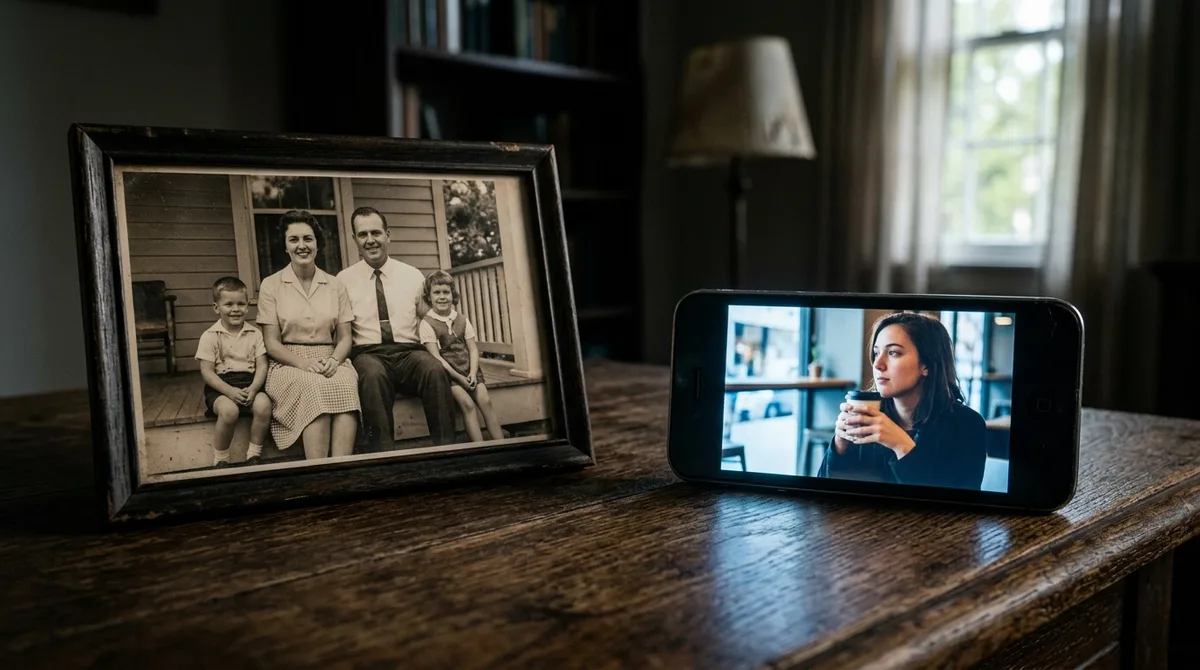
Rather than relying on interactive simulacra, mental health experts endorse passive commemorative rituals: curating physical photo albums, publishing family memoirs, archiving heirloom home videos, and dedicating philanthropic acts in memory of the deceased. These established practices preserve clear boundaries between past and present without fracturing psychological reality.
The phenomenon of AI griefbots reveals a profound spiritual vulnerability in a consumerist culture that struggles to accept human mortality. True reverence for those we have loved requires the courage to let them rest, honoring their enduring legacy in our living memories rather than in the synthetic echo chambers of commercial server farms.