

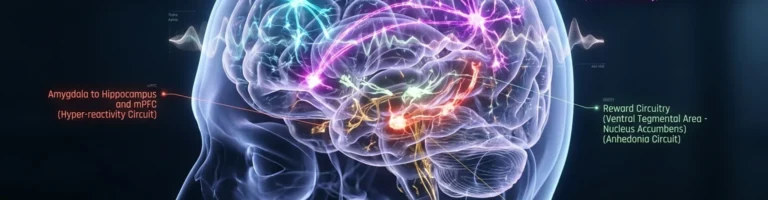

Clinical psychiatry stands on the threshold of its most profound paradigm shift in over half a century: in a landmark study published in Nature Mental Health, an international neuroimaging consortium led by Dr. Mari Partanen from the University of Helsinki and the Aalto University Brain Centre has demonstrated that major depressive disorder (MDD) is not a single uniform illness. By tracking whole-brain neuronal dynamics across more than 1,800 patients using millisecond-precision magnetoencephalography (MEG), researchers have mapped the functional human connectome to reveal exactly 5 biologically distinct electrophysiological biotypes of depression.
The Collapse of Symptom Questionnaires and the Serotonin Monolith
For more than fifty years, clinical diagnosis has relied on behavioral rating rubrics like the DSM-5 and Beck Depression Inventory: anhedonia, rumination, insomnia, and psychomotor retardation were bundled together under the monolithic umbrella of depression. As a result, standard first-line SSRIs (selective serotonin reuptake inhibitors) failed to bring remission to over 40–50% of sufferers, leading to refractory treatment resistance.
The Helsinki protocol supplanted subjective patient reporting with direct magnetic field detection. MEG captures instantaneous neuromagnetic signals generated by post-synaptic dendritic currents, measuring phase coupling across theta, alpha, and gamma bands without the hemodynamic lag inherent to conventional fMRI.
“Prescribing the same molecule to a patient suffering from default mode hyper-synchrony and another with blunted striatal reward circuits is a legacy error. We have shown that behind identical complaints of low mood lie diametrically opposed circuit-level electrophysiological dysfunctions.”
Prof. Riitta Hari, Professor Emerita at Aalto University Institute of Neuroscience
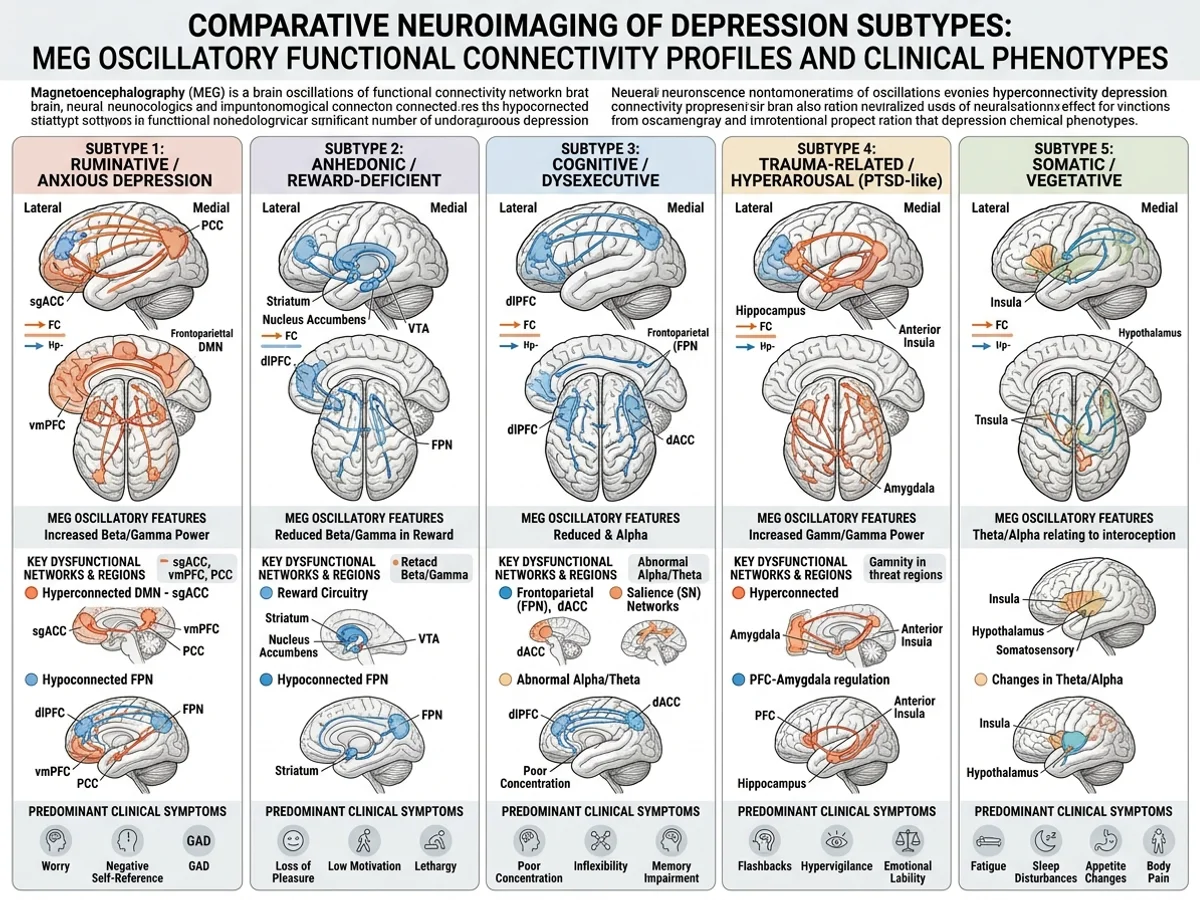
Pathological hyper-synchrony of the default mode network. Relentless internal loops of self-criticism and brooding fixation on failure.
Profound hypo-coupling between ventral striatum and mesolimbic circuits. Inability to experience pleasure or anticipate rewards.
Excessive gamma oscillations within the insular cortex and motor stripe. Manifests as physical agitation, tachycardia, and muscular tension.
Collapse of dorsolateral prefrontal functional connectivity. Profound mental fog, decision paralysis, and executive exhaustion.
Desynchronization of thalamocortical pacemakers and slow-wave delta sleep deficit. Characterized by diurnal mood swings and insomnia.
Targeted Therapeutics: Precision TMS and Receptor Modulation
The transformative utility of this classification lies in its predictive power. Clinical trials revealed that patients classified under Biotype 1 (DMN-rumination) achieved an 80% remission rate when treated with targeted transcranial magnetic stimulation (TMS) directed at angular gyrus hubs, despite previously failing multiple SSRI courses.
Conversely, Biotype 2 responders thrived on dopaminergic agonists and behavioral activation protocols, while Biotype 4 sufferers with profound brain fog responded rapidly to cholinergic neuromodulators and working memory rehabilitation.
Video: Understanding the Science Behind Depression
In this scientific explainer from AsapSCIENCE, the complex neurochemistry and cellular realities of depressive disorders are brought to light:
Ending the Era of Trial and Error in Mental Health
Pilot clinical rollout of rapid MEG screening protocols is slated to begin at university medical centers in Helsinki and Stockholm in 2027. This milestone promises to eliminate years of frustrating medication trials, transitioning psychiatric care into an objective, data-driven discipline.