



Neuroscientists have demonstrated that the elusive ability to awaken consciously inside one’s dreams can be systematically mastered in just four weeks: an innovative training protocol combining mindfulness meditation with surreal virtual reality reality-testing simulations reliably enabled novices to train to have lucid dreams during REM sleep.
The Lucid Dreaming Frontier: Bridging Sleep and Wakefulness
Lucid dreaming represents one of the most intriguing hybrid states in cognitive neuroscience: an altered state of consciousness wherein a sleeping individual becomes cognizant that they are dreaming, often attaining intentional agency over their actions, surroundings, and narrative trajectory. First empirically validated in sleep laboratories via electrooculography and polysomnography, the phenomenon demonstrates that higher-order metacognition can coexist with deep rapid eye movement (REM) sleep.
For neuroscientists, lucid dreaming serves as an unparalleled window into the neural correlates of consciousness. In examining how neural networks regulate conscious states and cortical excitability, researchers can directly explore how the brain constructs subjective experiential reality in the absence of external sensory inputs.
Historically, however, lucid dreaming has remained notoriously elusive: only roughly 20% of the population experiences spontaneous lucidity on a monthly basis, while the vast majority never achieve it. A groundbreaking study published in Frontiers in Psychology by researchers at the University of Trento in Italy has shattered this limitation, presenting a protocol that trains novices to become lucid dreamers within thirty days.
The lineage of empirical lucidity research traces back to Stephen LaBerge’s foundational experiments at Stanford University in the 1980s. Voluntarily lucid dreamers transmitted pre-arranged intentional ocular signals—specific left-right-left-right eye movements—recorded via electrooculogram across polysomnography monitors during unmistakable REM atonia.
Why Traditional ‘Reality Checks’ Failed to Deliver Reliable Results
For decades, the standard behavioral approach for lucid dream induction centered upon waking ‘reality checks.’ Practitioners were instructed to pause multiple times each day and interrogate their environment—asking ‘Am I dreaming?’ while checking analog clocks, reading text twice, or attempting to push a finger through their palm in hopes that the habit would replicate during sleep.
Despite widespread popularity, empirical studies revealed that waking reality checks suffered from high failure rates. As Daniel Morris, a cognitive neuroscientist specializing in dream cognition at Northwestern University, pointed out, mundane waking reality is far too stable, predictable, and devoid of the surreal distortions characteristic of dreams.
Because individuals never encounter genuine physical anomalies while awake, reality checks quickly devolve into superficial, automated routines. When that individual subsequently enters an absurd REM dream landscape, the discrepancy fails to trigger cognitive surprise, leaving metacognitive scrutiny completely dormant.
The failure of conventional reality testing stems from cognitive heuristics: evolutionary neural pathways aggressively conserve metabolic energy when processing mundane waking sensory feeds. Performing mechanical finger-checks fails to stimulate executive prefrontal loops, causing the routine to replicate within dreams as unexamined background noise.
«Because waking life obeys relentless, predictable physical laws, traditional reality tests quickly become mindless habits. Virtual reality allowed us to expose the brain to controlled surreal anomalies, teaching the cortex to instantly flag dream-like logic.»
Daniel Morris, Cognitive Neuroscientist at Northwestern University
The University of Trento Protocol: Fusing VR Simulations and Mindfulness
To bypass this cognitive shortcoming, the Italian research team devised a synergistic training paradigm. They recruited university students who verified that they had not experienced a single lucid dream over the preceding three years, subjecting them to a four-week regimen combining two psychological pillars.
The first pillar was mindfulness meditation. Participants engaged in structured mindfulness exercises designed to cultivate sustained present-moment awareness, non-judgmental observation of internal mental states, and metacognitive monitoring—strengthening executive brain regions.
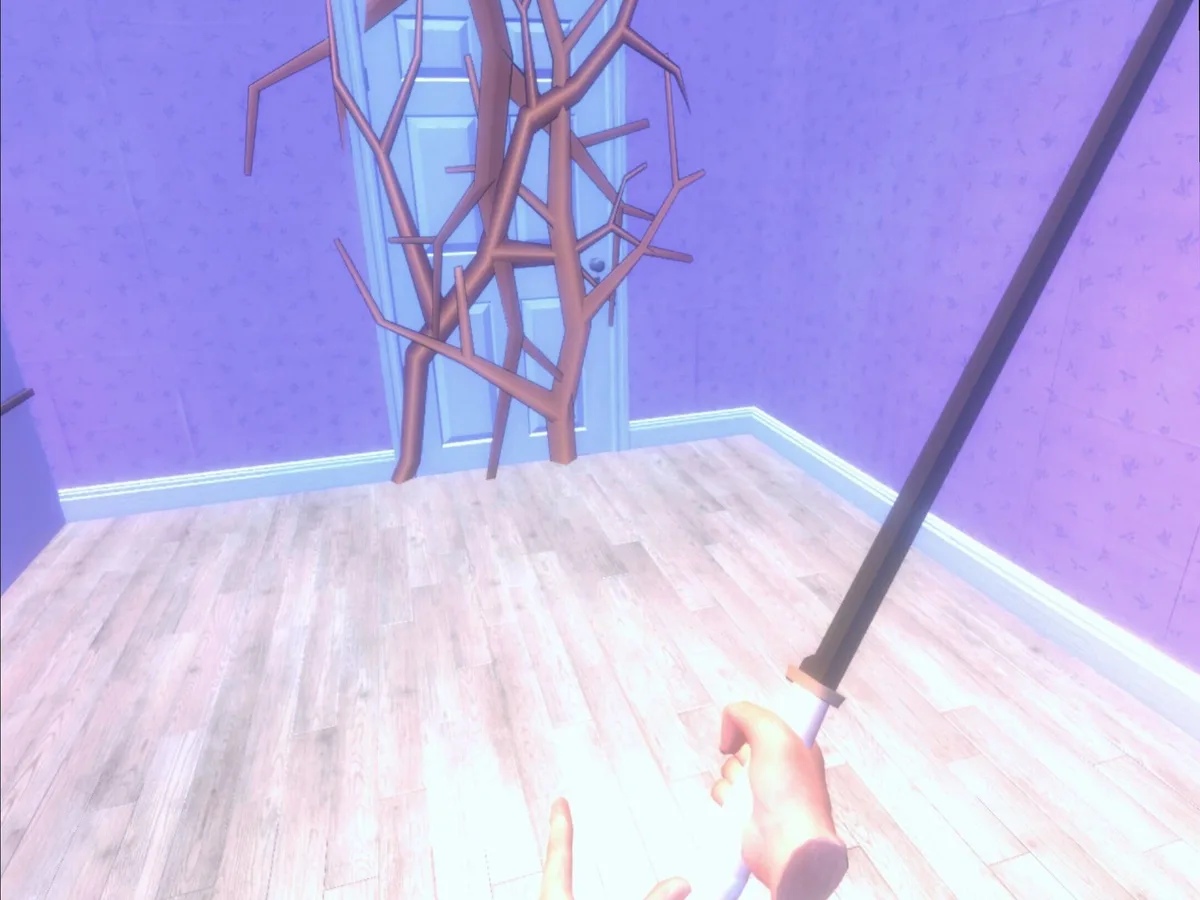
The second pillar leveraged immersive virtual reality headsets. The researchers engineered custom VR environments filled with surreal, physics-defying anomalies: floating geometric furniture, delayed mirror reflections, and impossible spatial dimensions. Whenever a surreal distortion emerged, participants executed deliberate, critical reality checks, binding cognitive dissonance directly to metacognitive verification.
The University of Trento VR modules introduced subtle sensorimotor incongruities, including 500-millisecond latency mirror lags, non-Euclidean spatial geometry, and inverted gravity. This engineered perceptual dissonance startled the cortical salience network, training participants to immediately link disorientation with rigorous metacognitive appraisal.
Virtual reality simulations introduced gravitational anomalies and morphing objects, instilling an instinctual reflex to perform reality tests upon noticing discordance.
Daily mindfulness meditation trained the dorsolateral prefrontal cortex, enhancing metacognitive introspection and critical self-monitoring inside nocturnal dreams.
Participants who had experienced zero lucid dreams over the preceding three years attained consistent lucidity within one month of daily protocol adherence.
The protocol provides an evidence-based roadmap for treating refractory post-traumatic nightmares by enabling dreamers to actively reconstruct threatening narratives.
Neurobiological Mechanisms: Prefrontal Reactivation and 40-Hz Gamma Waves
The combination yielded dramatic behavioral outcomes: structured morning dream logs and validated psychometric inventories demonstrated that over half of the previously non-lucid participants achieved stable, verifiable lucid dreams by the conclusion of the fourth week.
Neuroimaging elucidates why this dual approach is uniquely potent. During ordinary REM sleep, the dorsolateral prefrontal cortex (DLPFC)—the seat of working memory, logical reasoning, and executive agency—is selectively deactivated. This temporary hypofrontality explains why dreamers accept bizarre dream logic without skepticism.
When VR-conditioned triggers activate during a nocturnal dream narrative, the trained metacognitive response sparks a sudden reactivation of the DLPFC and anterior cingulate cortex. While somatic motor tone remains locked in REM atonia, the fronto-temporal cortex erupts into synchronized 40-Hz gamma rhythms, restoring lucid consciousness within the dream.
Quantitative EEG power spectrum analysis verified a 30% to 50% surge in localized 35–45 Hz gamma-band power across fronto-temporal regions upon the subjective onset of lucidity, confirming a neurobiological hybrid: the somatic architecture of REM sleep infused with the cognitive agency of waking consciousness.
- The investigation was conducted by cognitive neuroscientists at the University of Trento in Italy, focusing on reliable lucid dream induction protocols.
- The experimental cohort comprised volunteers with zero recall of lucid dreaming over the prior 36 months; over 50% attained lucid mastery by week four.
- Polysomnographic neuroimaging confirmed that lucid states correspond with 40-Hz gamma oscillatory synchrony concentrated across fronto-temporal cortical networks.
Therapeutic and Rehabilitative Frontiers of Induced Lucidity
Democratizing access to reliable lucid dream induction carries profound clinical implications. The most immediate application is in psychiatric medicine, specifically the eradication of chronic, treatment-resistant nightmares in individuals suffering from post-traumatic stress disorder (PTSD). By gaining conscious lucidity, traumatized individuals can actively transform terrifying recurring nightmares into benign narratives.
A second frontier lies in motor rehabilitation and neuroplastic skill acquisition. Neuroimaging studies confirm that practicing motor sequences inside a lucid dream activates the exact same supplementary motor areas, primary motor cortex, and basal ganglia circuits as waking physical execution, fostering synaptic plasticity without physical strain or injury risk.
The research team aims to translate their virtual reality protocol into consumer-accessible VR platforms, paving the way for evidence-based cognitive conditioning tools that turn the sleeping mind into an expansive sanctuary of self-discovery, healing, and creativity.