



For more than four decades following the seminal publications of Jack Sepkoski and David Raup, the concept of the «Big Five» mass extinctions served as the foundational bedrock of paleobiology and macroevolution. Geological orthodoxy held that the Phanerozoic biosphere was violently interrupted five times by near-instantaneous global catastrophes that wiped out up to 95 percent of marine species via asteroid strikes or flood basalt volcanism. Yet the arrival of transformer neural networks trained on vast stratigraphical datasets has upended this long-standing paradigm. The revolutionary OneStrata foundation model, developed by a team of geoscientists from Nanjing University, Zhejiang Lab, and the Santa Fe Institute, demonstrated that when Earth mass extinctions re-evaluated through machine learning, three of the five canonical die-offs were not sudden global apocalypses, but multi-million-year phases of ecological turnover and suppressed speciation.
The Myth of the Big Five: How Geology Divided Prehistory into Catastrophes
In 1982, paleontologists Jack Sepkoski and David Raup published a seminal paper in Science that established the canonical roadmap for deep-time macroevolution. Analyzing the taxonomic ranges of fossil marine families, they identified five distinct events of catastrophic global turnover: the end-Ordovician (444 Ma), the Late Devonian (375 Ma), the end-Permian (252 Ma), the end-Triassic (201 Ma), and the end-Cretaceous (66 Ma).
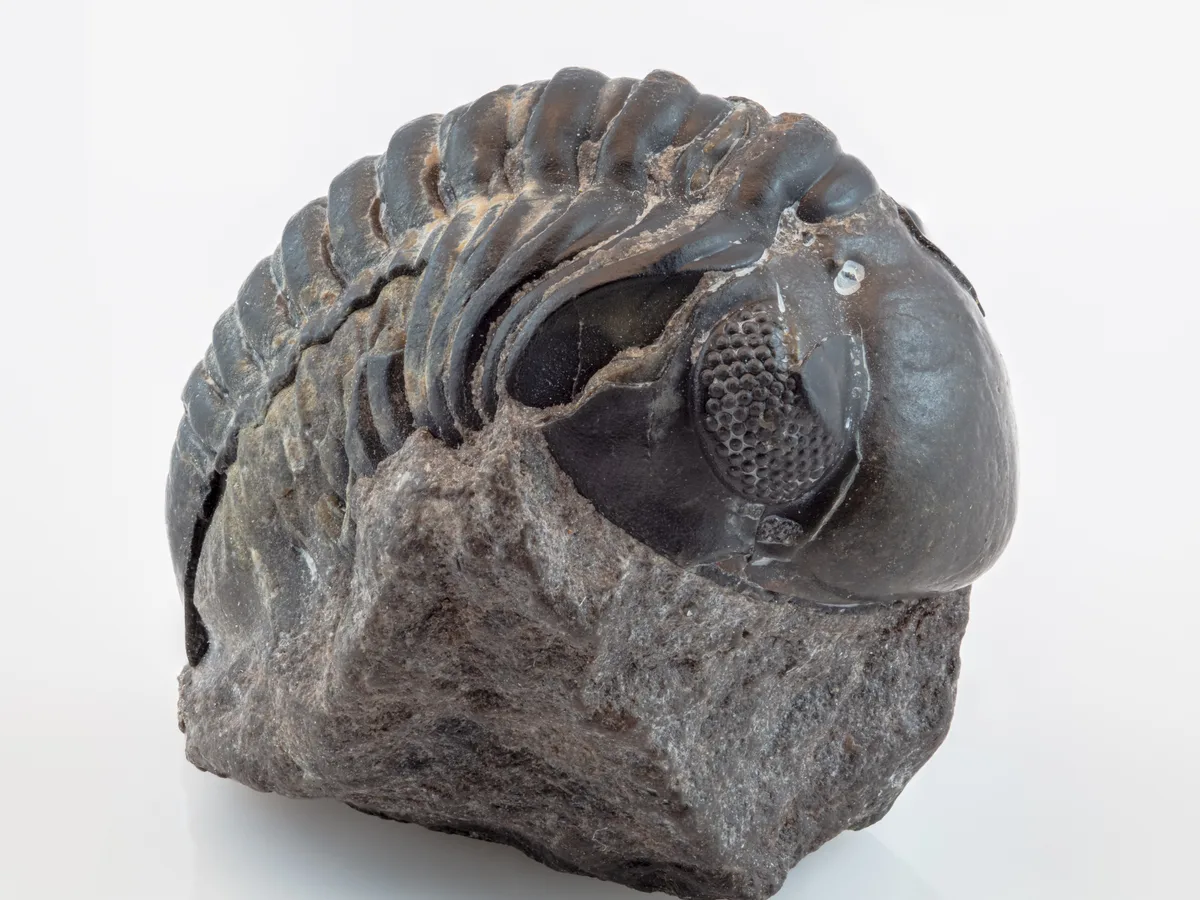
This paradigm nurtured a dramatic narrative of planetary vulnerability, wherein flourishing ecosystems were periodically obliterated by extraterrestrial impacts, volcanic basalt floods, or rapid climate anomalies. In textbooks, each event appeared as an abrupt guillotine cutting through the tree of life, eradicating trilobites, placoderms, and ammonites.
Yet this traditional framework contained a major computational limitation. Lacking modern algorithmic tools, twentieth-century researchers aggregated fossil occurrences into coarse, stage-level time bins spanning anywhere from two to ten million years. Consequently, protracted ecological declines unfolding across hundreds of millennia were artificially collapsed onto a single stage boundary, producing an illusory signal of sudden global catastrophe.
Genesis of OneStrata: Artificial Intelligence Reads the Earth’s Strata
To overcome the sampling biases inherent in the geological record, an international coalition from Nanjing University, Zhejiang Lab, and the Santa Fe Institute engineered OneStrata, an AI foundation model dedicated to deep-time stratigraphy. The model employs transformer neural architectures equipped with self-attention mechanisms, similar to those that analyze semantic relationships in natural language models.
Rather than processing text, OneStrata trained on quantitative stratigraphic logs from tens of thousands of geological sections worldwide. It ingested spatial rock superposition data, species co-occurrence networks within ancient paleocommunities, and hundreds of high-precision chemical abrasion isotope dilution thermal ionization mass spectrometry (CA-ID-TIMS) radiometric zircon dates with analytical uncertainties below 0.05 percent.
While earlier tools such as CONOP struggled with computational bottlenecks when processing more than ten thousand species, OneStrata simultaneously correlated over 300,000 fossil taxa. This generated a continuous, high-resolution Phanerozoic biodiversity trajectory resolved down to ten- to twenty-thousand-year increments.
The AI foundation model was trained on millions of fossil occurrence records extracted from tens of thousands of global stratigraphic sections.
Moving beyond crude 3–5 million-year geological stages, OneStrata resolves macroevolutionary trends down to tens of thousands of years.
Statistical re-evaluation confirmed that only the End-Ordovician glaciation and the End-Permian «Great Dying» were true instantaneous crises.
The Kellwasser and Hangenberg crises in the Devonian represented prolonged suppressions of speciation rather than sudden spikes in extinction.
Anatomy of a Paradigm Shift: Earth Mass Extinctions Re-evaluated
The findings from OneStrata, unveiled at the Geological Society of America (GSA) annual meeting and reported in Nature, sent shockwaves through the geosciences. When Earth mass extinctions re-evaluated with sub-million-year precision, the classic «Big Five» model dissolved into a more nuanced reality. Of the traditional five crises, only two maintained signatures of abrupt, catastrophic planetary die-offs.
The end-Ordovician extinction retained its abrupt profile, driven by rapid continental glaciation on Gondwana and ocean regression. Similarly, the end-Permian «Great Dying» was confirmed as an intensely rapid planetary collapse: within roughly sixty thousand years, greenhouse gas emissions from the Siberian Traps induced runaway global warming, marine anoxia, and the extermination of over 90 percent of ocean species.
In stark contrast, the other three classic events revealed fundamentally different dynamics. The Late Devonian crisis (including the Kellwasser and Hangenberg horizons) registered not as an explosive spike in extinction rates, but as a prolonged, stepped suppression of origination rates. Marine clades did not die off in a sudden shockwave; rather, the evolution of deep-rooting terrestrial forests triggered protracted nutrient runoff, marine eutrophication, and persistent black-shale anoxia across millions of years.
«OneStrata enabled us to overcome a persistent structural artifact in paleontology caused by aggregating deep-time records into stage-level time bins spanning millions of years. High-resolution temporal modeling reveals that only the end-Ordovician and end-Permian stand out as abrupt, cataclysmic die-offs, while the Late Devonian and end-Triassic were protracted slowdowns in origination.»
Shuzhong Shen (Шучжун Шэнь), Academician of the Chinese Academy of Sciences and Professor at Nanjing University
Triassic Turnover and the End of the Mesozoic: Deconstructing Abrupt Disasters
A similar reinterpretation emerged for the end-Triassic extinction (201 Ma), traditionally attributed to volcanic outgassing from the Central Atlantic Magmatic Province (CAMP). OneStrata’s fine-scale trajectory depicts a staggered, multi-phased faunal turnover extending over two million years, with conodonts and ammonoids declining asynchronously across disparate paleolatitudes.
Even the celebrated end-Cretaceous event (66 Ma) received critical refinement. While the Chicxulub asteroid impact indisputably delivered a catastrophic, instantaneous shock that ended the reign of the non-avian dinosaurs, OneStrata’s marine trajectory demonstrates that diverse ammonite and benthic lineages were already experiencing progressive ecological decline for several hundred thousand years prior, driven by volatile outgassing from India’s Deccan Traps.
As co-author and Santa Fe Institute evolutionary theorist Douglas H. Erwin emphasized, deep-time ecology is far richer than simple catastrophism. Earth’s biosphere operates as a non-linear complex system, where gradual breakdowns in ecological redundancy can easily be mistaken for sudden external blows when viewed through low-resolution lenses.
- Spearheaded by geoscientist Shuzhong Shen alongside Santa Fe Institute evolutionary paleobiologist Douglas H. Erwin.
- OneStrata uses self-attention mechanisms to correlate incomplete sedimentary successions with high-precision ID-TIMS radiometric dates.
- The classical perception of sudden Late Devonian and End-Triassic catastrophes was largely an artifact of the Signor-Lipps effect and coarse bins.
- The End-Cretaceous asteroid impact hit an ammonite marine fauna already enduring prolonged environmental stress from Deccan volcanism.
- Highlights that modern human-driven biodiversity loss is occurring orders of magnitude faster than prehistoric protracted crises.
Lessons for the Anthropocene: Deep Time Reflects the Sixth Extinction
The algorithmic re-evaluation of prehistoric mass extinctions delivers far more than academic revisions—it provides an urgent perspective on contemporary environmental crises. By comparing the multi-million-year tempo of the Devonian and Triassic crises to modern ecological trends, researchers arrived at an alarming conclusion: today’s anthropogenic crisis is unfolding thousands of times faster than most prehistoric turnovers.
Global deforestation, marine pollution, habitat fragmentation, and the release of hundreds of billions of tons of greenhouse gases over two centuries have no operational parallel in the rock record for abrupt synchrony. Unlike the protracted Devonian declines, the modern Sixth Mass Extinction mirrors the speed and severity of the end-Permian crisis.
Foundational models like OneStrata equip scientists with powerful predictive capabilities. By deciphering the precise mechanisms of collapse and multi-million-year recovery in deep time, conservation biologists can better identify tipping points in modern ecosystems, guiding urgent strategies to preserve Earth’s biological heritage.