

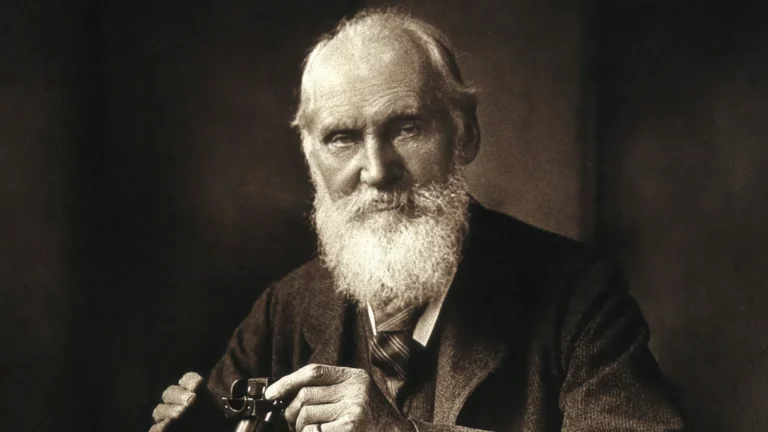

The authentic age of the Earth became the defining intellectual battleground of nineteenth-century science when Lord Kelvin applied rigorous thermodynamics to challenge geology and Charles Darwin’s theory of biological evolution.
Lord Kelvin and the Age of the Earth: A Thermodynamic Challenge to Darwinism
During the mid-nineteenth century, the quest to determine the authentic age of the Earth evolved into a fierce intellectual struggle between classical physics and the emerging natural sciences. Before rigorous mathematical geophysics took hold, uniformitarian geologists following Charles Lyell and naturalists inspired by Charles Darwin’s landmark masterpiece *On the Origin of Species* (1859) operated under the assumption of virtually limitless deep time. The gradual carving of river valleys, sedimentation of colossal rock strata, and incremental generational speciation demanded hundreds of millions, if not billions, of years.
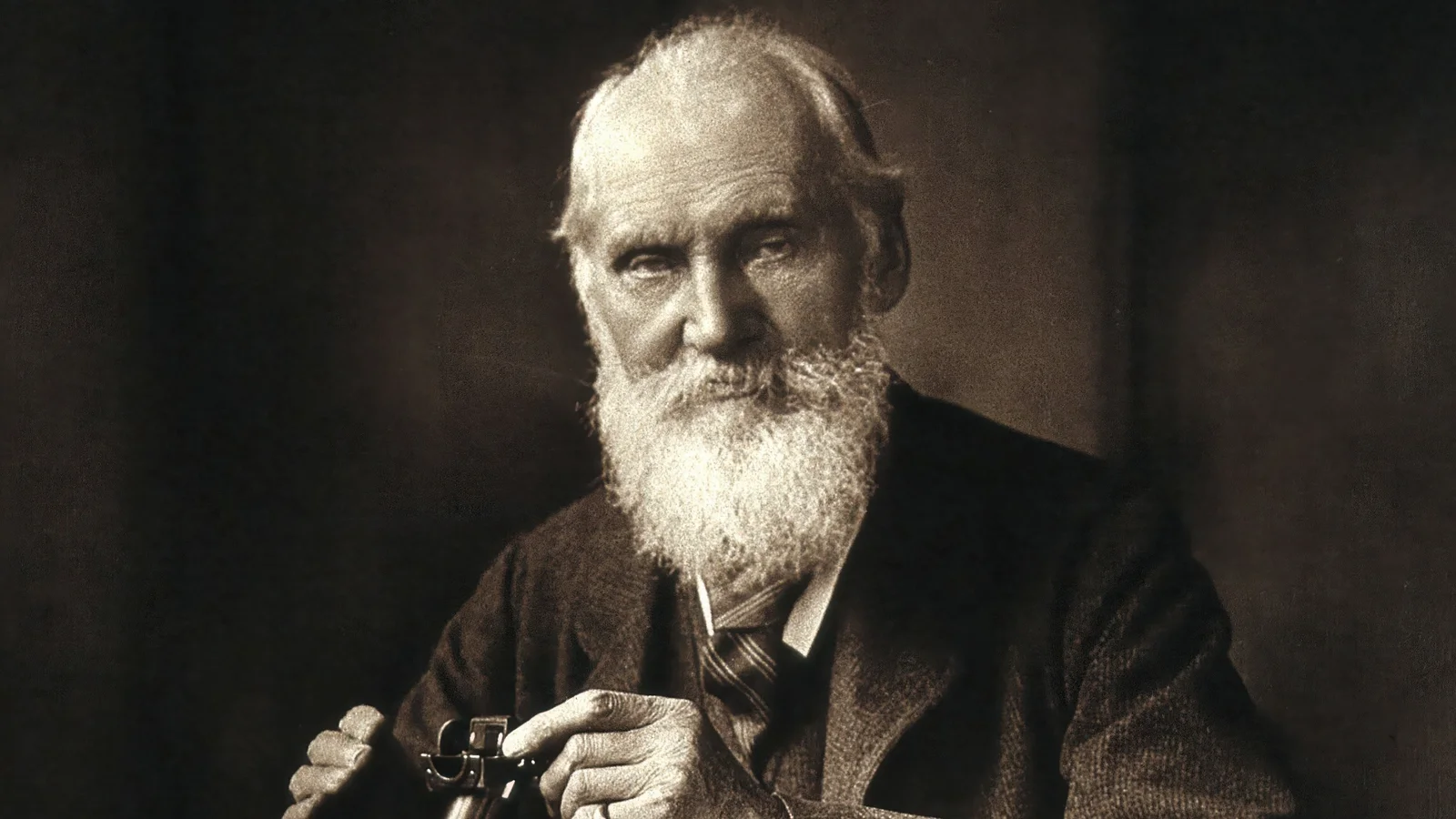
In 1862, rigorous physics decisively intervened. William Thomson—a brilliant Scottish mathematical physicist and engineer later ennobled as Lord Kelvin—resolved to replace speculative geological guesswork with quantitative thermodynamic mechanics. Armed with Joseph Fourier’s analytical theory of heat conduction and the newly established laws of thermodynamics, Thomson undertook the ambitious task of calculating the precise cooling rate of the terrestrial globe.
Kelvin approached the planet through radical physical simplification. He modeled Earth as an ideal, homogeneous solid rock sphere extending uniformly from the planetary surface to its core, entirely devoid of oceans, atmosphere, or internal fluid motion. Postulating an initial molten state at approximately 3,900 °C, the physicist calculated how long it would take for such an object to reach modern surface geothermal gradients (approximately 1 °C per 30 meters of depth). His initial verdict stunned academia: Earth was between 40 and 400 million years old, centering on a most probable estimate of 100 million years.
This mathematical proof fell upon naturalists like an intellectual thunderbolt. Victorian physicists possessed the unmatched prestige of exact mathematics, leaving geologists disarmed before differential equations they could neither parse nor refute.
The Unquestioned Superstar: Why Victorian Scientists Feared Lord Kelvin
In successive publications, Thomson continuously narrowed his thermal estimates, revising Earth’s lifespan downward to 40 million years, and eventually settling upon an unforgiving 20 to 24 million years. For Charles Darwin, this curtailed timeframe represented an existential scientific crisis: twenty million years was catastrophically brief to accommodate the slow accumulation of adaptive variations across the tree of life. Darwin confided in private correspondence that Lord Kelvin’s mathematical calculations haunted him as an «odious spectre».
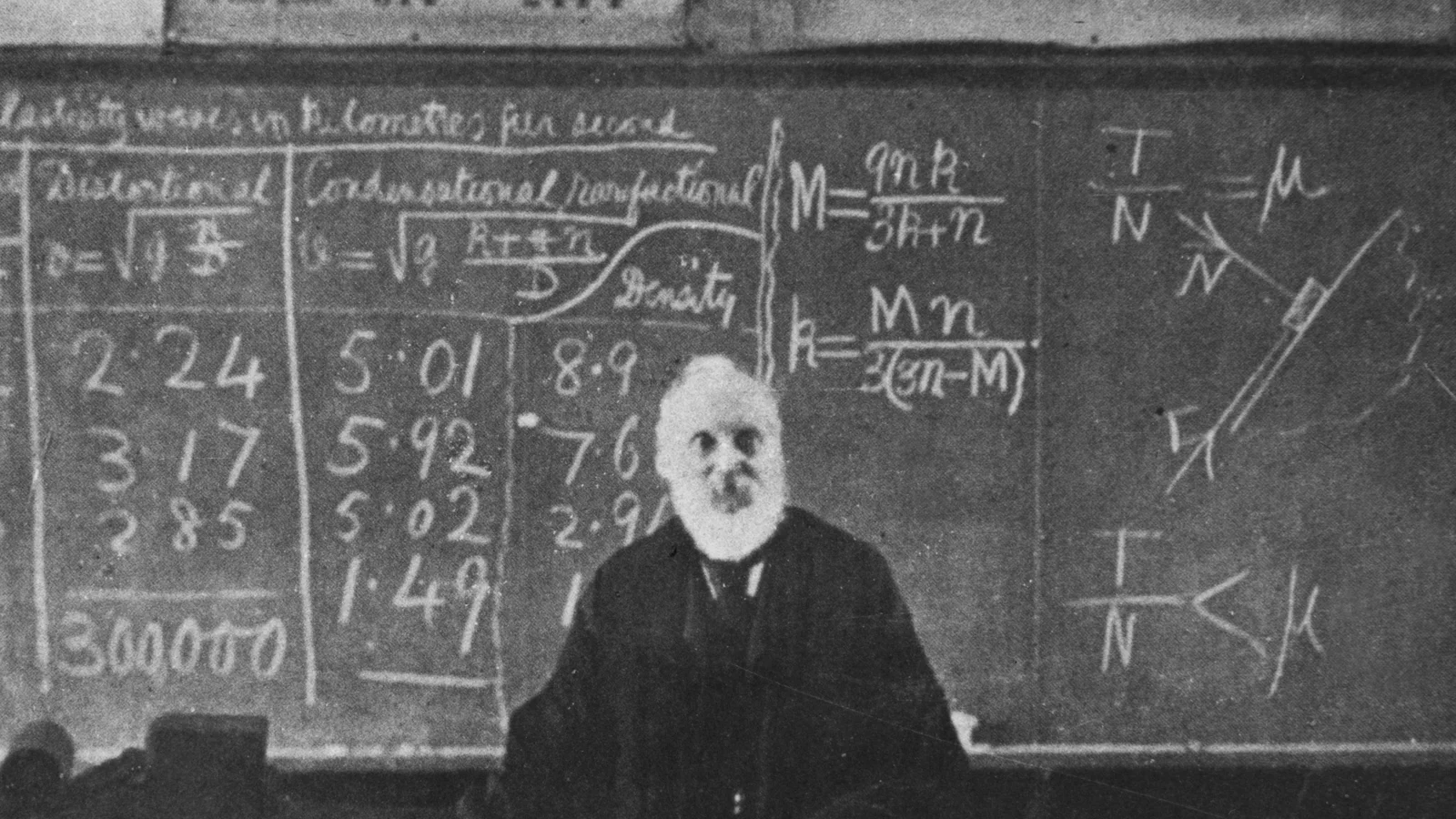
Yet across Victorian Britain, no one dared challenge Thomson’s results. By the late 19th century, William Thomson had achieved monumental public prestige: he had engineered the triumphant transatlantic telegraph cable, established the absolute Kelvin temperature scale, and presided over the Royal Society of London. His towering academic authority possessed career-ending potency; publicly disputing his mathematical deductions was widely regarded as professional suicide.
Geologists of the period lacked rigorous mathematical training, relying instead on descriptive natural prose. While their instincts told them that rock strata and fossil beds required vast geological epochs, they felt powerless to dismantle Kelvin’s imposing differential equations.
John Perry Breaks the Silence: Mantle Convection and the Birth of Tectonics
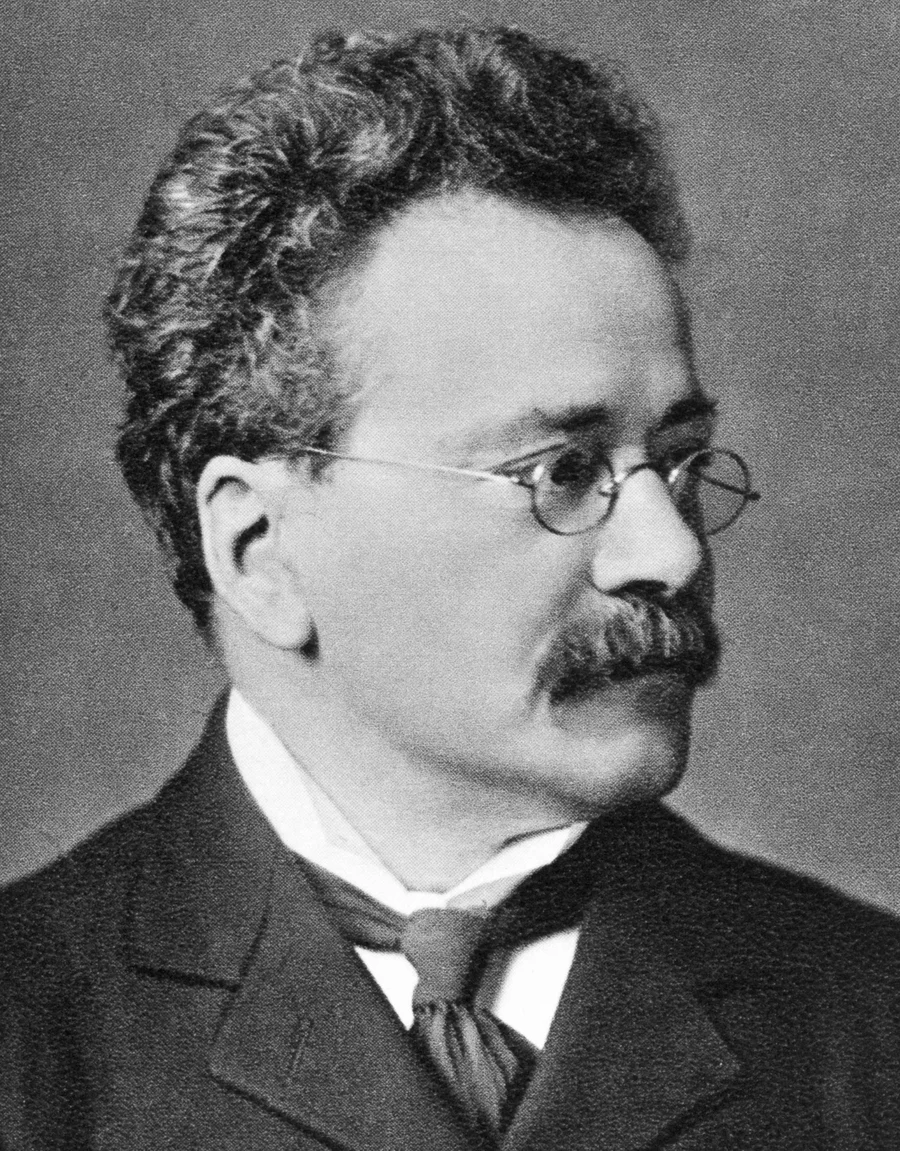
The solitary figure with the intellectual audacity to expose the flaw in Kelvin’s model was his former student and assistant, Northern Irish engineer and physicist John Perry. Having labored closely alongside Kelvin at Glasgow University, Perry possessed an intimate understanding of the master’s mathematical frameworks, allowing him to identify the fatal blind spot concealed within its foundational assumptions.
Kelvin had predicated his thermal calculations upon static conductive heat transfer within an inert, solid rocky interior. However, Perry recognized that the crust was merely a fragile, thin skin overlying an immense silicate mantle. Under extreme confining pressures and temperatures sustained over millions of years, solid silicate rocks do not remain brittle; they behave as an ultra-viscous, non-Newtonian fluid capable of plastic flow!
In 1895, Perry published a revolutionary treatise in *Nature*. He demonstrated that if heat from the deep interior is transported by slow fluid convection—similar to water circulating in a boiling kettle—the mantle preserves its internal thermal reservoir for vastly longer epochs. Continuous convective loops convey subterranean heat directly to the base of the crust, prolonging planetary cooling to two or three billion years, and potentially far more.
«Perry envisioned the mantle behaving like a fluid only over vast timescales. Sandwiched between a hot core and a colder crust, the mantle forms slow convection loops, preventing the planet from quickly radiating away its energy into space.»
Christophe Galfard, Theoretical Physicist and Author of «This is Life» (2026)
Perry’s Prophecy and the Tectonic Revolution
Furthermore, Perry’s hydrodynamic model incorporated an astonishing geological deduction decades ahead of its time: circulating convection cells within the plastic mantle would exert drag forces upon the brittle overlying crust. This friction would fragment the solid surface into plates, causing continental landmasses to drift, collide to uplift alpine mountain belts (such as the Alps and Himalayas), and tear apart along mid-ocean rifts. Perry deduced the essential principles of plate tectonics half a century before Alfred Wegener and Marie Tharp.
Regrettably, Perry’s pioneering paper was largely dismissed by Kelvin and the broader scientific establishment. Complete vindication arrived only at the turn of the twentieth century, when Henri Becquerel, Marie Curie, and Pierre Curie unveiled the phenomenon of radioactivity. The decay of uranium, thorium, and potassium demonstrated that Earth contained a potent, perpetual internal nuclear heat source, rendering Kelvin’s assumption of a simple cooling ball obsolete. To explore contemporary cosmological enigmas, read our investigation on the cosmology crisis and temporal anomalies in modern physics.
The True Geochronology: Patterson and the Meteorite Evidence
The ultimate resolution to the historical debate was delivered in 1953 by American geochemist Clair Patterson. Utilizing high-precision lead isotope mass spectrometry on pristine fragments of the Canyon Diablo iron meteorite, Patterson established the authoritative age of Earth and the solar system: 4.55 billion years (with modern refinements placing it at 4.567 billion years).
The legendary clash between Lord Kelvin and John Perry endures as an instructive parable in the history of science: no degree of mathematical elegance can rescue a model when its foundational assumptions diverge from physical reality.